
Throughout most of my life (till the age of 19 years), I failed consecutively. My report card is filled with C’s D’s N.I.’s; you name it. I even joked around saying that my grades were a platter of everything.
It’s safe to say that I was a below-average student. And that was fine. Because I realised after years of struggling was that the problem didn’t lie within me, the problem mainly existing in studying wrong.
I didn’t know what method actually worked and the system to school ran on wasn’t working. So I did some tests runs of my own. I failed a lot but learned a lot.
And I think I’ve reached a point where I can tell others what works and what doesn’t. But it is important to note that every person is different, so what works for me doesn’t necessarily have to work for you.
So buckle up! This is going to be a ride!
Table of Contents:
Types of Learners
Note-Taking
Apps for Note-Taking
Apps for Concentration
Apps for Learning
Tips and Tricks
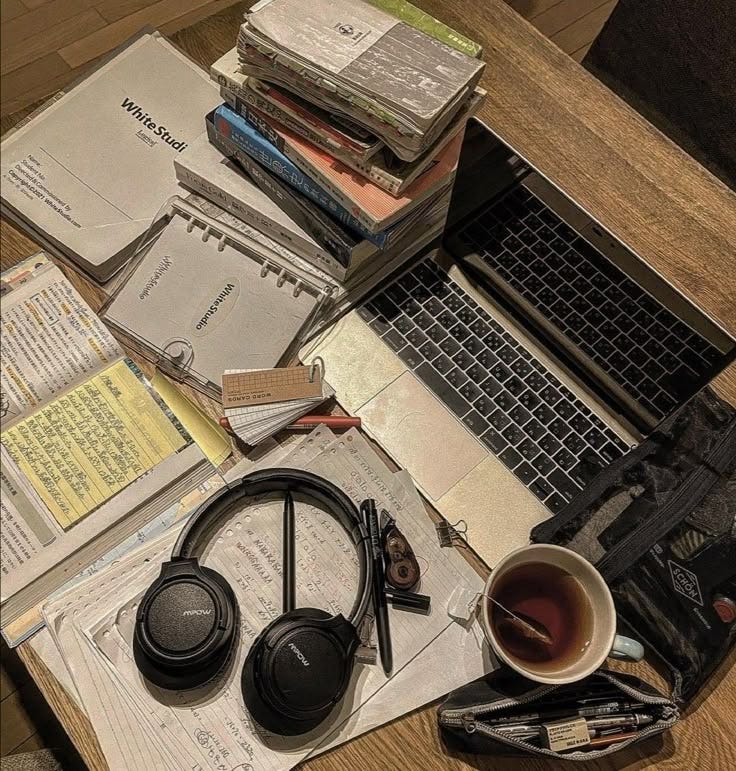
The first thing you need to understand the kind of learner you are. There are 4 main types of learners which I will go through one at time.
Visual Learners
People who learn best via diagrams, colour coded notes, pictures, charts etc.
Auditory Leaners
People who learn best via listening. They don’t particularly need notes but can easily retain information as they listen along.
Reading/Writing Learners
People who thrive with detailed notes. They prefer texts and aren’t the best with anything else. These people also need to make written notes of everything before they actually study.
Kinaesthetic Learners
People who learn best through practical application and activities
Once you know what kind of learner you are; note-taking, memorising and understanding your subject becomes so much easier. Now, there are also an additional set of preferences which I would run through briefly as well:
Social (interpersonal) Learners
‘Inter’ meaning interaction (if you use it as a prefix. I mean that’s how I remember the difference between the two terms). People who thrive with group study sessions and can understand and learn the material better with someone by their side.
Solidarity (intrapersonal) Learners
‘Intra’ meaning inside or within. People who prefer self-study and quiet places.
Once you know which one of the additional preferences you fit in, you can tailor your study sessions accordingly.
Personally, I’m a mixture of reading/writing and visual learner. Instructions or just listening to a lecture doesn’t work until and unless the theory somewhat comes into practice. As for reading/writing; the more I read the slides and make my notes, the quicker I remember the material. It’s tedious I won’t lie but the fruit is definitely sweet. Plus, group sessions stress me out becomes sometimes I feel that everyone is speaking a language I don’t know. Solitary sessions work best for me.
Again, there are many types. So I’m going to run by this too.
Structured Methods
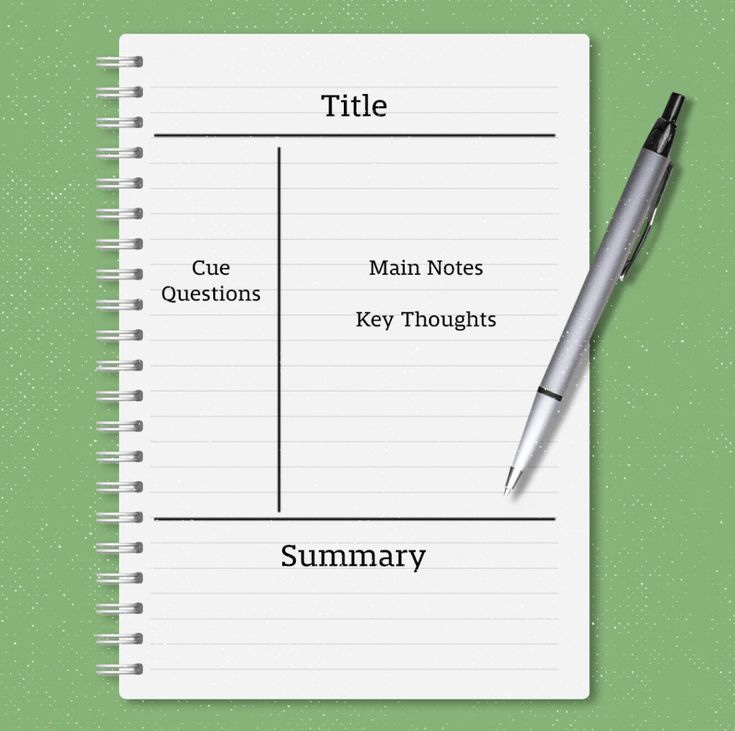
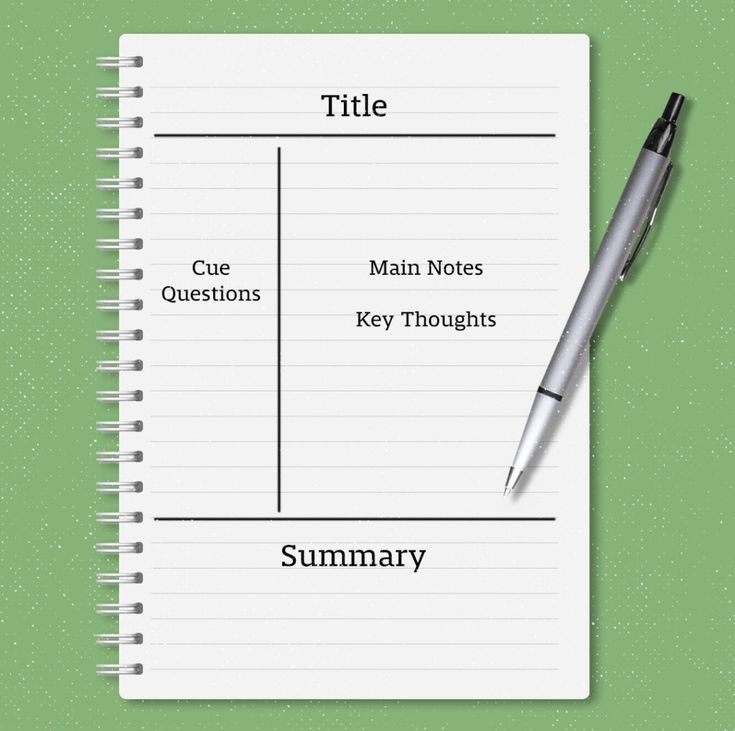
Cornell Method
The page is divided into 3. A narrow column on the left for cues and keywords, a large area on the right for all your detailed notes and a block at the bottom for a summary.
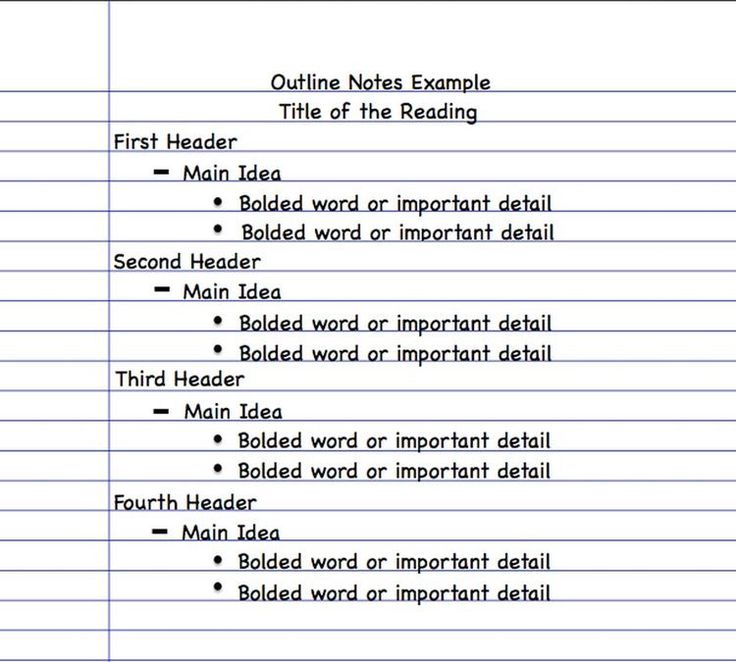
Outline Method
This method is like simplifying everything with bullet points, headings and subheadings.

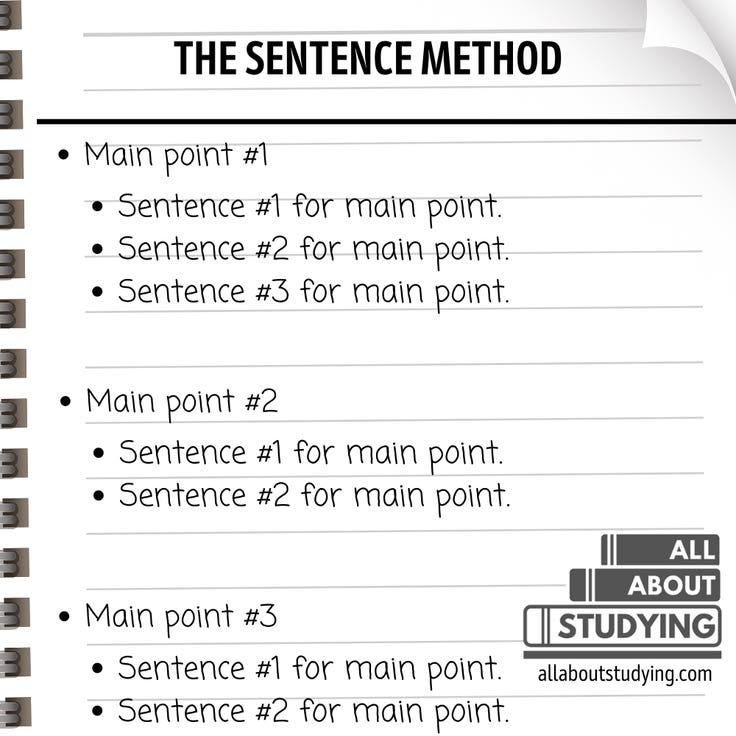
Sentence Method
For every content, a simple line, thought or fact is recorded. This makes the material feel less intimidating

Visual Methods
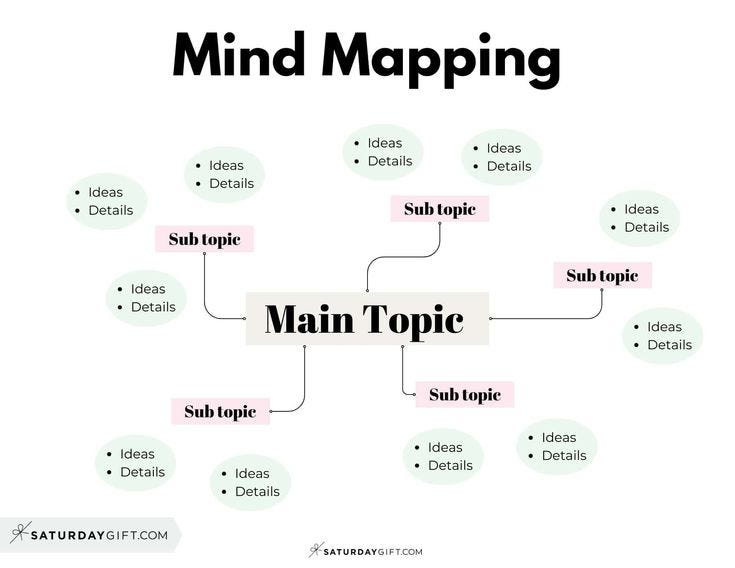
Mind Mapping
It’s similar to what was done for story writing back in school. A centre point with headings and subheadings branching out. You can have your own key to refer to, different colours and anything else to make it personal.
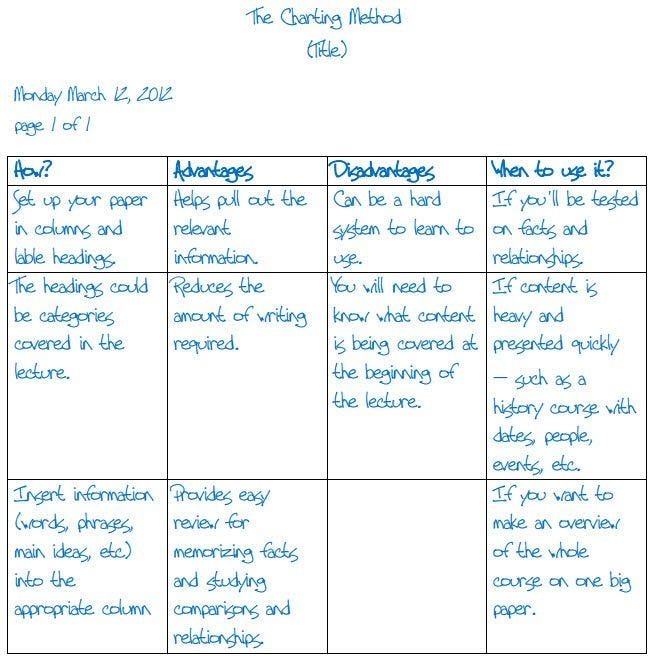
Charting Method
This method is what I would use for history or anything related to comparisons. It organises your material in columns.
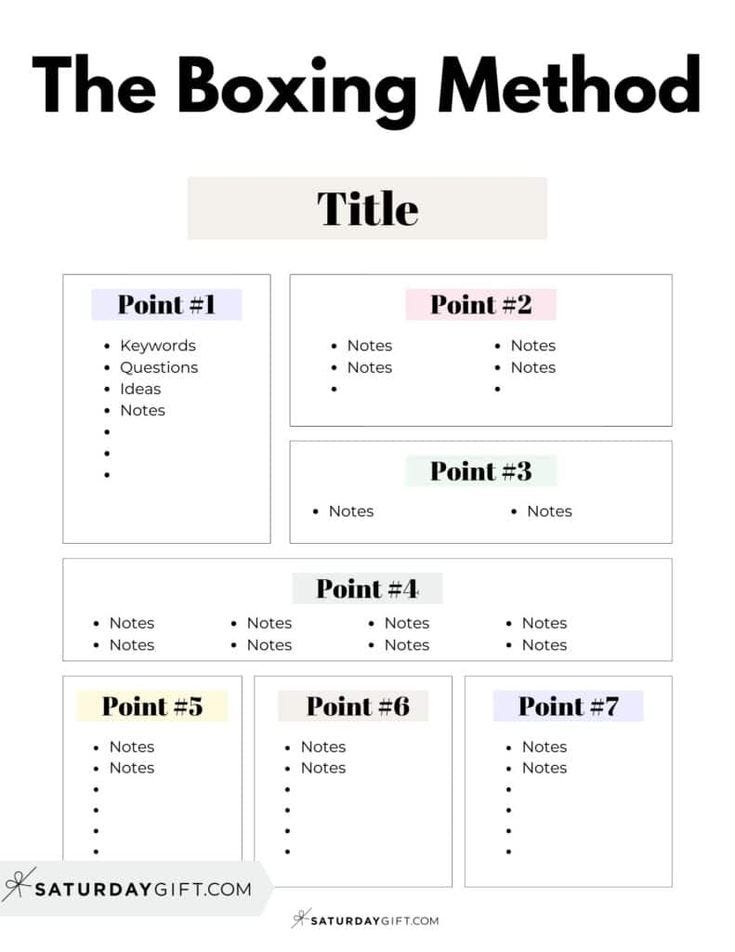
Box Method
You box up or in other words clump up related information in one box. It makes the material more digestible since everything related to a certain topic is in a single box.
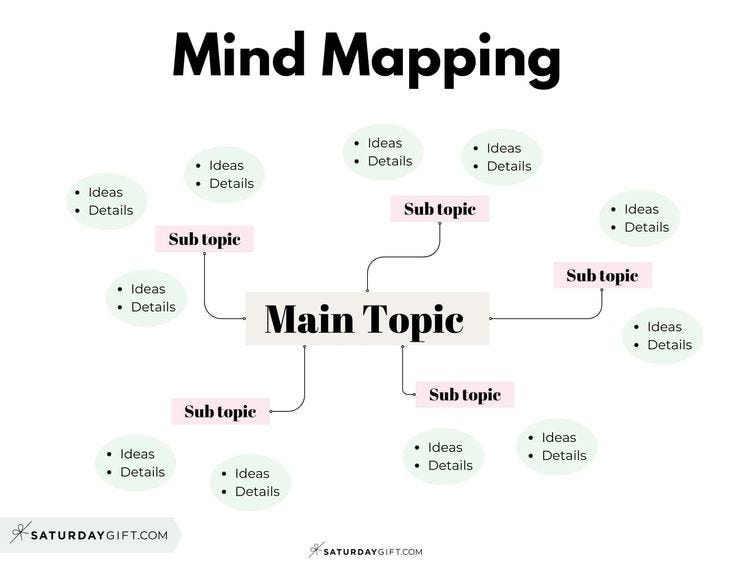
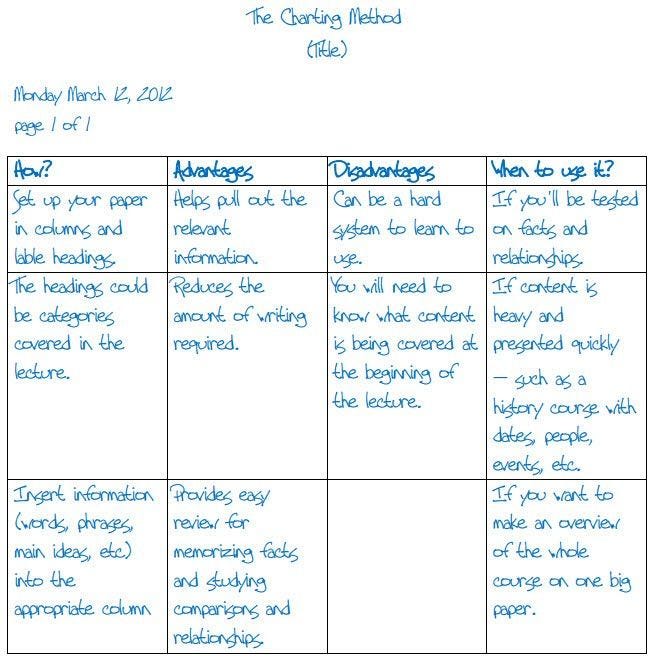
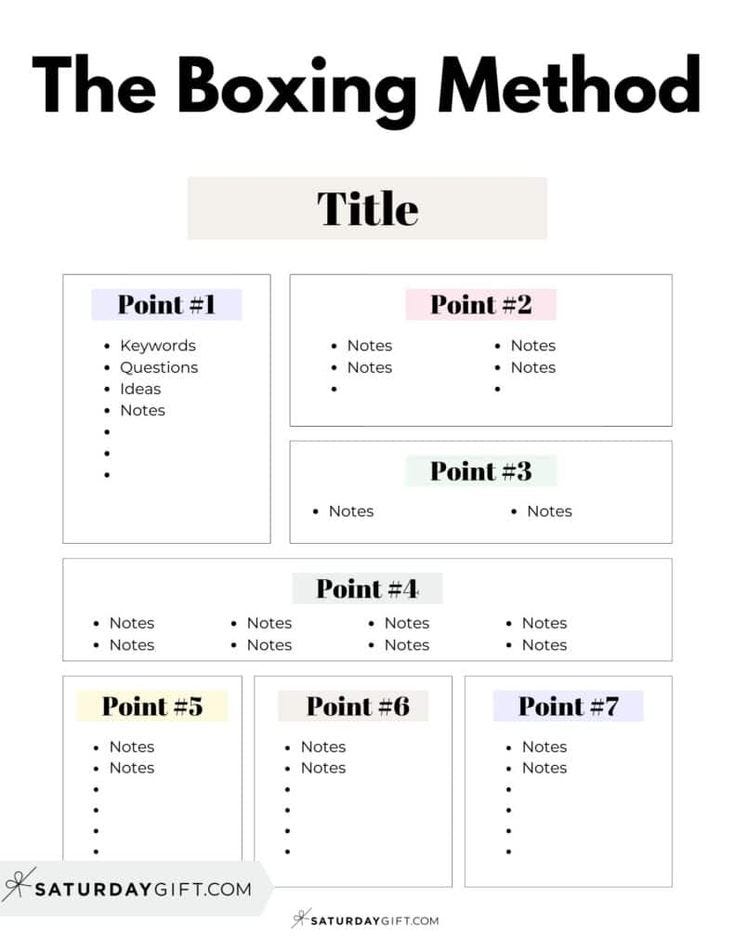
What’s the best method?
None of them.
Hear me out. It’s not a rule that needs to be followed. A single student doesn’t rely on one method. You can, but you don’t have to.
Personally, I relied on the Outline Method while I studied for A Level Psychology. I relied on Mind Mapping for A Level Law. I used the Charting Method multiple times in school mostly in Biology and Chemistry. When I came to university, I used Mind Mapping for majority of my courses because I could fit a whole chapter on a single page. Now, I rely on the Sentence Method the most but do switch it up if I feel the need.
I also tried the Cornell Method. I didn’t like it. Felt like I was wasting the page because the notes I wanted to write didn’t fit. Plus, the summaries felt too much. So, I stopped.
So switch it up. And these aren’t the only methods out there. There are probably dozens more you can search up and test in your own time!
There are too many apps to count but I’ll just mention the ones I use or have used at least once in my life. Apps that are easy to navigate.
TurboLearn - Requires a subscription but extremely helpful. Makes notes via recorded lectures, provides practice quizzes and flashcards
VoiceMemos - A free app for Apple users. You can record your lectures and listen to them later on. Helps make accurate notes and allows you to listen in class rather than make notes.
StudyFetch - Similar to TurboLearn
ChatGPT - You can provide slides and ask for detailed notes
DeepSeek - Similar command to ChatGPT
GoodNote/Apple Notes/OneNote - Mainly for people who prefer digitally writing their notes. Not a huge fan of digitally writing my notes but I’ve heard they’re good.
Google Docs - If you like to type out your notes.
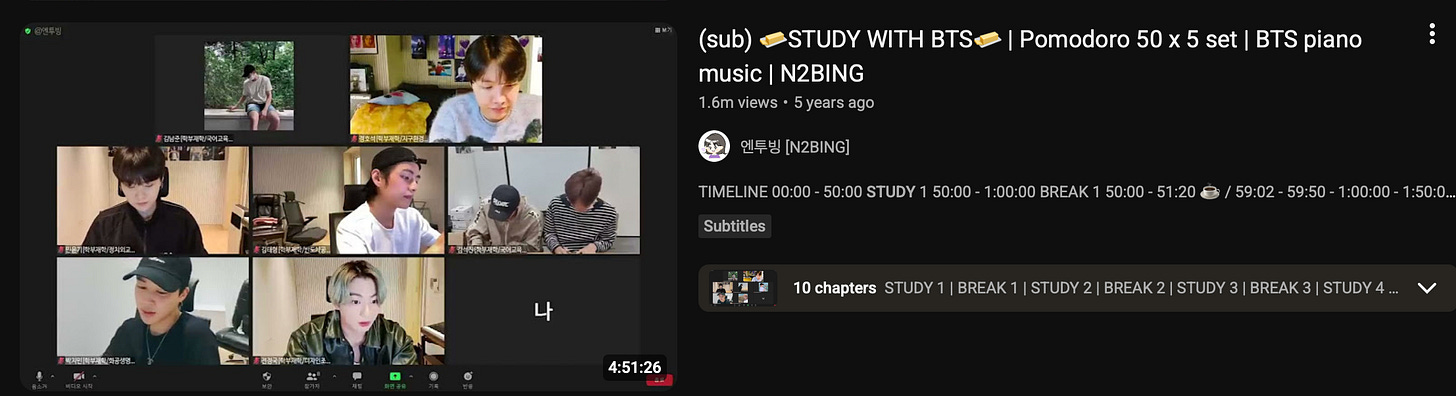
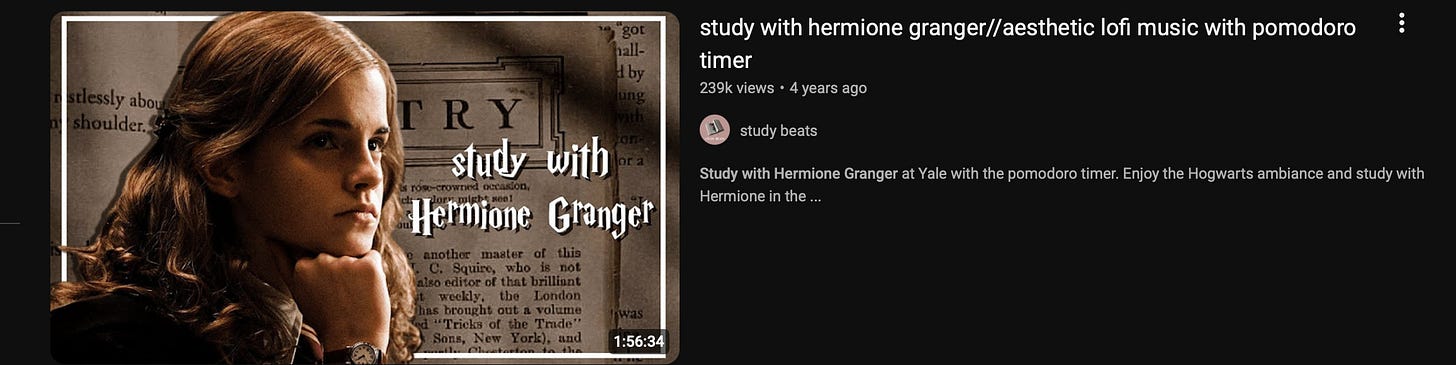
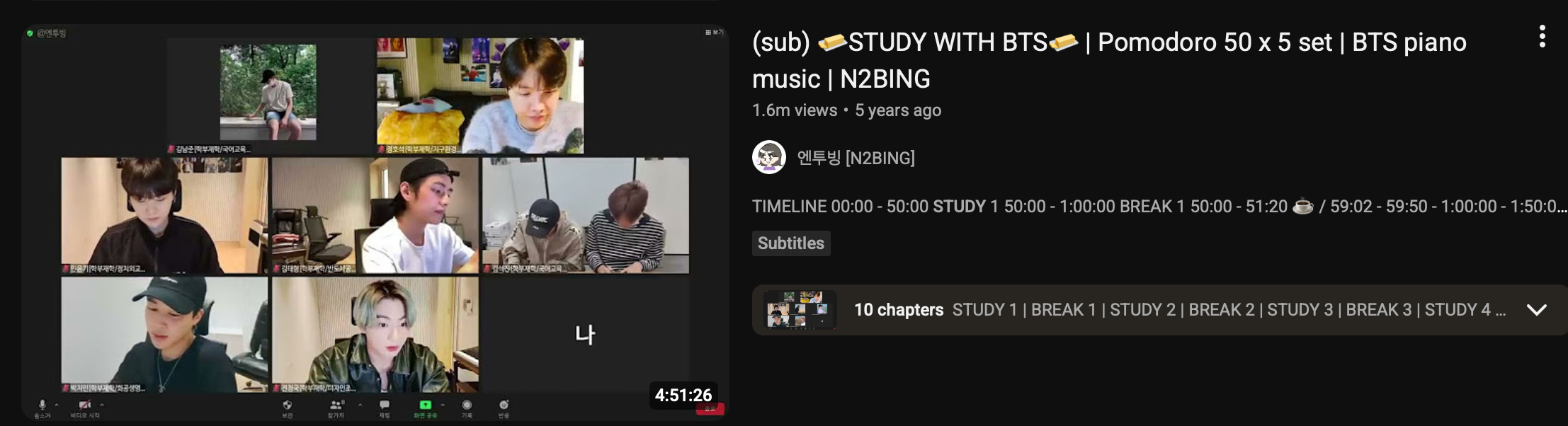
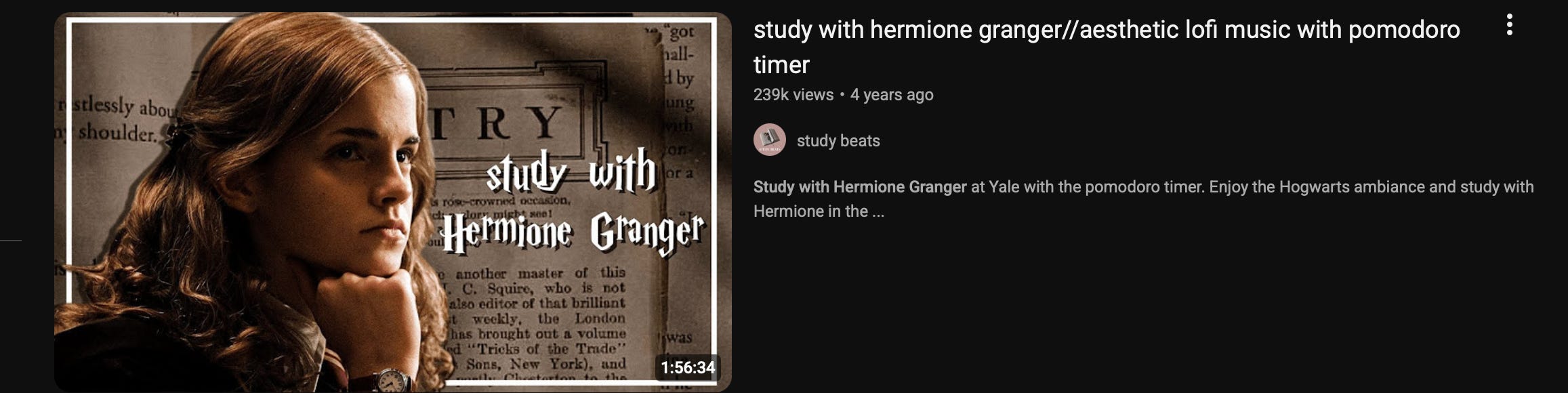
Youtube - Different study videos where you can play a make believe game of studying with your favourite celebrity/character. For example; “Studying with Hermoine Granger” or “Studying with BTS”
Focus Timer - A simple pomodoro timer
FocusFlight - Something fun which I use the most. It gives you the impression that you are on a flight and you study for the time of the flight
Claude
TurboLearn
Alison/Coursera
Take a lot of breaks. There’s no point in trying to push through when you’re low on fuel.
Make sure you eat proper meals
Try to avoid people before an exam. They may ask questions or explanations and the moment a word or term is used and you don’t know what it means, you will go into panic mode
Try not to discuss your exam after giving it. If you get to know the stuff you did wrong, it would only make you overthink about something you can’t change
Active Recall. It’s going to be your best friend. It’s a method where you try to recall everything you remember without looking at your notes. Helps with long term memory
Don’t leave any material for the morning of your exam. Study everything before hand
Sleeping properly. Meaning no all nighters because they don’t do anyone any favours
Make cue cards. Personally, I don’t make them because they’re time consuming but they do help a lot
List down important terms/cases/theories in one place. It will help you remember and revise later on
Studying every single day. Practically speaking, it is overwhelming and I still struggle with this but if you do get used to it, the result is apparent
Don’t listen to people who say they haven’t studied and/or they’re panicking. In fact try to stay away from them because that’s usually not the case. You’re only going to panic and start worrying which won’t help you in your paper
Teach something. Either pick up a white board and teach it to your imaginary friends or walk around and pretend you’r teaching a class. It works wonders because you’re learning and performing active recall
During exam season, it’s every man for themselves. You can help out if you want but remember it is not your obligatory to provide/explain the material or the syllabus a day/night before the exam
A bit late to the back to school thing but I hope this helps anyone who struggles or absolutely despises studying. I promise, I get it.
I hope all of you have a great school/college year and make tons of memories and accomplish your goals!
No posts
Comments
Nothing yet. Say the first thing.
Sign in to join the conversation.