
My husband Jason has had a long love affair with a fitness tracker called a Whoop. He’s tried to divorce it many times. But he can’t seem to let go of his deep love for his health data.
The Whoop is designed for athletes. It tracks data like respiratory rate, heart rate, heart rate variability, and sleep quality. It also tracks the most important bit of data: strain. Strain is anything that challenges the body and therefore requires energy output: exertion, stress, or challenging emotions.
Jason wakes up every morning eager to see his “color” for the day. Because first thing in the morning, his Whoop crunches all his data, calculates how well he has recovered overnight, and gives him his recovery “color” for the day.
His daily excitement about this still makes me scratch my head. And chuckle.
Green means go. His body is fully recovered from the exertions of the day before and ready for high effort and high strain. These are the days for him to push hard and get stronger.
Yellow means meh. His recovery is fine but not stellar. This is a day for him to maintain gains but not push too hard. Pushing too hard on a yellow day makes it more likely that his body will break down rather than build up.
And then there’s red, the “oh shit” of Whoop scores. Red means too much strain with insufficient recovery, so it’s best to back off and let his body rest and repair.
While Jason’s commitment to—or maybe slight obsession with?—his Whoop scores and health data makes me laugh, the truth is it’s not that different than nervous system rewiring. I was endlessly tickled when I saw this.
In those early months of coaxing Tante Sumaya—my nickname for the parts of my brain in charge of all things autonomic (see chapter 15 for more on this!)—out of her frozen, fearful state, I too woke up each morning and took stock of what “color” day it was. I didn’t think of it that way at the time, but that’s essentially what it was.
How did I sleep? How is my energy level? How strong are the sensations (read: pain) in my neck and head? How are the other weird sensations in my body?
My answers to these questions told me what “color” day it was, and what I needed to do that day to keep building my capacity, rather than stagnating or backsliding.
A “green day” meant I got decent sleep, my symptoms were lower and I had a little more energy. This was a day to stretch, to try new things and increase my capacity. Maybe I could increase my daily walk by five minutes, try turning my head a few more degrees to each side, or really spread my wings and try a little more social time or a bit of time in a crowded place. It most certainly was not a day to do all these things. No day of any color was ever a day for that. Pushing too hard was a recipe for spiraling down instead of up. The idea was to play at the upper edge of my Tante Sumaya’s comfort zone rather than blowing through it.
A “yellow day” meant “meh.” Don’t turtle, but don’t push. Just maintain. On these days, I did the things I had already reclaimed and knew were safe, and I didn’t expect to gain any new ground.
And then there were “red days.” Oh, the red days. The “oh shit” days of nervous system rewiring. These were the days I woke up after a poor night’s sleep, already exhausted by 6 am, with the sensations (read: pain) in my neck already sky high before I had even poked my toes out from under the covers. The days when I had to focus entirely on reassuring Tante Sumaya.
I practiced my vagal toning techniques. I meditated. I did breathwork. I got on the floor and enjoyed some gentle (so, so gentle!) stretching. I listened to Yo Yo Ma make love to his cello. And I spent hours and hours in the corral with my horses, either sitting in a camp chair or lying nearby on a picnic blanket, listening to their hoofbeats and their snuffles.
Calm. Soothe. Reassure. Revel in moments of delight. Commune with the universe. Be a soul, not just a body.
That was my refrain on red days. Not so “oh shit” after all.
In those first few months, most of my days were “red days.” It could take days or even weeks for my system to respond to my gentle coaxing and come back to a state of safety. It took a big leap of faith—a second leap of faith, this time into science rather than soul—to keep going, to trust that the process would work, that I would start experiencing some yellow, and even green, days.
Which is what happened. The science was right—at least the basic idea, if not the details, which neuroscientists are still sorting out and will be for a long time.
Tante Sumaya started trusting me a teeny little bit, which meant a few yellow days were sprinkled into the solid wall of red days. And then little by little, month by month, that trust grew and I had my first taste of green days: deep sleep, good digestion, energy in my body, and the thing that can still bring tears of relief to my eyes: a reduction of the neck pain and the weird, uncomfortable nerve sensations that had been my constant companions for so long.
The easing of that pain was an almost unbearable relief. I say unbearable, because, dear one, it was harder than you would think. I want to say that those green days were the easy ones, the best ones. I want to say that the easing of that pain was nothing but a relief and a balm.
But that’s not how it was.
In some ways, green days were the hardest. Because I knew they couldn’t last. That’s not how it works. Especially at the beginning, green days were rare. Which made those green days so much harder than I could ever have predicted.
The absence of pain, the relief from crushing fatigue, felt so exquisite that I couldn’t help but be afraid of losing it. I wanted to hold on to it, to hug it tightly to my chest and get it to last a little bit longer. Which meant I was terrified of “overdoing it” and having that relief evaporate back into the murky muck of yellow days—and of going right back to the unique agony of yet another red day, the kind of interminable days I had lived for years and was so, so ready to have behind me.
Ironically—and this still breaks my heart—the fear was a self-fulfilling prophecy. It was the very thing that scared Tante Sumaya and sent me tumbling right back into a red day.
As if that wasn’t enough to make green days hard, they were also, ironically, the days when I had to dig the deepest and stare down the fear. Because the only way out of my symptoms was to use green days to do more, to push the envelope a little. Which meant intentionally provoking pain and symptoms—not too much, but still! That was the only way to re-train Tante sumaya (read: rewire my brain) and find my way out of the mess I was in.
But I was terrified.
Terrified to twist or bend my spine forward even a little bit. Terrified to lift my arms above my waist or to lift anything heavier than a feather. I was terrified to talk for too long, to be on screen, to read, to walk for too long. Terrified of the pain and symptoms that any of these things would provoke, and the insomnia that would ensue. The insomnia that would, once again, rob me of me.
So when I had a hard-earned “green day,” my reward was that I got to stare into that abyss of terror and do the things anyway, provoke the symptoms anyway.
What I really wanted to do was crumple into a heap and say: “Nope. Sorry. Not today. I can’t face it today. I’m just going to enjoy feeling better. I’m not doing the hard things today.”
But avoiding symptoms is what had turned me into a 2 x 4, atrophied and rigid, literally frozen in fear. It’s what had put Tante Sumaya into the driver’s seat of my health and my life. And I really, really wanted to move, to unfreeze, to re-claim that driver’s seat.
So I leaned into my faith—both in my unstoppable soul-self and into the science that said I could heal.
I sandwiched each little attempt at doing a scary thing with something reassuring. It looked something like this:
Start with something reassuring/calming, like a seated body scan or short meditation.
Do the hard thing: a slight turn of my head, lifting my arms a little higher, or picking up a pot of soup, doing a task on a phone or computer, walking a few extra minutes.
Finish with another reassuring thing. Maybe this time a little breathwork, soothing music or some humming.
The pace of all of this was unthinkably slow. It was a pace that might drive the most patient person crazy. I had never been a patient person. Not even a little.
But I became one. Because reclaiming my body, my life, would take years, not months.
As I write this four years later, I feel the tears well up and tighten my throat, a rush of grief at how hard it was to stare down that fear again and again.
And I feel the river of grief underneath those tears. Grief at how lonely it was. None of it makes any sense until you’ve experienced it, and I still haven’t met anyone who has experienced it quite like I did.
Maybe that someone is you, dear one. And maybe one day I’ll get to meet you and hear your story. If that does happen, please be ready for the dam to break on my river of sobs. I will be powerless to contain them.
Text within this block will maintain its original spacing when published
Dear one, if you’re reading this, you’re probably facing another hard day, another hard moment.
I know you’re exhausted and scared. I know you want to crumple into a heap and give up. I know you think your well has run dry. Your well of courage, fierceness, perseverance.
But it hasn’t. And it never will.
Because that well is not yours or even you.
It’s an infinite, communal well.
An oasis in a desert of pain, sometimes it disappears. Sometimes you get lost and can’t find it. Sometimes it shimmers like a mirage in the heat of your exhaustion.
But that doesn’t mean it’s not there.
So trust, dear one.
Trust that once you let the tears flow, collapse into a heap for a time, you’ll find your way back to that oasis. You’ll drink from that communal well, and the courage will flood back into you, surprising you with its fierce strength.
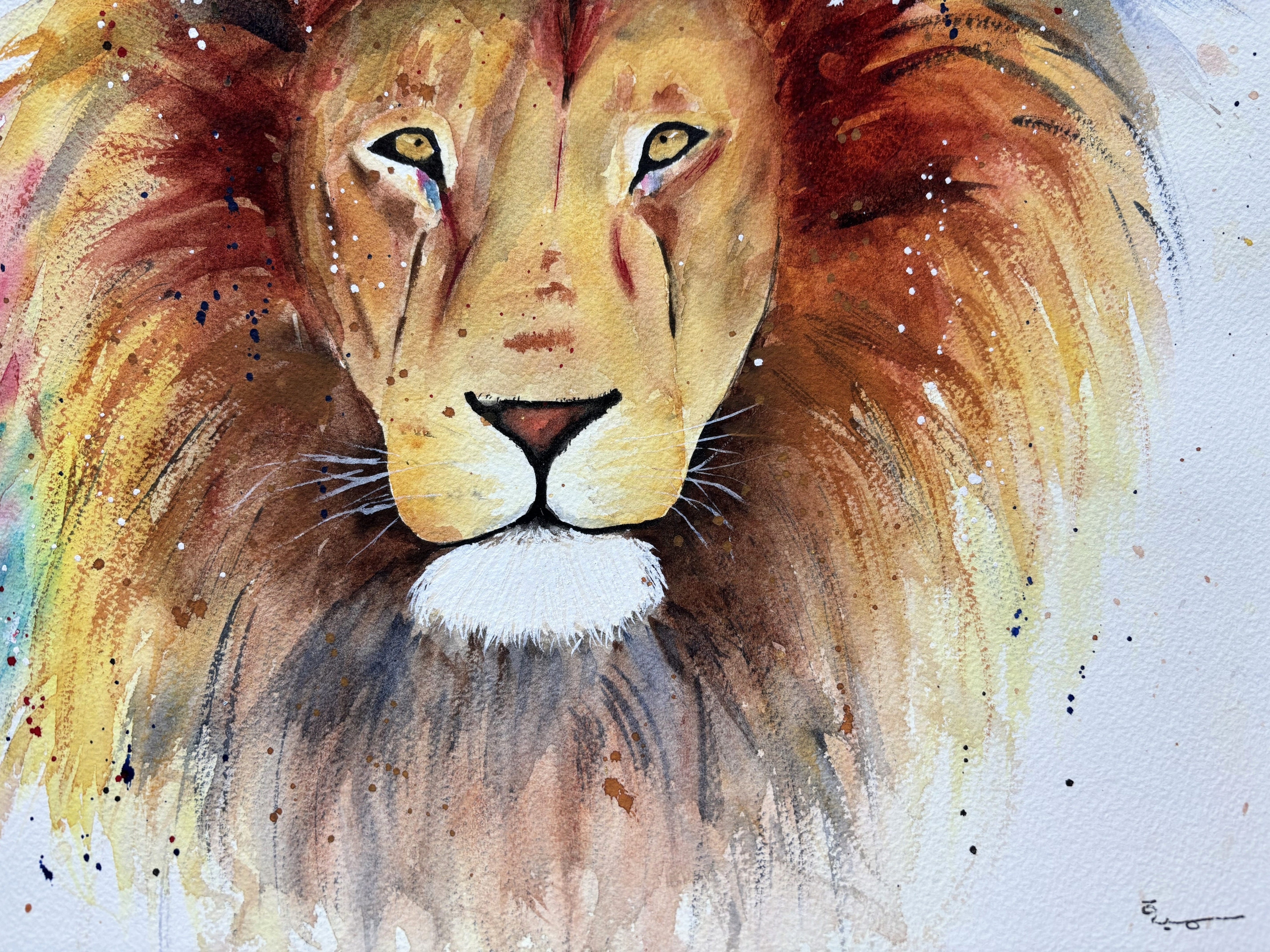
You don’t have to manufacture anything that isn't already there. It is woven into the very fabric of you, into the fierce lioness energy that is your birthright. Everyone’s birthright.
You, the real you untouched beneath all the pain and fear, is braver than you can imagine. You are braver than you can imagine.
So trust, dear one.
You can do this.

If you’re new here, welcome!
However you made your way here, I’m grateful you found me and happy to have you pop into my little world, whether it’s for a brief visit or a longer hangout around my campfire.
Accidental Alchemy is a serial memoir, so if you’re curious and have the time, I recommend starting with the Prologue and reading chapters in order for the full experience. You can access all chapters on my Substack homepage.
For the best reading experience, I recommend reading in a browser and on a larger screen. It makes it easier to enjoy the art and navigate through the chapters with the buttons at the bottom of each post.
If you’re enjoying this memoir, please share with someone you love!
Share Accidental Alchemy by Sumaya Abuhaidar
PS.. All art and poetry included in this memoir are my own unless I specifically credit another author or artist.
Comments
Nothing yet. Say the first thing.
Sign in to join the conversation.