
Welcome to the 📌 Intellectual’s Weekly Bulletin.
Every Monday, and/or reflect on or provide resources for lifelong learners the process of building an intellectual life.
This week, Kaelyn shares a personal essay all about Personal Curriculums, their benefits and drawbacks, as well as some recommendations to develop an intellectually rigorous and curiosity-centered curriculum for lifelong learning.
🖋️Accepted Society is an intellectual community for lifelong learning which was founded in 2020 and offers a dedicated space for co-studying, emotional support, and resources for pursuing one’s education in whichever way they see fit.
If you would like to learn more about Accepted Society or enroll in one of our upcoming short-courses, head over to: https://www.acceptedsociety.com/
The Trend and Origin of “Personal Curriculum”
In 2025, Elizabeth Jean (@xparmesanprincessx on TikTok) introduced the world to the concept of a “Personal Curriculum” or a customized learning plan built around your goals and/or interests.1 Sometimes referred to as a personal syllabus or learning plan, the intent is to apply the structure of a university or course syllabus based around your own subjects of interest, materials, pace, and objectives.2
Now, over a year later, the trend is going strong with a plethora of guides and videos sharing how you can build your own personal curriculum. These self-study methods provide non-students with a tools to begin developing their own lifelong learning. Within several months, many of these creators who shared their Personal Curriculums return to share that they are struggling to maintain the pace they set out or that their interests have evolved. It makes sense. Personal Curriculums seek to mimic the model of the university course but they lack the external structure nor the known objective. They model the syllabi provided by a professor without any of the discussion or synthesis demanded. Thus, there remains two problems which require a solution:
The lack of structure
The absence of a known objective
Personal Curriculums offer the flexibility and accessibility to a range of learners, not just those able to attend and/or afford further study. Furthermore, this flexibility of learning beyond a classroom allows the lifelong learner to explore and connect all of their varied ideas and interests. We don’t need to abandon the concept of the Personal Curriculum, we must adapt it!
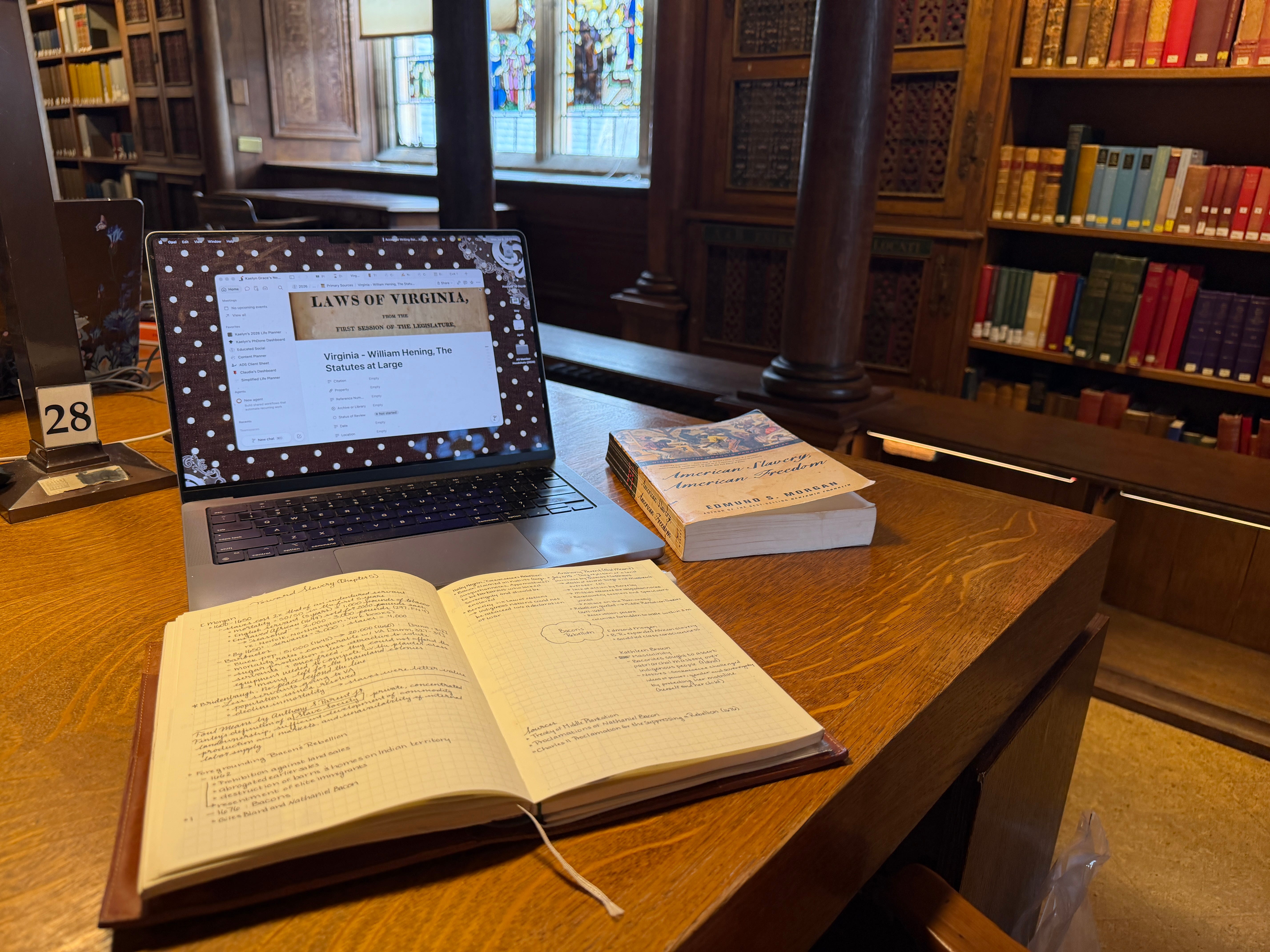
Solving the Structure Problem
As we embark on our self-studying journey, we must begin with our objectives and work our way back (similar to developing a new protocol). Learning objectives outline to the recipient of a syllabus not only what they will retain from the course but also what they might produce.
Here is a sample of the learning objectives for ’s upcoming Accepted Academy Course titled “Your Renaissance: An Introduction to Interdisciplinary and Critical Discourse”:
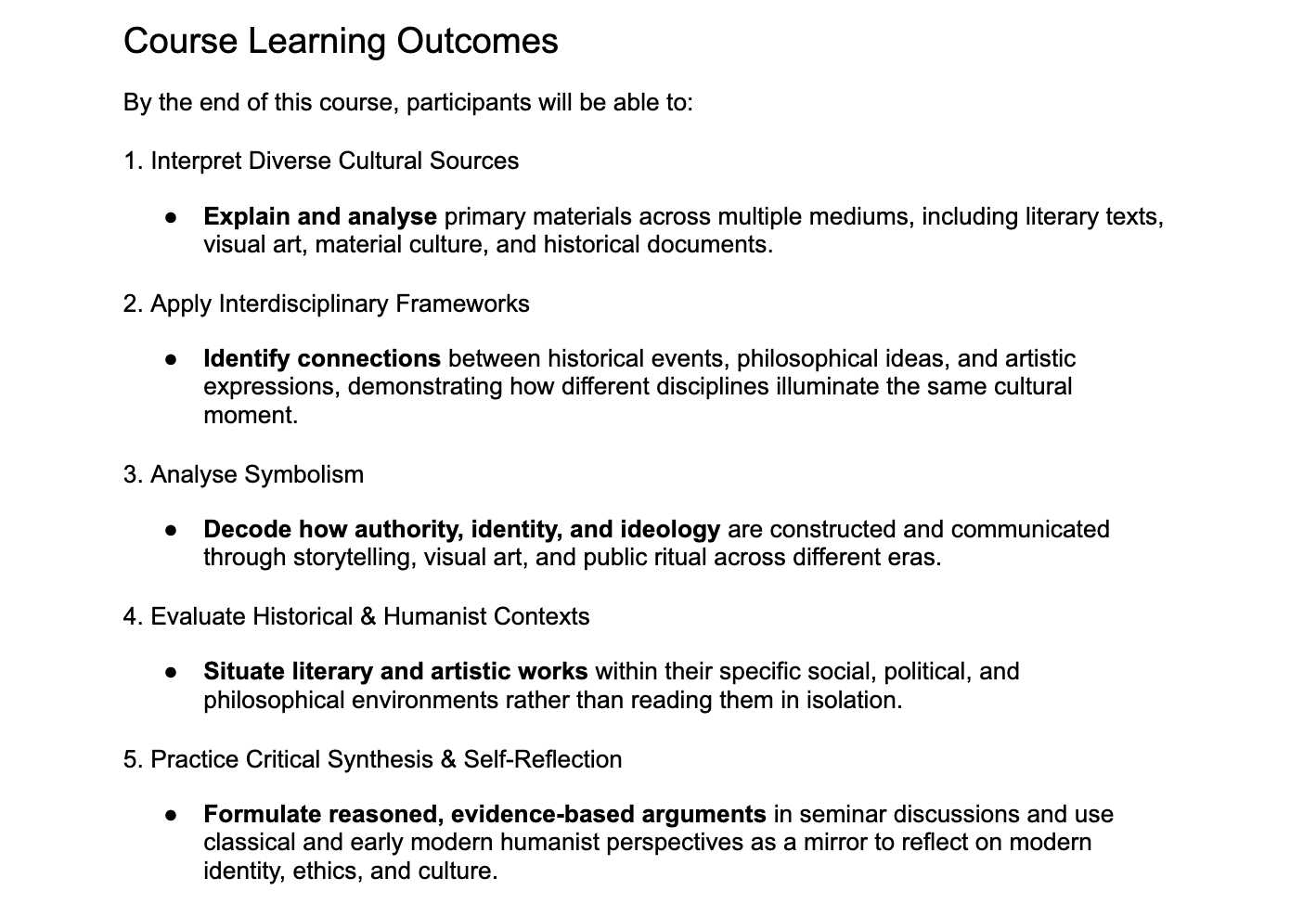
Outlining Your Course Objectives
What concepts will be learned?
What information/knowledge will be gained?
How will this new knowledge be applied in future?
Your objective may be to produce an article for a conference, a freelance publication, for Substack or a video essay on Youtube. Your objective may be to be capable of discussing 19th Century English literature and comparing its symbology to artworks of the period. You may also wish simply to re-engage in the art of learning without any clear or known output. These are all valid and will guide your Personal Curriculum.
Following the drafting of our learning objectives, we must now design our Curriculum using a variety of source material:
Primary Readings: Books, Poems, Pamphlets, etc.
Primary Material and/or Artworks: Buildings, cloth, images, paintings, etc.
Media: Documentaries, Films, etc.
Secondary Readings: Peer-reviewed articles or books (perhaps even Substack articles)
Courses, Lectures, Conference Talks: To enrich your study, you might like to look up a short, introductory lecture or course on your subject. Here are a few free resources to get you started:
EdX Online Courses: great for skills-based courses and more technical studies
Harvard Open Courses: particularly fantastic for humanities subjects
Yale Open Courses: I might be biased but Yale’s courses are some of the best for philosophy, history, and political science!
MIT OpenCourseWare: STEM meets humanities
Setting your pace of study should also allow room for exploration. Don’t simply pack your schedule if you are not going to be able to adhere to it. You have time. Focus on depth, rather than the productivity engine which is telling you to read and consume as much information as possible. The joy of learning is in the journey.
And finally, structure is hard to find and adhere to in isolation. One of the best parts of enrolling in a course is the instructor and the other students. Why? It is partly due to human connection but it is also because being amidst others requires us to synthesize and share our learnings in real time. It is a reminder that learning is an active process NOT A DESTINATION.
I recommend joining in with a group of friends or participating in a Personal Curriculum Support Group (we have one that meets 1-2 times per month at Accepted Society) where you must present on what you are learning. For these meetings I recommend:
Each participant has between 3-5 minutes to present on their Personal Curriculum title and learnings
Members of the group then have 3-5 minutes to ask questions, make comments, or present connections to their own findings.
It is this act of communal learning which compels our brains to recall what we have learned and communicate it to others.
How to establish a Personal Curriculum structure you will stick to:
Outline your learning objectives and review them as you go.
Create your “syllabus” of materials but leave time to wander.
Remember: the objective should be depth, not to win the internalized race of knowledge consumption
Learn in a collective in order to recall and communicate your learnings
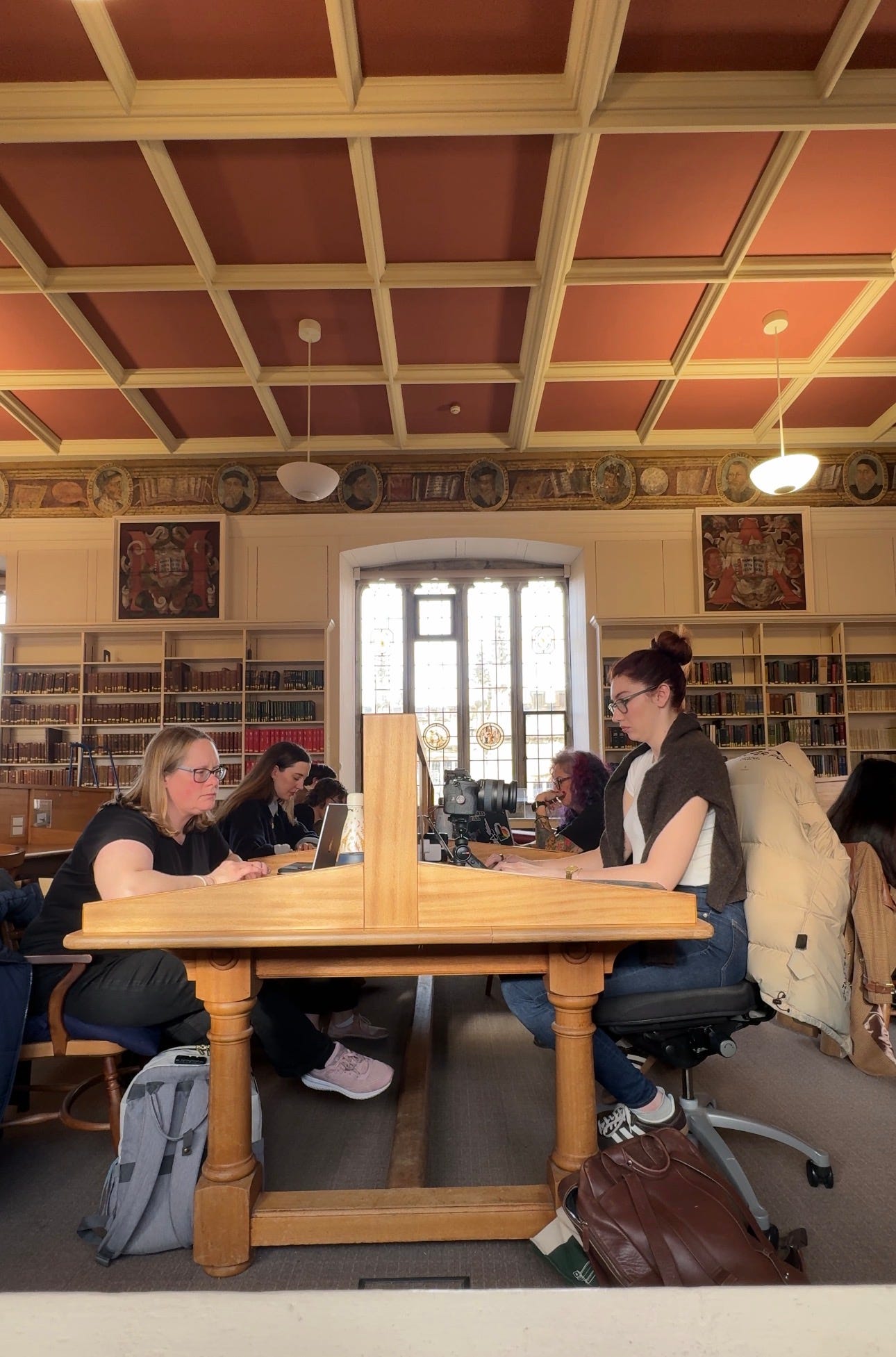
Solving for the Objective
If your objective is to go beyond self study and to become an independent researcher, we must take our learnings and produce something tangible. Something that can be shared and which provides a unique perspective. It doesn’t matter if you intend to publish in a peer-reviewed journal, present at a conference in your field, or publish your research on Substack, you just need to turn your ideas into something real.
The Essay
Part of the reason many of us look fondly upon our time at university or graduate school is due to the dedicated space we were provided and pressure to transform our ideas into tangible essays, articles, and even dissertations. It wasn’t just the product itself. In fact, writing essays provided a way of learning by doing. The very process of writing demanded a return to our source material, a synthesis our thoughts, and to make connections between bodies of evidence, scholarly articles, and, in some instances, our lived experiences.
Independent Researchers are producers of knowledge just as academic scholars are. Our mediums for sharing that knowledge just might look a little different. Yet, the desire to have our ideas, research, and findings be made legible to another still stands. This is why I argue, a Personal Curriculum for the intent of knowledge production, rather than simple retention, is to write essays.
Essays demand that the researcher coherently articulate their ideas in a structure or format which will make that information clear for the reader. An essay can take many forms and the output may vary. You could write a Substack article in 1000 words or less or produce a conference style paper which runs 10-20 pages. Perhaps the end result is a video essay of podcast. Regardless of the “end product”, it is the act of writing the essay and organizing our thoughts to be translated to another which holds the most significant value.
What if you don’t have a place to share your essays?
The effort itself is the goal, the objective or end result is simply the manifestation of that effort which you can choose to share or not. To write an essay, I recommend following the structure many of us may be familiar with from our school days:
Structure of an Essay for your Personal Curriculum:
Introduction (Anecdote or Hook; Thesis Statement; Sign Posting re: Organization of the following essay)
Body Paragraphs (Topic sentence related to the thesis; evidence; analysis)
Conclusion (Reiteration of the thesis statement and an articulation of how it was supported; potential statement of further study needed)
Start with an outline, build out your argument, begin committing “pen to paper”, and see just how many threads surface from your self-study journey.
Why all lifelong learners need a personal curriculum
At the beginning of this article I claimed that personal curriculums do not work. In truth, this is an inaccurate representation of a fluid structure for lifelong learning which has, can, and should be adapted to fit your needs. There is NO one size fits all approach to learning and we all deserve to engage and encourage our curious minds in whatever way we see fit.
A Personal Curriculum which combines a syllabus of material, a schedule, learning objectives, a collective to explain and challenge your ideas, and the inclusion of essay writing is the pièces de résistance of learning which applies similar pedagogical approaches found in the classroom. Yet, it is not the only way!
A Personal Curriculum should be yours and if you choose to develop a list of readings and follow along simply for the joy of reading, critical thinking, and retention, I applaud you. No one should police how you learn. It is a personal process which deserves nurturing whether you are a student or a lifelong learner returning to study on your own merits.
In fact, I intend to develop my own personal curriculum to be conducted when I finish my PhD because though I am becoming a specialist in my field, there is still SO much I want to know.
Lifelong learners are freedom fights; activists in the resistance against anti-intellectualism. And we deserve spaces where we can come together with like-minded nerds to share our ideas, to challenge one another, and to show the world just how beautiful a intellectual collective can be.
With love,
Kaelyn, Co-Founder of
Accepted Society is an intellectual community for lifelong learning which was founded in 2020 and offers a dedicated space for co-studying, emotional support, and resources for pursuing one’s education in whichever way they see fit. If you would like to learn more about Accepted Society or enroll in one of our upcoming short-courses, head over to:
https://www.tiktok.com/@xparmesanprincessx
https://www.reddit.com/r/personalcurriculum/comments/1o0cewa/personal_curriculum_101/
Comments
Nothing yet. Say the first thing.
Sign in to join the conversation.