
If your adult child has cut you off, and you are lying awake at night replaying every conversation, wondering how everything fell apart, hear this first: you are not alone. And if you are an adult child who stepped away because the pain felt unbearable, you are not alone either.
Family estrangement leaves people on both sides carrying grief that has no funeral, questions with no clear answers, and wounds that remain open because the people involved are still alive.
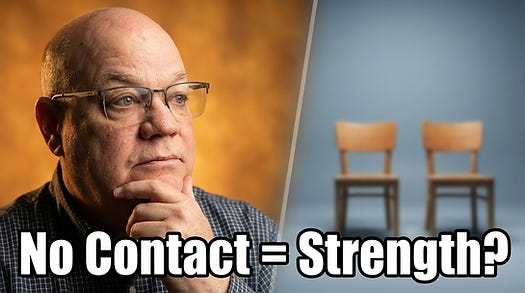
We are living in a cultural moment where cutting people off is often called courage, where silence is sold as safety, and where distance is routinely labeled healing. Sometimes, that language is appropriate.
There are situations where danger is real, abuse is present, and wisdom requires space. Scripture never commands us to remain in harm, and God does not ask His people to pretend evil does not exist. (See: Tough to Love: The Gospel Path to Reconciliation)
But sometimes—and this is the part few are willing to say out loud—the very thing that feels safest is also the thing that keeps the wound open.
This article is not written to shame anyone, minimize real abuse, or force reconciliation where repentance and safety are absent. It is written to slow the conversation down and bring clarity.
The Church must be able to speak more carefully than the internet. We are called not merely to validate pain, but to proclaim forgiveness, truth, and hope in Jesus Christ. (See: Ambassadors’ Hope is in Christ)
“The LORD is near to the brokenhearted and saves the crushed in spirit” (Psalm 34:18, ESV).
One of the most important distinctions Scripture requires—but our culture regularly blurs—is the difference between wise boundaries and relational avoidance.
Distance can be wise. It can be necessary. In some situations, it can even be loving for a season. There are moments when stepping back is an act of stewardship over one’s life and calling. Scripture is clear that peace is not achieved by pretending danger does not exist. “Be wise as serpents and innocent as doves” (Matthew 10:16, ESV).
Yet “no contact” distance can also quietly become something else.
In the loudest corners of our cultural conversation, cutoff is often treated as courage and repair as weakness. If a relationship costs emotional effort, it must be toxic. If someone triggers discomfort, they must be unsafe. Peace is redefined as the removal of anyone who challenges our comfort.
But biblical peace is not fragile. It is not allergic to truth. And it does not require silence to survive.
Scripture calls us, as far as it depends on us, to pursue peace: “If possible, so far as it depends on you, live peaceably with all” (Romans 12:18, ESV). That verse does not deny the reality of danger; it simply refuses to let fear define faithfulness.
The harder question most of us avoid asking is this: Am I choosing distance because there is danger—or because there is discomfort?
Avoidance often feels powerful because it requires no humility. It feels clean, controlled, and decisive. For a while, it can even feel like peace. But relief and freedom are not the same thing. Freedom comes from truth, not from disappearance.
Many relationships remain frozen not because healing is impossible, but because the wrong category was applied at the wrong time. (See: What is the Difference Between Forgiveness and Reconciliation)
By Dwight Schettler
www.aorhope.com
No posts
Comments
Nothing yet. Say the first thing.
Sign in to join the conversation.