
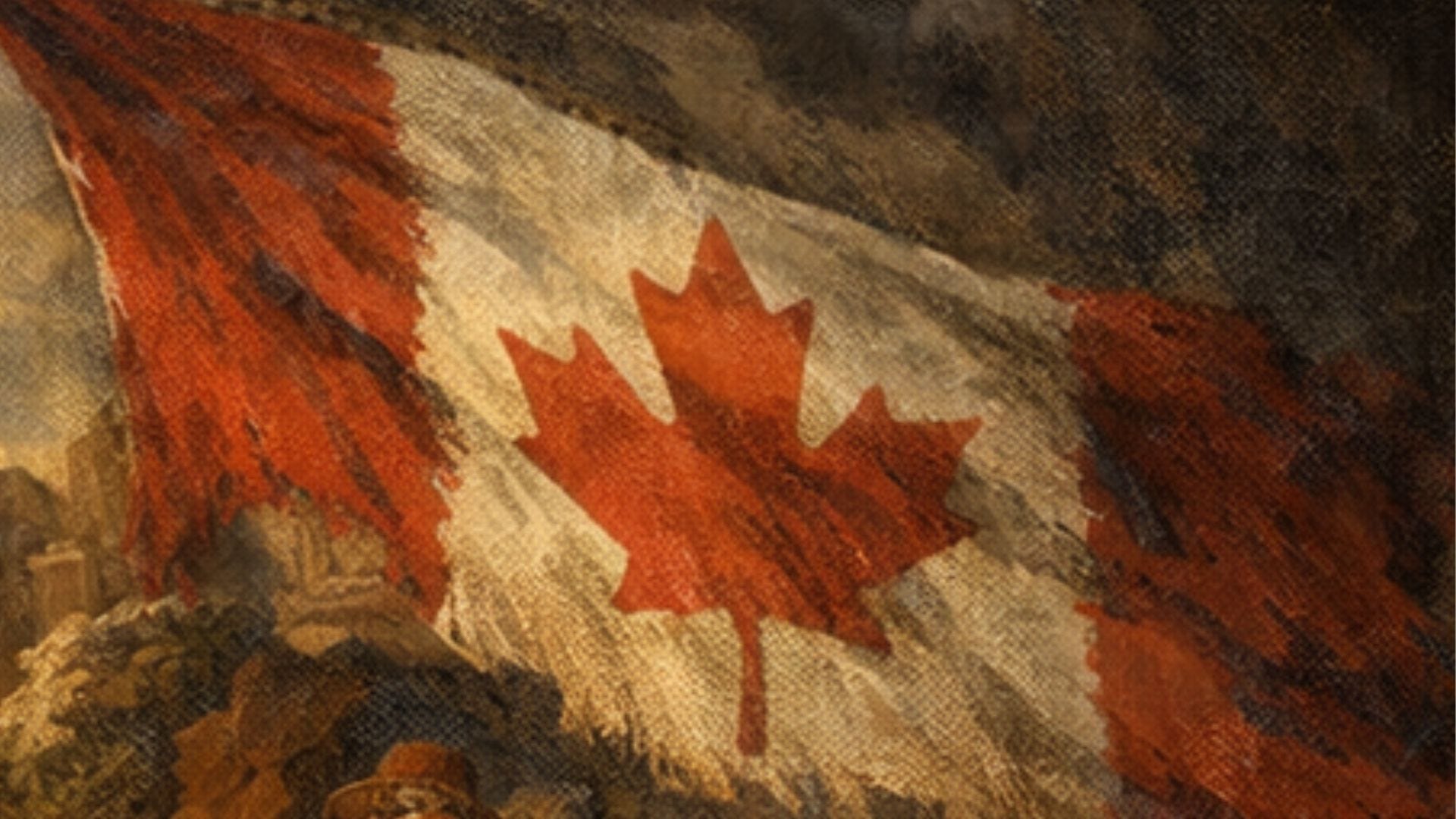
"A democracy cannot exist as a permanent form of government. It can only exist until the voters discover that they can vote themselves largesse from the public treasury. From that moment on, the majority always votes for the candidates promising the most benefits from the public treasury with the result that a democracy always collapses over loose fiscal policy, always followed by a dictatorship. The average age of the world's greatest civilizations from the beginning of history has been about 200 years. During those 200 years, these nations always progressed through the following sequence: From bondage to spiritual faith; From spiritual faith to great courage; From courage to liberty; From liberty to abundance; From abundance to complacency; From complacency to apathy; From apathy to dependence; From dependence back into bondage."
Alexander Fraser Tytler?
History doesn’t collapse in explosions. It decays in patterns. Slowly enough that people argue about whether it’s happening at all. By the time consensus forms, the outcome is already locked in.
We are inside one of those patterns now. Not as theory. Not as metaphor. As lived reality.
Democracy was never permanent. It survives only until voters learn they can use it to extract value from the public treasury. Not wealth. Money. Borrowed money. Future money.
Canada crossed that line years ago.
Once growth slows, politics stops being about stewardship and becomes about distribution. Long-term planning disappears. Polling replaces judgment. Every problem becomes justification for spending someone else’s money, usually money not yet earned.
Canada’s economic growth is already limping. Forecasts hover around 1.2 to 1.6 percent. That is not expansion. That is stagnation disguised as stability. Trade relationships are brittle. Productivity is flat. And instead of correcting course, leadership doubles down on optics and short-term relief.
The public treasury has become a candy store.
COVID normalized emergency spending. Temporary programs hardened into permanent expectations. Federal debt now sits north of 1.4 trillion dollars. That works out to roughly fifty-six thousand dollars per person, one of the highest per-capita debt loads in Canadian history. Interest payments alone now consume a growing share of tax revenue, quietly crowding out everything else. But somehow we can afford billions overseas every few months.
This is not compassion. It is dependency engineering.
Once voters expect government support as a baseline, elections stop being contests of vision. They become auctions. Free dental care. Expanded pharmacare. Housing subsidies. Energy rebates. Carbon offsets. Each promise framed as relief, none framed as cost.
Deficits are dismissed as manageable. Borrowing is rebranded as investment. And voters under pressure from inflation and housing costs vote accordingly. Not because they are irrational. Because incentives matter.
By 2026, this accelerates. Slower growth leaves fewer real solutions, so politicians compensate with larger promises. Debt rises faster. The future narrows.
Loose fiscal policy does not just create economic fragility. It creates political conditions.
When debt expands, control follows. When crises stack, emergency powers linger. When fear becomes permanent, authority feels reasonable. Canada is not a dictatorship. But emergency measures no longer shock the public. Surveillance expands quietly. Speech boundaries tighten. National security becomes a catch-all justification.
Throw someone in jail for a Facebook post? They probably deserved it.
History does not need villains. It only needs momentum and complacence.
Zoom out further and the civilizational arc becomes impossible to ignore.
Canada began under external control. Built faith, grit, and arguably independence. Hit liberty and abundance in the post-war era. Then comfort. Then complacency. Then apathy.
Now dependence.
Dependence on debt.
Dependence on global supply chains.
Dependence on state management to preserve a standard of living no longer supported by domestic productivity.
Once dependence hardens, the cycle closes. Not dramatically. Administratively. Through restrictions, austerity, and loss of autonomy. Sometimes imposed from outside. Sometimes enforced internally.
The uncomfortable truth is that cycles rarely stop without pain. They slow only when responsibility reasserts itself. When people choose restraint over relief. When power is tied back to consequence.
The question is not whether the cycle is real.
The question is whether Canadians still have the awareness, and the spine, to resist it.
Darren Grimes
No posts
Comments
Nothing yet. Say the first thing.
Sign in to join the conversation.