
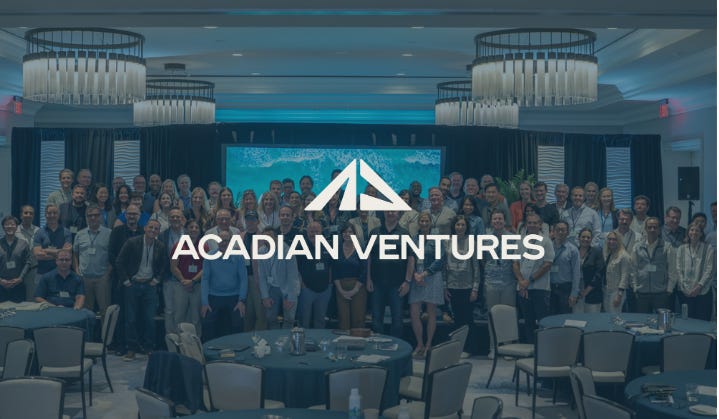
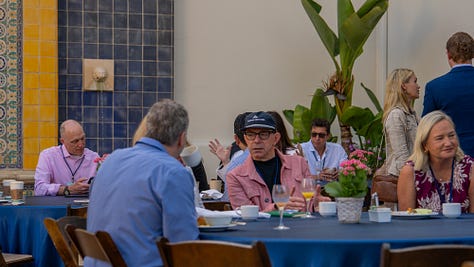
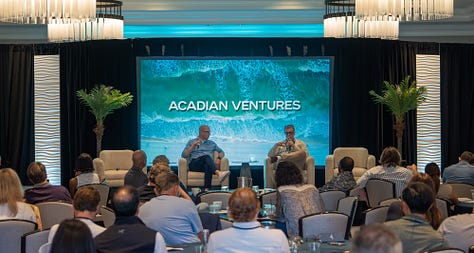
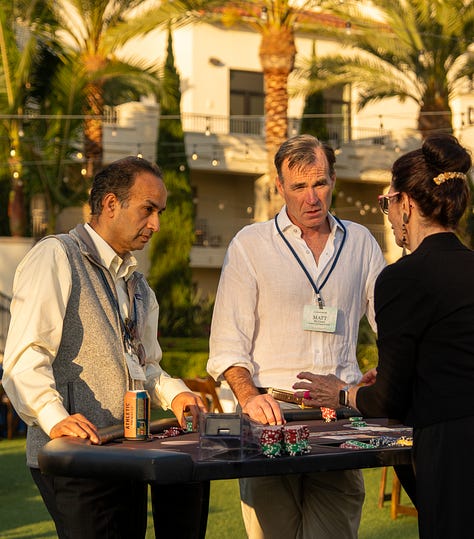
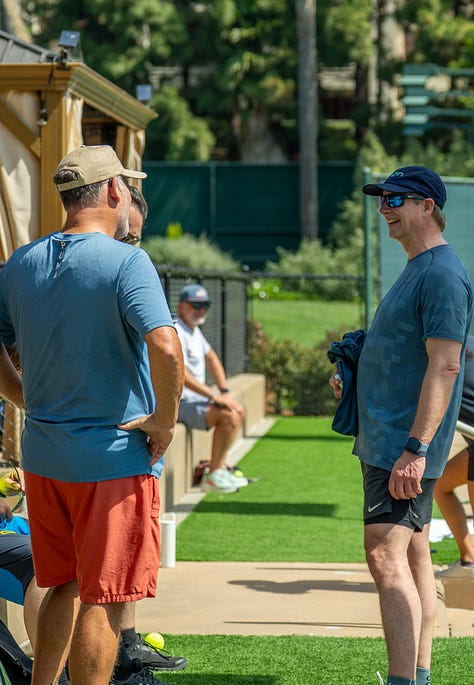
Over two days in San Diego, some of the sharpest operators, investors, and builders from around the world gathered for the Acadian Ventures Summit 2026. What emerged wasn’t a polished consensus view of the new “architecture of work.” It was something more valuable: an honest, high-friction debate about what’s real, what’s hype, and what the serious money is actually betting on.
The century-old industrial blueprint of work is being fundamentally re-engineered. We are entering the era of the agentic workforce — where software agents execute end-to-end workflows alongside humans. As the Acadian manifesto puts it: “Execution is no longer scarce — intelligence and clarity are.”
But the path forward is far less smooth than Silicon Valley admits.

Every major tech wave gets compared to the steam engine or the expansion of the railway. Thomas Otter offered a sharper analogy: AI is a circular saw — an incredibly powerful, highly fragile tool that demands specific mastery. The enterprise market is already splitting into three tiers: the Tourists who buy the saw and let it sit in the garage; the Casualties who rush in without guardrails and cut their fingers off via data leaks and compliance failures; and the Craftsmen — a small, highly skilled fraction achieving astronomical efficiency gains.
Dave Wright of ServiceNow delivered the summit’s most cited case study: IKEA. Their AI agent “Billie” automated 94% of customer service inquiries. Rather than cut headcount, IKEA upskilled 8,500 reps into Remote Interior Design Consultants — turning a cost center into a growth engine that generated €1.3 billion in net-new revenue in its first year. The lesson: Mode 1 frees capacity. Mode 2 builds revenue. Most companies stop at Mode 1.
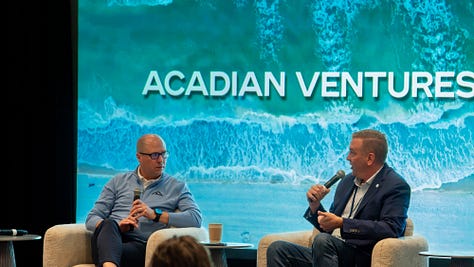


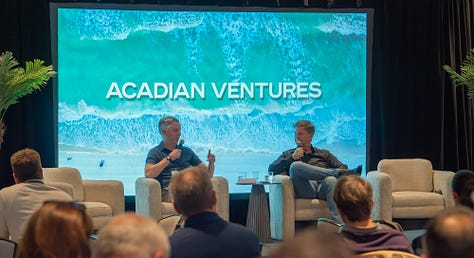
Open access is the new lock-in. Oracle’s Ognjen Pavlovic (OP) made a counterintuitive point: the more customers extend platforms like Fusion with their own agents and APIs, the harder it becomes to leave. This is quite a different stance from many vendors now “tolling” their data in an attempt to monetize AI. In the words of OP, “openness deepens dependency.”
The system of record is becoming the system of action. UKG’s Gretchen Alarcon noted that pay benchmarking needs to operate at the zip code level — your frontline worker will walk across the street for ten cents more an hour. Passive record-keeping is no longer enough.
The next hire will bring their agent. Oyster’s Tony Jamous offered one of the summit’s most forward-looking takes: the EOR of the future employs the human and their AI agent as a single unit across borders. The compliance and IP implications of “Bring Your Own Agent” are only beginning to be understood.
The data chokepoint will define the landscape. The fuel agents need sits deep inside legacy ERP systems. The critical question: will incumbents act like the Strait of Hormuz — hoarding data to protect legacy turf — or like the Panama Canal — enabling flow while capturing value through regulated passage?
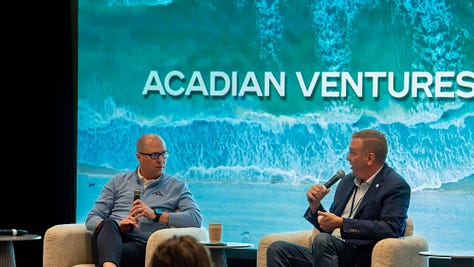
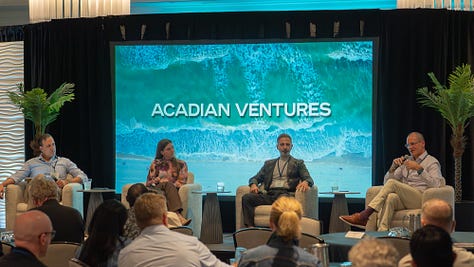
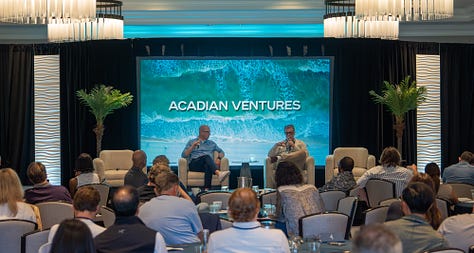

Alexis Fink (formerly of META), who joined the closing customer panel, delivered some of the most grounding perspective of the event. Her message to founders: stop selling, start listening. A few of her sharpest points:
Value creates its own budget — prove 10x impact and the money follows.
Respect the buyer’s strategy; a great product aimed at a low-priority problem still loses.
Don’t lie. Own mistakes fast. Your buyer’s reputation is on the line internally.
Be a partner — help buyers get smarter, build community, and advocate for employee trust.
The biggest macro mistake investors are making today is overestimating the speed of enterprise adoption. AI won’t magically double global GDP — it will radically disrupt where that growth is captured. Enterprise AI is hitting what one attendee called the Last-Mile Brittle Point: a 1% failure rate in a compliance or financial agent can destroy an enterprise. Patching that final edge-case reliability — like Waymo’s decade-long push from 90% to 99.9% autonomous driving — is brutally capital-intensive. The smart money isn’t flowing to wrapper apps. It’s flowing to the foundational infrastructure of work.
Looking back from 2035, the true surprise won’t be a breakthrough in large language models. It will be the triumph of founder conviction — the resolve to build entirely new industries rather than take comfortable early exits, and to ride the wave all the way to generational scale.
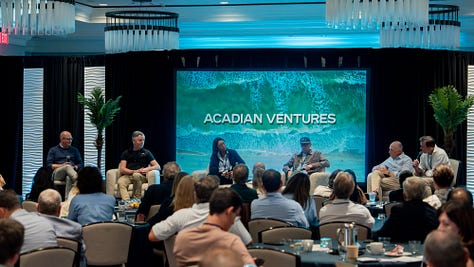
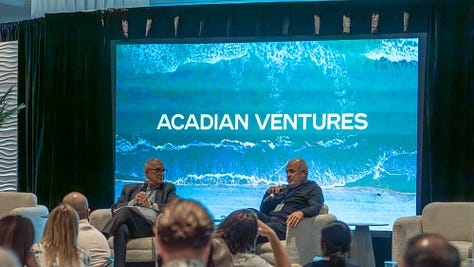

Huge shout out to our amazing lineup of speakers. Having all of the major platform vendors — ADP, Dayforce, Oracle, SAP, ServiceNow, UKG, Workday — along with leading VCs and startup founders made it our best event even. Not sure how we will top it next year!
No posts
Comments
Nothing yet. Say the first thing.
Sign in to join the conversation.