
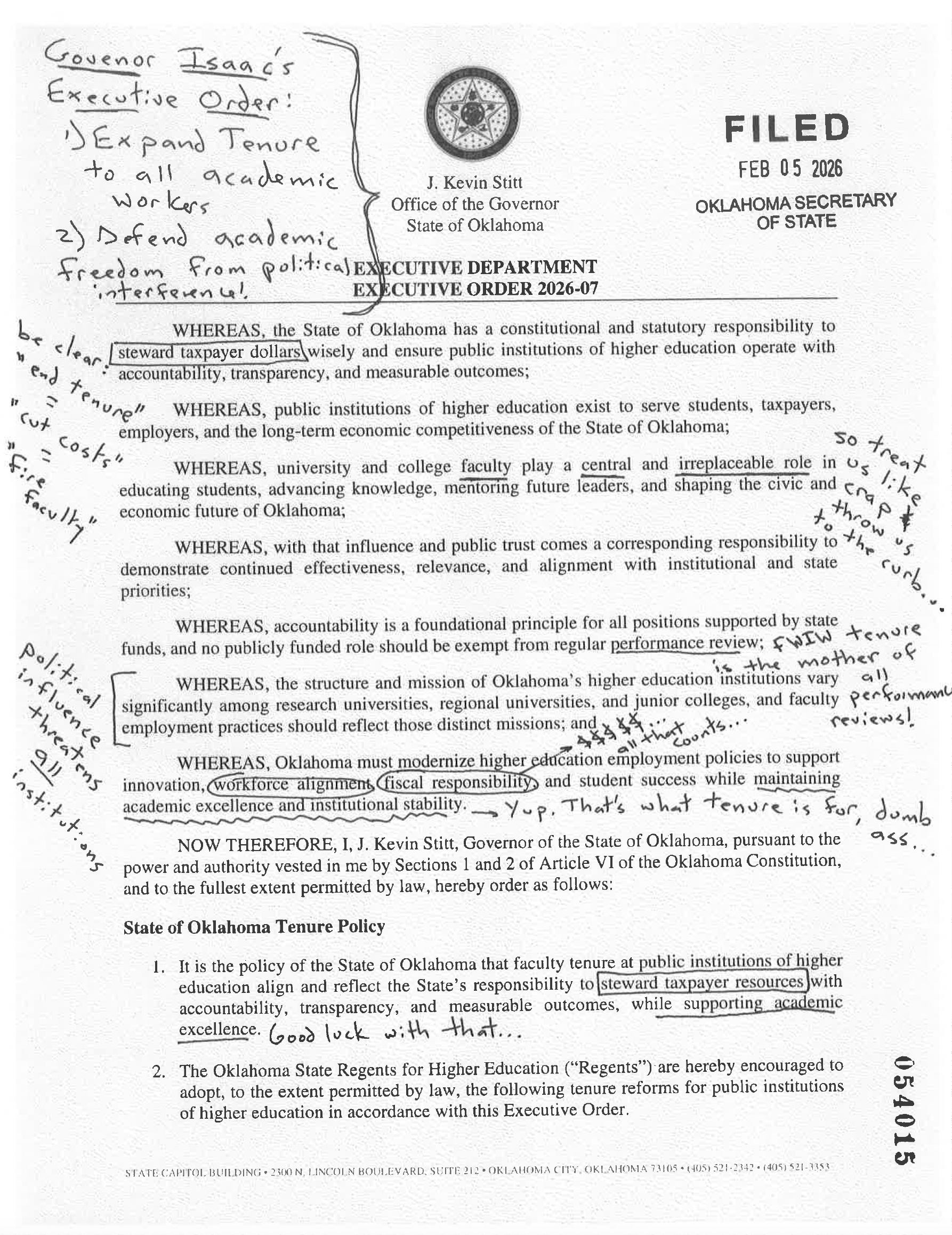
On Thursday, February 5, 2026, Oklahoma Governor J. Kevin Stitt issued Executive Order 2026-07 ending tenure at public institutions. The executive order frames the issue of tenure exclusively around return on economic investment, “steward[ing] taxpayer dollars,” supporting “workforce alignment,” “fiscal responsibility,” and making sure that public colleges and universities serve state interests. Of course, there’s a throw-away line to also being concerned about “maintaining academic excellence.”
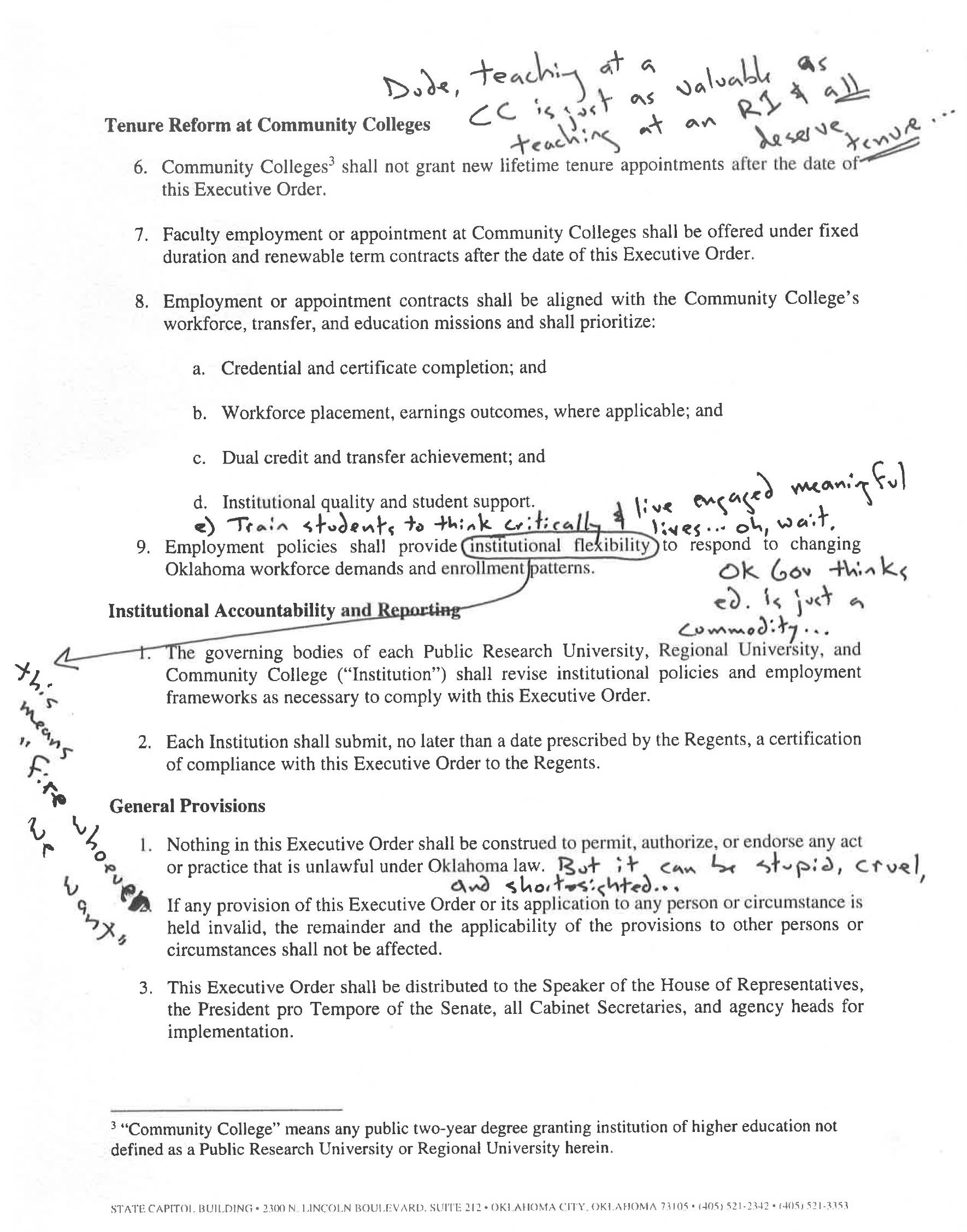
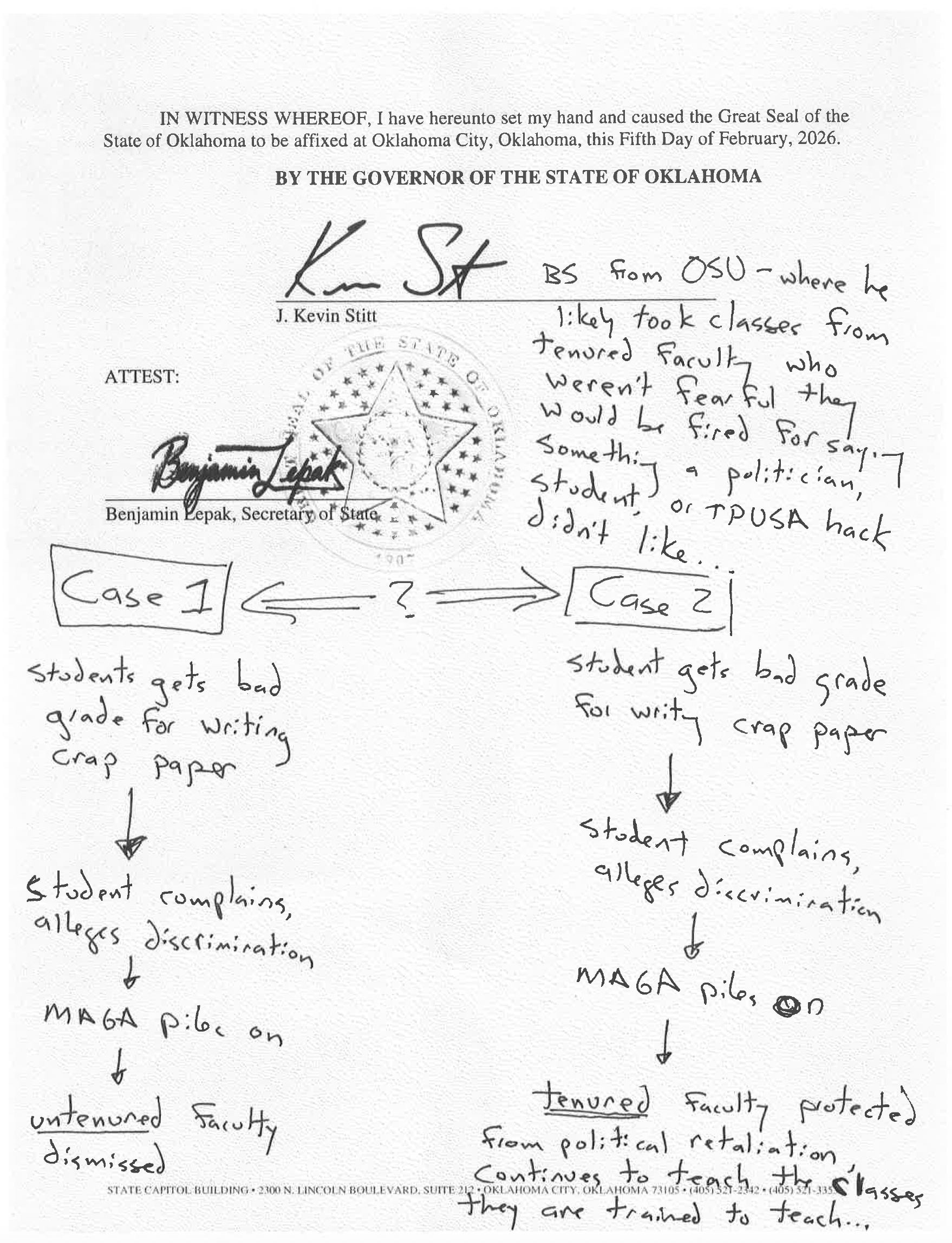
These moves, and other proposals from the right-wing think tankeratti (Heritage Foundation, Manhattan Institute, et al.), are a kind of final move to put public institutions fully under partisan political control and to operate to the benefit not of the citizens of the state, but the interests of capital. We should want more than that for our students and our communities. The assault on faculty freedom is part of a larger assault on public colleges and universities as places of opportunity, open and welcoming to all.
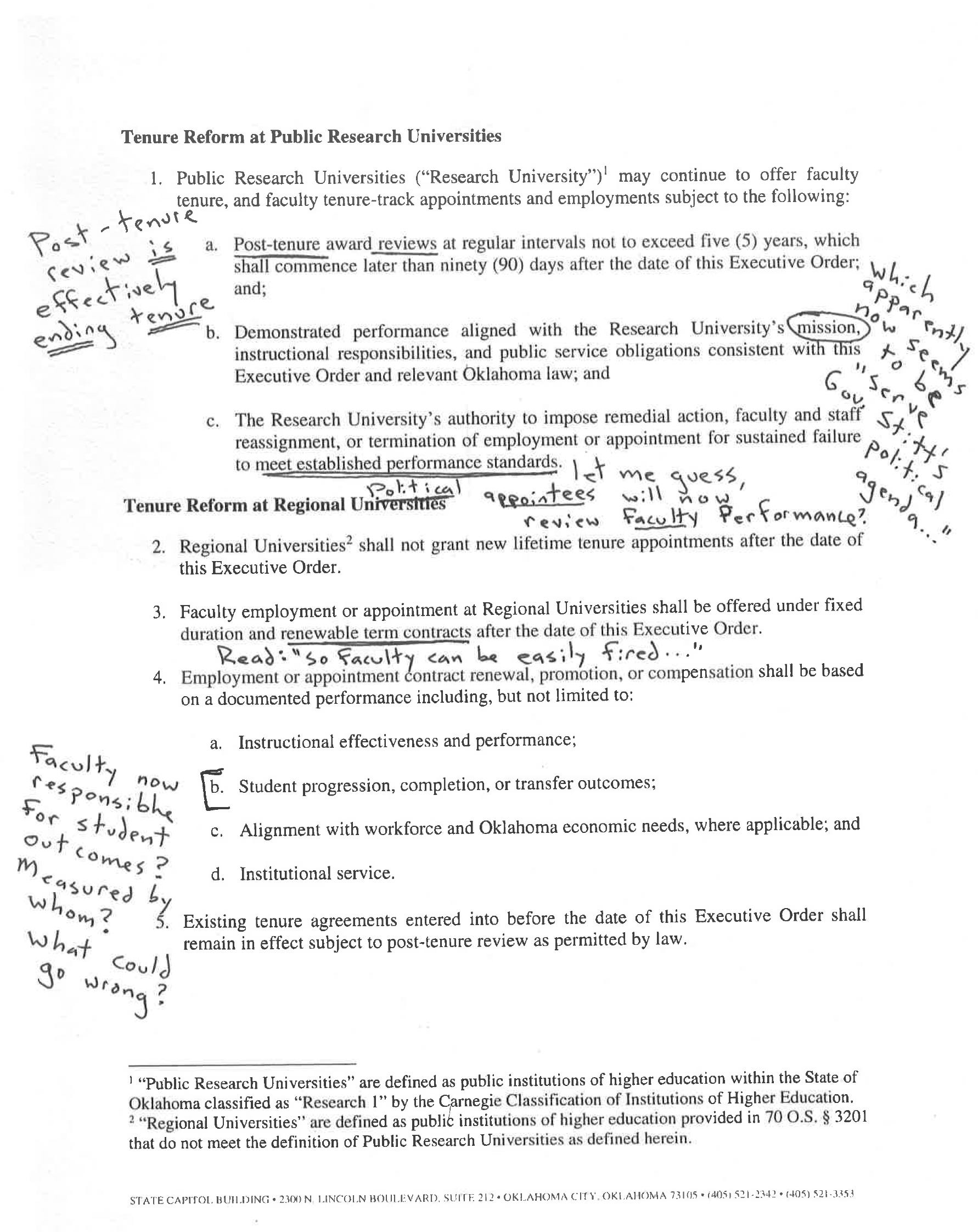
The real crisis is that decades of austerity and attacks on higher education have reduced the number of faculty working with tenure. Sixty-eight percent of faculty work on contingent contracts. And many states, including Georgia, Florida, Wisconsin, and others, have effectively ended tenure by instituting post-tenure review that includes the potential for dismissal. (Check out CDAF’s report on post-tenure review.)
CDAF director Isaac Kamola has years of experience seeing past the rhetoric to reveal what’s really underneath these plans. We’re pleased to be able to present another installment of “Isaac’s Annotations,” this time on the executive order of Oklahoma Governor Kevin Stitt. Previously in this series, Isaac looked at the “American Higher Education Restoration Act,” which should be called the “American Higher Ed Teardown and Corporate Capture Act.”
—
The views expressed in this newsletter are those of individual contributors and not those of the American Association of University Professors (AAUP) or the AAUP’s Center for the Defense of Academic Freedom.
No posts
Comments
Nothing yet. Say the first thing.
Sign in to join the conversation.