
Please support my work by becoming a free or a paid subscriber to the newsletter. Paid subscribers are vital to me being able to continue producing and expanding this newsletter.
You can also support my work by making a one-off payment, at a price you consider affordable.
This post is part of the ‘Research and Reflections’ occasional series, consisting of pieces based on my ongoing academic research, as well as on my musings on and responses to current affairs and personal developments.
Content warnings: Murder; Racism; Death.
This is the third and final entry in my series of posts on the former Conservative leader of Wandsworth Council, Ravi Govindia, who first came to Britain as a teenage refugee from Uganda in 1972. The first post examined how he retrospectively narrated Asian community life in his former homeland, their expulsion from Uganda by Idi Amin’s regime, and their subsequent resettlement in Britain.
The second considered Govindia’s reign as leader of Wandsworth Council between 2011 and 2022, the policies and rhetoric he deployed, and how his experiences as a refugee from Uganda shaped both his self-presentation and characterisation by others.
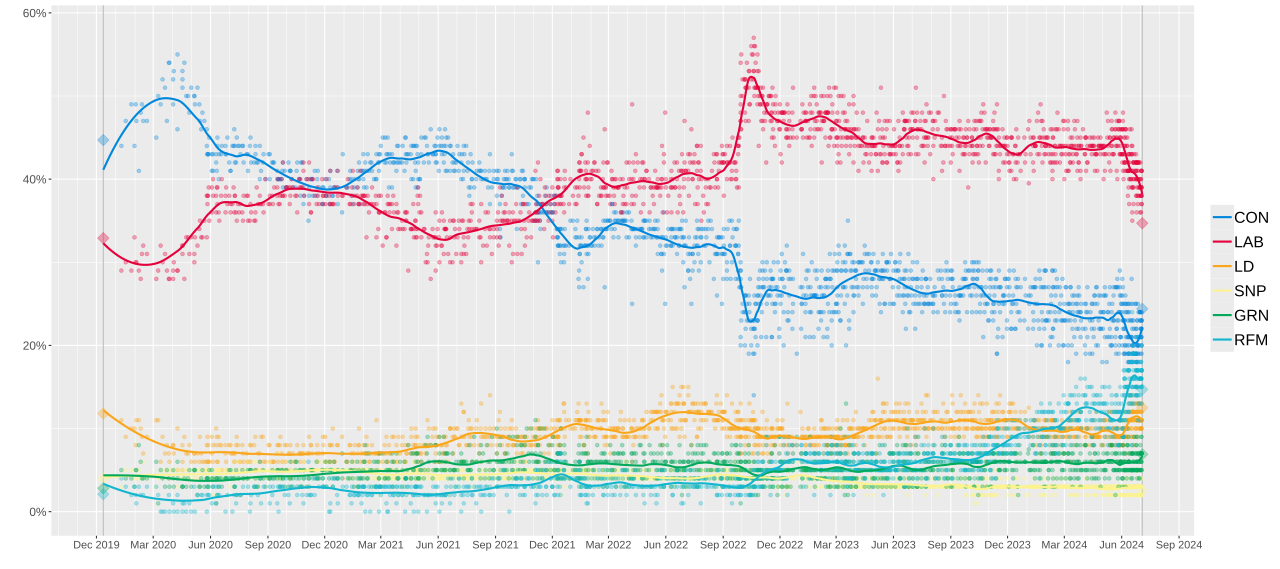
The final instalment in this trilogy starts (but does not end) some three months after the Conservatives’ defeat in Wandsworth’s local elections brought Govindia’s time as council leader to a close. On 1 September 2022, he participated in a panel event held at Edward Heath’s old home at Arundells (covered partly in the first post in this trilogy) to mark the 50th anniversary of Asian expulsion from Uganda. Boris Johnson had that summer announced his resignation as Prime Minister after three years in office, his government’s reputation in tatters after a series of scandals. On 5 September, Liz Truss defeated Rishi Sunak in the contest to succeed him. At that point, Labour led the Conservatives in the polls by around ten points. Truss’s 50-day spell as Prime Minister, including a radical and economically and politically disastrous mini-budget, led to that gap widening drastically by the time she resigned, to be replaced by Sunak.
Much of the discussion at Arundells, particularly the contributions of Govindia’s fellow panellist, the former Conservative minister Lord Hunt, and of self-identified Conservatives in the audience during the subsequent questions-and-answers session, centred on Heath’s and aligned Conservatives’ bravery in pushing for the expelled Ugandan Asians to be resettled in Britain. They had done so in the face of apparently widely hostile public opinion, and opposition not only from Labour, but also within their own party. In making this argument, Hunt and others articulated a belief in conservative principles of freedom and aspiration that they saw as intrinsically connected with an embrace of cosmopolitanism and rejection of prejudice. They also, with a degree of levity in Hunt’s case, acknowledged that this was not necessarily hegemonic within the Conservatives as a party.
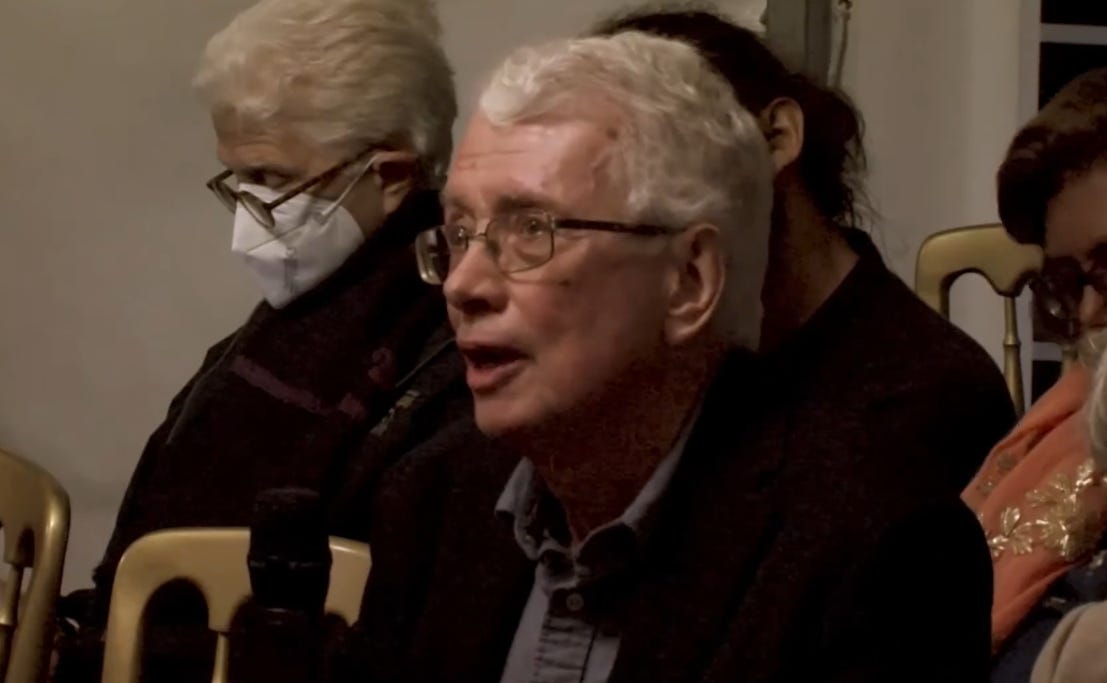
Another audience member made this point more earnestly. He introduced himself as Peter Dawson, stating that in 1972 he had been a young Conservative councillor in Kensington and Chelsea, who had visited the reception centre for Ugandan refugees in the district, and written to the local newspaper in support of Heath’s policy. He added that he had subsequently been a councillor in Wandsworth for 16 years, working alongside Govindia, and implying that he had at times been seen as rather left-leaning within that context. Dawson finished by putting the question to Hunt and to his former colleague: ‘What’s happened to our party?’
Govindia, speaking first, responded:
…our politics generally have become soundbite politics…too much of our decision-making is entirely focused on what the ah, opinion p- polls will say…uh, you know, what will happen in this local by-election, or this local council election, and the issue that the- were governed for principles, were governed for outcomes that are in the national, or wider national interest, all that seems to take second stage. Fighting elections to win elections, to hold power for the purpose of holding power, is a bit too…not right, for my- I mean, you and I worked for Wandsworth Council, we knew that there were challenges, but we had a purpose and we needed- we needed to deliver our promises, and actually deliver sometimes against our own instincts, but we had to do the right thing, and I think doing the right thing has become…not necessarily the priority for government, that’s the problem.
This diagnosis is an instructive point from which to reflect on the question of just what type of Conservative Govindia was, and how that related to his own personal history. Dawson’s question, and Govindia’s answer, also provide a leaping-off point for delineating the trajectory of the Conservative Party, and British politics more generally, since the 1970s, and for exploring the place of Ugandan Asians and other minority groups therein. These stories are intertwined by the ideological threads of social and economic liberalism, themselves often historically entangled, and yet just as frequently pulled apart.
A Ugandan Asian refugee’s Conservatism
The panel chair at Arundells that evening, Praveen Moman – founder of event sponsor Volcanoes Safari, and previously a political and policy advisor to several Conservative politicians, including Michael Heseltine – had jokingly introduced Govindia at the outset as having sought to recreate Jinja in Wandsworth. Beyond Govindia’s previous direct linking of his personal experience and political outlook, we can read in his accounts of life in Uganda, expulsion, and resettlement, both on this panel and on other occasions, the active cultivation of a recollected hinterland to his Conservatism.
In evoking the Jinja of his youth and its Asian population, Govindia presented an idealised pre-political community, in which voluntary mutual aid coexisted necessarily with individual and intergenerational responsibility and aspiration, with both crossing class differences. Divisions and inequalities existed – particularly on racial but also ethno-religious lines – but could and were being overcome through individual pragmatism and an intrinsically growing worldliness. Govindia’s own remembered interracial adolescent friendships, of belonging to a community of young men united by outlook and institutional affiliation, was emblematic of that.
Where government – and government failure – came into the picture was in the destruction of this organic and naturally progressing society. Govindia recognised this partly in the post-independence Ugandan state’s insufficient progress redistributing economic opportunities more broadly, acknowledging the Asian population’s perceived monopolisation of said opportunities as part of the problem. More explicitly, he identified it in the arbitrary wielding of state power to dispossess people of their (meritoriously accrued) belongings and of their sense of home and community, and latterly even more abhorrently in the slaughter of what ought to have been a new Ugandan African elite.
By contrast, the Heath administration’s response illustrated the good government could do, acting with a sense of obligation and compassion in providing safe haven and aid to the vulnerable and unjustly wronged. Govindia’s family’s welfare was enhanced by the Plymouth community that received them with the same spirit of neighbourliness and kindness he had valued in Jinja, and through the same institutional integration and instruction and disregard of racial difference he once saw as his and Uganda’s future. In Govindia’s view, his family and other Ugandan Asians were not passive recipients of this aid, but had actively taken the opportunity to settle and make their fortunes in Britain, as they had in Uganda, through ambition and enterprise, as well as by embracing their new home as it did them.
If all this rendered Govindia unusual as a Conservative, we can nonetheless see in his career arc the rise and fall of a certain Conservative order. As he told it, his embrace of the party and what it stood for, particularly within the context of Wandsworth as a crucible of Thatcherism, corresponded with the experience and values outlined above. Govindia had witnessed in Jinja and in Plymouth the richness of local communities as organic entities, and the centrality of institutions and the diligence of individuals within them to realising and safeguarding those communities. He perceived political activism and judicious government, allocating resources to those in need and opportunities to those who desired them, as a vital manifestation of that. Yet he also rejected the creeping statism of the 1970s as crushing individual initiative, freedom, and prosperity, and weighing too heavily on those organic communities – with Amin’s regime as the ultimate cautionary tale as to where this could lead.
The alignment of social and economic liberalism
‘What’s happened to our party?’, Peter Dawson asked Ravi Govindia and Lord Hunt in 2022. Fifty years earlier, Heath had been willing to take the political risk to accept expelled Ugandan Asians. His government framed it as a humanitarian act (in which the international community ought to also participate), rather than wholly acknowledging the crisis as a direct consequence of the economic and political inequalities inherent to Britain’s approach to governing and developing Uganda as a colony. That November, at a meeting of Conservative Party workers, Heath said of the Ugandan Asians who had since arrived in Britain:
These would be people who would be rotting in concentration camps prepared by President Amin, and they would be there simply because of the colour of their skins, and the fact that they held British passports. Mr Chairman, that would have been a site presented to us on our television screens night after night this Christmas if we had not acted. I cannot believe that anyone in this country, with our sense of fairness, of humanity, and of responsibility, would have regarded such an outcome to President Amin’s decrees as being acceptable to the British people.
Heath’s actions and rhetoric sat at the positive end of the spectrum within a certain British liberal approach to race relations. This approach has centred on a paradox that it deems racial prejudice irrational and undesirable, but cannot wholly acknowledge it as a legacy of colonialism, in which the state is historically implicated, and from which a postimperial British polity therefore cannot be extricated. At its most optimistic, this liberalism has envisaged a clear role for the British state in mitigating racism, through acts such as accepting refugees, or outlawing certain discriminatory practices, as with the Race Relations Acts of the 1960s and 1970s. At its most pessimistic, it has deemed racism inevitable and only manageable through the state claiming a monopoly on racial exclusion itself, as with the simultaneous passing of increasingly stringent restrictions on Commonwealth immigration.
By the early 1970s, this approach existed in both tension and dialogue with a more radical antiracism that insisted on addressing the centrality of race and empire to the Britain’s formation as a polity, the ubiquity of white supremacism and the state’s role in upholding it, notably in the realm of border and migration policy, and the intrinsic relationship between racial inequalities in Britain and postcolonial states. It was also embattled by a nativism that, using the language of culture rather than biology, aimed to vocally shore up white supremacism’s normativity. The latter produced an unlikely alignment between the post-war settlement’s dissidents and its moral centre. Dockworkers and meat porters marched in London in support of Enoch Powell, the most prominent critic of the Heath government’s policy, and whose combination of free-market economics and nativist populism in some ways prefigured Margaret Thatcher’s leadership of the Conservatives.
The remaking of Britain’s political economy under Thatcher gained its legitimacy in part from the deployment of moralising, socially conservative, frequently nationalistic rhetoric and action that helped legitimise the treatment of those who lost out from this transformation. Decades later, when Thatcher died in 2013, Govindia praised her as a standard bearer for the liberatory spirit in the face of vested interests that he and his fellow Conservative councillors had sought to channel in their own policies. Yet there were equally a host of communities who experienced Thatcherism as precisely the kind of authoritarianism whose phantom Govindia characterised her as exorcising: the extinguishing of their aspirations, social ties, and ways of life, in the face of structural and at times kinetic state violence.
Nonetheless, radical grassroots movements, liberal institutions, and minorities’ increased public visibility did help embed antiracist norms over the same period. The architects of New Labour broadly perceived social and economic liberalism as mutually integral forces. After coming to power in 1997, the party accommodated the variety of capitalism it inherited with redistribution and investment in public services. It also adopted a socially liberal approach in many policy areas, exemplified in part by its legalistic exploration of instances of historical injustice by state forces against marginalised communities, such as the 1973 Bloody Sunday Massacre, or the bungled police investigation into the 1993 murder of Stephen Lawrence. These were integral components of New Labour’s approach to statecraft: the recommendations of the 1999 Macpherson Report into Lawrence’s murder fed into the 2000 Race Relations Act.
They also, I think, ought to be considered within a global post-Cold War embrace of transitional justice as both a mode of both reconciliation and governance of divided societies. This includes Ugandan President Yoweri Museveni’s 1997 address at Neasden Temple in Northwest London, on the 25th anniversary of the expulsion order, in which he praised the exiled Ugandan Asians for the industriousness and resilience they had shown in Britain, and invited them to return to Uganda and resume their lives and economic activities there. The connection between the national and the transnational, between social and economic liberalism, was also evident in New Labour’s encouragement of migration from new EU member states.
The 2008 Great Recession punctured New Labour’s reputation, facilitating the Conservatives’ return to national government, with junior partners the Liberal Democrats. The Coalition deemed Labour’s irresponsible largesse culpable for the scale of the deficit in state spending post-financial crisis, and committed to reducing it by cutting government spending. Yet there was also continuity in the way this programme coexisted with a continuing guise of social liberalism and paternalism. Many of the processes of historical justice initiated by New Labour persisted after 2010, including David Cameron’s official apologies over Bloody Sunday and Hillsborough. Continuing revelations about police misconduct over Stephen Lawrence’s murder laid ground for Home Secretary Theresa May launching the Undercover Policing Inquiry in 2014.
The dealignment of social and economic liberalism
Yet there were nonetheless persisting racialised exceptions to this liberal approach to governance. Tony Blair’s embrace of the Great War on Terror facilitated the state’s persistent treatment of British Muslims as a suspect community, such as through the Prevent antiterrorism programme. Under the Coalition, Theresa May, who tended towards liberal positions in many other policy areas, was incredibly hawkish on reducing immigration, especially notably in her ‘Hostile Environment’ policy designed to deter migrants from overstaying illegally. The policy promised a valuable dividing line with Labour, to help keep the party’s own fractious internal coalition together, and offset the threat to their right from UKIP.
Both state austerity and immigration control were frequently legitimised in the moralising language of the deserving and undeserving. The consequences were the hollowing out of public services and the social safety net, the increased malignancy of immigration as an electoral issue – including in fuelling a narrow leave vote in the 2016 EU referendum – and the exacerbation of racial inequalities. These were laid bare by events such as the 2017 Grenfell Fire and the 2018 Windrush Scandal, pressuring the Conservative government into implementing the same tools of liberal juridical statecraft to investigate the consequences of their own actions. The party engaged in a series of realignments under a quickening conveyor belt of Prime Ministers, jettisoning dissenters from its own internal coalition and alienating segments of its electoral one, with ultimately diminishing returns, culminating eventually in a landslide defeat in 2024.
If the Coalition coming to power in 2010 seemed to herald the marriage of social and economic liberalism at its most harmonious, Govindia’s elevation to leader of Wandsworth Council a year later likewise resembled a salutary fruition of those same forces at a local level. The refugee who came to govern the London borough in which he had resided for nearly three decades, whose political outlook emerged as repudiation of racially motivated authoritarian statism, and whose political career demonstrated what was possible if prejudice did not impede effort and ability. Yet the same project Govindia seemed to apotheosise was also one that eroded municipal budgets and capacity across the country – even if, in an increasingly transactional political environment, he was able to continue leveraging a positive relationship with the national government to deliver investment for Wandsworth.
The alignment of social and economic liberalism, influential but often embattled within the Conservatives, apparently dominant under David Cameron’s decade-long leadership, did not held in the party, nor within British politics. Britain’s economic model has failed to deliver broad, consistent improvement in living standards since the late 2000s, in part due to austerity, in part owing to governments’ frequent embrace of socially illiberal objectives, particularly around controlling immigration. Both the Conservatives and Labour have responded by articulating visions of new economic models – ‘Global Britain’, ‘Levelling up’, ‘Securonomics’ – whose faddish rhetoric fail to deliver sustained, meaningful breaks with the past.
Under Kemi Badenoch, the Conservatives have re-embraced an alignment of social illiberalism and economic liberalism. In October 2024, her leadership campaign group produced a pamphlet entitled Conservatism in Crisis: Rise of the Bureaucratic Class. She wrote in its foreword:
In nearly every country, a new progressive ideology is on the rise. This ideology is based on the twin pillars of constant intervention on behalf of protecting marginalised, vulnerable groups, including protecting us from ourselves – and the idea that bureaucrats make better decisions than individuals, or even democratic nation states.
This ideology is behind the rise of identity politics, the attacks on the democratic, sovereign nation state, and ever-more government via spending and regulation. It is driving the economic slowdown seen across the West and social polarisation in country after country. A new left, not based primarily on nationalisation and private sector trade unions, but ever increasing social and economic control.
These bureaucrats were distinguished not by whether they worked in the public and private sector, according to Badenoch, but rather by whether the work they did was economically worthwhile or unnecessary managerialism designed to enforce these progressive values. It was driving affluent professionals who comprised the new bureaucratic class leftward and besieging the old middle class who comprised the party’s traditional social and economic base.
While the moral outlook, economic goals, and political strategy underpinning Thatcherism were deeply intertwined, they were rooted in a coherent vision of the particular social and institutional composition of their supporters and opponents, of how to govern in the interest of and retain the loyalties of the former, and disempower and shrink the latter. The form of Conservatism Badenoch invokes draws barely discernible distinctions between and within organisations and occupational groups, based upon whether she can stereotype them as fulfilling social goals she finds repulsive; to quote her own example, ‘between a lawyer dealing with market contracts and one focused on compliance, human rights or environmental laws’.
The following year, in an interview with the right-wing Canadian psychologist and commentator Jordan Peterson for the Daily Wire, Badenoch rather infamously dismissed the Liberal Democrats, whom the Conservatives had lost a not insignificant chunk of their 2019 vote to in the previous year’s general election, as follows:
They are not on Twitter, but they are in local communities. A typical Liberal Democrat will be somebody who is good at fixing their church roof. And, you know, the people in the community like them, they are like ‘Fix the church roof, you should be a member of parliament’.
And they want to be nice. But actually, they’ve got lots of very silly and foolish ideas, along with, you know, being able to fundraise for a local community. And then they have bad views on national security, for example, they don’t want us to keep maybe a nuclear deterrent.
This diminishment of the politics of the local, of modest but concrete actions designed to make impactful changes in people’s day-to-day lives, of kindness as orienting virtue, is drastically at odds with the accounts of political formation Govindia cumulatively articulated, in which he rooted his own ideological trajectory. It also offers a particularly crude example of what he lamented in contemporary politics.
The Ugandan Asian paradox
Badenoch, who moved to Britain from Nigeria as a teenager, epitomises another political trend, of Conservative MPs from minority backgrounds occupying increasingly prominent senior roles in the party. And yet this has coincided with an increasingly hard-line rhetoric and policy towards refugees and migrants, and hostility to movements towards racial justice – often from those same minority Conservative politicians. Shadow Foreign Secretary Priti Patel, for example, was born in Britain in 1972 to Ugandan Asian migrants who had moved to the country several years earlier. Upon becoming an MP, she evoked (exaggeratedly) that background in her maiden speech to Parliament:
My own deep and personal interest in what I call the economics of enterprise and small business stems from my family background. My parents arrived in Britain from Uganda with literally nothing, and, like the thousands of British Asians – and also the many Patels – who arrived in Britain in similar circumstances at that time, they relentlessly pursued the path of pure hard work in order to get on in life. By working long hours and by saving their hard-earned money, my parents were able to buy their first business –what else but a newsagent’s?
As a result, my youth was literally spent sleeping above the shop and playing directly under the till, while watching my family – thanks to the free-market policies of Margaret Thatcher – thrive and grow. Wherever my parents set up shop, they employed local people, contributed to the local community, and made a substantial contribution to the local economy.
During her stint as Home Secretary between 2019 and 2022, Patel lent legitimacy, by dint of her own racial background, to state racism and anti-antiracism. She responded hostilely to the resurgence of the Black Lives Matters movement in Britain and globally during the summer of 2020, retrospectively describing the protests as ‘dreadful’. She also oversaw the controversial (and ultimately unsuccessful) introduction of offshore processing of undocumented migrants in Rwanda. Making a statement to Parliament about the policy in June 2022, she asserted:
We are a generous and welcoming country, as has been shown time and time again. Over 200,000 people have used safe and legal routes to come to the UK since 2015. And most recently Madam Deputy Speaker, Britons have opened their hearts and their homes to Afghan nationals and Ukrainian nationals. But our capacity to help those in need is severely compromised by those who come here illegally and, as we have discussed in this house many, many times who seek to jump the queue because they can afford to pay the people smugglers. It is illegal. It is not necessary – because they are coming from other safe countries. It is not fair – either on those who play by the rules, or on the British taxpayers, who have to foot this bill.
We cannot keep on spending nearly £5 million a day on accommodation including that of hotels. We cannot accept this intolerable pressure on public services and local communities. It makes us less safe as a nation – because those who come here illegally do not have the regularised checks or even the regularised status. And because evil people-smuggling gangs use the proceeds of their ill-gotten gains to fund other appalling crimes that undermine the security of our country. It is also lethally dangerous for those who are smuggled. People have drowned at sea, suffocated in lorries, and perished crossing territories. The humane, decent, and moral response to all this is simply not to stand by and let people drown or to be sold into slavery, or to be smuggled, but to stop this.
If Ravi Govindia’s story offers a valuable insight into why an alignment of social and economic liberalism came to pass, the integration of Ugandan Asians – by Patel, and others – into nativist narratives also illuminates the paradox upon which that alignment foundered. Absent a fuller reckoning with the legacies of empire, Heath sold a liberal response to their expulsion from Uganda through a narrative of British exceptionalism, of liberal principles as British rather than universal, as a normative move intended to flatter its audience into enacting its truth claims.
Equally, there were structural factors that shaped Ugandan Asians’ subsequent social mobility: the human capital they accrued through their position in colonial Uganda, the political context that facilitated their resettlement in Britain, and the changes in British economic structure and policy that created new opportunities for them there. Eliding these meant this too could be couched entirely as an innate product of their culture (as Govindia himself lent towards in his characterisation of Asian life in Jinja).
Nativism has persisted as a political force, despite the apparent discrediting of open racism, in part because it has adopted multicultural trappings. It incorporates certain minority communities into more elevated, even exemplary, positions within a racial hierarchy. They are characterised as sharing qualities with the white majority that render them deserving of protection not just from white racism, inasmuch as its existence is admitted, but more importantly, from identified racial outgroups.
Britain, in Patel’s account, as it was in Heath’s, is exceptionally tolerant and welcoming. Ugandan Asians have thrived because they are hardworking and enterprising, a natural fit for Britain’s ‘nation of shopkeepers’, as Patel twice described the country in her maiden speech. The implication of this logic is that minority groups for whom less positive social and economic outcomes are recorded are culpable for this on cultural grounds, and that others who might lack the valued attributes can be pre-emptively excluded, and all of this can be described in the same language of fairness and humaneness. Socially liberal values are often evoked through references to their implementation in the past, as in 1972, to justify their negation in the present, in line with the austerian logic of a perpetually diminished state.
If you’ve enjoyed this post, please consider supporting my work by becoming a free or a paid subscriber to the newsletter. Paid subscribers are vital to me being able to continue producing and expanding this newsletter.
You can also support my work by making a one-off payment, at a price you consider affordable.
Otherwise, please show your appreciation by sharing this post more widely, and referring the newsletter to friends.
You might also enjoy these posts from the Academic Bubble archive:
Research and Reflections
Double Jeopardy and Cold Cases
·
December 3, 2023

The murder of Stephen Lawrence inspired a rule change that eventually helped convict one of his killers; the process also revealed much about the British state’s relationship to historical injustice.
Comments
Nothing yet. Say the first thing.
Sign in to join the conversation.