
I am blessed. I can’t say it any other way.
With the blessing of both bishops, I am able to participate in both the Syriac Orthodox and the Greek Orthodox Eucharistic celebrations. As I mentioned before, my husband is Greek Orthodox, and his church, St. George Orthodox in Prescott, is 12 minutes from our house, compared to the 1:35 hours it takes me to get to my Syriac Orthodox church, St. Mary’s Syriac Orthodox Church, down in the Phoenix area.
Because of this, I have been granted by our good God a genuine insider view of both Orthodox traditions. One could even add the Coptic Orthodox Church, since my spiritual father is a Coptic Orthodox monk-priest, and I worship in that setting from time to time as well. Add to this my diverse background — Roman Catholic as a young child, evangelical for decades of my adult life in various denominations, such as non-denominational, Baptist, Presbyterian, and Lutheran — and it becomes clear that I can truly say I have been given “surround-sound, 3D” vision into all of these to one degree or another.
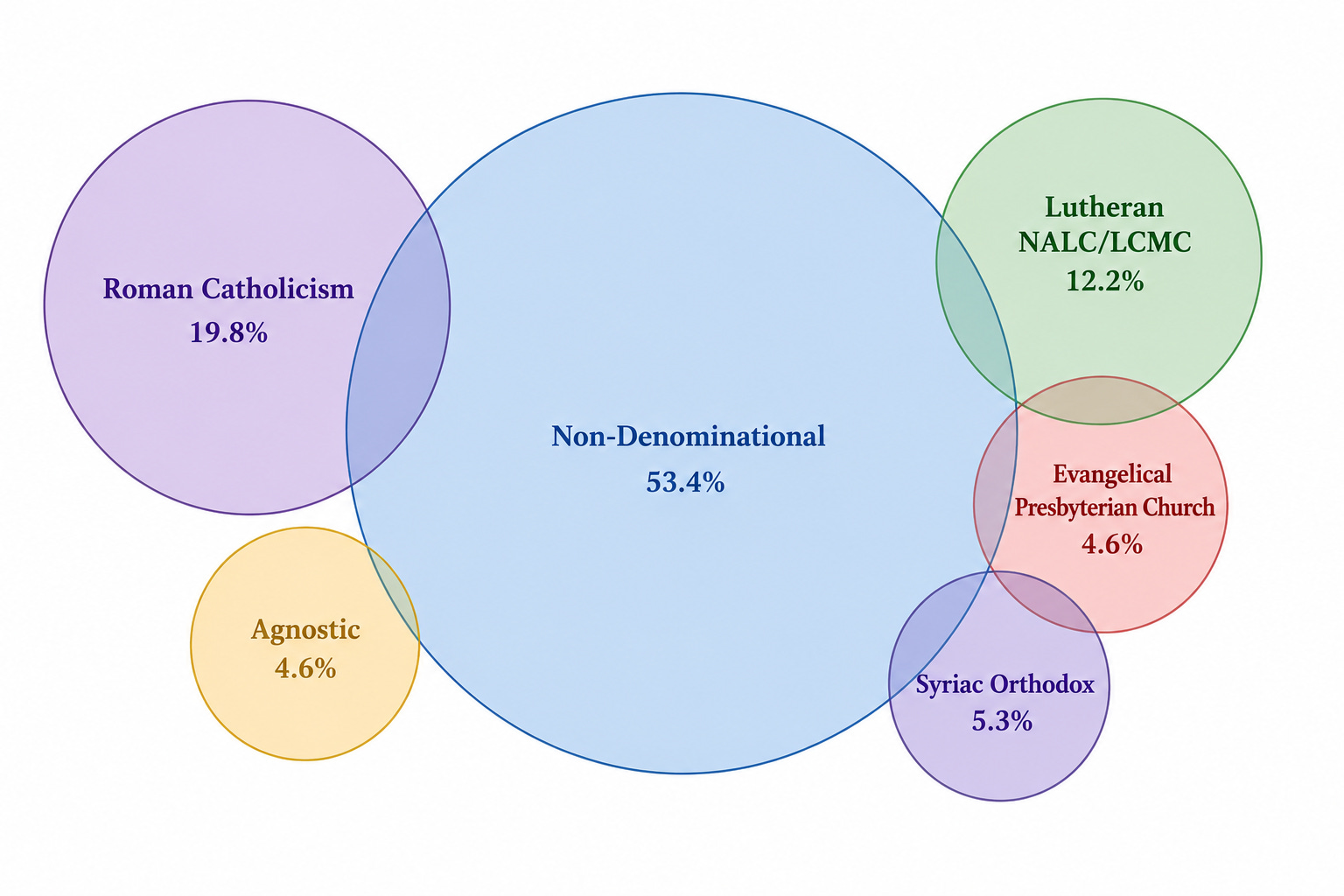
As usual, to give you a better understanding of who I am and where my opinions and perspectives originate, here is my life so far in a Venn diagram:
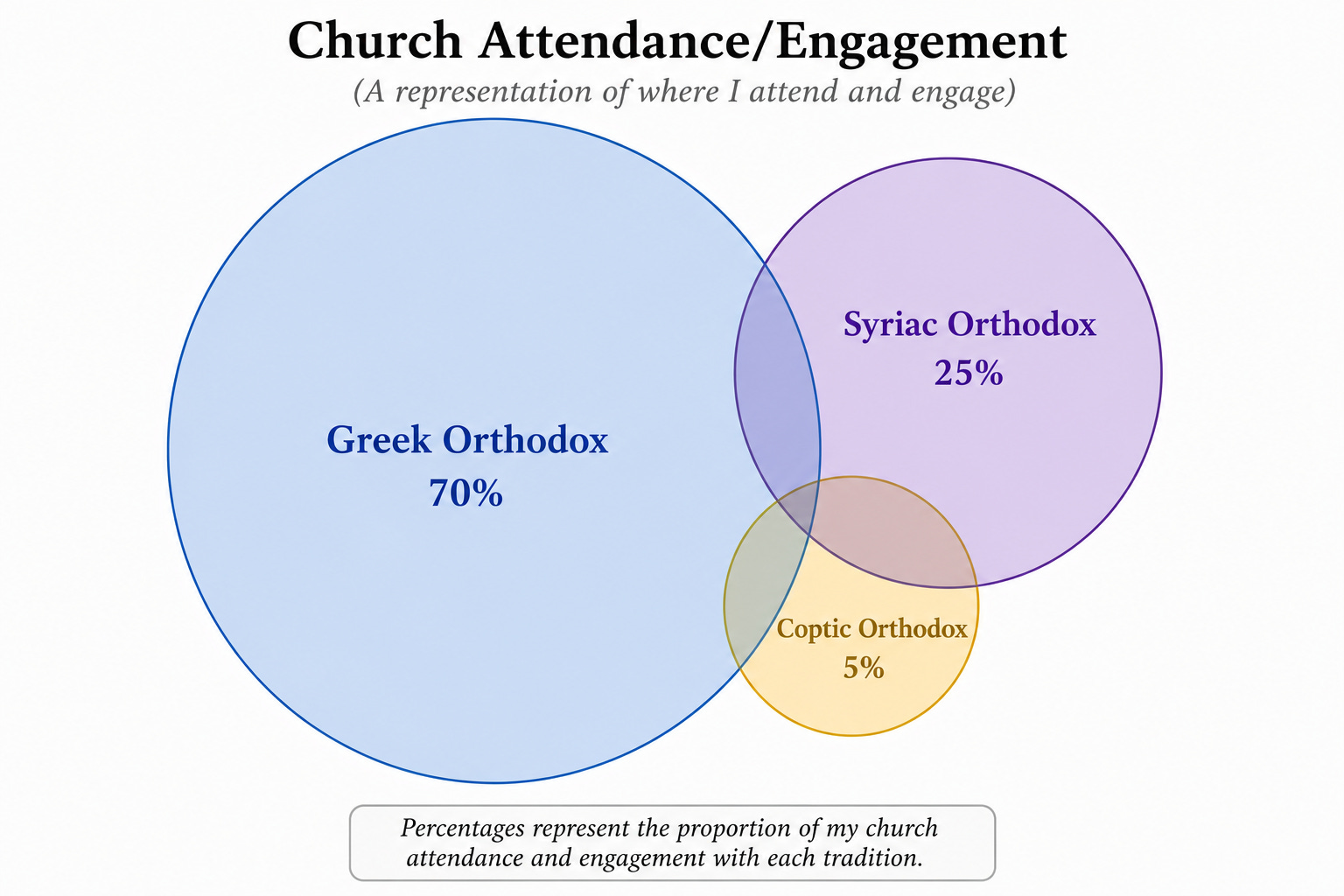
And here is my activity level across the Orthodox traditions I now engage with weekly, probably best explained by the fact that my husband’s church is 12 minutes from my house; however, my Syriac Orthodox Church is, as mentioned, a 1:35-hour drive. Also, my spiritual father and confessor is Coptic Orthodox, even though we rarely go into Coptic teaching per se, so I didn’t want to break that out too much:
Now on to the real reason for the post:
This past Sunday was Pentecost for Orthodox Christians, one week after the Western calendar. There are exceptions to this rhythm (e.g., the Jacobite Syriac Orthodox Church celebrated Pentecost on the same date as the Western church), but this is the calendar of the two churches I worship in.
And I simply wanted to share some of the similarities and differences I saw. I attended Divine Liturgy at my husband’s church, then drove to Phoenix to attend the Holy Qurobo for Pentecost and Kneeling Prayers at my church. Since my husband’s church did their Kneeling Vespers at 5 pm, I made it up the hill again in time to catch most of it. Ugh….catching my breath!
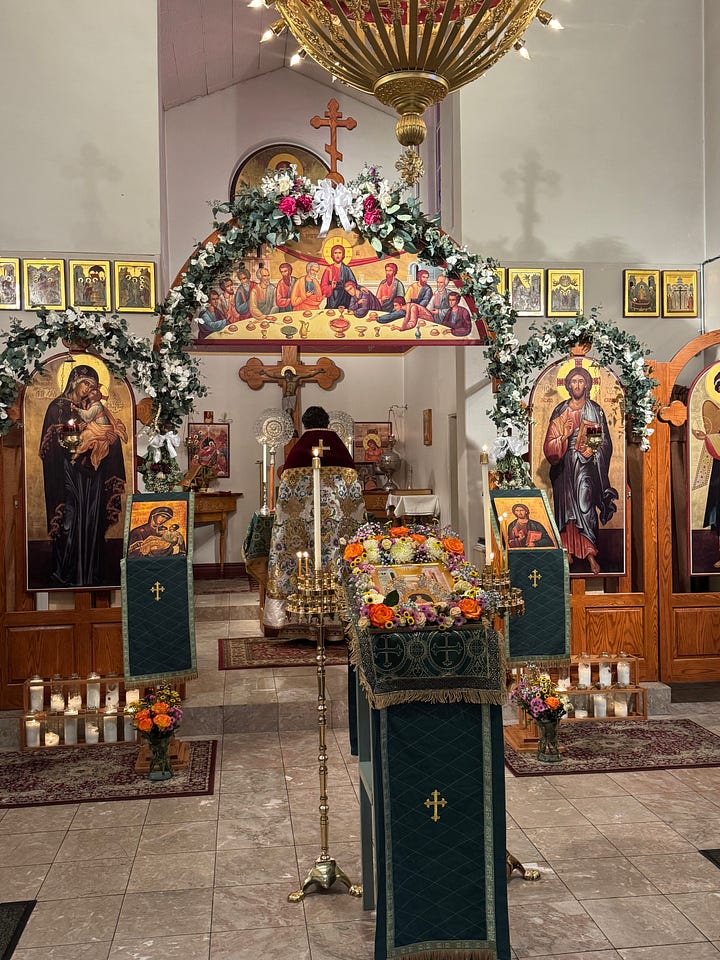
Here is Nick’s church on Pentecost:


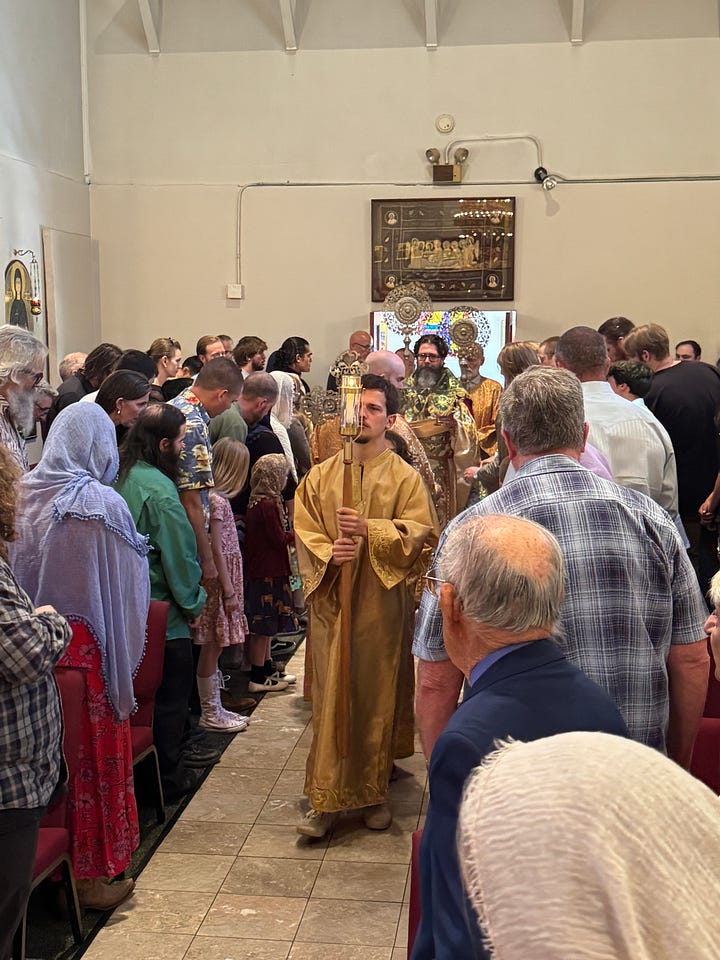
Immediately after the Eucharist, I left early and drove to my church. These are photos from Pentecost at St. Mary’s Syriac Orthodox Church in Glendale, AZ:

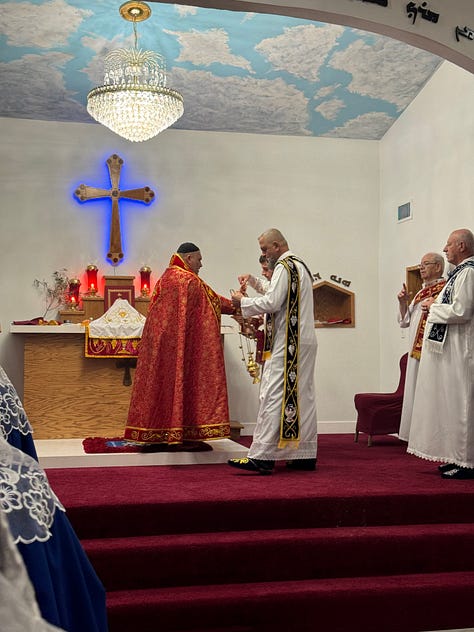
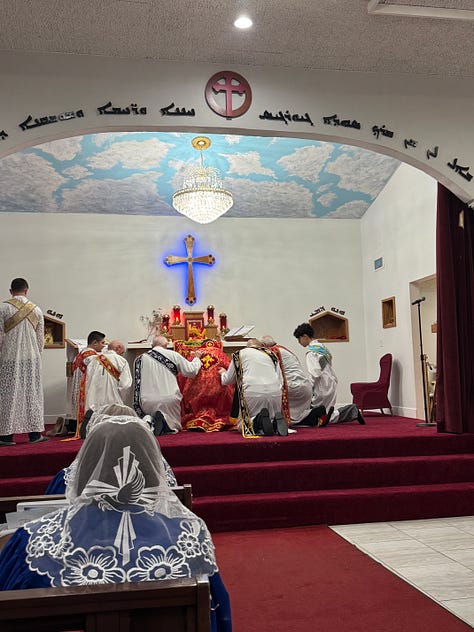
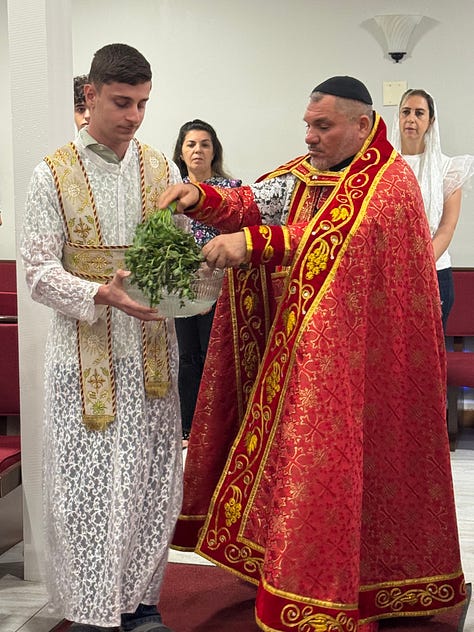
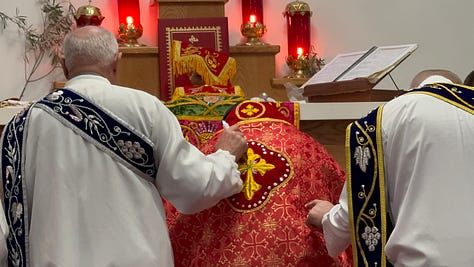
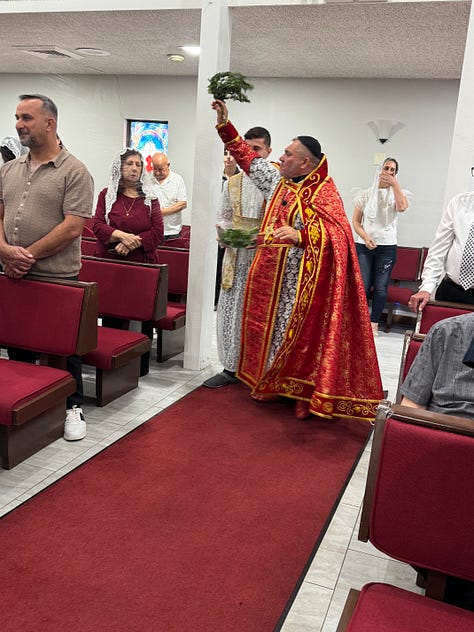
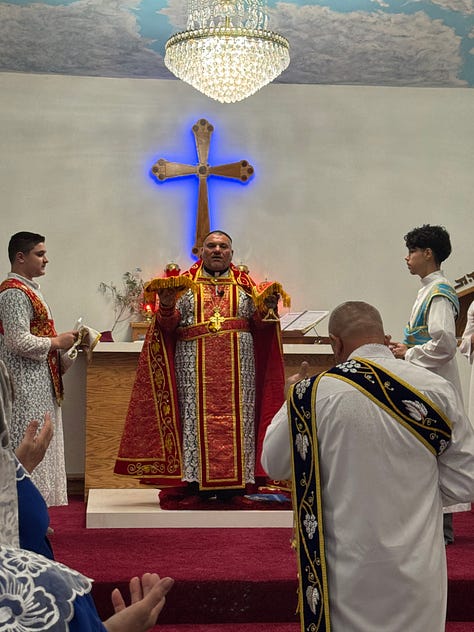

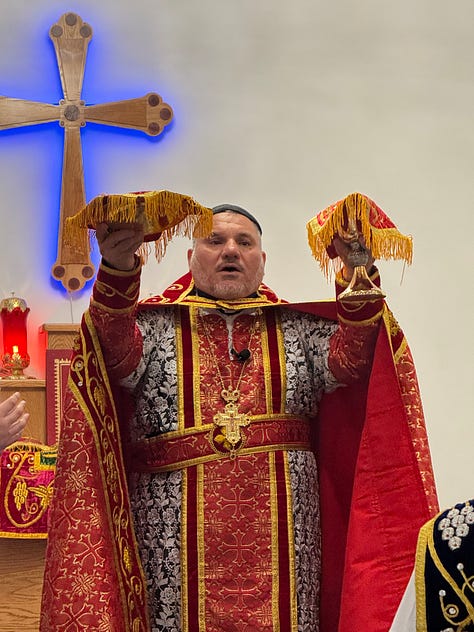
The Holy Qurobo and the Kneeling Prayers were being performed together, interwoven into each other. After Abouna Abdelmesih and the altar servers knelt and tapped each other on the back with a finger to remind each other of the coming of the Holy Spirit (which happened less so for the faithful in attendance, just by observation), he blessed the congregation by sprinkling water on us (well…by dousing us pretty well 🤣 ). After the three Kneeling Prayers (more about them here) and sprinkling us, the Eucharist was distributed.
Typically, the Kneeling Prayers at Nick's church happen after the Divine Liturgy. However, last Sunday, Father Jeffrey switched it up and did the Kneeling Vespers at 5 pm. This allowed me to make it back almost in time. I walked in just as the first prayer was being offered. In the Greek Orthodox tradition, everyone definitely kneels, and the prayers tend to be longer. Three prayers with three kneelings, just as in the Syriac Orthodox Church, but no tapping each other on the back.

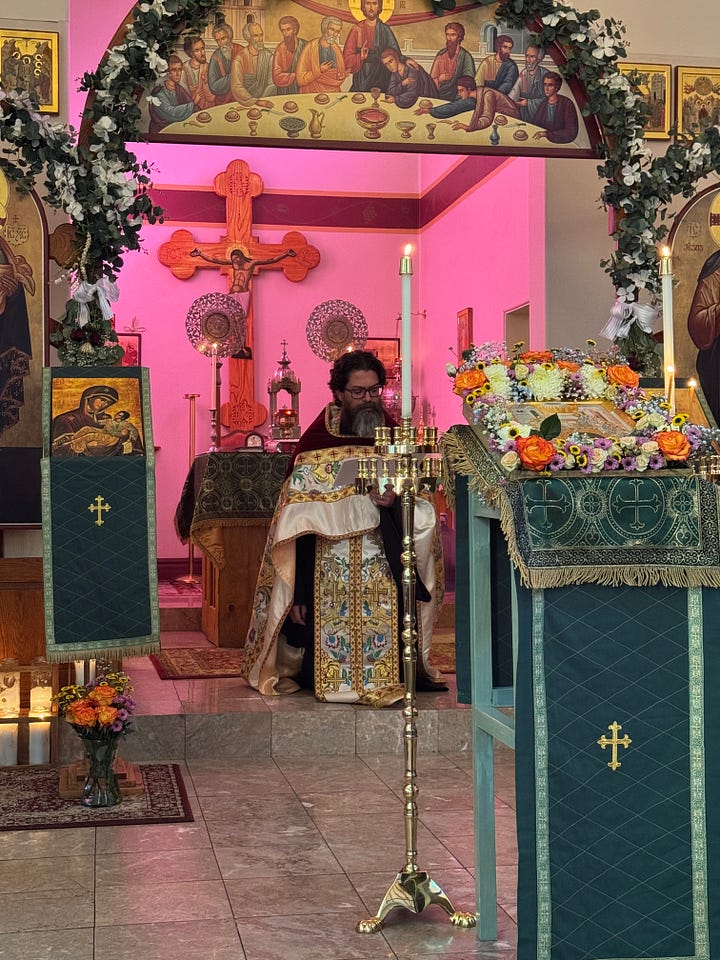
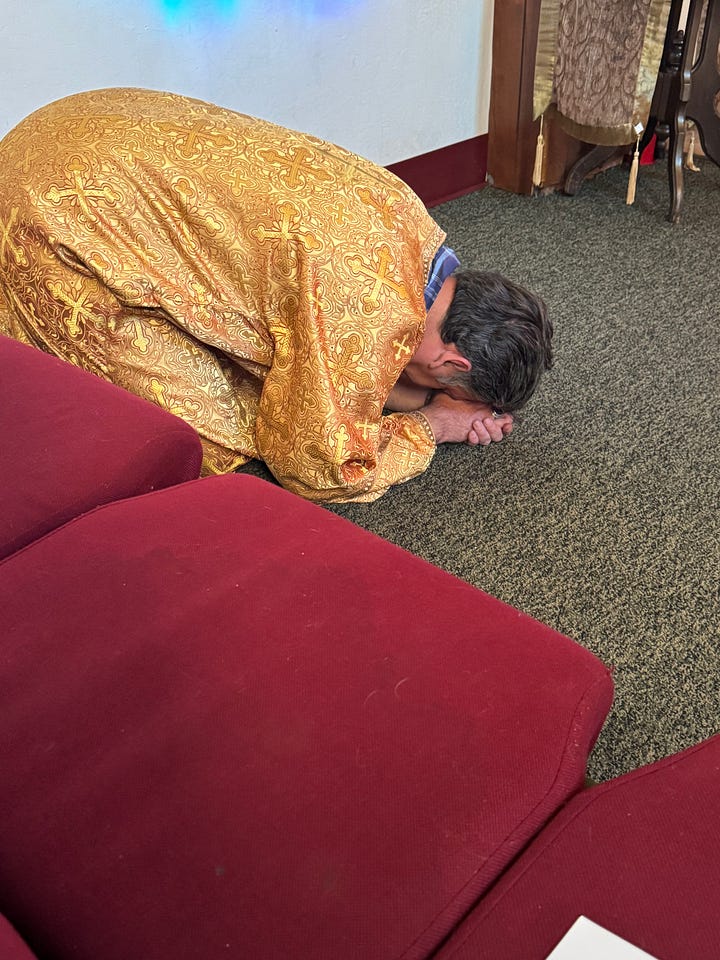

So, different ways of celebrating the Kneeling Prayers of Pentecost, but the reason is the same: we are committing ourselves to fasting and kneeling when we come before the Lord now, after Pentecost.
While the Greek Orthodox had a fast-free week after Pentecost, followed by the Apostles’ Fast starting this coming Monday through June 28, the Syriac Orthodox immediately returned to Wednesday and Friday fasting but will only fast the Apostles’ Fast for three days, June 26-28. The Coptic Orthodox already started the Apostles’ Fast this past Monday. This fast is in honor of the Feast Day of the Apostles Peter and Paul, celebrated on June 29.
It is interesting to note that the Syriac Orthodox Church originally began the Apostles’ Fast on the Monday after Pentecost and continued until the Feast of Saints Peter and Paul on June 29, making its length variable depending on the date of Pascha. This was the ancient Antiochian practice.
However, the fast was officially shortened by the Council (Synod) of Homs in 1946. The council decreed that the Apostles’ Fast would be observed only from June 26–28, immediately preceding the Feast of Saints Peter and Paul on June 29. Thus, it became a fixed three-day fast.
I will readily admit that I am not a fan of this, as it was usually done in response to the faithful complaining. Here, I will say that I am glad that my spiritual father asks me to fast with my husband on such occasions. The fast is something I have come to love. It is meaningful and makes a real difference in our spiritual life. I am very discouraged when I hear about so many people in my church not fasting, even during the already shortened times. Christ fasted - but we can’t? We should seriously examine our practices in light of this.
So many differences, yet so many similarities. Even after offering criticism of my church in the last paragraph, I love the Orthodox Church in whatever form I encounter it. The most meaningful aspect of my Christianity in Orthodoxy has been following a liturgical calendar that lets me participate in the life of Christ and the Church, including her feast and fast days.
No posts
Comments
Nothing yet. Say the first thing.
Sign in to join the conversation.