
[REPRINT FROM “CAPITAL INSIGHTS”, MAR 2026 ISSUE]
Digital Fellow, Stanford HAI-Digital Economy Lab | Sr. Fellow, Asia Society Policy Institute-CCA | Author, Our Next Reality | Chairman, Virtual World Society
Plato’s philosopher king was never meant to be a charismatic decider. He was trained into restraint: disciplined reasoning, moral clarity, and the ability to hold competing truths without flinching. That ideal faded when speed and confidence theater became leadership substitutes. It’s about to return now because the world is becoming less forgiving and wisdom-driven leadership more needed.
Decision loops have tightened. Information is abundant yet uneven, and often strategic. Supply chains, capital, and market access are shaped by shifting alliances, export controls, sanctions, and regulatory divergence. The leader’s burden is no longer just to run an organization. It is to steer through a moving map while keeping teams aligned and calm.
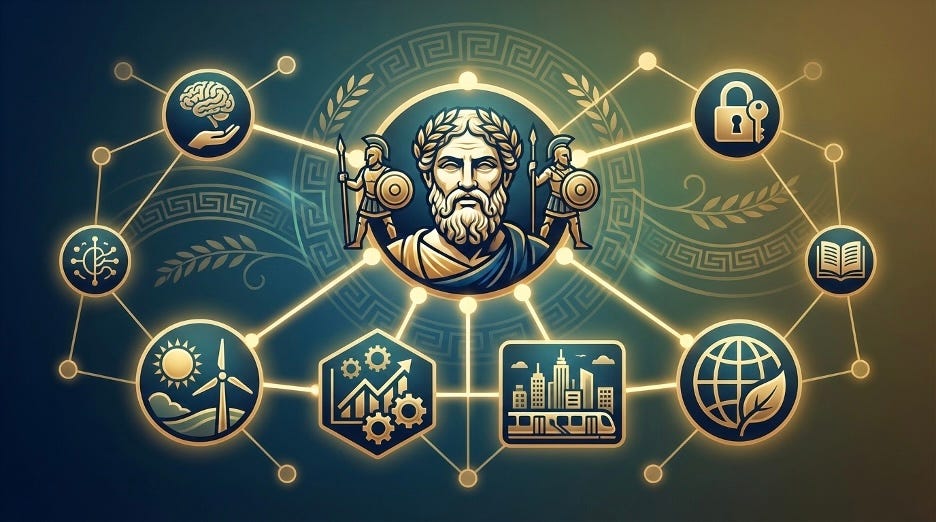
In that setting, the temptation is to outsource judgment to whatever sounds most authoritative, including AI. So the first question is not “How do I use AI?” It is “Who is the philosopher king now?” Is AI the king, because it can see more than we can? Or is it the tutor, sharpening the king’s thinking while leaving accountability in human hands?
My answer is counterintuitive but true: the best leaders will hand over more tactical decisions to AI over time, while becoming more demanding about the human layer AI cannot supply. We should trust AI with more decisions, but not with more authority.
The data below shows that by allowing AI more autonomy in decision-making in appropriate use cases, team productivity improves significantly. The key is figuring out in advance which decisions to delegate and what to do when AI is wrong. Tasks that are repetitive or reversible are good candidates for delegation.
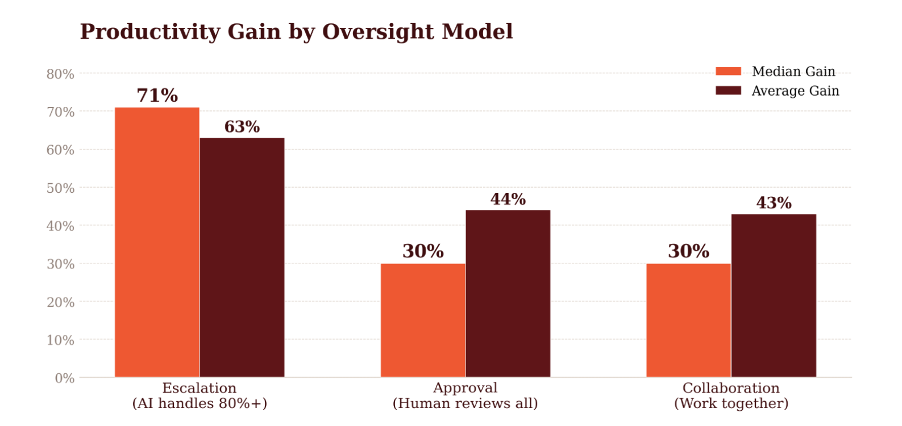
Figure 1. Productivity gain with high and low human oversight.
Source: “The Enterprise AI Playbook”, Brynjolfsson, Graylin, Pereira. (April 2026)
AI compresses the time between signal and action. That can improve performance, but it also amplifies error and panic when decision discipline is weak. In volatility, speed is not a virtue by itself. Speed only matters when it is coupled to values, verifiable reasoning, and a habit of testing assumptions before they become plans.
This is the modern “guardian” toolkit: scenario reasoning, incentive and bias checks, and the discipline to ask what would have to be true for our plan to fail. AI is uniquely good at expanding the option set and surfacing second-order effects humans miss under pressure.
From my recent Stanford research, our team interviewed 50+ CEOs and AI leads who have successfully deployed AI in their firms. The most effective pattern is not rushing “AI for productivity”, it is rewiring the organizational culture, metrics and processes to make it “AI-ready.” Here’s a summary of some of the things we learned that applies to leadership:
1. Fund the Invisible Work
Make AI a change program, not a tool rollout: personally budget and staff workflow redesign, adoption, and iteration as first-class deliverables. Give permission to fail.
2. Run an Exception-First Operating Model
Delegate repeatable decisions to AI and require humans to own edge cases and accountability, with clear escalation triggers and audit trails.
3. Sponsor Like You Mean It
Tie AI outcomes to enterprise level OKRs and leadership incentives, then remove blockers weekly as if they were operational incidents. Find ways to grow business, not only reduce costs.
4. Turn Gatekeepers into Enablers
Pre-negotiate “yes conditions” with Legal, Risk, HR, and Compliance so teams can ship inside guardrails, learn fast, and scale safely.
You can now hear prominent executives describe AI as an always-on advisor in the flow of leadership, not just an IT initiative.
David Ricks, CEO of Eli Lilly, has said he keeps “one or two AIs running” during every meeting to ask questions and pressure-test thinking in real time.
Microsoft CEO, Satya Nadella, has publicly shared prompt patterns he uses for meeting preparation, project synthesis, and launch risk assessment, which is essentially executive cognition turned into a reproducible loop.
The key shift is emotional. The best CEOs are calmer, not because they have more certainty, but because they have a stronger process for uncertainty. AI becomes a partner in composure when geopolitics or markets change the rules overnight. This is the new baseline: leaders who do not co-think with AI will increasingly be competing against leaders who out-think them.
Albania drew attention by experimenting with an “AI minister” concept, framed as a tool for transparency and reducing corruption. Whatever one thinks of the optics, the lesson is real: delegating parts of governance to AI is now a public experiment, and legitimacy becomes the hard problem.
Singapore’s SEA-LION sovereign AI models point to a durable approach: build national capability, governance scaffolding, and evaluation infrastructure, while reducing unnecessary dependence where technology sovereignty matters. AI is not only about productivity. It is institutional capacity.
The happy balance is humility without abdication.
Humility: AI often knows more than we do about facts, precedents, patterns, and probability. Ask it to show you what you are missing, not what you already believe.
Confidence: AI does not carry moral responsibility. It does not own trust. It does not pay the price of a wrong call. Accountability remains human, even when execution becomes machine-led.
This maps cleanly onto Greek and Chinese philosophy. Plato asks for leaders trained to see beyond appetites and factions. Confucius asks for leaders who cultivate virtue and relational responsibility. Both are about trustworthy governance, not perfect knowledge.
A more practical framework for thinking about AI is with the Janus concept: two faces, one goal. The human face sets ends: purpose, values, boundaries, and legitimacy. This is where you decide what will not be optimized away, even when it is costly. The AI face optimizes means: options, trade-offs, scenario trees, incentive checks, anomaly detection, and second-order effects.
The leader’s job is to referee the interface. Over time, it will make sense to hand greater parts of tactical decisions to AI, because less conflicted systems can outperform conflicted human actors in repeatable domains. But the transfer should be earned, governed, auditable, and reversible.
As AI takes on tactical work, teams become more important in three ways: framing, evaluation, and trust. This is where an Abundanism mindset becomes practical. As intelligence becomes abundant, value shifts from raw output to agency and stewardship: allocating capability toward human flourishing, and evolving roles rather than defending obsolete workflows. Understanding and protecting the dignity of human purpose and service becomes a leadership imperative. Leaders will soon need to make hard choices of prioritizing profits over people, and it’s at these times, we will need to lean into our humanity and design soft landings for the organization.
The chart below provides a view into the minds of successful CEOs who are going through the process today. There will be increasing market pressures to reduce workforce, but the ill will created amongst affected staff and negative reputation risks may not be worth the benefits near term. It’s a bit worrisome that even today, leaders are already choosing layoff or avoid hiring new staff as a result of AI productivity gains in almost 2/3 of cases.
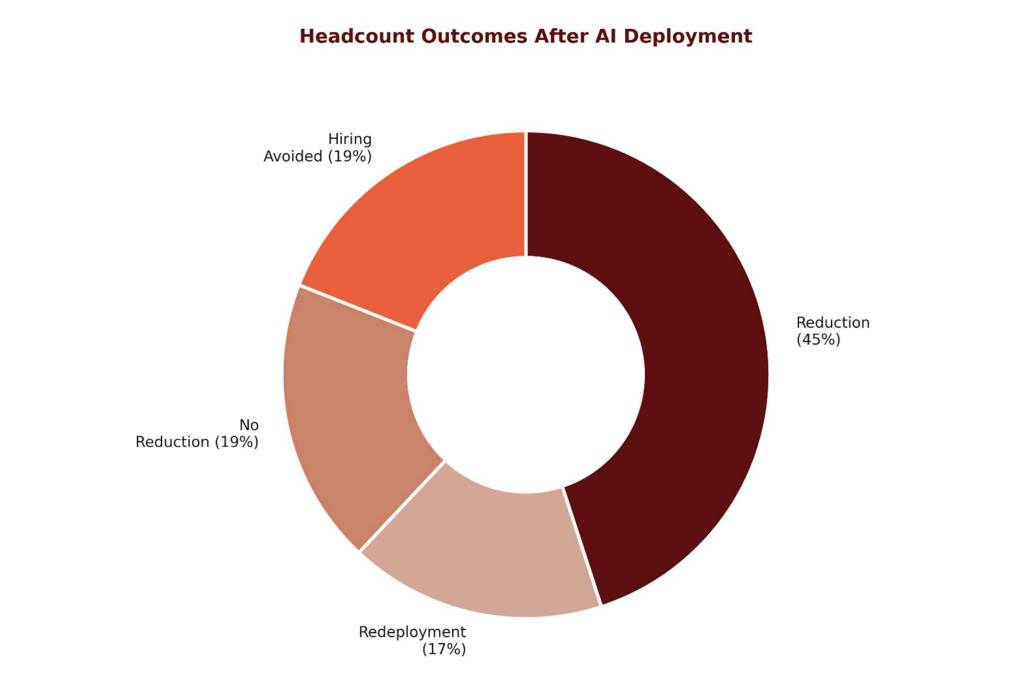
Figure 2. Findings on personnel reallocation post successful AI deployment.
Source: “The Enterprise AI Playbook”, Brynjolfsson, Graylin, Pereira. (April 2026)
One underappreciated leadership advantage is using AI to understand the counterparty more deeply. Not to manipulate, but to widen the solution space.
In negotiation prep, leaders can use AI to map counterpart incentives, cultural context, and hidden constraints, then generate proposals that protect both sides’ dignity. In geopolitically sensitive deals, this becomes strategic: AI can help teams anticipate regulatory friction, sanctions exposure, and second-order reputational risk while still seeking constructive outcomes. The aim is not “perfect information.” It is fewer avoidable misunderstandings.
Finally, treat AI as a partner in becoming the kind of leader Plato described: disciplined, virtuous, and wise. Have the humility to let AI reveal your blind spots. Have the courage to delegate repeatable, reversible decisions to it, while keeping responsibility for outcomes squarely human. Have the compassion to protect the dignity of your team and customers as roles evolve. And build the wisdom to remember that leadership serves not only shareholders, but the social fabric your institution depends on.
Do this with a Janus design: humans set the ends; AI optimizes the means. If you lead that way, the philosopher king is not replaced. He is finally given a tutor worthy of the task, and a system where two minds strengthen each other.
“No one in any position of rule, insofar as he is a ruler, considers or commands what is advantageous for himself, but what is advantageous for his subject.” — Plato’s Republic 342e
Thanks for reading Abundanist: A Post-Scarcity Community! This post is public so feel free to share it.
No posts
Comments
Nothing yet. Say the first thing.
Sign in to join the conversation.