
Hello everyone! I joined the Abundance New York team this spring while completing my first year of an MPA at Cornell University. I’m a native of Cedar Rapids, Iowa, but I moved to New York City for college, and stayed for several years after that, because I fell in love with the kind of life made possible by the city’s walkability and transit access.
Last year, I left the city to pursue my degree in Ithaca—a gorgeous city of around 30,000 residents in New York’s Finger Lakes region—to develop the skills that could help make cities more affordable, walkable, and better connected. Living there has broadened how I think about these issues and reinforced my belief that dense neighborhoods can bring enormous value to cities of all sizes.
If, like me, you have spent the last month completely engrossed in the World Cup, you may be familiar with the German tourist turned social media phenom, Freddy. He and his road-trip companions have drawn enormous attention for their enthusiasm for small-town America. Their trip included stops at Buc-ee’s, Waffle House, and even Watkins Glen State Park—perhaps the most stunning park in the Finger Lakes region. Seeing someone experience this country for the first time, in real time, and without the cynicism that comes from spending your entire life here has been fascinating. Slow Boring’s Halina Bennet wrote an interesting piece that explores this more thoroughly. Like her, this experience has given me a sense of pride in things that I’ve long felt reflected a degree of backwardness in American culture: gas stations the size of malls, fast food designed as meticulously as a consumer tech product, and the like.
Still, as someone who wants to see the United States invest in more walkable, transit-rich communities, it is difficult not to connect these images to the numerous issues associated with sprawling, carbon-intensive lifestyles. But, as Bennet rightly points out, a political vision that treats the preferences of people outside major cities as something to be corrected will never build a durable governing coalition. We need a positive vision for small-town and rural America which embraces abundance priorities without, as Bennet writes, “treating the existing landscape as a moral embarrassment.”
That vision could begin with reinvigorating historic downtowns.
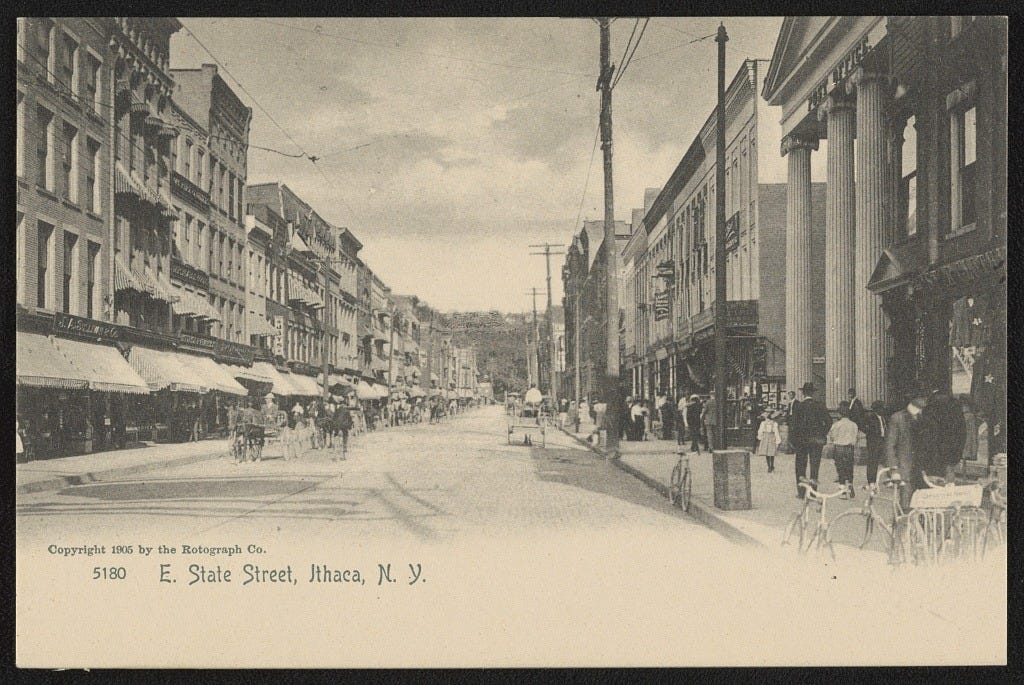
In the wake of our country’s 250th birthday and the global spotlight brought by the World Cup, it’s worth revisiting the history of America’s downtowns. For much of our history, the downtowns of small towns and small cities were the center of daily life. They were places where people lived, worked, organized, argued, gathered, and spontaneously encountered one another. Many of these downtowns still exist in form. The buildings, street grids, and storefronts have not disappeared, but often the life around them has been hollowed out. Storefronts and apartments sit vacant. Traffic moves quickly through streets where people once walked and lingered. Local businesses struggle for customers while growth is pushed to the edge of town, where strip malls, chain restaurants, and big-box stores proliferate.
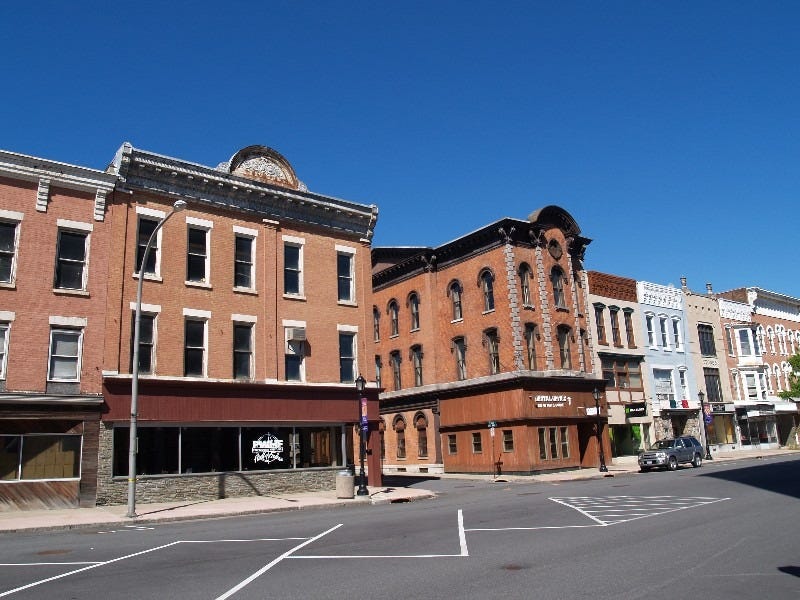
That decline is often treated as inevitable. Americans got richer, bought cars, moved to the suburbs, and began shopping online. There is truth in that story, but it’s incomplete. Downtowns were not abandoned purely because people’s preferences changed. Decades of public policy choices subsidized sprawl while imposing regulations that made it difficult for downtowns to thrive.
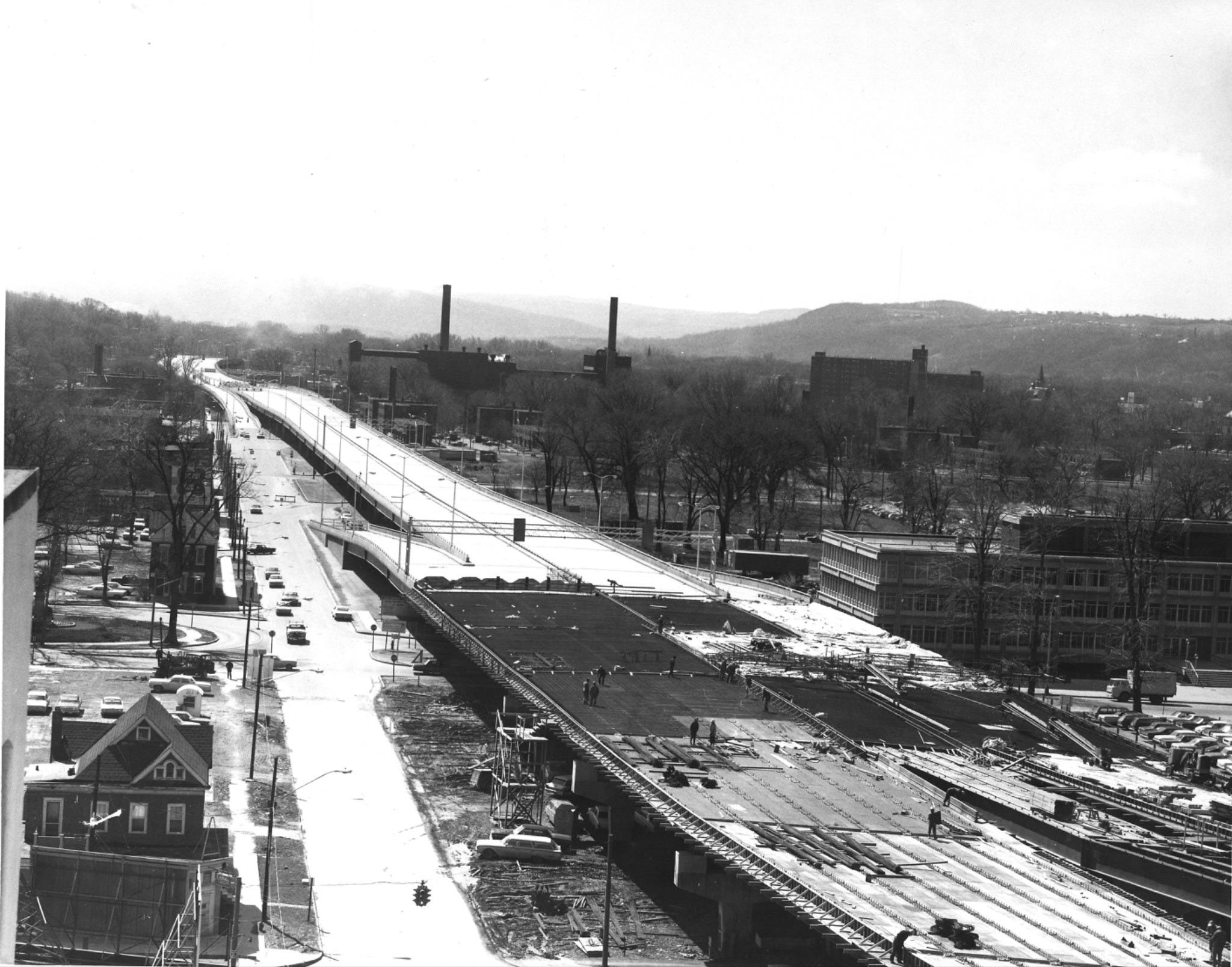
The development of the federal highway system played a key role. In 1956, the Federal-Aid Highway Act was passed, establishing the Interstate Highway System and beginning the largest public works project in American history. Federal policymakers made highways the centerpiece of national transportation investment, while transit systems received far less consistent support. That investment changed where people lived and how communities developed. Suddenly it was possible to live thirty miles away from your place of work without any transit connections. In some places, highways bypassed historic downtowns. In others, like Syracuse, they cut directly through existing neighborhoods, cutting off access to the economic core and damaging the urban fabric that had supported community life.
In many areas, older neighborhoods and commercial districts were treated as obsolete rather than as places that should be invested in and renewed. Parking lots replaced buildings that could have housed families or businesses. Simultaneously, zoning codes and parking requirements made it harder to reproduce dense development. Downtowns with shops on the ground floor, apartments or offices above, narrow streets, and a mix of uses within walking distance became difficult or illegal to build in many communities. They were replaced by a sprawling suburban landscape of single-family homes, large driveways, and wide streets — creating communities that were both more carbon-intensive and socially isolating. In many cities, large and small, where dense downtowns persisted, housing prices have skyrocketed as the supply of new housing has been constrained by these same onerous restrictions and requirements.
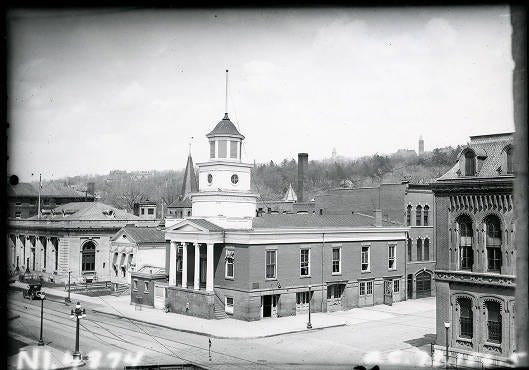
Ithaca offers an intriguing case study. In the 1960s, the city demolished its historic City Hall. Rather than using this central downtown land for housing or businesses, a large portion of the site was later converted into a parking garage. The garage was recently closed permanently because of structural deterioration, creating what Mayor Robert Cantelmo called a “generational opportunity to make a critical investment” in downtown. Ithaca should seize that opportunity to build more homes in the city’s densest and best-connected neighborhood.
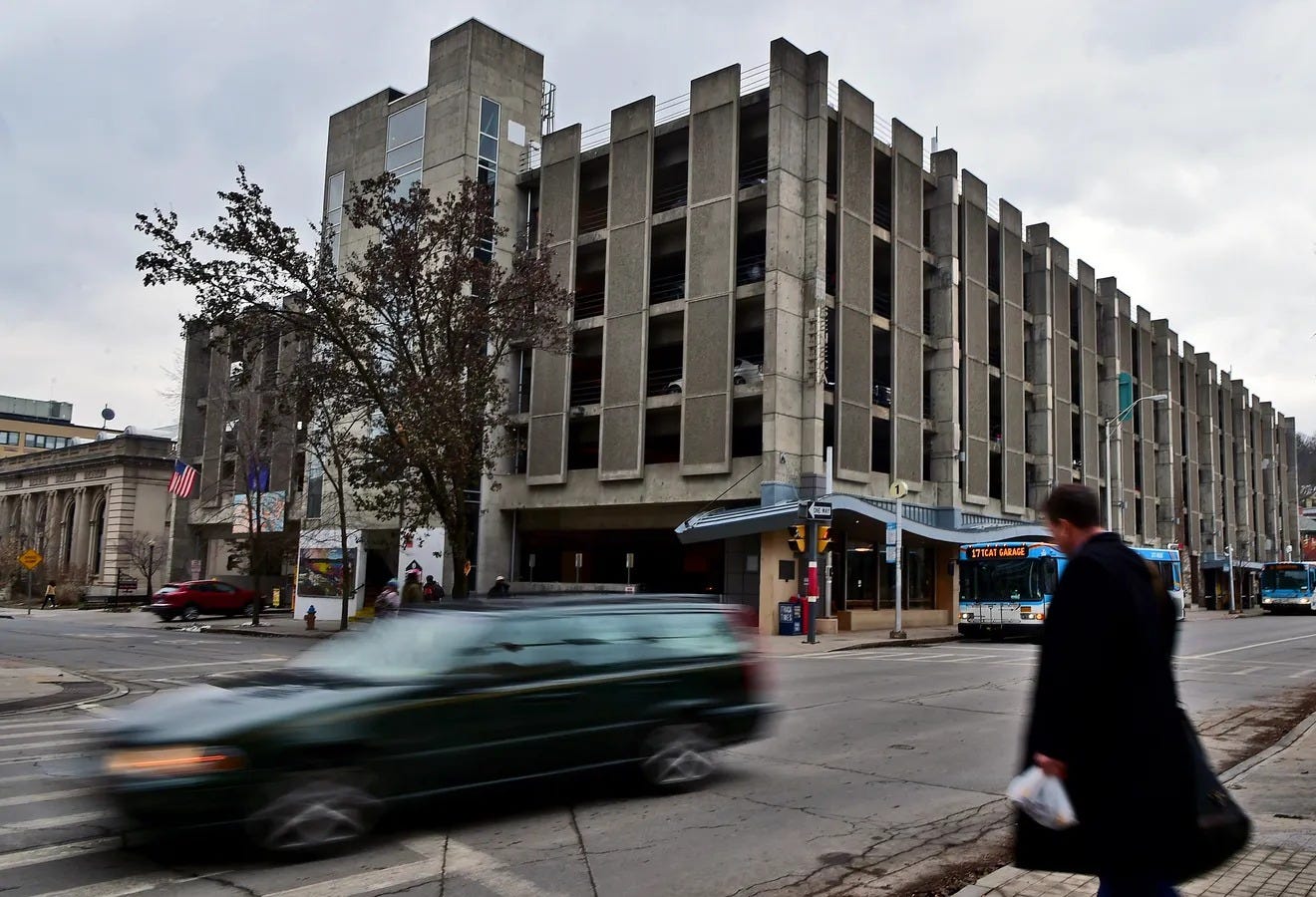
The historic downtowns of small cities and towns are reminders that density can exist outside metropolises like New York or Chicago. It was commonplace until the middle of the twentieth century, and communities can choose density again today.
While we typically focus on creating abundance in New York City, the state is full of smaller communities with historic cores that could support more homes and growth. Places like Ithaca, Utica, Binghamton, Troy, Hudson, and countless smaller villages have inherited downtowns that newer communities would struggle to build from scratch today. They already have walkable streets, mixed-use buildings, and infrastructure that taxpayers paid for decades ago. Now, state and local policymakers need to make it easier for these places to grow again.
That does not mean Binghamton or Utica should aim for the same growth as New York City. Different places need different kinds of growth. That might mean apartment towers near subway stations in New York City, or allowing small apartment buildings in neighborhoods near downtown Ithaca. We know that a durable pro-growth coalition can’t be built only around the needs of large coastal cities. That means we need to demonstrate how growth and change can make life better in places that look very different from Brooklyn or Manhattan. We need a vision that speaks to people who live outside dense neighborhoods but might still value having a coffee shop or grocery store around the corner.
We should begin by reviving historic downtowns, which already offer a positive model of dense development outside major cities. Instead of asking small towns to look like big cities, we should help them strengthen the communities they already have. Legalizing more kinds of housing in and around downtowns could support local businesses, ease pressure on rents, create livelier public spaces, and give young people more reasons to stay or return. It would also make lower-carbon lifestyles possible outside major metropolitan areas.
New York State can help by tying infrastructure and economic-development funding to infill housing, eliminating state barriers to converting vacant commercial buildings, supporting more frequent local and regional transit service, and rewarding municipalities that legalize housing in and around existing commercial centers.
Legalize More Housing Downtown
Many small cities and towns have vacant upper floors, empty lots, and underused commercial buildings that could become homes. Local governments should upzone downtowns and nearby neighborhoods to allow apartments above storefronts, small multifamily housing, conversions of unused commercial space, and accessory dwelling units (ADUs) on existing residential lots. States should also modernize building codes, including by legalizing single-stair apartment buildings, to reduce construction costs.
California shows how dramatically ADU reform can increase housing production. After the state streamlined the permitting process, ADUs accounted for nearly one in five new homes permitted statewide by 2022.
Eliminate Parking Mandates
Historic downtowns were generally built before zoning codes required every home or business to provide large amounts of off-street parking. Applying suburban parking standards to dense areas can make projects too expensive or physically impossible to build. Required parking spaces can also consume land that could be used to build more housing. Communities should allow property owners and businesses to decide how much parking they need, while managing public parking more effectively.
After Buffalo eliminated parking mandates citywide, developments that chose to build less parking averaged 60 fewer spaces than the old rules required. This collectively avoided more than eight acres of pavement and as much as $30 million in construction costs.
Reclaim Streets as Public Spaces
Many downtown streets have been widened or redesigned to move cars through town as quickly as possible. That can make them dangerous to cross and unpleasant places to spend time. Local and state transportation agencies should add safer crossings, narrower travel lanes, trees, benches, bike connections, and wider sidewalks when possible. We should make it easier for people to get to downtown and more enjoyable to move around once they’re there.
Lancaster, California, converted a five-lane downtown arterial into a two-lane, pedestrian-friendly boulevard. Within four years, the city reported that the surrounding area attracted 52 businesses, created roughly 1,950 jobs, and generated more than $280 million in economic activity.
Invest in Existing Communities
Governments frequently subsidize development at the edge of town, which can require costly new roads and utilities, while older neighborhoods struggle with deteriorating infrastructure. State economic-development and infrastructure programs should target housing investments in places that already have streets, water lines, schools, and public buildings. Reusing existing infrastructure is usually cheaper than extending it farther outward.
Massachusetts does this through its Housing Development Incentive Program, which directs tax credits toward housing in older Gateway Cities. In 2024 alone, the program supported 1,256 new homes across nine established cities.
Prioritize Bus Service on Commercial Corridors
It’s unlikely that Utica’s transit system will look like New York City’s anytime soon, but that doesn’t mean we can’t reduce the number of trips that require a car. In most small and midsize cities, better transit means better buses. Local governments should prioritize frequent service along existing commercial corridors. Dedicated lanes, traffic-signal priority, and all-door boarding can also increase speeds and reduce delays. A small network of frequent and reliable routes can make downtown living practical for more people without requiring every trip to be made by car.
Richmond, Virginia introduced frequent bus rapid transit along its main commercial corridor and redesigned the surrounding bus network. The Pulse line soon carried more than twice its projected ridership, while systemwide ridership rose 17 percent in its first full year.
Reviving historic downtowns offers a way to embrace growth without asking every community to resemble New York City. Small towns do not need to abandon their identity to become more walkable, affordable, and economically vibrant. In many cases, they only need to reinvest in the kind of development that shaped them in the first place.
Building abundance means making it easier to live above a Main Street bookstore, walk to the grocery store, take a bus to the next town, and open a business in a storefront that has sat empty for years. That vision can coexist with places like Buc-ee’s and Bass Pro Shops, which filled Freddy and his friends with awe and are part of what makes this country distinctive.
No posts
Comments
Nothing yet. Say the first thing.
Sign in to join the conversation.