
I heard something beautiful tonight: that our bodies know how to die, just like they know how to cough, sleep, have an orgasm, breathe. I think about it at night, sometimes—how to be ready for someone to die in my house.
Since I live with, cook for, transport, laugh with and try to delight, a precious 85 year old, I strive to be ready for something to transform. If she’s not awake and feeding her cat in the morning, I sometimes have a piercing fear of opening her bedroom door.
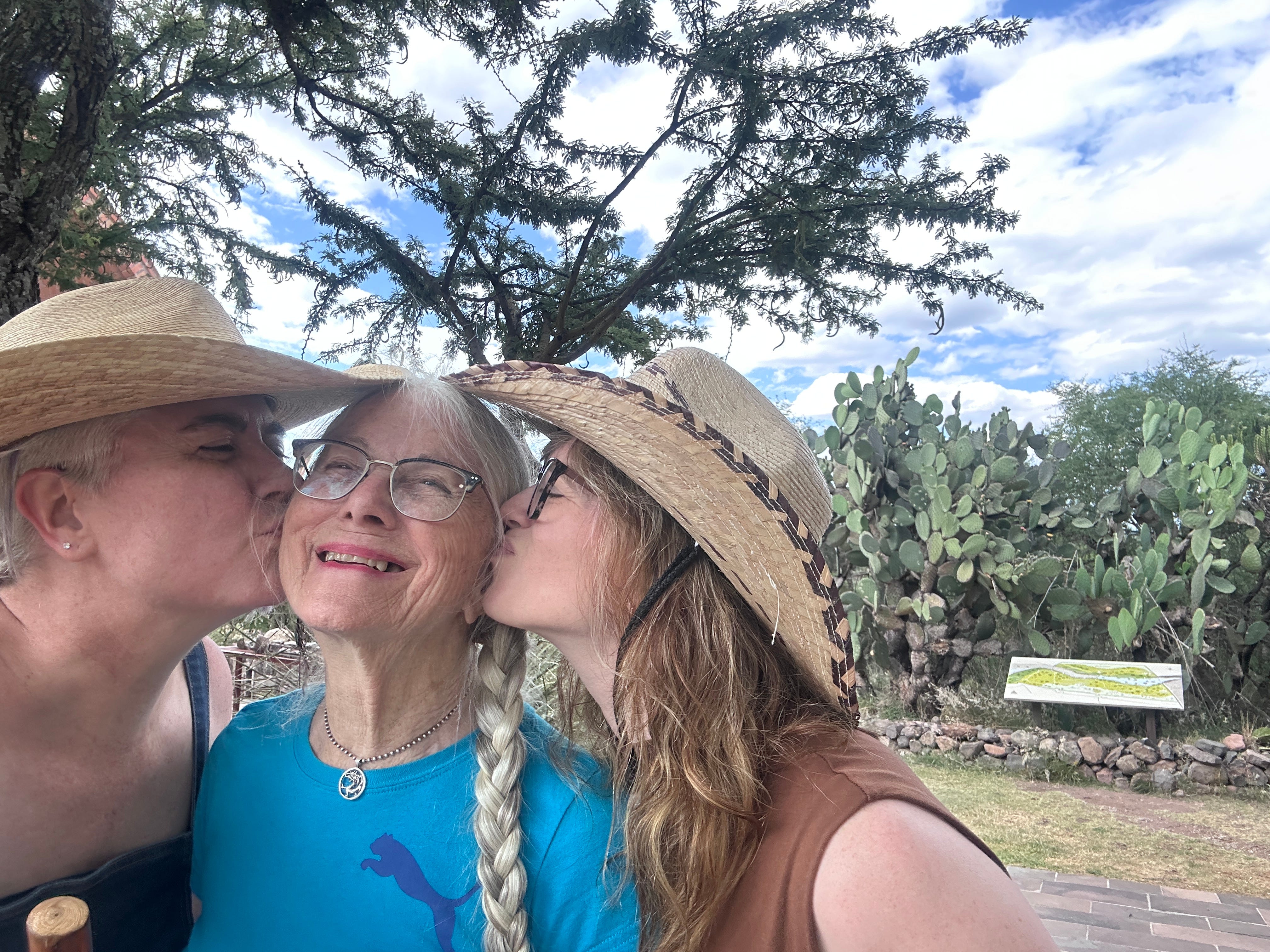
This is my over-caution. She’s vibrant, she can walk a mile a day with me, picking up trash from the parks or arroyos. My mom calls herself a hummingbird. She wants dessert with every meal and is fueled by chocolate, Coca-Cola, cake, pie, on a constant lookout for candy.
She bought herself a wooden statue of an angel and puts a bunch of new wildflowers or a curious new twig in its hand every day; today I pranked her by putting in a bunch of lollipops.
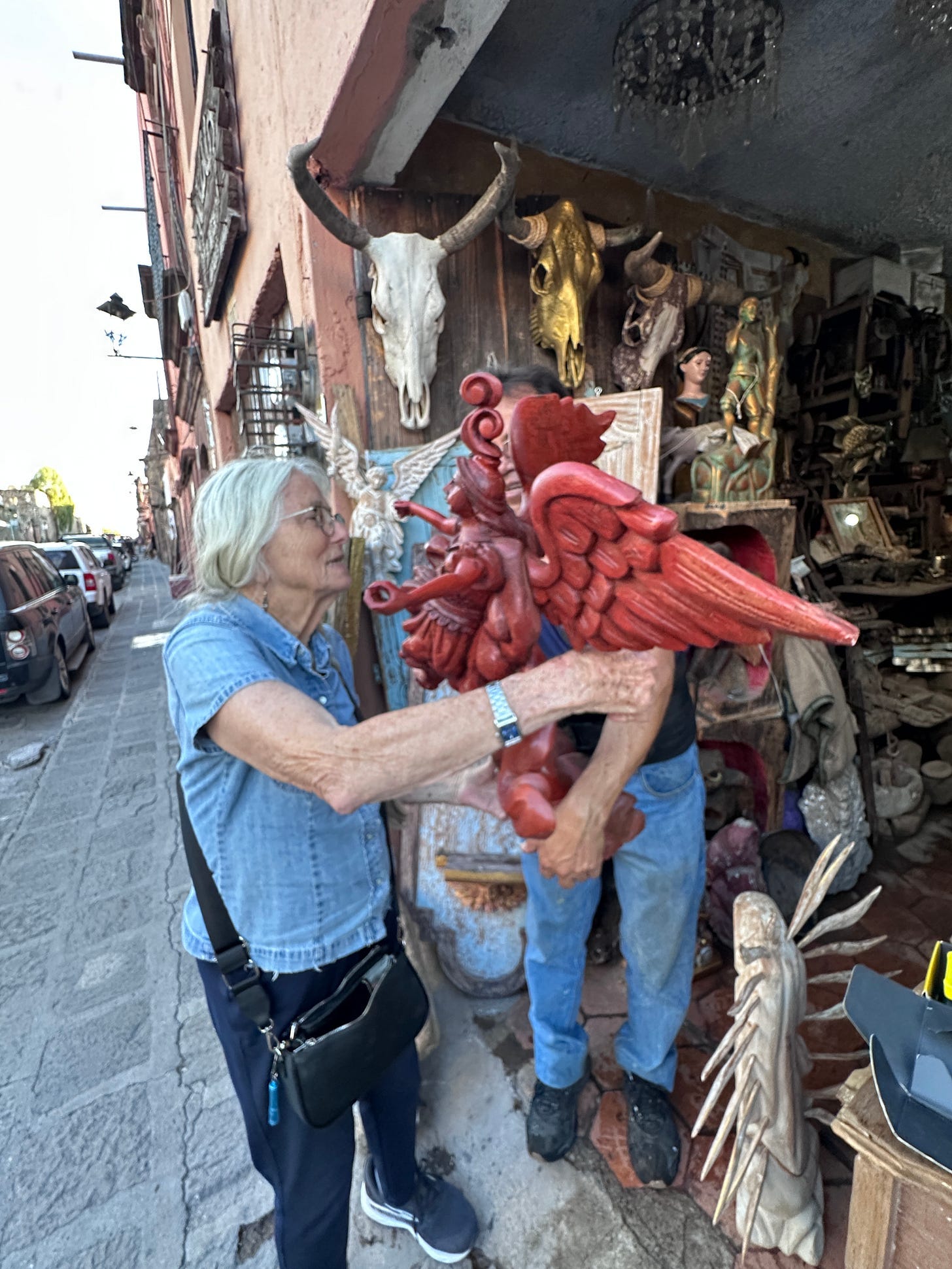
We have endless fun. This requires that I keep a tight grip on time and watch every step of her feet when we’re on the street, since neuropathy keeps them numb.
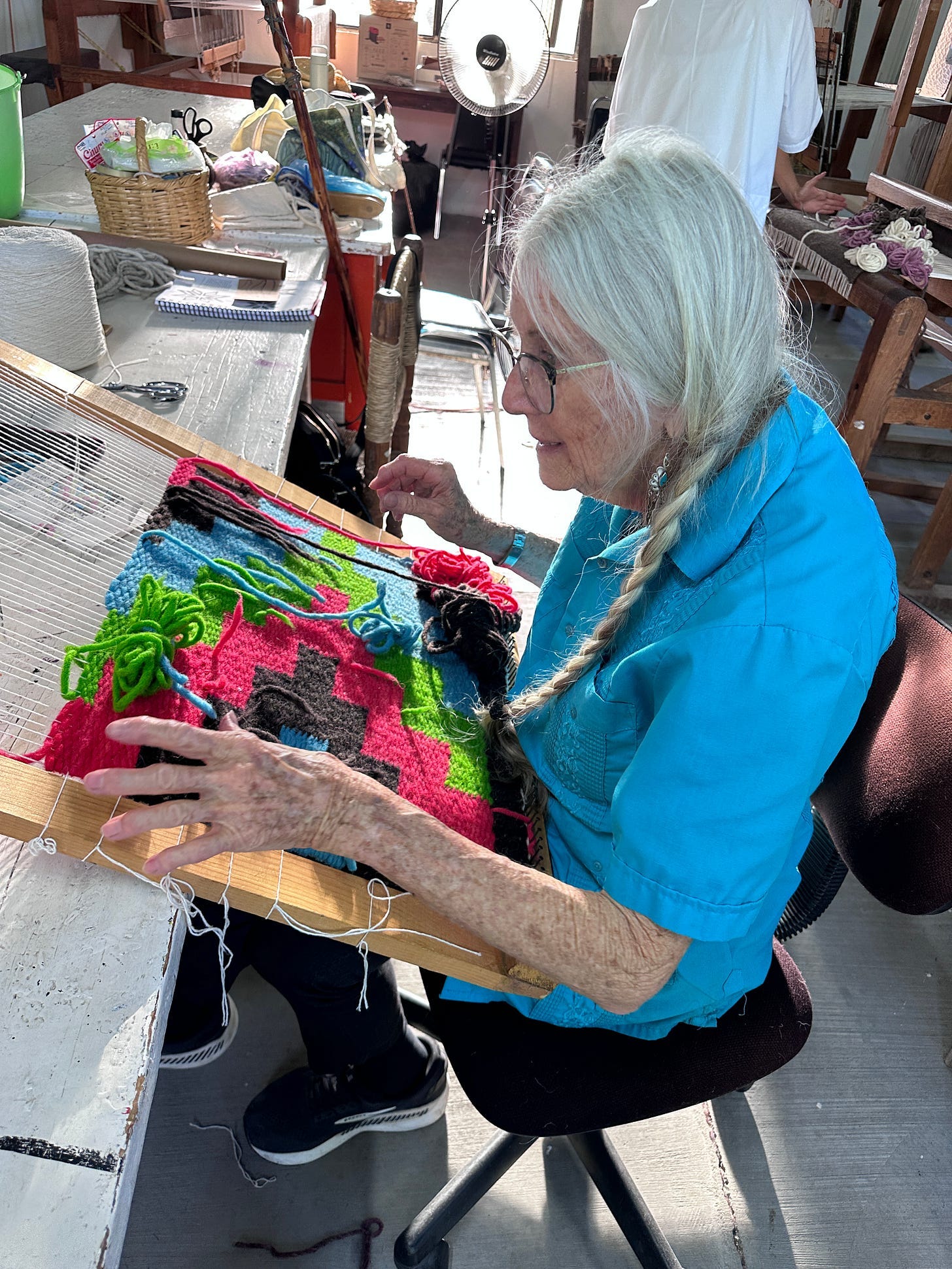
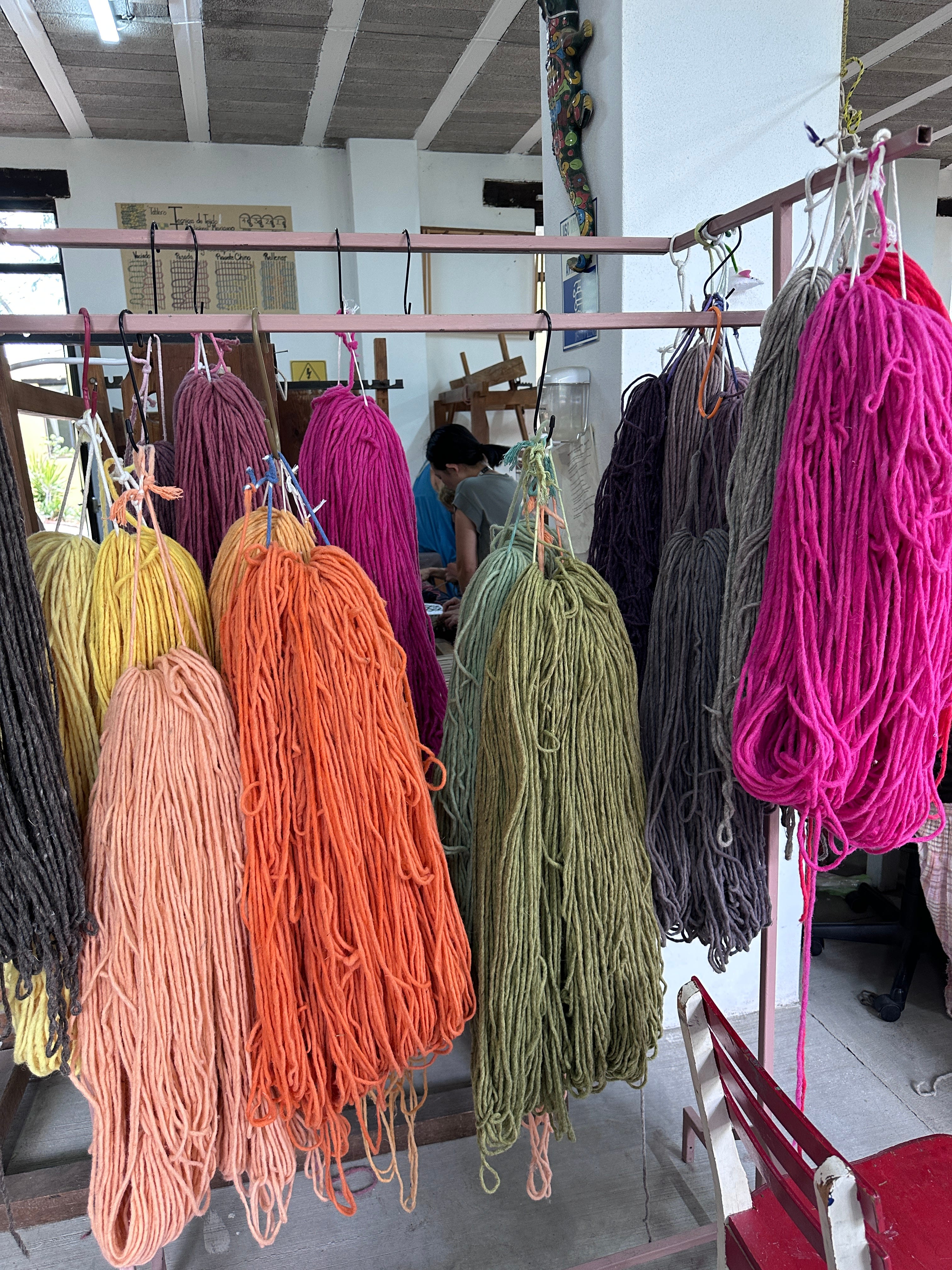
Like she did for me, I organize and take her to things like physical therapy, Spanish class and weaving class. A craft she can do with one hand that works! The other hand that’s stuck can serve as a hook. Look at these beautiful colors.
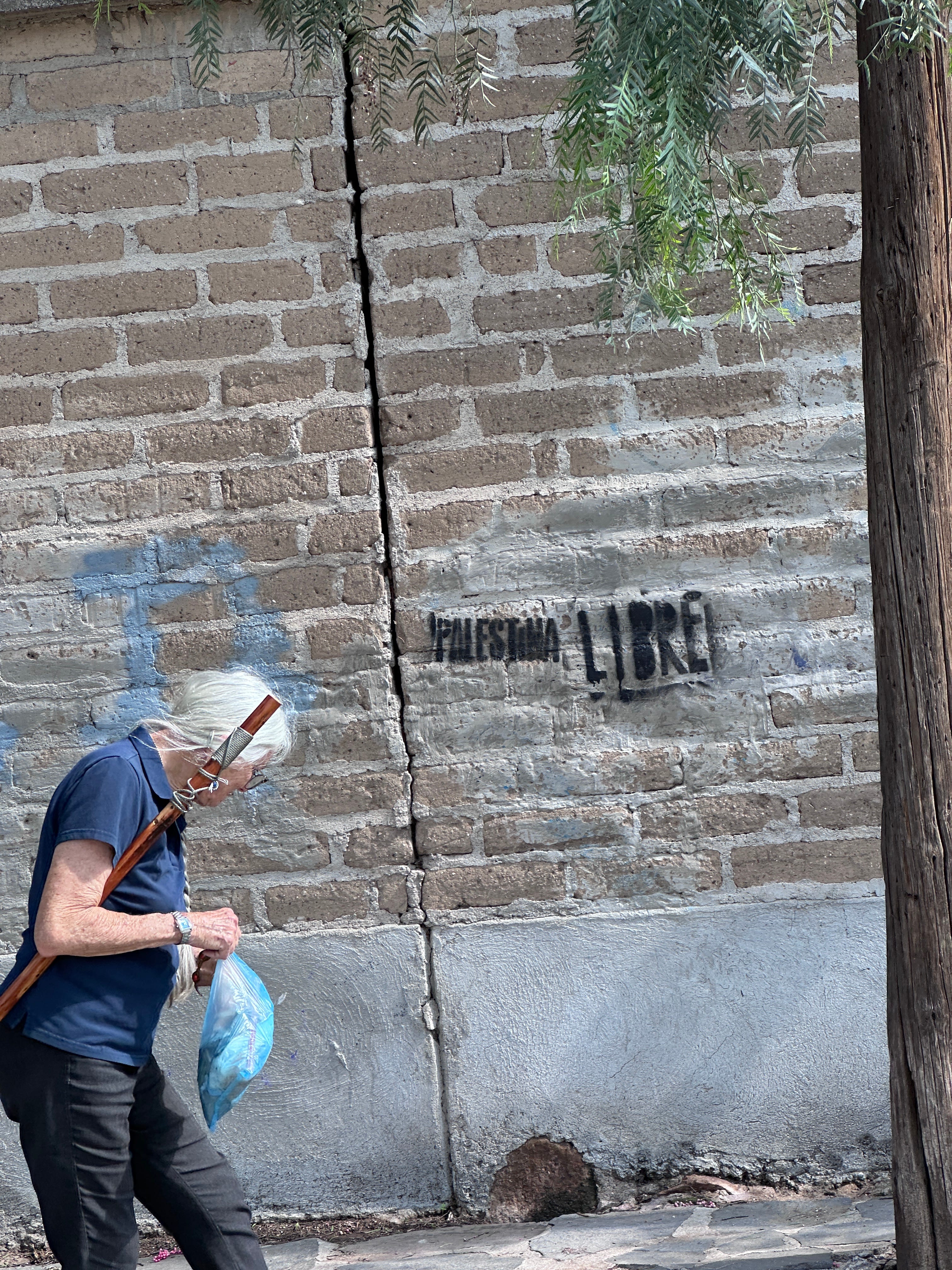
Today, we walked through a huge flea market in the small Central Mexico town we have been staying in. (My house in Texas is rented out til mid-July, a marvelous congruence of a neighbor needing a temporary place and us needing a fresh landscape.)
She’d been agitating to place an AmazonMX order online. I want to keep that wolf away from our door. I said, maybe we can find what she needs in person—from a person we can talk to and converse with. Maybe we can put the money in a human hand and share a smile.
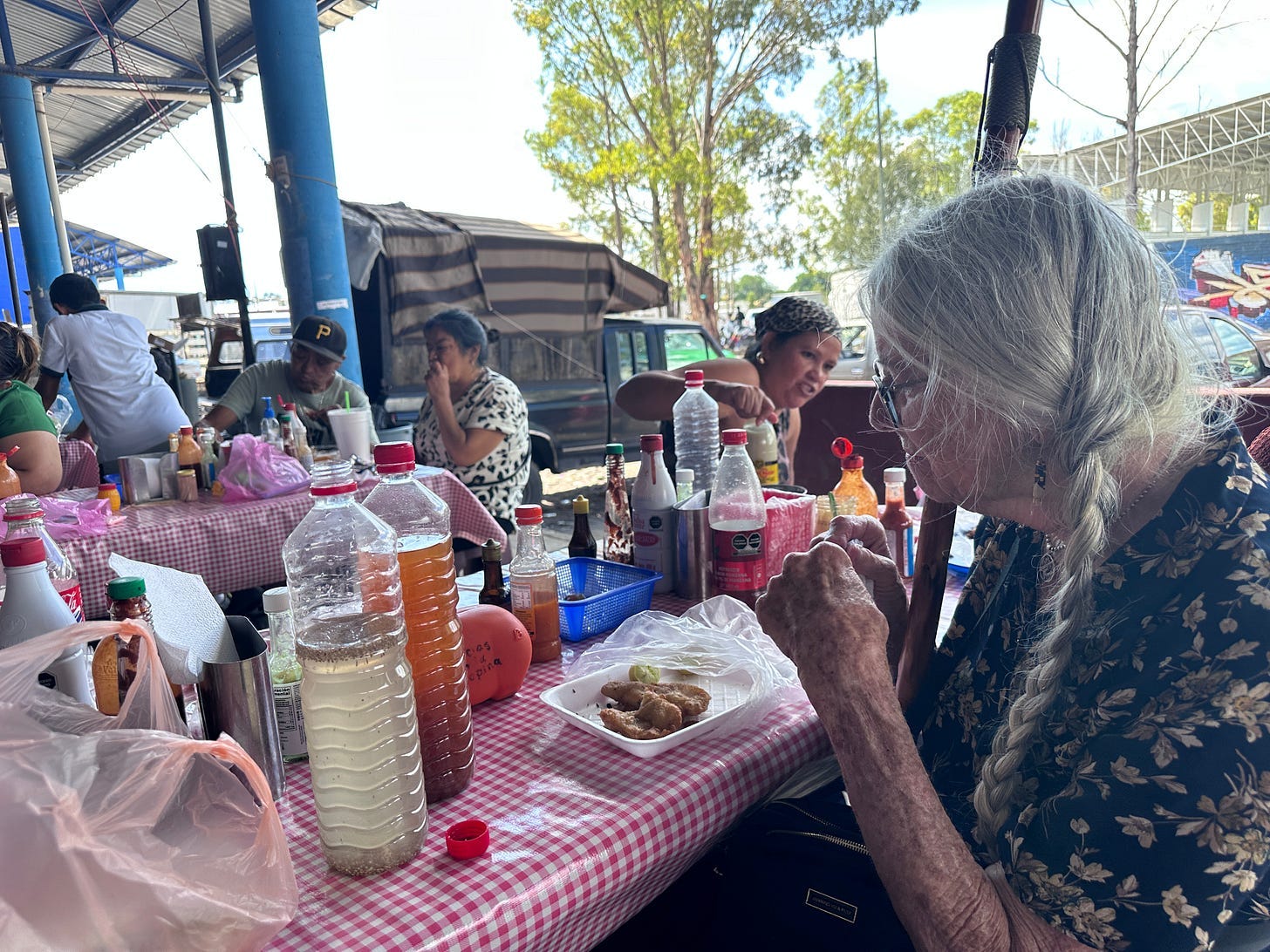
In tianguis, the open air market, like magic, we found the exact hair barrettes she wanted to keep the flyaway strands inside her two-foot long braid, for seven cents a pack. We found the small red spray bottle she wanted in order to kill mosquitoes with rubbing alcohol. We found a four-pack of her favorite toilet paper, Charmin (now I know) and two very light drinking glasses that won’t slip out of her hand. She ate fried fish from a stall. I had a chia-limon drink and a spicy fruit. We got invited to the birthday party of a 95 year old when they stopped to compare ages!
After that, we went to the grocery store and she shopped for her Corona, milk, Cheerios and bananas while I distractedly worked and answered emails and calls. In this grocery store, I relax because I can’t lose her. There are only 20 aisles and I can see over all of them.
I can duck into my other life, where I make money and things need doing. I’m never not behind now. I work after she is asleep and in the spaces between things. I love my work and I love my clients. And I’m aware when I’m on a call or editing a manuscript that someone is waiting downstairs for me.
Here, set loose in a grocery with a metal cart, she will experience euphoria, abandon, choice-making and freedom all at once. She does not need me a bit. I can read and write and check in.
When we went to check out, the man scanning our groceries brought her a chair to sit on. Mexican culture is organized differently, and I am grateful. It is restructuring how I think about how we have to live. A society with more time for care. More primacy of family. More care.
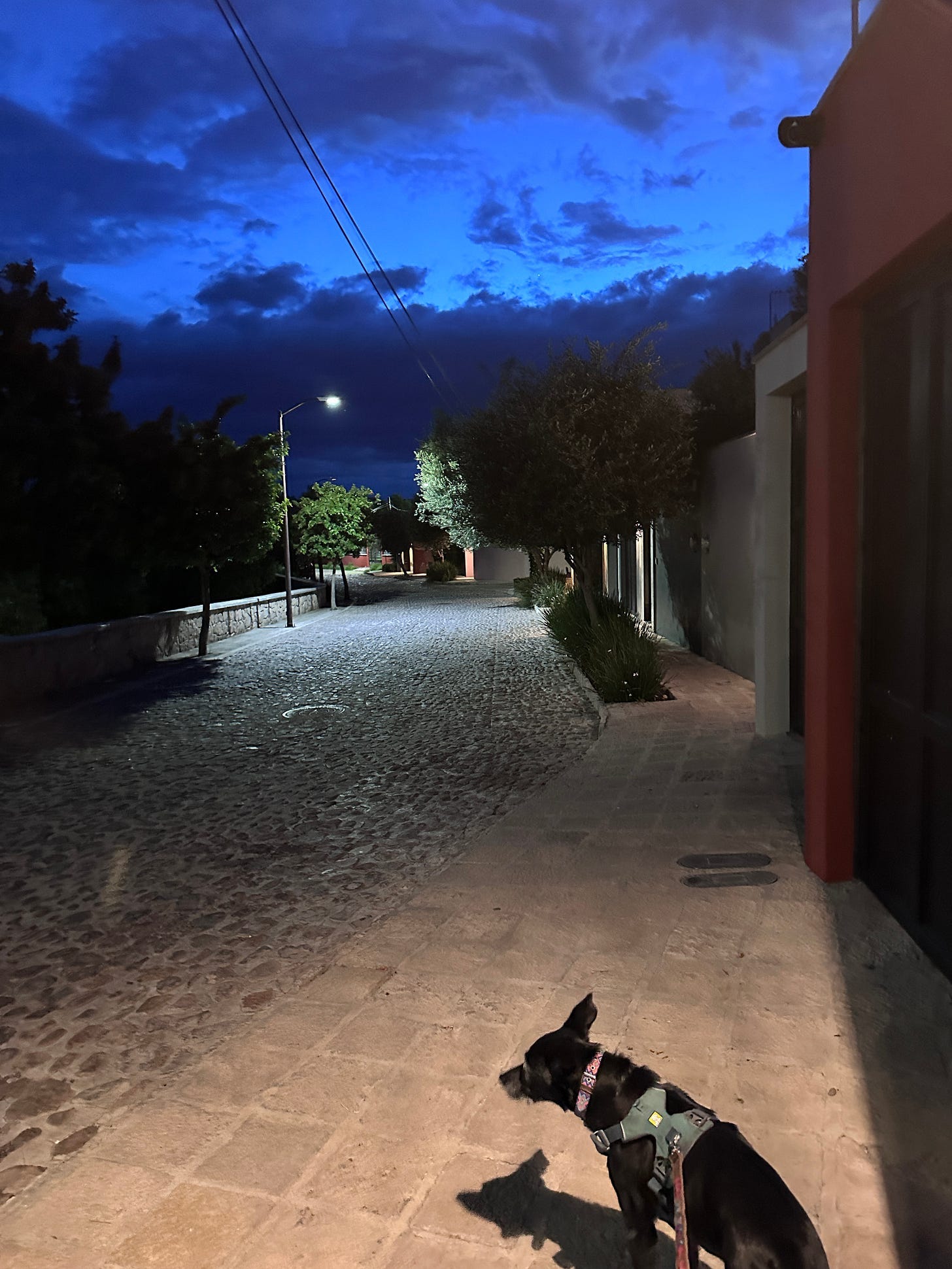
It was dark and raining on the cobblestones when we got the bags to the curb and I hailed a taxi. She climbed in the front seat with her five-foot walking staff, pulled all her limbs in like a turtle, and I shut the door. The driver drove in a manner as gentle, tenuous and slow as if he was carrying us in a basket, or carrying her in his arms.
Since it was raining, we sang the Itsy Bitsy Spider with him in Spanish:
La araña chicitita subió, subió subió
vino la lluvia y se la llevó
salió el Sol y todo se secó y
La araña chicitita otra vez subió
We learned it from this video—Ms. Aimee.
Veronica said, “I loved to drive on Bayou Road in New Orleans because it had cobblestones and my kids felt like we were in a horse wagon—wagon wheels were iron so everything bumped around. And then there was Bamboo Road, which was almost overgrown with bamboo on both sides. That was fun for everyone!”
“Oh, I remember!” I said. I relished her smile as she thought about making free fun for us, her brood of four in a rusty brown station wagon in the 1980s. The carpet of the station wagon grew grass. We would experience paternal rage when we got home, so time out was liberation.
At the end of the ride, she extracted herself from the car, untangling from the seat belt and using her staff (mi baston!) to haul up and out, one, two, three.
We have an ongoing tussle and dispute because I don’t want her to carry any heavy objects besides her staff. It throws her balance haywire. I want her other hand to be ready for holding handrails (pasamanos!) and steadying on walls, catching herself if she trips. “I am the one who carries heavy things,” I say.
But she wants to be as able as she was—able to carry 5 grocery bags, children, a cat and a few feet of copper pipe or lumber at the same time.
Here I am, not carrying heavy things, which is most of the time.
After dinner while I was washing dishes, she yelped in pain and said, “It is a real bother getting so old. I don’t know why I have to get bitten by my own back.”
I said, “That’s true. But I think you are luckier than some of your compatriots. Haven’t some of them recently shucked off this mortal coil? And don’t have bodies to bite them anymore?”
“Well, yes, that’s true, they’ve gone and I still get to be here,” she said. “And there are many more marvelous things than bothers. And my friends who’ve died don’t get to have them anymore. I guess I am really in luck.”
“Where did they go, I wonder?” I said. (I thought the echo of a Czeslaw Milosz poem, the line, “O my love, where are they, where are they going?”)
“Nowhere, I think. I don’t really want to go anywhere afterward. I want to be nowhere,” she said.
“So you don’t think there’s somewhere or something else to experience, after death?” I asked.
“What’s wrong with this place?” she said. “It’s a perfectly good place, I don’t need another one. I just won’t be here anymore. Poof!”
“I won’t enjoy that,” I said.
“Well, you’d better get on board with it!” she said.
Here is the poem that’s been bouncing around for years like a velvet ball in the light blue morning of my mind.
Encounter
by Czeslaw Milosz
Translated By Czeslaw Milosz
We were riding through frozen fields in a wagon at dawn.
A red wing rose in the darkness.
And suddenly a hare ran across the road.
One of us pointed to it with his hand.
That was long ago. Today neither of them is alive,
Not the hare, nor the man who made the gesture.
O my love, where are they, where are they going?
The flash of a hand, streak of movement, rustle of pebbles.
I ask not out of sorrow, but in wonder.
Wilno, 1936
Creative Invitation
What tiny details move you as you go throughout the world?
What do you remember about caring for an elder?
What nursery rhymes did people sing to you?
Write or draw for ten minutes, and share it.
If you want to contemplate things, this video is the most beautiful explanation of death I’ve ever seen.
The Breathing Field is a reader-supported publication. To receive new posts and support my work, consider becoming a free or paid subscriber.
Comments
Nothing yet. Say the first thing.
Sign in to join the conversation.