
{Thank you for your patience, friends. I got a concussion and needed to not read or write for a few weeks. I appreciate your support. Even when the words are not flowing, the stories are germinating. My head is better now and I’m excited to share them with you.}
*Names are changed and photos are shared with permission.
Sometimes the catastrophic loss of family that creates homelessness can be healed, or remedied, or bridged. When I met Belinda in the Walmart parking lot I brought her bedding to put between her painful back and the sidewalk. She was talkative, in her sixties, said she had advanced lung cancer, arthritis and lupus. She said she was sober and religious. This story is both mundane and ridiculously miraculous.
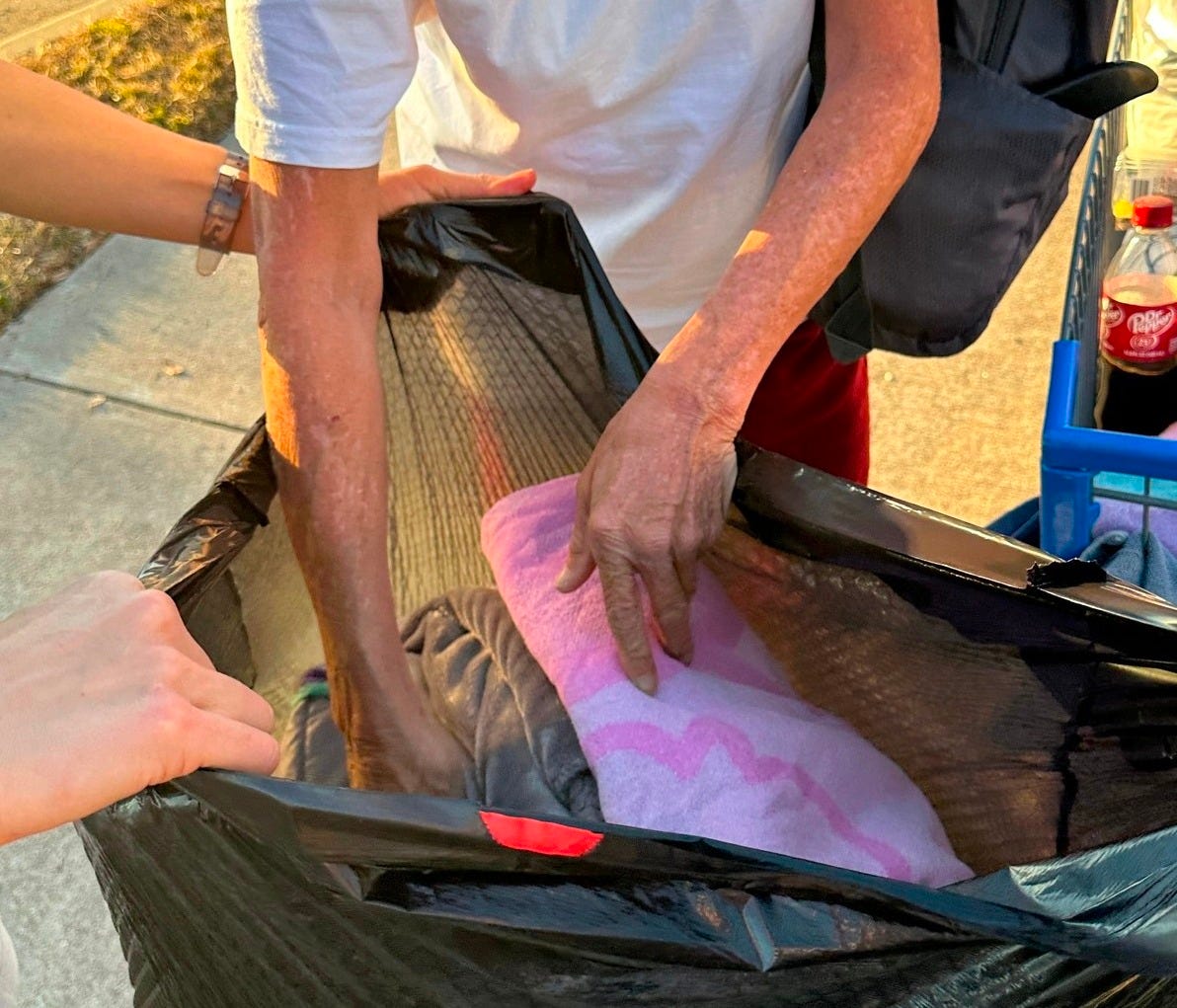
I had $150 left in my freeze fund and I wanted to use it for what she asked: a military-grade 4 person tent so she could set up her lost camp in the woods. My friend Ana and I went to pick her up. We put all her belongings in black trash bags, tied them and stashed them in my car.
When we got to the apocalyptic Army Surplus store, the tents they’d promised were outside in a pile under a downspout and filled with black mildew.

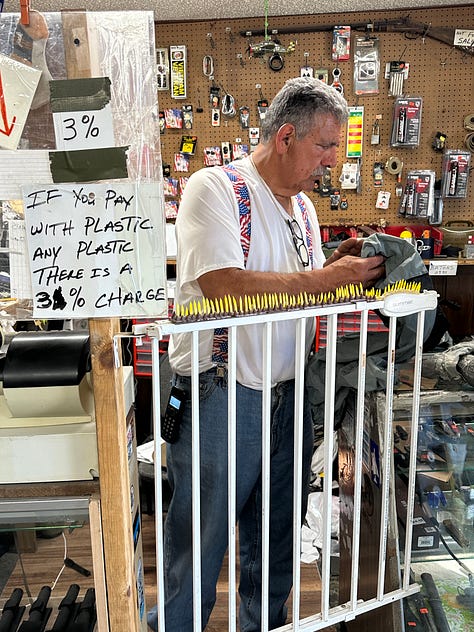
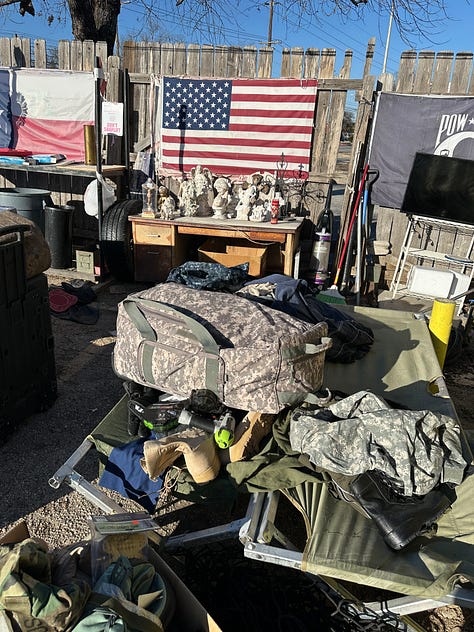


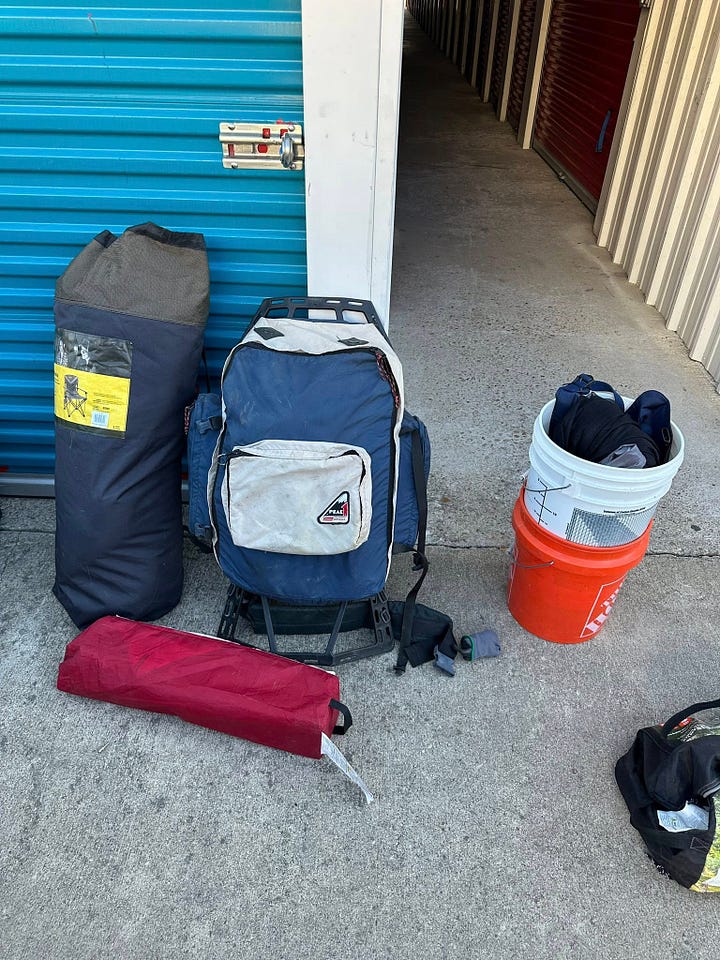
It was getting dark and there was no suitable tent for us to set up for her yet I had her and all her stuff in my car and she was expecting a safe place to sleep. Ana started looking for used tents on Facebook. I started driving. With the $150, should we buy her a flimsy tent at Walmart or Academy Sports or find a cheap motel so she could rest for one night? Ana and I didn’t want to go in the woods where lots of people sleep to try setting up a tent without flashlights or protection.
“Would you be comfortable in more of a camping tent than a military tent?” I asked.
“I’d be thinking about the lions and tigers and bears and the men,” she said.
We kept driving as I’d gotten lost. She started feeling safer. She started humming songs and talking. We talked about her life--she’d been a nurse’s aide, a CNA, and worked as a prison guard, and cared for runaways at her home. “I hope I can see my father before he dies. He has liver cancer and is on dialysis.” I snapped to attention.
“Where is your father?” I asked.
“He’s in Kansas,” she said.
“Do you have any other family there?”
“Yes, I have all my kids. I have four boys and three grandkids. All boys but I’m hoping I get a girl baby sometime!”
“What brought you here to Austin?”
“I came here to Texas to get married six years ago. But it didn’t work out.”
“Would you like to go back to Kansas? Would you have a place to live? Would people take care of you?” I asked.
“They sure would. I’d go back there in a heartbeat. But I have no way how. I have no money. All my stuff was stolen so I have no ID,” she said.
“If we got you a bus ticket and set it up, and called your family, and got you warm clothes for winter, would you want to go back soon, in the next few days?”
“Yes! Yes I would! I’d go back there to the residence! All I have to do is walk up and I have my own house. I have the house next to my father.”
Belinda said she has four children, a living father, and a small home in her name where her disabled brother lives! She has been living outside for several years, dealing with cancer, trying to get into supportive housing, praying, going to hospital and caseworker appointments on the bus and by foot.

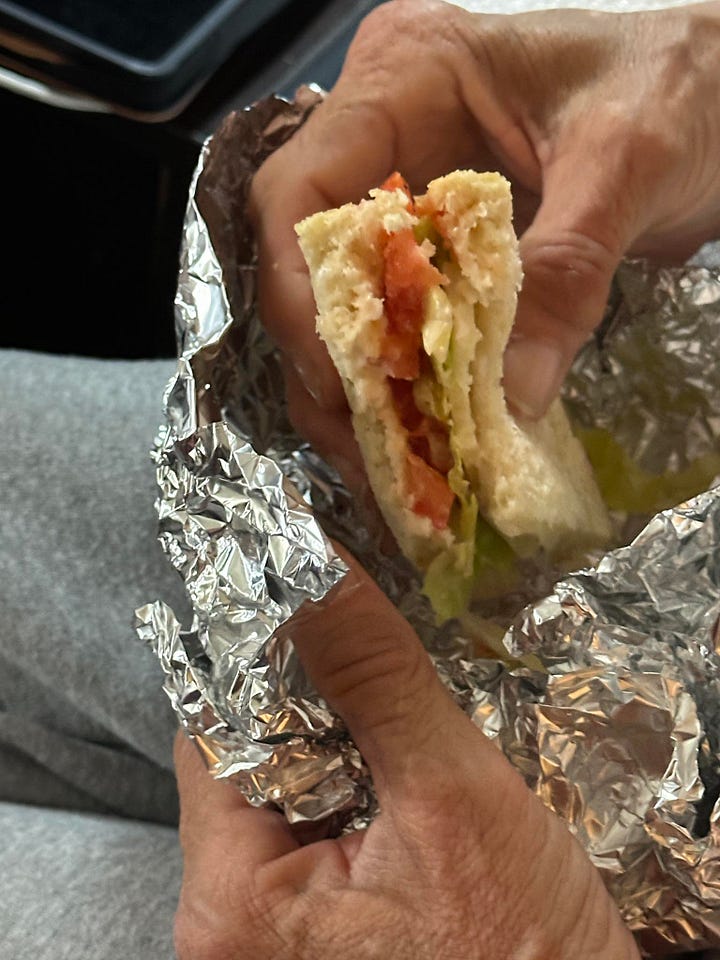

I saw the glimmer of a possible solution. Solutions are, undoubtedly, fragile and subject to change. But when people feel safer, their own gifts and inner resources can rise up. They may find their own paths.
The next step would be to find and contact Belinda’s family. She knew her father’s address but had no current phone numbers or emails for family members and hadn’t for over a year. She also didn’t have a phone or remember her email address.
We met up with Ana in the Academy parking lot as night fell. I said, “Left turn! We may be getting a motel and a bus ticket instead of a tent.” We sat on the sidewalk with Belinda to talk about her options and strategize. I decided to rent her a room for two nights at a motel so she could finally sleep, and we could work on this plan together. If it were possible (cautiously possible) to get her home, that would be worth an investment of money and time.
When people who live outside are in a hotel room, feeling safe, rather than on guard, they can think about it all and make moves for change.
I wouldn’t get her a ticket on a bus to Kansas in subzero weather unless someone will definitely be there to receive her and welcome her. If we can’t make contact, we will be back to finding a good tent she can live in.
I talked with her about writing her story and sharing it online to raise funds for her. “Sweetie, my life’s an open book,” she said. “I want to do what will help you help me.” I decided to front the money and raise funds overnight to pay for her motel. I checked her in.
My beautiful mom put a bag of winter clothes together for Belinda from her closet; they’re the same size, tiny ladies. My friends dropped off more. For a person trying to somersault beyond the street, that self-worth elevation can be easier with personal presentation.
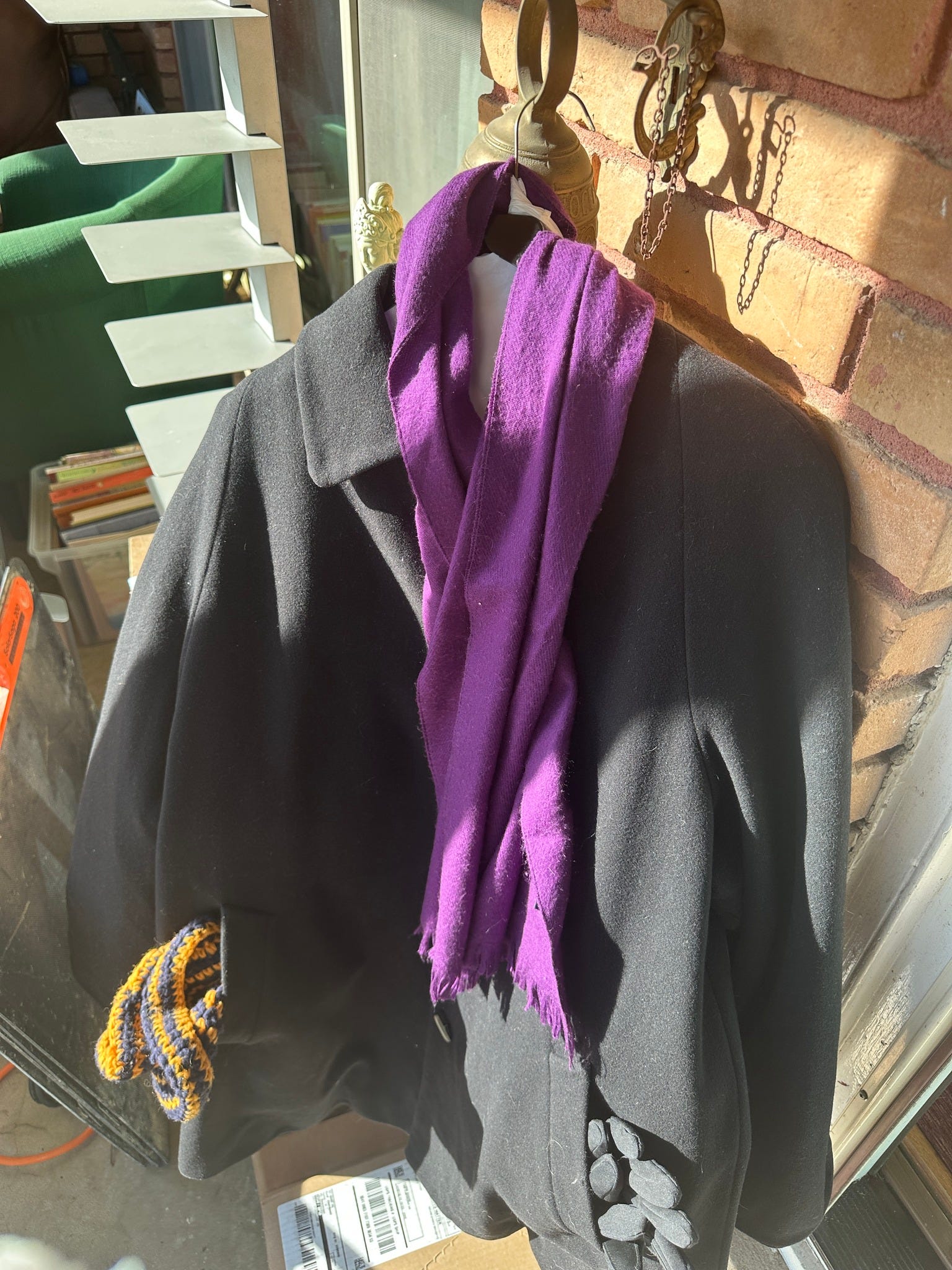
I found some jewelry for Belinda in my drawer. Norma offered boots in her size. Ana bought a box of brown hair dye belinda requested (”my greys thank you!”) Who among us does not want to look our best?
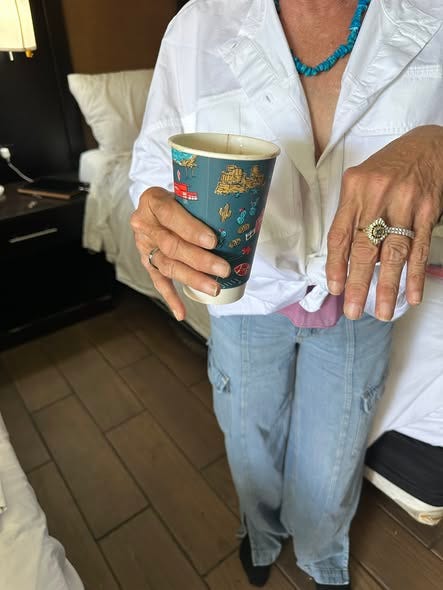
Could we help this elder get off the street? I hoped we could put her on a Greyhound for a 28 hour ride, with a picnic basket, some cash, a phone programmed with her family’s numbers. But she didn’t have any identification. It is the era of fascism; armed officers might enter anywhere and demand documents. I made a note to call the last place she’d gotten services and ask them if they had any paper copies of her state ID in their files.
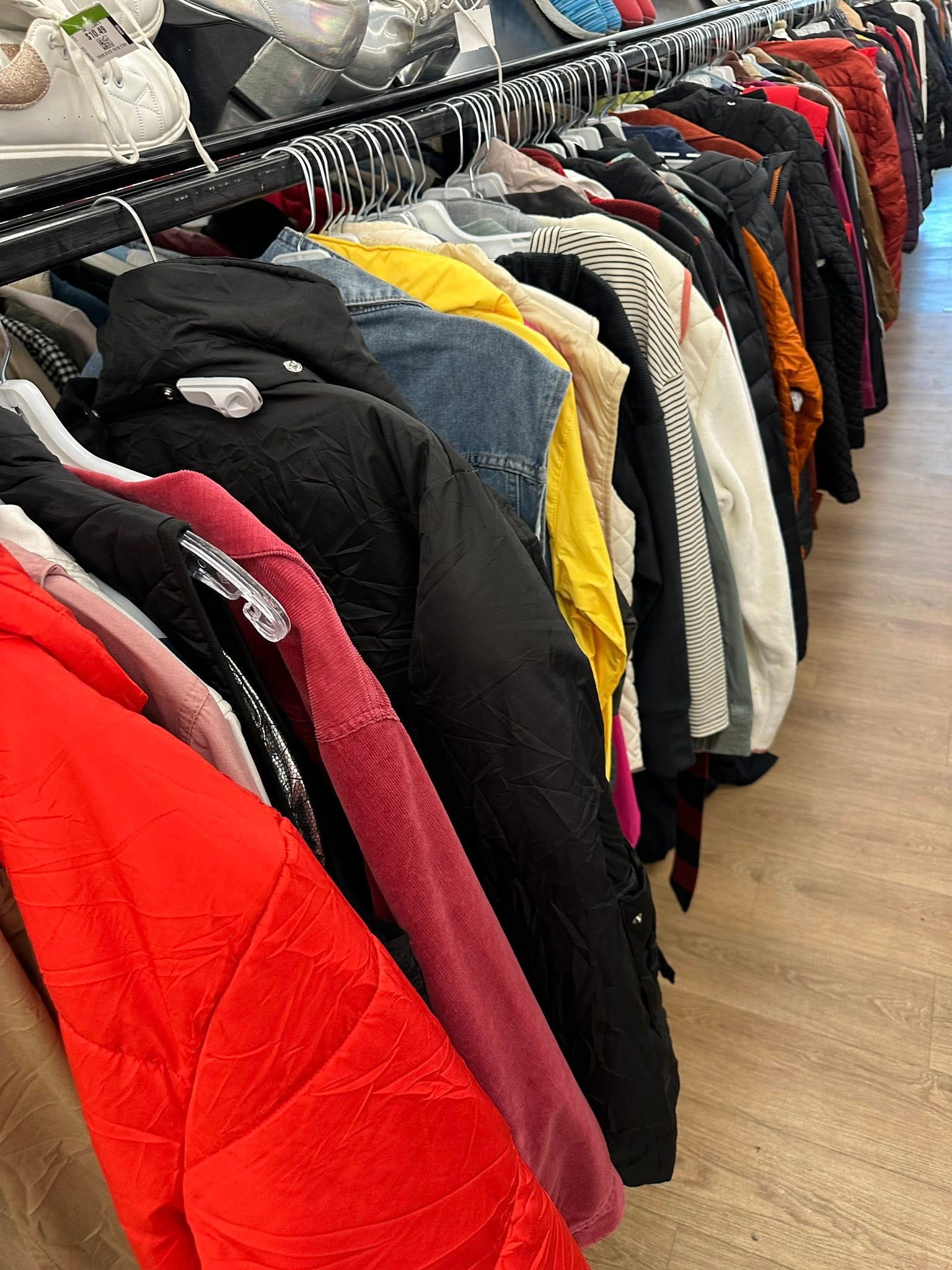
After the first night in the motel, Belinda trilled, “You have to see me, I look like a woman again. I feel so much much better. I feel like me. Almost human, not perfect but getting there!” I went to Texas Thrift to find her warm clothes that could meet a Kansas snowstorm.
She spent the day thinking about how to reach people. With the help of my mutual aid friends, we located her father’s address and a bunch of phone numbers online. I wrote messages to her relatives on Facebook. My friends called the police department, the county clerk, and other officials in her county, but didn’t come up with any cell numbers.
I had a flash of an idea: with her father’s address, she could write a letter. I brought blank paper and a pen to the motel room. She agreed, sat at the desk, hands trembling, to write. “Dad, I need to come home. Been trying to call you, lost number, no luck. I need to come home…”
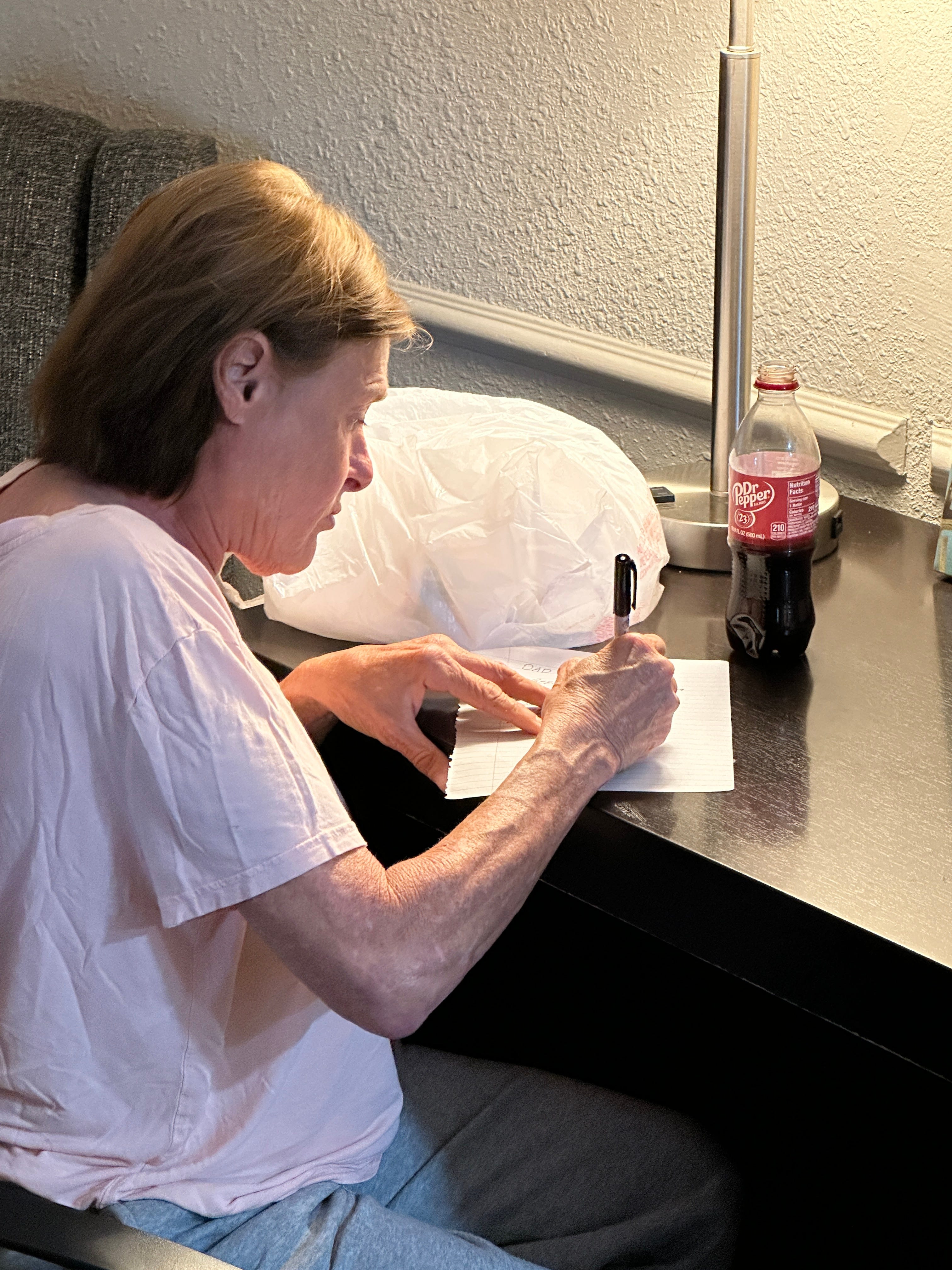
She wrote for half an hour, five lines on the page. I drove to Fedex and overnighted the letter. I got donations enough to keep her in the motel another few nights while we waited on a reply, so her progress wouldn’t be interrupted.
Belinda said she has a philosophy of not putting negative energy or anger into the world. She tried to make that real as a prison guard: not showing anger to inmates so they could learn to trust themselves. She said she learned this approach in foster care as a child.
This story will continue in the next missive. Thank you to my paid subscribers who help support this work with people living outside.
Comments
Nothing yet. Say the first thing.
Sign in to join the conversation.