
Since the chapter restarted in 2024, Albuquerque DSA has endorsed two successful campaigns for local office: Eleanor Chavez for state house district 26, and Stephanie Telles for Albuquerque City Council District 1. Both of these campaigns involved a direct face off of a DSA-backed candidate against an openly Republican opponent. Both of these campaigns took place in districts on Albuquerque’s West Side. And in both of these districts, the DSA-backed candidate outperformed Kamala Harris.
This does not necessarily mean that Telles and Chavez won a large number of Trump voters. Telles ran in an off year city council election with significantly lower turnout than the 2024 election, although she also significantly outperformed Democratic Mayor Tim Keller against Republican challenger Darren White. Chavez ran on the same ballot as Harris, but it is common for some voters to only vote in the Presidential election and not the “down ballot” contests.
Still, this over performance significantly undermines the typical advice of the Democratic consultant class. Not only were Telles and Chavez electable despite their support from DSA, they performed above the expectations of a Democratic candidate in their districts. Could this be a dynamic unique to Albuquerque’s West Side? Or does it suggest more broadly that democratic socialism is a much more viable strategy than common wisdom would portray?
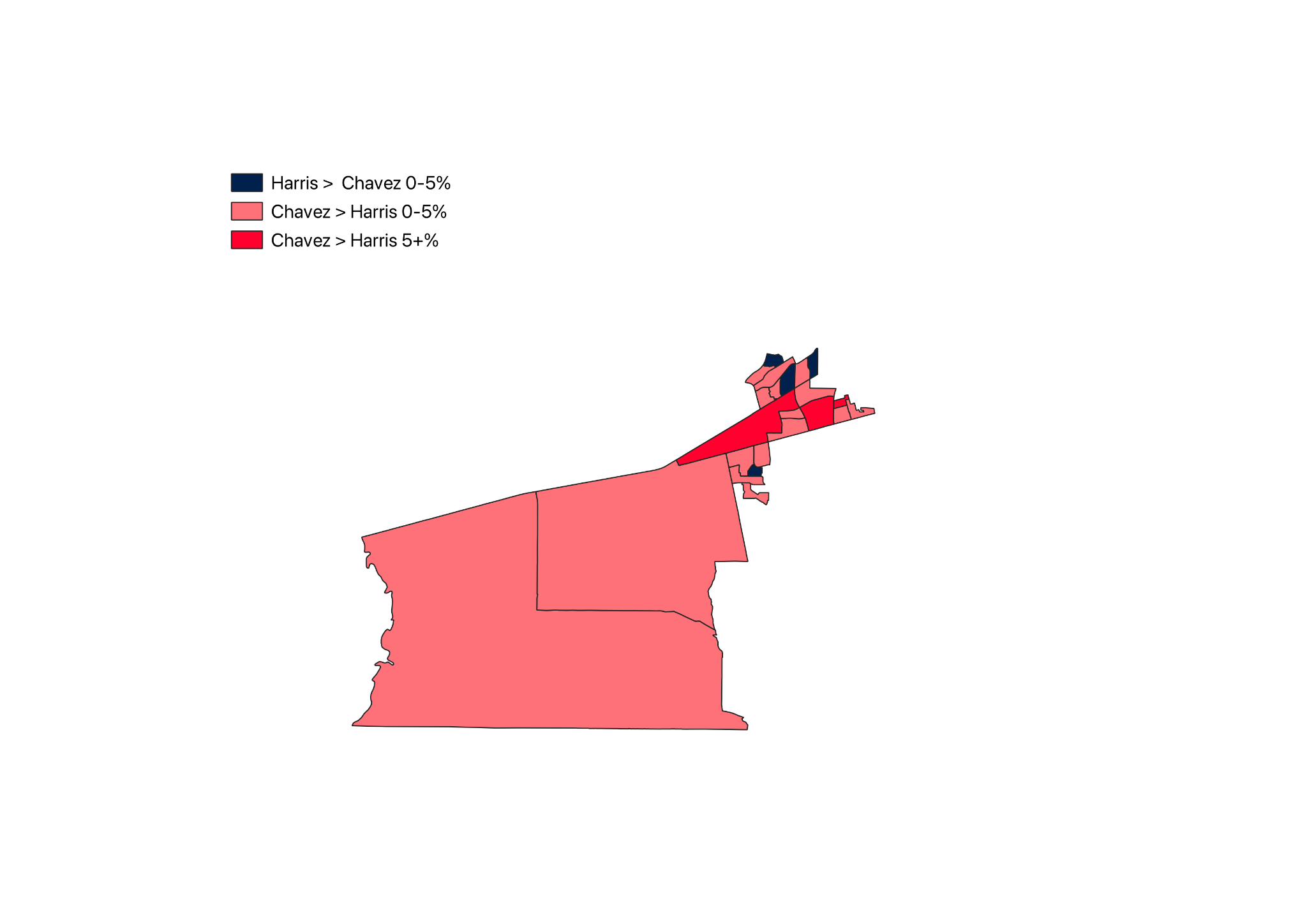
We can begin by examining HD-26. In 2024, 10,836 people voted in the Presidential election from this district, and Kamala Harris received 57.0% of the vote to Trump’s 42.6%, while Eleanor Chavez received 58.2% to her opponent’s 41.8%. Both Harris and Chavez underperformed Joe Biden, who won in the district with 64% of the vote. The comparison of Harris and Chavez’s number can be seen in the figure below, where the precincts shaded in red were ones where Chavez overperformed Harris, and those colored in black had Harris overperform Chavez.
The District 1 numbers are a bit harder to compare, as the city council elections happened a year after the Presidential election. Furthermore, the city of Albuquerque boundaries divide some of the precincts. Still, we can get a rough estimate by comparing Harris’s result within the precincts included in District 1 to Telles’s performance, as shown below.
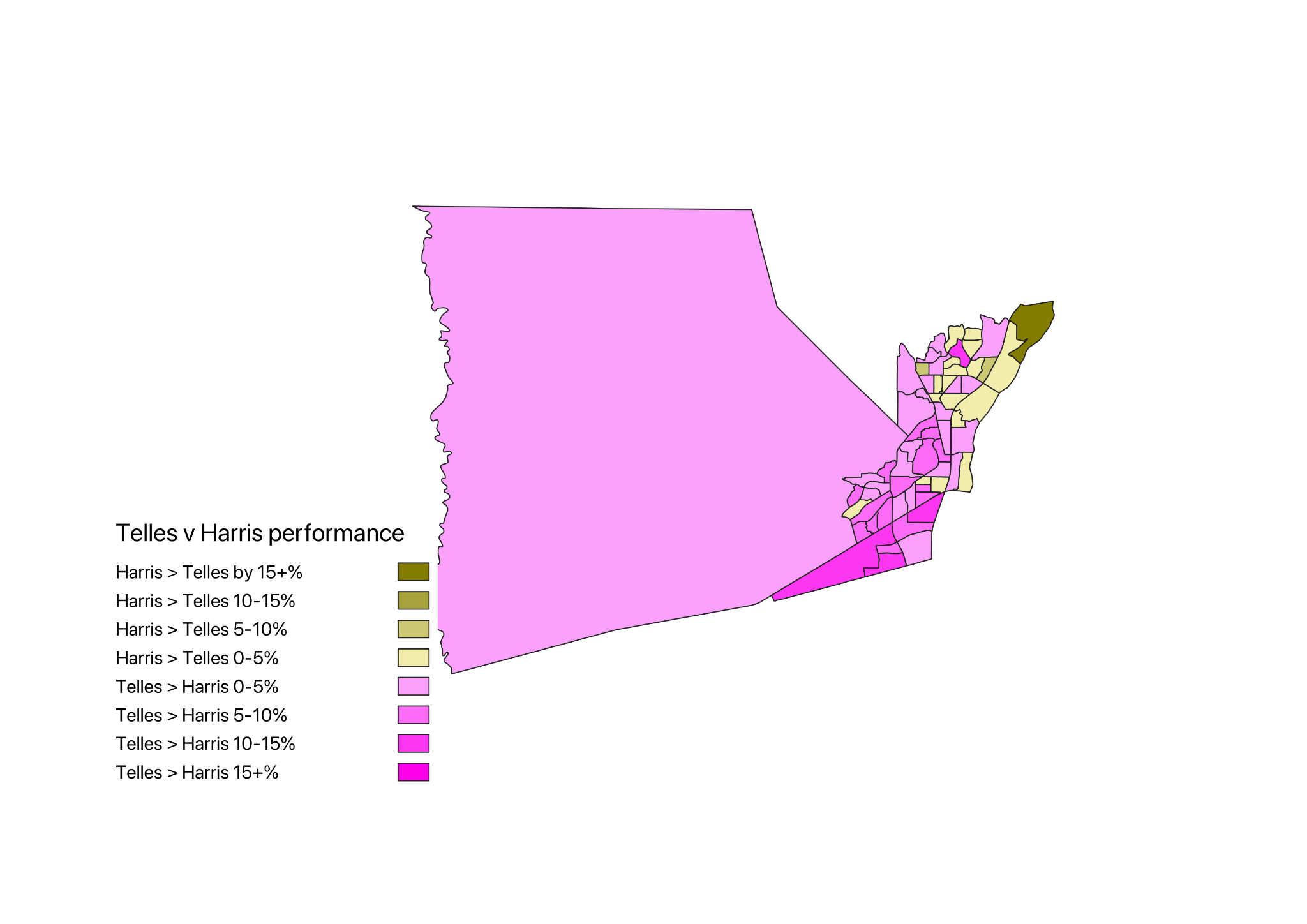
We see that while Telles outperformed Harris in the district, this was not a uniform outperformance across different geographical areas. Telles’s strongest areas were in the south/central parts of the district.
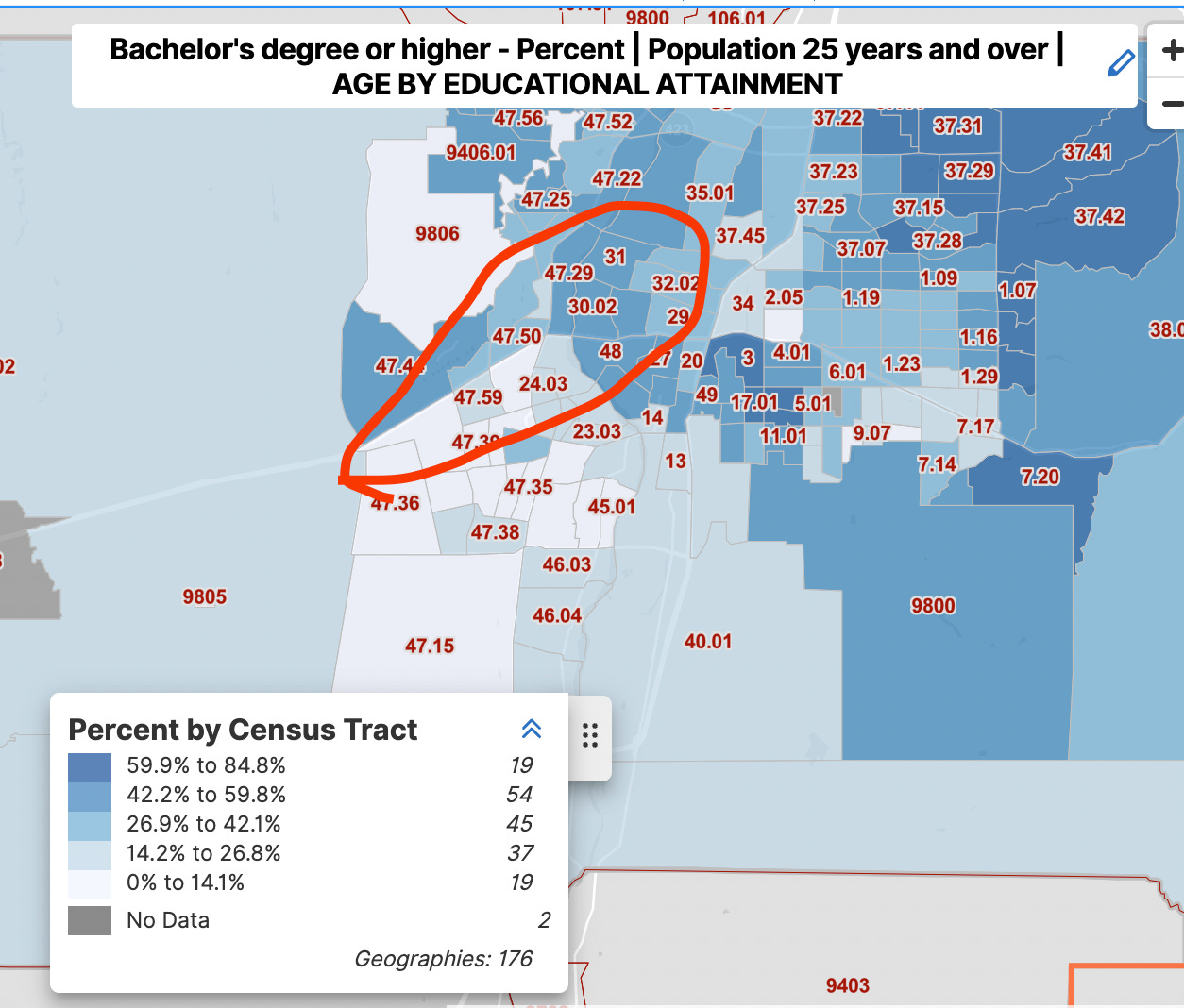
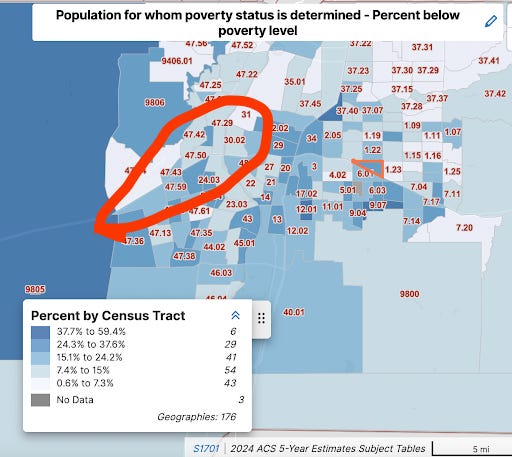
By examining US census data, we can note several characteristics common to the areas that Telles and Chavez overperformed in, indicated in the maps below, with the regions in both Telles’s and Chavez’s districts circled in red. For one, they are areas of the Albuquerque Westside with the lowest rates of having a Bachelor’s degree, and the highest rates of poverty.
We can also compare Telles’s performance to that of Albuquerque Mayor Tim Keller, who ran on the same ballot against Republican challenger Darren White.
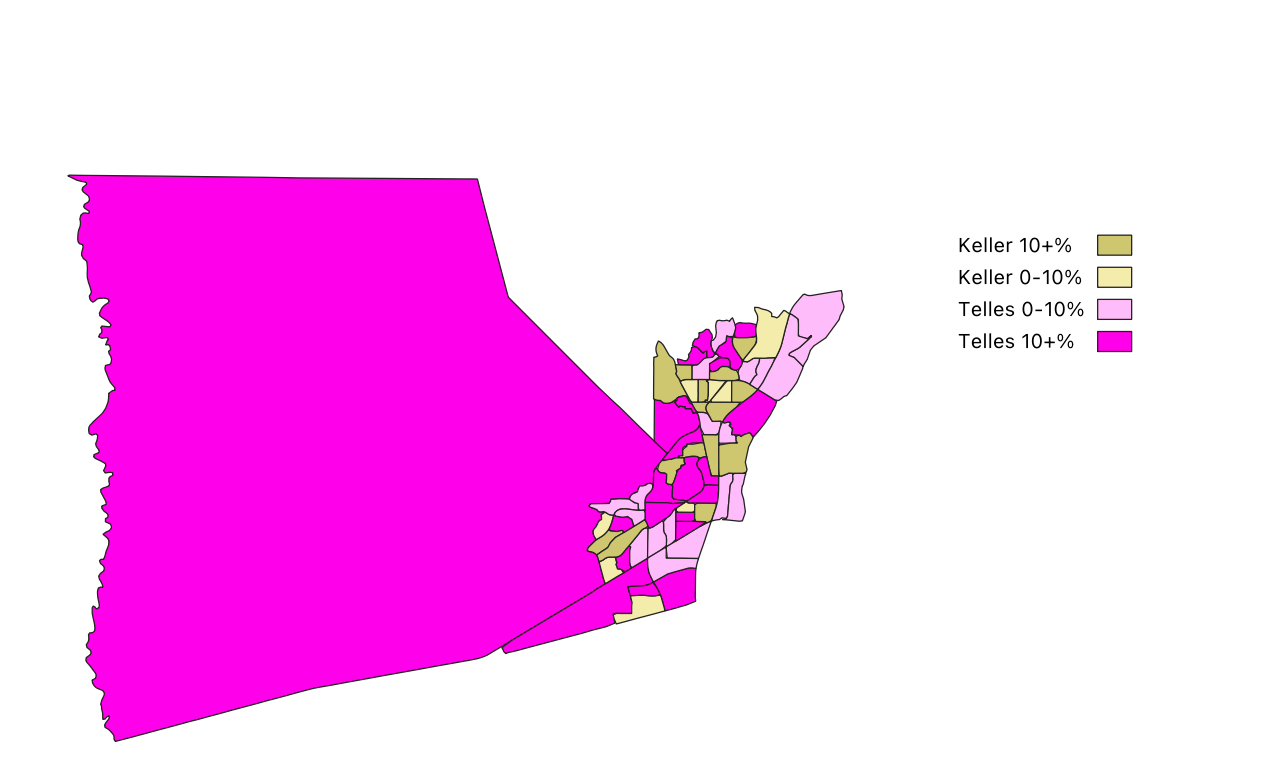
This map is slightly different from the Telles vs Harris comparison. However, we can still identify many of the same higher poverty areas as the regions where Telles overperformed.
What can we conclude from these charts? To be clear, this is still a relatively small sample size, and the nuances of Telles’s and Chavez’s campaigns must be taken into account. However, the most basic takeaway is that a socialist-endorsed campaign is not necessarily put at a disadvantage in a conservative area. Furthermore, the examples provided suggest that it is particularly in lower income, less professional communities where these candidates have overperformed - precisely the areas where Democrats have seen the sharpest declines.
The map below from votehub.com shows the area on the Albuquerque westside, colored by partisan shift from 2016 to 2024. We see that the areas of overperformance, including the entirety of HD-26, have undergone a strong Republican swing.
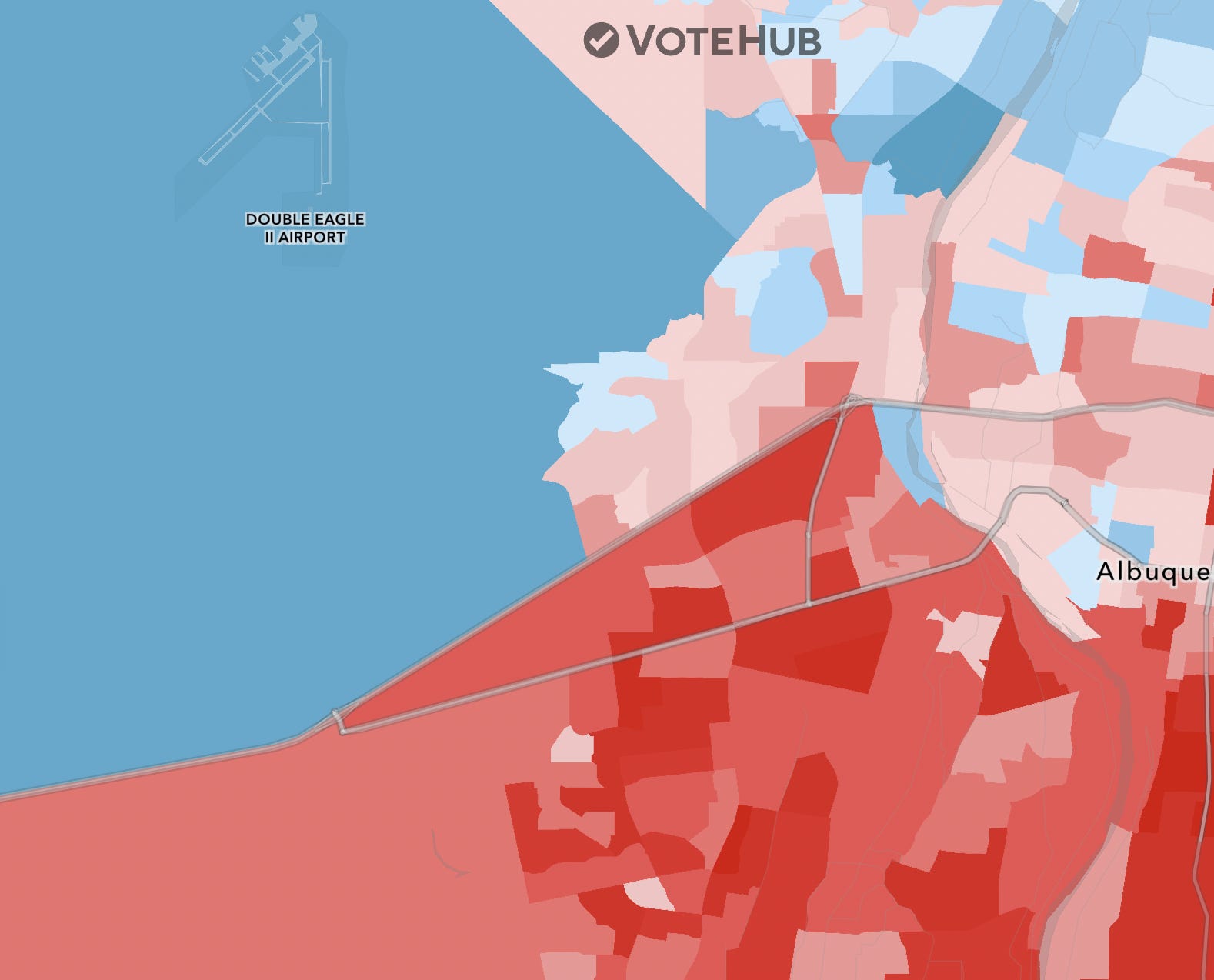
From the perspective of the socialist approach to electoral politics, this confirms that we must not restrict ourselves entirely to safe blue partisan areas; we can and should campaign in the communities seeing the most pressure to swing to the right. The Trump campaign regularly has appealed to the aesthetics and concerns of lower income voters, with pseudo-populist campaign promises such as ending the tax on tips, and assurances of industrial protectionism. We are rapidly seeing the Trump administration fail on its promises, and socialists have the unique message to reach out to those who feel betrayed by the political system.
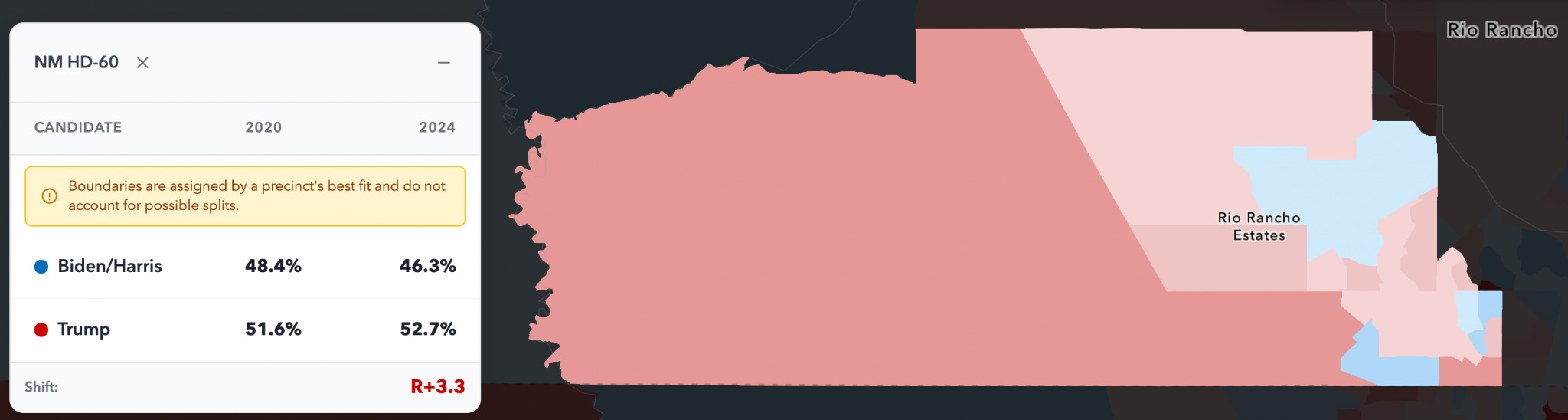
We have that chance this year with Luke Jungmann’s campaign in New Mexico’s House District 60. Jungmann is running openly as a democratic socialist and has proudly touted his affiliation and endorsement from Albuquerque DSA. This district narrowly voted for Trump in 2024, a slight rightwards swing from 2020. Jungmann’s victory here would further demonstrate the viability of a socialist platform among swing voters, in addition to adding a potentially decisive vote in the New Mexico legislature on issues of healthcare, housing, and worker’s protections.
There are no easy solutions to defeating the rise of the far right in the US. However, we must make the strongest effort that we can, and we can do so without sacrificing our values.
The views expressed in this piece are those of the author and not necessarily those of The Red Rose, any individual editor, Albuquerque DSA, the Democratic Socialists of America, or any individual therein.
Do you have thoughts on socialism in New Mexico? Submit your idea here.
No posts
Comments
Nothing yet. Say the first thing.
Sign in to join the conversation.