
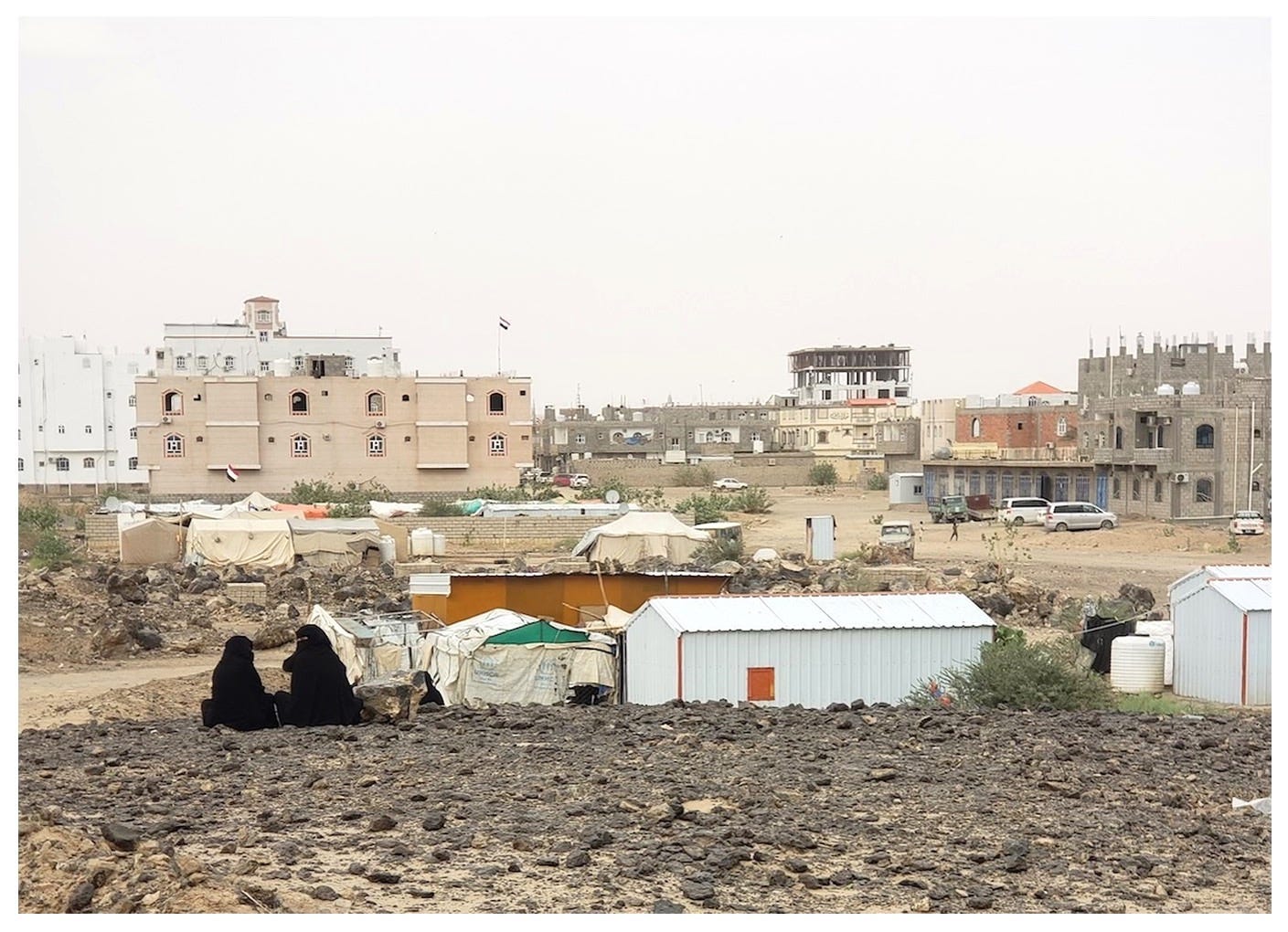
SANA’A, YEMEN — Yemeni women humanitarian workers, who have been the backbone of our country’s humanitarian response, feel “rendered invisible” by a dual crisis: repressive travel restrictions and mass layoffs at international non-governmental organizations (INGOs).
Six out of nine women staff members were let go from my organization in Sana’a. The official reason given was funding shortages. Because only two men were laid off, many women employees believe the real issue is related to the male guardianship policy (mahram), imposed in 2022 by the Houthi de facto authorities. Additionally, as one program staff member angrily told me, women have been excluded from field trips and training abroad due to these restrictions on ourfree movement and the costs associated with bringing a guardian.
“I believe my contract was ended not merely due to funding shortages, but rather significantly influenced by broader societal challenges,” a longtime INGO worker with another Sana’a-based nonprofit told me, citing widespread restrictionson us and specifically humanitarian workers. The termination of her employment, she added, “reflects not only the financial constraints faced by our organization but also the painful realities that limit the professional opportunities and mobility for women in the field. I can’t help but feel a profound sense of loss and frustration as I navigate this difficult transition.”
On “Handling Everything”
The mahram policy has made it complicated and expensive for women to get permission to travel. This approval from our male relatives also needs to be certified by officials in the De Facto Authorities (DFA) areas, which cover the capital Sana’a and most of the Yemeni population, who live under Houthi control. Since 2022, the rules have gotten stricter. Now, women usually need a male guardian to be physically present with them, even if they have all the required documents to travel alone.
Psychologically, these rules take away our independence and keep us worried about being delayed, denied permission, or facing social consequences. For humanitarian workers, even with the right documents, our freedom of movement is always at risk. Over time, this can lead women to avoid fieldwork, miss assignments, and feel discouraged about whether they can travel at all.
The financial burden of this dual crisis hasn’t just fallen on women workers. Some NGOs choose to cover the travel, meals, and lodging costs for mandated guardians, making it more expensive to keep women on staff in a time of shrinking budgets. This is a heavy strain and leaves less support for humanitarian work. Meanwhile, other organizations ignore this issue and expect employees to cover these expenses themselves. In both cases, the pressure is pushing women out of field roles — and sometimes out of their jobs.
The mahram policy is raised in job interviews for women candidates. Another humanitarian worker told me that during an interview for a position requiring field travel, she was asked how she would “handle” the restrictions on women. She suggested bringing her mahram along; the interviewer stated that the organization wouldn’t cover the costs for him and, as a non-employee, he wouldn’t be listed on the work permit. She responded that they would “travel discreetly.” The interviewer warned her that the organization wouldn’t have any legal responsibility if something happened on the trip. Concerned she might be ruled out for the job, she ultimately said: “No problem, I’ll handle everything.”
These conditions put her in serious danger in a war context. Without an approved guardian and without clear legal protection from the organization, she could face harassment, threats, detention, interrogation, or being treated as suspicious at checkpoints. That is why agreeing to “handle everything” can mean accepting unsafe and unprotected conditions just to keep the job.
It seems that national and international NGOs often favor men for remaining positions because they are legally “easier” to deploy. This creates an environment where jobs are effectively reserved for men, leaving women to bear the economic burden and the feeling of being left on their own by the organizations they served for years — rendered invisible. These are the same international community members and INGOs that once spoke about women’s rights and how to be free and fight for our rights, yet now they have abandoned us.
As humanitarians, we work to protect vulnerable groups. As Yemeni women, we are an unprotected vulnerable group ourselves. Rather than helping those at risk, international or national NGOs have, in their view, shifted women humanitarian workers from empowered professionals to vulnerable recipients.
Jawaher Al Wadei is a Yemeni journalist, writer, and member of the Arab Journalists Federation. Her reporting, notably published with Deutsche Welle Arabic, focuses on critical humanitarian and social issues, including child malnutrition and the impact of war on women. Beyond her journalism, she has worked with INGOs as a project officer during Yemen’s cholera and COVID-19 crises, as well as a media coordinator and partnership officer in collaboration with women-led initiatives. By bridging journalism and development, her work elevates marginalized communities and advocates for resilience, social justice, and gender equality. On January 1, Jawaher published her first piece with Above the War, “Rebuilding a Yemen We Did Not Destroy.”
Comments
Nothing yet. Say the first thing.
Sign in to join the conversation.