
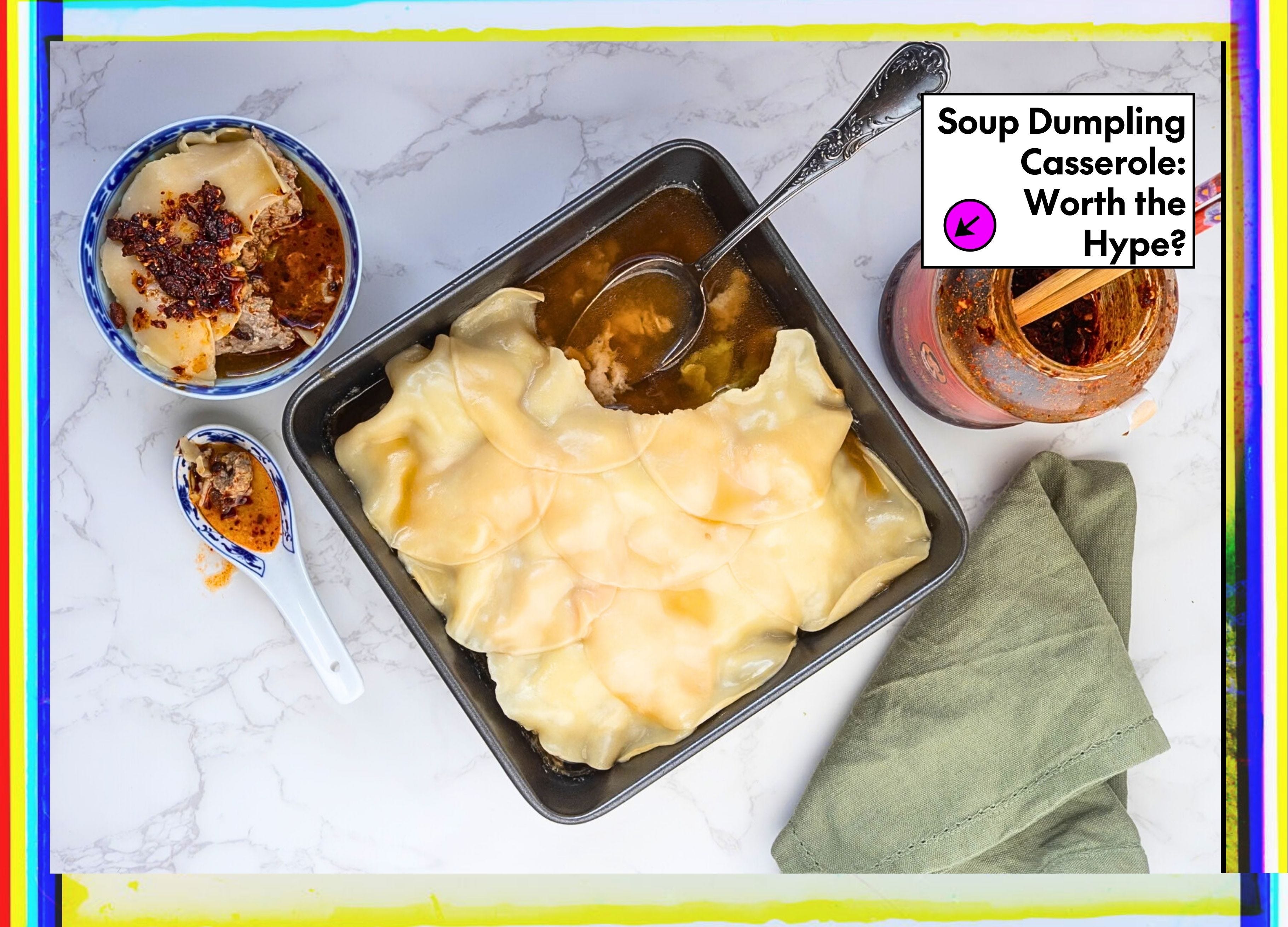
Welcome to Dumpling Hacks, where Mei Li takes on the dumpling variants making their way around the internet—and reports on which ones are actually worth trying at home. (Catch up on the first installment, which test-drove the smash dumpling.)
For round two of Dumpling Hacks, we’re taking a look at a Chinese soup dumpling, or xiaolongbao, repackaged as a family-style casserole dish. Other online names for this concoction include giant xiaolongbao, Chinese lasagna, soup dumpling lasagna, layered soup dumplings, and lazy soup dumplings, among others. What they’re all describing: a large-format layered casserole, comprised of soup dumpling ingredients.
Soup dumplings are one of my favorite foods in the entire world: dumpling wrappers folded up into fancy little pouches, filled with well-seasoned pork and hot savory broth, steamed until piping hot. They’re notoriously difficult to make for two main reasons: 1) how do you fold those tiny intricate pleated pouches? and 2) how exactly do you get soup inside a dumpling?
This is where the genius of the soup dumpling casserole comes into play. There’s no complex folding process, and no mysterious cooking magic where somehow boiling hot soup gets inside a sealed wrapper. It’s so smart and easy! (But to answer those questions anyway: 1) with the right dough and a lot of pleating practice; and 2) by stuffing the dumplings with a filling that contains meat jelly—made with added gelatin, agar agar, or very collagen-rich meat—which then liquifies when the dumplings are steamed.)
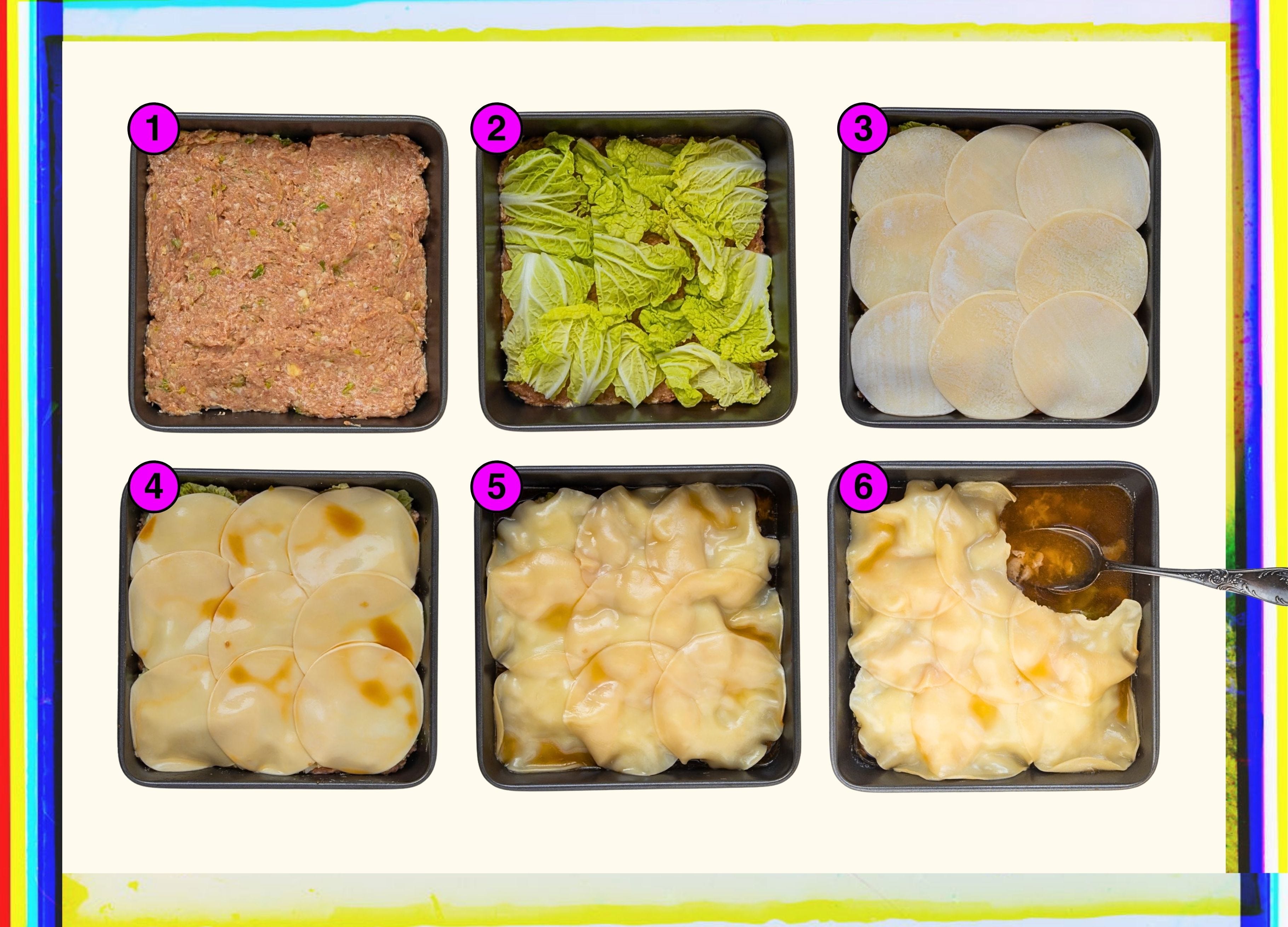
Instead, for this variation, you make a typical dumpling filling with ground pork and Chinese sauces and aromatics, then layer that meat up with pre-made dumpling wrappers and sometimes leafy greens and repeat until you have a family-sized layered casserole. Judging by the viral videos, this dish seems to deliver on both my Dumpling Hacks criteria: ease (I’d rather not fold dozens of individual soup dumplings on a weeknight or make my own gelatinized meat stock) and flavor (how can you go wrong with all of the soup dumpling components in one dish?).
This post by @painkllapril happened to be the first version of the giant casserole soup dumpling in my feed, so I used it as my starting point. Her recipe called for layering the casseroles into individual ramekins, so I made one for myself and one for my husband. I mixed up the meat and aromatics in the food processor, pressed in frilly leaves of napa cabbage, and topped each one with a dumpling wrapper. I repeated the process with another 3 layers, then poured in water to create the “soup.” I steamed the ramekins for 20 minutes, handed one off to my husband, and sat down to eat.
My first thought: Damn, I should have saved both these servings for myself. The small bowl of layered soup dumplings offered all the best aspects of xiaolongbao: silky steamed wrappers, rich porky broth, and tender ground pork with notes of ginger, garlic, and soy, like a warm umami hug.
So far: 10/10 for the deconstructed layered soup dumpling on flavor and ease, at least in comparison to making real soup dumplings. And if one ramekin was not enough, then clearly doubling the recipe and using a 8x8-inch baking dish would solve the problem. Right?
Unfortunately, this is where I ran into issues. The instructions to double layer the wrappers led to thick bands of starchy raw dough in the casserole dish, not the slippery thin noodle-like layers I’d been expecting. I increased the steaming time to cook the casserole further, but even an additional ten minutes didn’t fully cook the wrappers and led to unpleasant floury bits within the dish. Turns out there’s a reason you’re supposed to pre-cook lasagna noodles (or buy a special no-cook kind!).
But I’m willing to admit user error on my part: First of all, I used store-bought dumpling wrappers instead of specifically labeled wonton wrappers, which are usually rolled much thinner. And since I’d laid my circular wrappers in a shingle pattern in that double layer, a few spots had ended up with a dense four-wrapper-thick layer of dough that couldn’t steam properly.
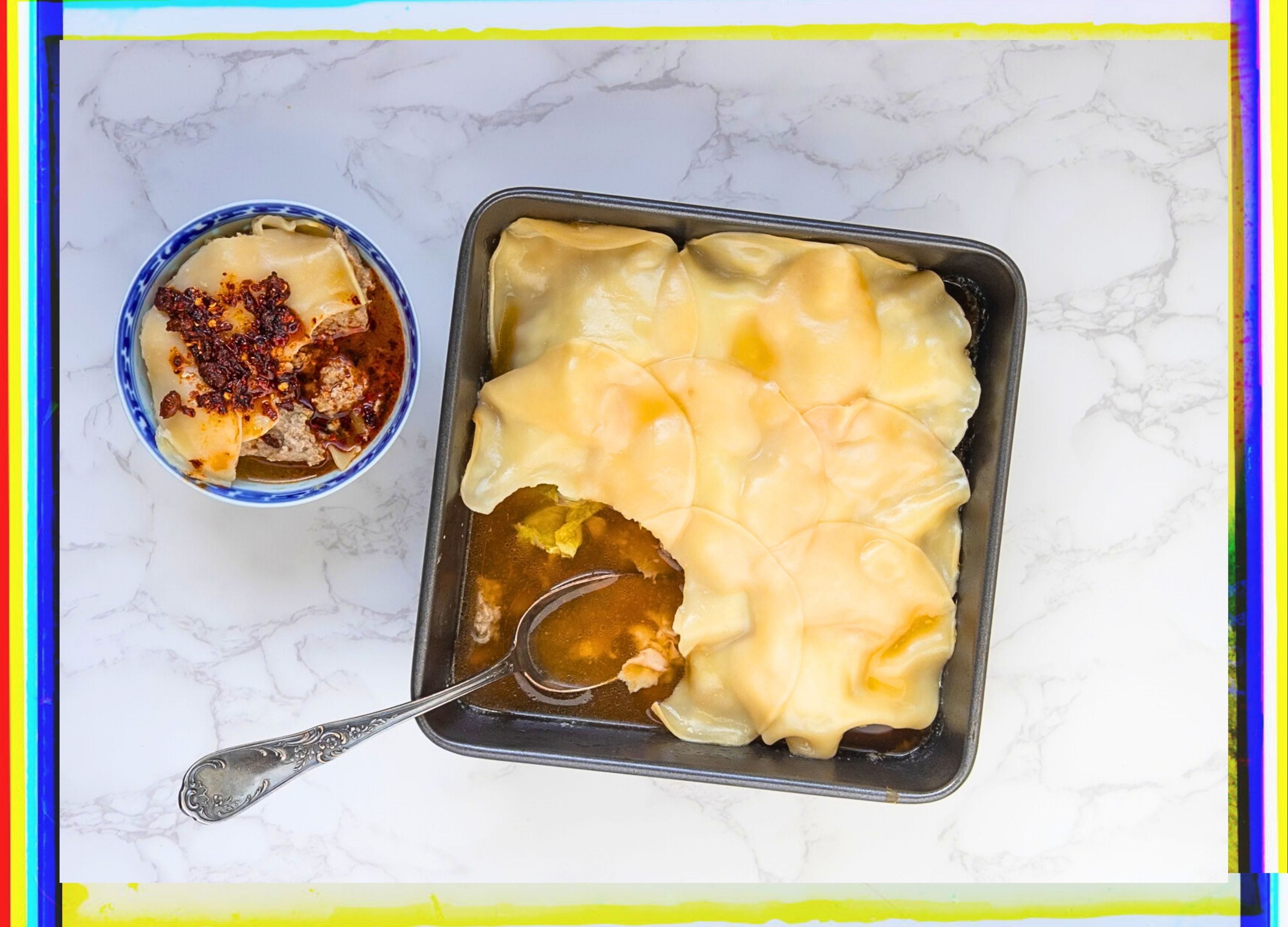
My next attempt at the large-format soup dumpling lasagna fared much better, with only a single layer of wrappers in the center. I also brushed on a mixture of soy sauce and water to keep the top layer moist and flavorful, as inspired by this post from @waskitchenrecipes. It all turned out as advertised: You scoop up a large piece of the casserole into a big bowl and follow up with a ladle full of the soup that pools in the bottom of the dish. Once you have a steaming bowl full of broth, meat, wrappers and cabbage, top with a splash of soy sauce or chili oil or matchsticks of fresh ginger. It’s not a particularly pretty dish, but the flavors are spot-on with only a fraction of the effort.
Whatever you want to call it, this deconstructed soup dumpling casserole-lasagna situation is something I’ll be making again. It’s comforting, it’s delicious, and it’s an extremely satisfying dinner. What it isn’t is a true replacement for a well-made soup dumpling. You don’t get the ritual of placing a perfectly formed xiaolongbao onto a Chinese soup spoon and poking a hole with a chopstick to let the steam escape. You miss out on the heady rush of broth bursting into your mouth and the appreciation of the artistry and effort it took to create that single bite. But also, I’m fine with saving that ceremony for a visit to my favorite dim sum restaurants. I’ll let those experts put in the work and layer up the easy version at home. Chinese lasagna, welcome to the dinner rotation.
Below is the original “Chinese lasagna” recipe from @painkllapril. Use it as a general template, but before you dive in, these are my tips for casserole success:
To make it into a family-size casserole, double the ingredient amounts.
I don’t recommend double layering the dumpling wrappers. Make sure you buy specifically labeled wonton wrappers, or be prepared for a thicker, doughier layer. (Also, square wrappers would make it easier to cover the surface of the casserole without overlap.)
To make sure the dough is well-hydrated, you can brush each layer of wrappers with the soy-water mixture from @waskitchenrecipes, or dip the wrappers in water like in this video from @easypeasyjordan.
Can feed two1.
1/2 pound ground pork
1 thinly sliced green onion
1 heaping tsp of chicken bouillon
1 tsp brown sugar
1 Tbsp cooking wine
1 Tbsp soy sauce
1 Tbsp sesame oil
2 Tsbp grated ginger
1 Tbsp water
2 tsp oyster sauce
1/3 cup water or more
Napa cabbage leaves
Garlic chili crunch (for serving)
Once you mix up your meat mixture, layer up your soup bowl with ground pork, cabbage, double layer wonton wrap (you can add more or less layers). Once you get to the top, add the 1/3 cup of water (you can add more if you want more broth). Then top off with another layer of wonton wrap. Steam and boil for 20 minutes, top off with garlic chili crunch and enjoy while hot!
Note: This recipe has been very lightly reformatted from its original version, and otherwise is the same as posted. Refer to Mei’s notes above the recipe for recommendations on how to modify the recipe.
No posts
Comments
Nothing yet. Say the first thing.
Sign in to join the conversation.