

Hello! Anyone else feeling like no one knows how to do their job lately? That’s been the theme of my day, but the good news is: I’m my own boss and take myself to task, so at least I don’t have to worry about the call coming from inside the house. It also has gotten me in the mood to explore ethics and cultural dynamics, from shameless copying to predators. I’m bringing a “don’t mess with us” vibe this week. Ready to join in?
— Morgan
And more…
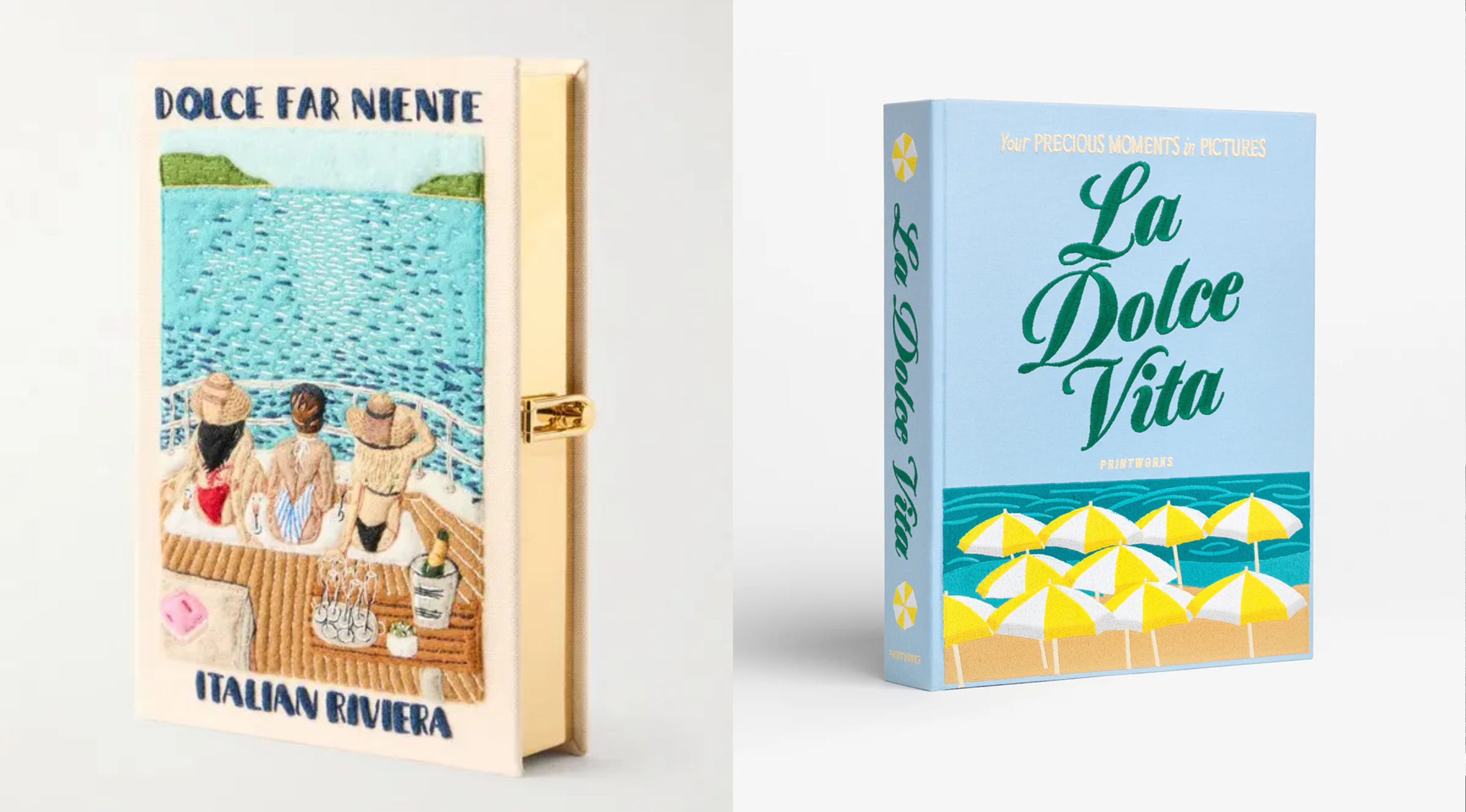
I stopped in my tracks when I saw a giant Olympia Le-Tan clutch. Or at least, I thought it was one. But no. Even though it had her signature embroidered “book” cover and sturdy structure, that’s when my eye began to find the differences.
It was confined in a thin shrink-wrap, had a belly band declaring that it was a photo album, and an embroidered “Printworks” logo just above.
Coco Chanel famously said, “Imitation is the sincerest form of flattery.” That may be true as a platitude to make sense of the behavior. But it neglects to address the three elephants in the room: who’s to credit? Who did it first? And who should be allowed to do it?
In the world of commerce, those questions come with actual stakes beyond dressing like someone you admire. The latter is innocent “Who Wore It Best” Us Weekly energy, not intellectual property theft. “The same but different” in the product space takes more than a reader poll to resolve.
Society wants us to see the glossed-over version of “there’s room for everyone!” Well, that’s not true when the “everyone” only existed when a big conglomerate swooped in to rip off a small maker who had the original idea. Capitalism has benefited from stealing for years, especially by appropriating from marginalized groups, BIPOC, LGBTQIA+, and women, to name a few.
To have this conversation of Olympia Le-Tan (est. 2009) vs Printworks (est. 2017) fairly, we also need to ask: who might have done this before Olympia? Before she became the go-to for embroidered book clutches, who was she “inspired” by?
With that, you can find two answers.
The first helps redirect our perception, privilege, and pocketbooks, accordingly, to the OG source. The second shows us how inspiration should be utilized. From my knowledge, Olympia did it the right way by taking a vintage, DIY concept of the book clutch (a hollowed-out book with a clasp) and putting a personalized spin on it with luxurious hand-embroidery.
But is a photo album enough of a spin on the original inspiration source? I’m not so sure, but you tell me what you think in the comments.
Content Warning: sexual assault and rape culture.
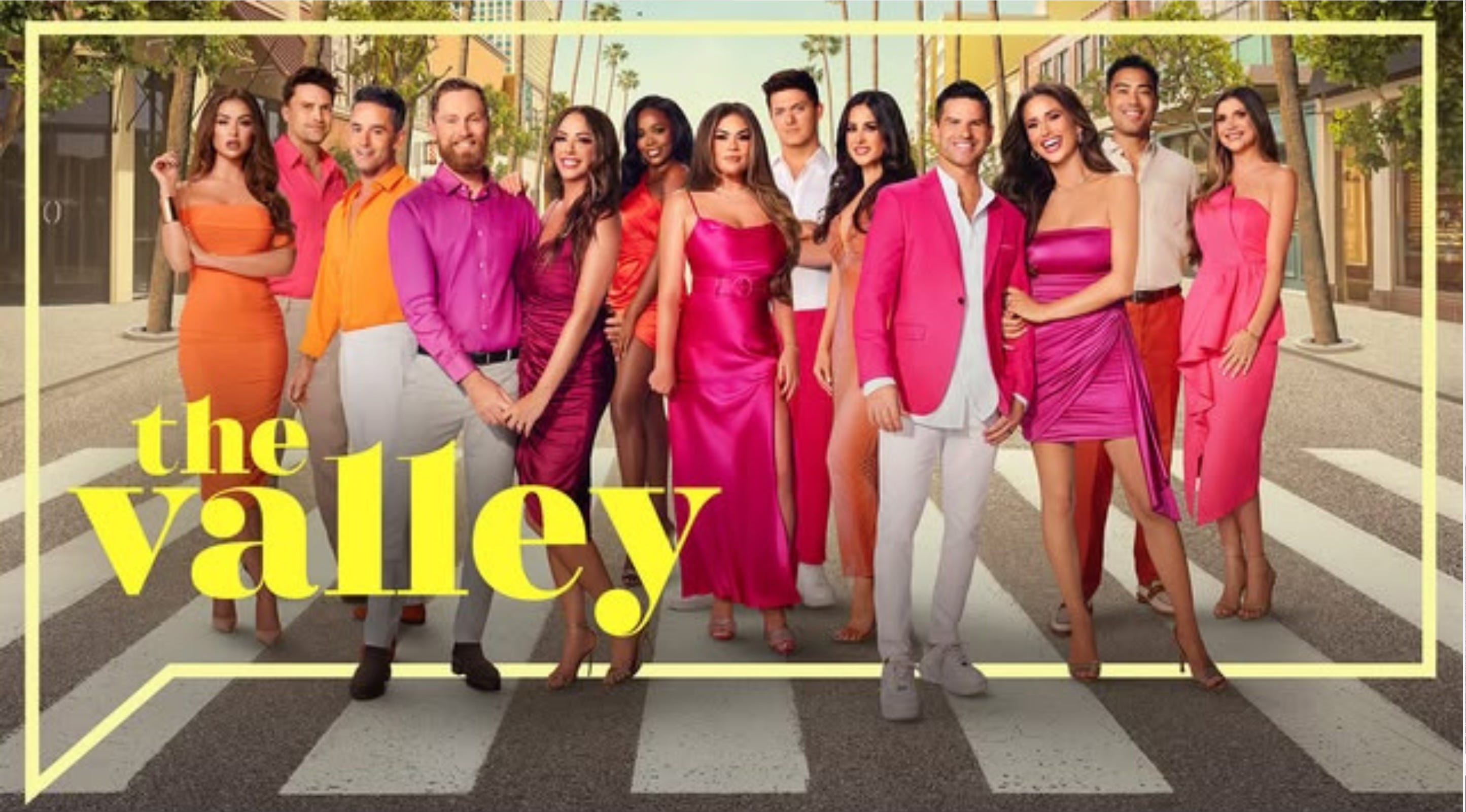
I should start calling this section of the newsletter the Bravo Corner. Journalist Tracie Morrissey recently did a deep dive into Bravo’s The Valley, examining what the show “reveals about patriarchy, rape culture, and the social choreography of friend groups”. She nails exactly what has been driving me crazy for the past two seasons. (Team Janet, btw.) But Tracie also brought up a point that left me feeling a little off:
I truly believe these three seasons of The Valley belong on a Gender Studies syllabus somewhere between Judith Butler and bell hooks. Sure, this is a show in which messy suburban millennials yell at each other. But more than anything, it’s a show about the social architecture of patriarchy.
— excerpt from “Flagged & Reported”
I was first introduced to rape culture1 at too young an age by a combination of Law & Order: SVU and MTV’s The Real World. One explicitly condemned it; the other blurred the lines in a problematic, pre-social media 90s way. But the “he said/she said” dynamic was prevalent in both. Today, while that dynamic hasn’t gone away, we’ve become both enlightened to its nuances (thanks to movements like #metoo) and desensitized to its presence.
That’s what The Valley represents to me. The presence of girlboss/girl power alongside shrugs of “he meant well,” and continuing to hold a flashlight to a woman’s behavior instead of holding the man who did something inappropriate accountable.
It shows how a new iteration of “he said/she said” has spread to the “friends of.” It’s not just about two people’s words; it’s debated in the group chat, the echo chamber of Close Friends, and even across the divided Friendsgiving table.
These nuances of our modern times bring us back to Gender Studies, as Tracie wrote, but in a way that steps off the battlefield of black and white and replaces the quest for truth and justice with a cycle of passive analysis into the gray areas.
And that’s exactly why Tracie’s syllabus idea felt off to me. Studying the problem isn’t always the answer. (As a writer, I know the research trap all too well.) Transforming our culture is what gets us closer, not a textbook approach. So how can we start to shift these narratives IRL instead of getting stuck theorizing about what’s wrong?
And get the group chat in on the change while we’re at it. Because 3am memes won’t save us.

Spoon theory was coined by Christine Miserandino in 2003.
…while trying to explain to a friend what living with chronic illness actually feels like. Sitting in a diner, [Christine] grabbed a handful of spoons off nearby tables and handed them over, one for every basic task in a day: getting out of bed, showering, making a meal, going to work, seeing a friend. A healthy person, she explained, basically starts the day with an unlimited supply of spoons, or the ability to make more when they run low. Someone with a chronic illness starts with a fixed number, and once they're gone, they're gone. Some days, you wake up with fewer spoons than the day actually requires, before you've done anything at all.
— via Restorative Health Clinic
As someone living with chronic illnesses, I know this all too well, and I find it quite helpful to stop being so hard on myself. Since spoon theory also applies to other experiences, like neurodivergence, I knew it had more than one practical focus. But I’ve never carried it over into my work. Until now…
There’s an accompanying framework called the 4 Ps that I’m using to figure out how to make my video edits easier:
Prioritizing: Record when I can edit that same day so the files don’t pile up in the queue.
Planning: Outline talking points better so I have less footage to cut.
Pacing: Consider recording takes separately so I can trash the ones that didn’t work on the spot and keep the good ones that won’t need much editing,
Preemptive Resting: Reverse engineer when I’ll need the video done so I can carve out time when it’s not hectic or down to the wire.
Here’s a blank template for you to copy and fill in the blanks for whatever part of your life needs some spoon theory.
Prioritizing:
Planning:
Pacing:
Preemptive Resting:
If you’re looking for a good time smashing the patriarchy to bits, check out one of my favorite internet follows, Anna Bash aka @cvnty_chanel on Instagram.
I have the first three individual issues of this newly released graphic novel and can tell you it’s amazing! Check out the book here and, if you’re not already a fan, get ready to adore katie skelly.
WRITTEN BY
The latest in the world of creativity, delivered every Wednesday to help you stay inspired and get through the rest of the week.
*Never written with AI. Proudly featuring typos that me and my ADHD will likely miss :)
This newsletter may include affiliate links. If you purchase something through my link, I may receive a small commission at no additional cost to you.
Rape culture is a social environment in which sexual violence is normalized, excused, and minimized. It thrives on gender inequality, victim-blaming, and the objectification of bodies, manifesting in everyday behaviors like harmful jokes, street harassment, and the glamorization of sexual assault in media. (via Google)
Comments
Nothing yet. Say the first thing.
Sign in to join the conversation.