
To celebrate International Bog Day (July 26th), a piece about English literature’s two most memorable morasses.
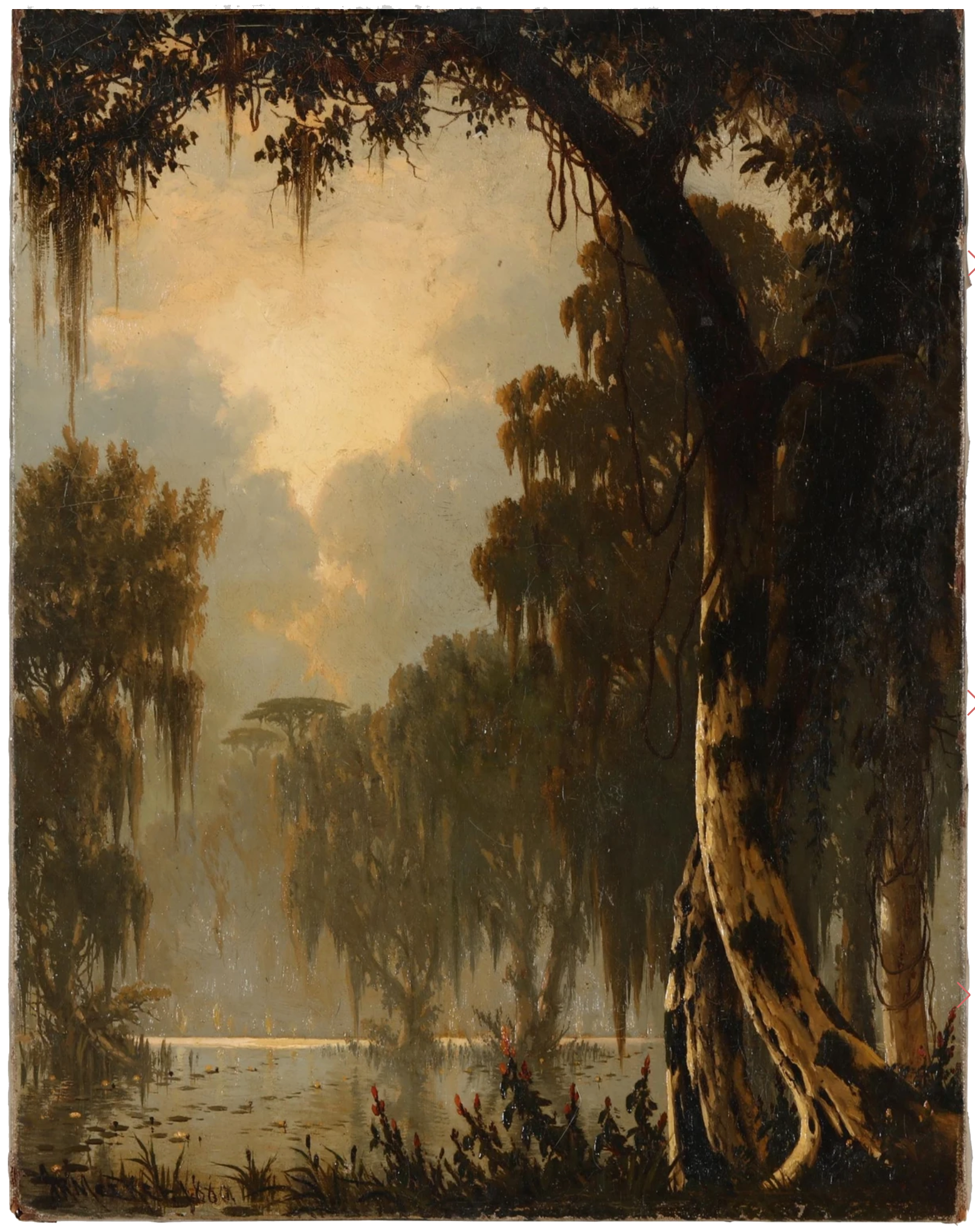
A small wand planted here and there showed where the path zigzagged from tuft to tuft of rushes among those green-scummed pits and foul quagmires which barred the way to the stranger. Rank reeds and lush, slimy water-plants sent an odour of decay and a heavy miasmatic vapour into our faces, while a false step plunged us more than once thigh-deep into the dark quivering mire, which shook for yards in soft undulations around our feet. Its tenacious grip plucked at our heels as we walked, and when we sank into it it was if some malignant hand was tugging us down into those obscene depths.
Grimpen Mire, in Arthur Conan Doyle The Hound of the Baskervilles (1902) Chapter 14
The Victorian novelistic bog is a clinging morass that that threatens to drag down even clean-living Victorian gents. But it’s not just a wasteland. In it live evil men like Selden the escaped Dartmoor prisoner in Hound of the Baskervilles, “hiding in a burrow like a wild beast, his heart full of malignancy against the whole race which had cast him out”.
Swampy stuff now and then, mountains mostly, arriving every Wednesday
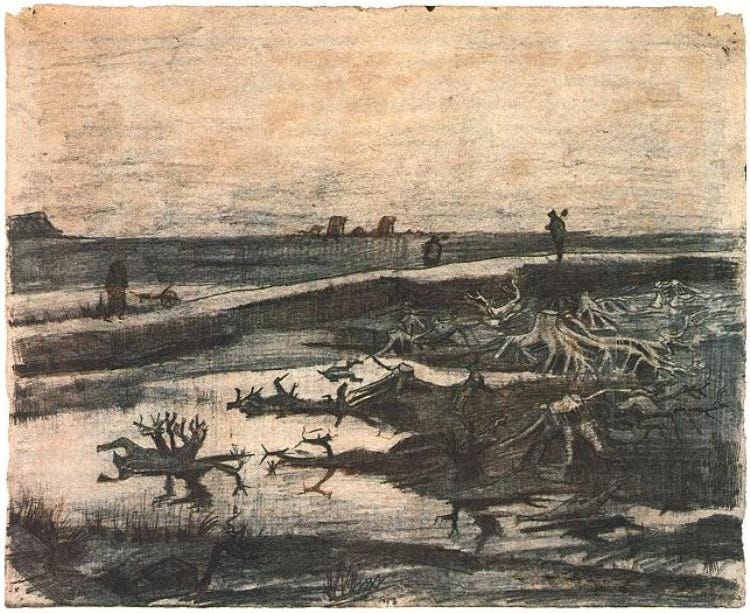
Equally malignant, and magnificently so, is Carver Doone: heartless, depraved, intent on marrying his 17-year-old cousin Lorna.
Though I am not a judge of men’s faces, there was something in his which turned me cold, as though with a kind of horror. From the short black hair above the broad forehead, to the long black beard descending below the curt, bold chin, there was not any curve or glimpse of weakness or of afterthought. Nothing playful, nothing pleasant, nothing with a track of smiles; nothing which a friend could like, and laugh at him for having. And yet he might have seemed a good man, but for the cold and cruel hankering of his steel-blue eyes.
Lorna Doone RD Blackmore (1869)
He burns down houses, he shoots people, he likes nothing better than a bit of extortion. And he interrupts Lorna’s wedding itself, as she’s in the middle of marrying the book’s hero Jan Ridd. Interrupts it by shooting her through the little window of the church.
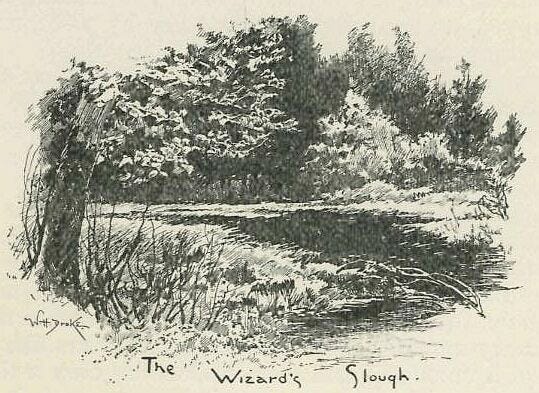
And his landscape equivalent lies handily at the upper end of Doone Valley.
There was the Wizard’s Slough itself, as black as death, and bubbling, with a few scant yellow reeds in a ring around it. Outside there, bright watergrass of the liveliest green was creeping, tempting any unwary foot to step, and plunge, and founder.
... I myself might scarcely leap, with the last spring of o’er laboured legs, from the engulfing grave of slime.
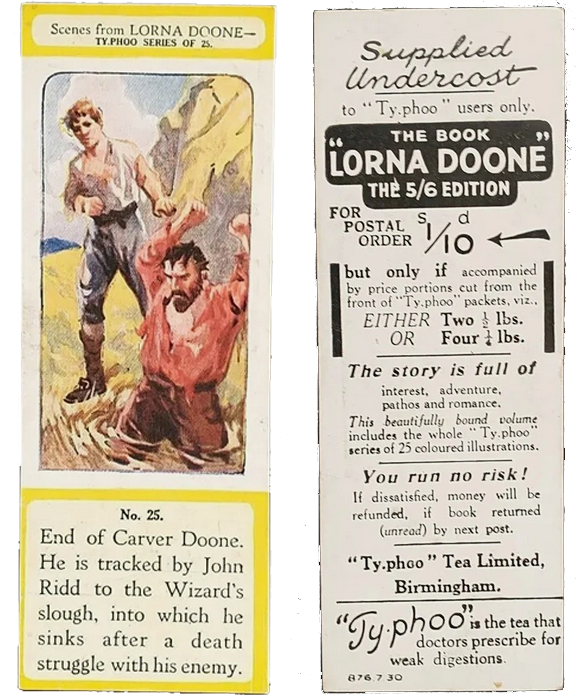
The black bog had him by the feet; the sucking of the ground drew on him, like the thirsty lips of death… He fell back, with his swarthy breast (from which my gripe had rent all clothing), like a hummock of bog-oak, standing out the quagmire; and then he tossed his arms to heaven, and they were black to the elbow, and the glare of his eyes was ghastly. I could only gaze and pant; for my strength was no more than an infant’s, from the fury and the horror. Scarcely could I turn away, while, joint by joint, he sank from sight.
When the little boy came back with the bluebells, which he had managed to find—as children always do find flowers, when older eyes see none—the only sign of his father left was a dark brown bubble, upon a newly formed patch of blackness. But to the centre of its pulpy gorge the greedy slough was heaving, and sullenly grinding its weltering jaws among the flags and the sedges.
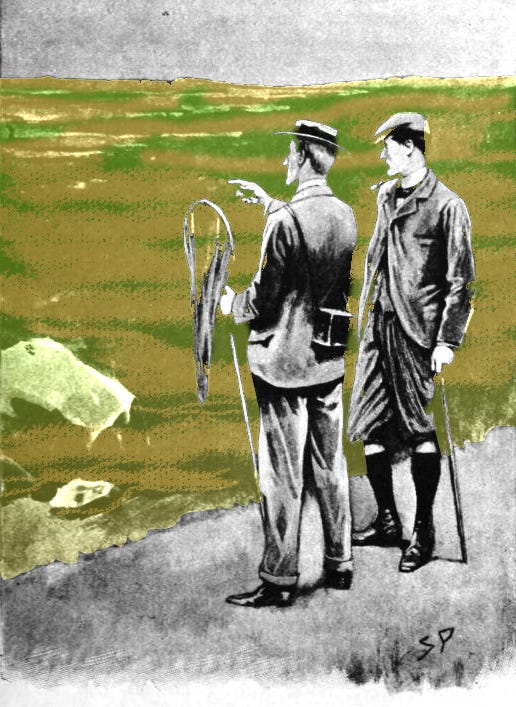
Grimpen is based on Foxtor Mires, near Dartmoor’s Cornwall border: a flatland of bleak brown grasses, surrounded by chunky little carved granite crosses mostly raised as tombstones. Shafts of a former tin mine add extra excitement. A bridlepath crosses the mire, marked with wooden stakes which fall over into the moss. Accounts of the place dwell on the people and horses supposedly sunken into the seven-metre deep peat.
For four years I was a boarding pupil at a small private school on the edge of Dartmoor. It stood eight miles from Princetown and its prison: six miles nearer, indeed, than Baskerville Hall. Every couple of years policemen with dogs would be searching through the school’s woods for an escaped convict. On one wondrous occasion a prison escapee was discovered by Mr Witherington the French master, in Mr Witherington’s wardrobe, just climbing into Mr Witherington’s trousers.
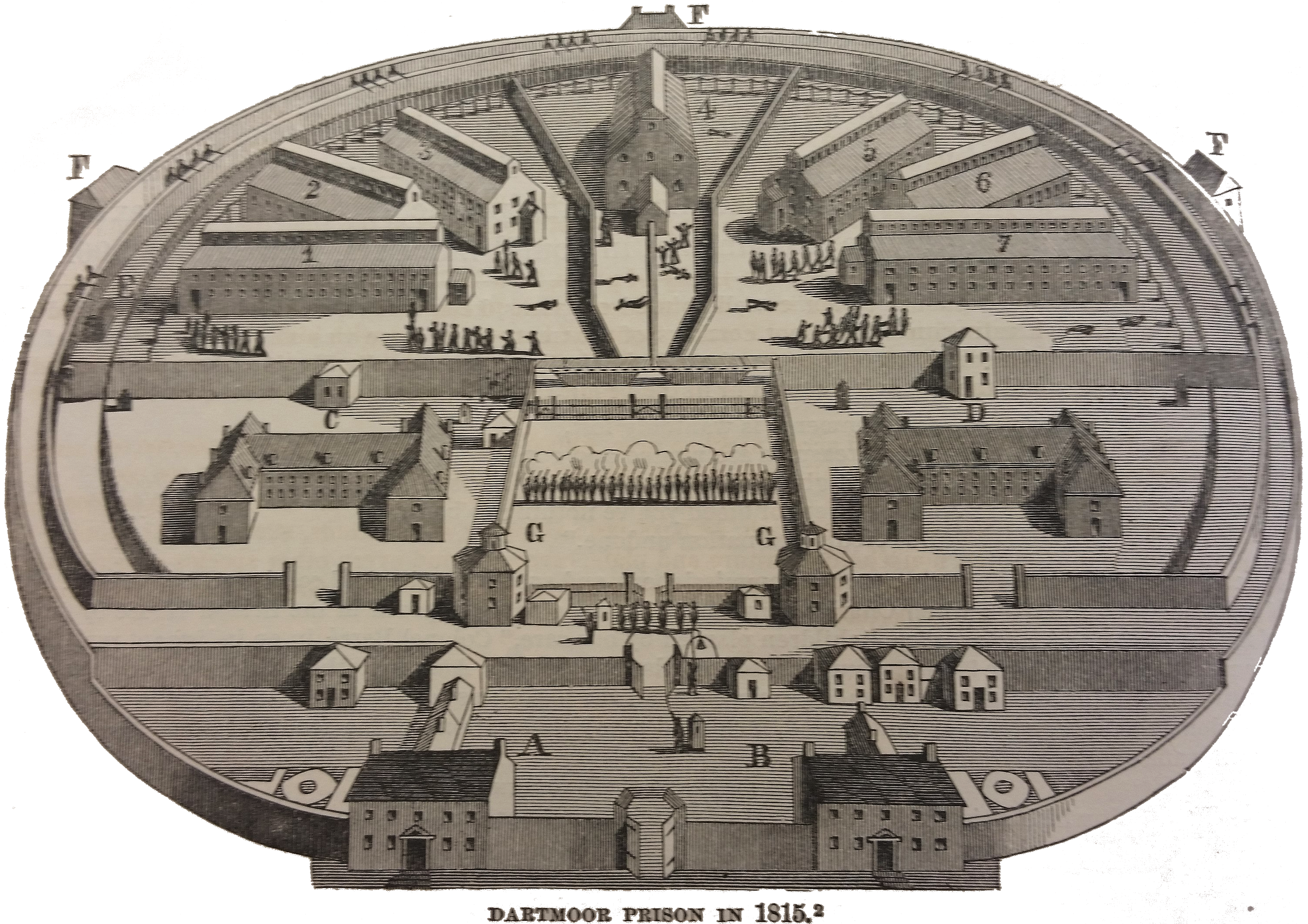
While waiting for the police, our teacher entertained the convict with tea – or would it have been a bottle of beer? The man of crime let slip that he had been to a good school, and left a souvenir of prison-issue toilet paper.
This memory does seem suspiciously like an episode of John Buchan or Rider Haggard rather than real life. Having believed it literal (rather than literary) for almost 50 years, I now suspect it may have been embroidered by one of my talented pals, or even the supercilious Mr Witherington himself. One scrap of harsh, unperforated bog paper looks much like any other…
Within the English private school system, Victorian-style story happenings lingered into the 1950s. And so did the attitudes of the Victorian upper-middle classes. This education has, perhaps, equipped me to interpret the Conan Doyle or Blackmore style of Going to the Bog.
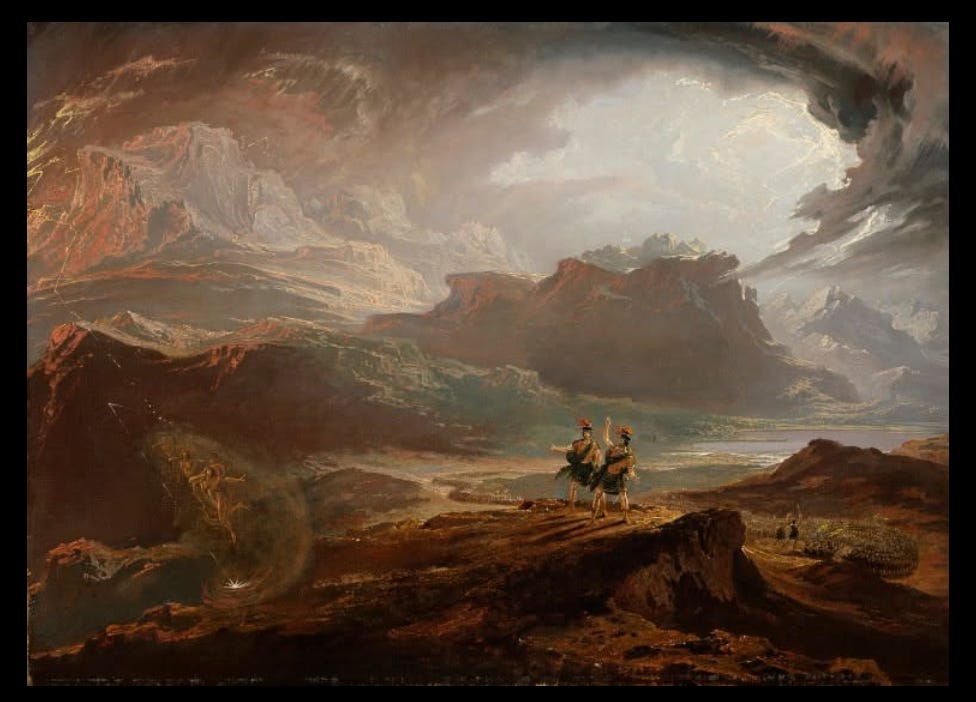
King Lear gets thrown out by his daughters into a place of nature, where the civilisation of the Renaissance was threatened by unruly wilderness, and any houseless man might die of hunger or exposure to the storm. But the Victorian gent with his repeater pistol and his umbrella didn’t fear the wilderness. What he feared was the working class.
Over the rocks… there was thrust out an evil yellow face, a terrible animal face, all seamed and scored with vile passions. Foul with mire, with a bristling beard, and hung with matted hair, it might well have belonged to one of those old savages who dwelt in the burrows of the hillsides. (Selden the Notting Hill murderer, Chapter 9)
But civilised man in the shape of Sherlock Holmes has better wilderness technique. Bedded down in one of the Neolithic hut circles, he “had contrived… that his chin should be as smooth and his linen as perfect as if he were in Baker Street.”
Conan Doyle’s readers were the newly emerging Victorian middle class. They did not live among the moors and quagmires: they lived in Brixton. “Long lines of dull brick houses were only relieved by the coarse glare and tawdry brilliancy of public houses at the corner. Then came rows of two-storied villas each with a fronting of miniature garden, and then again interminable lines of new staring brick buildings, — the monster tentacles which the giant city was throwing out into the country.” (The Sign of Four Chapter 4.) The Strand magazine, where Sherlock Holmes first appeared, sold hugely to the London commuters heading into the City along the new suburban railway lines.
It’s not the wild forces of nature: it is the impolite, coarse-tongued proletariat that may undermine the precarious status of the insurance clerk on the train from Tooting Bec, suck him down and smother him in mud along with Dr Mortimer’s curly-haired Spaniel dog. Or, more happily, absorb the ungentlemanly butterfly collector Stapleton, the depraved Carver Doone.
Today, neither Grimpen Mire nor the Wizard’s Slough can be made out on any map. In southern Scotland, the boglands have been drained for sheep pasture: grass and rushes, just damp enough to challenge the gaiters and the Gore-tex lining. Today, people in the UK are almost never sucked down into swamps. In four crossings of Rannoch Moor, I’ve never felt in peril of my life.
But I did, once, in the Lake District. We were coming down the Wyth Burn on the way to Helvellyn. Five o’ clock is teatime in the village, but at Wyth Burn in midwinter it’s full darkness, and a cold rain falling, and nothing to see but a few feet of white grass stalks in the beam of the torch. And I felt the ground wobbling under my foot, in a way that wasn’t just the weariness of a 12 hour day on the fells. I was on quaking mire: a black pool of liquefied peat, under a mat of sphagnum moss tied together with sedge, just dry enough on top to grow a normal-looking coat of grasses, sundew and asphodel.
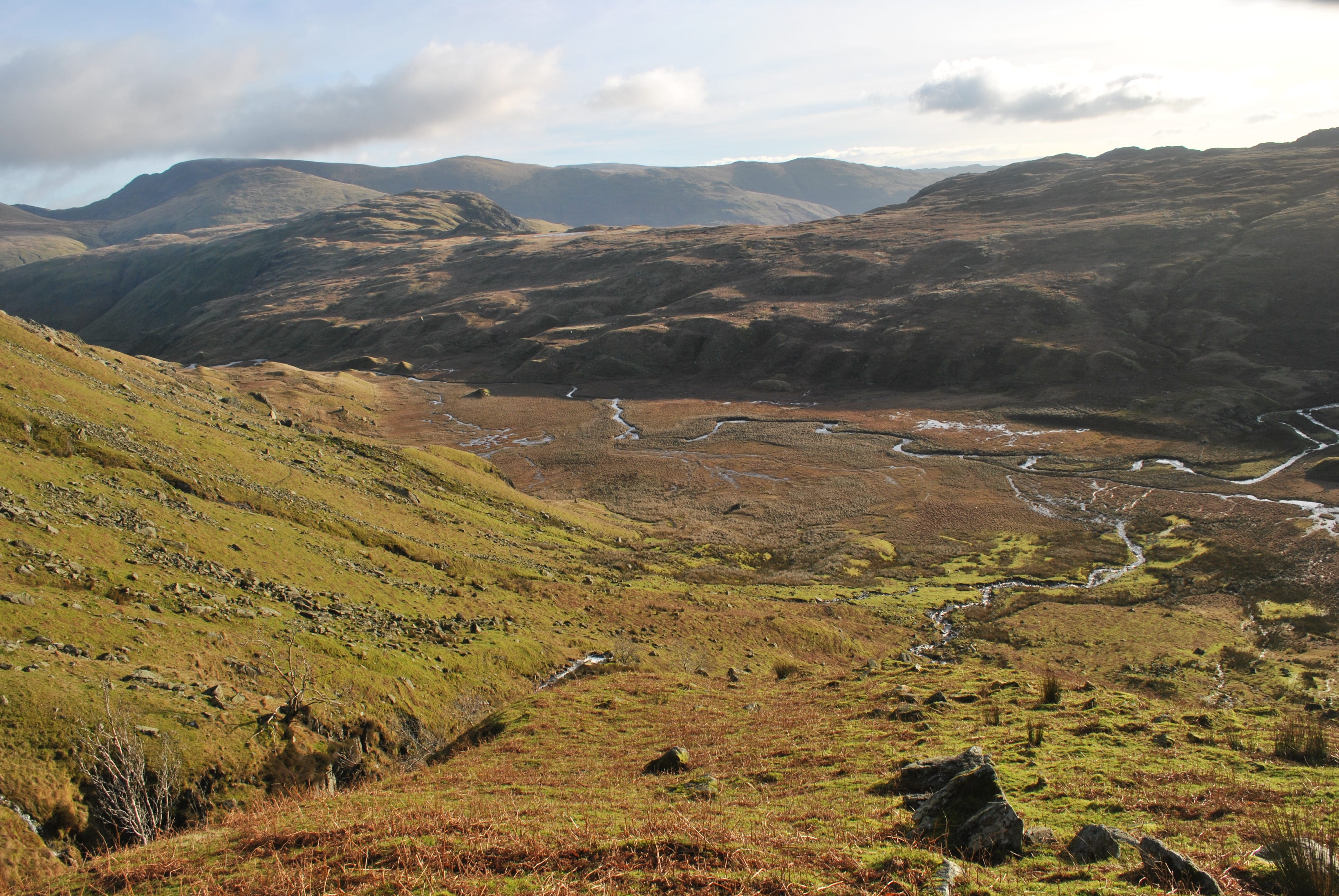
I slowed down over several steps, like a car on black ice; lowered myself onto knees and elbows; then crawled backwards the way I’d come until I found stones under my hand. After that I felt out with my feet the ground with a slope on it along the side of the valley. On the map afterwards, the place is named simply as ‘The Bog’.
And that’s International Bog Day over for another year…. May you survive unswallowed up in slime until next time
Comments
Nothing yet. Say the first thing.
Sign in to join the conversation.