
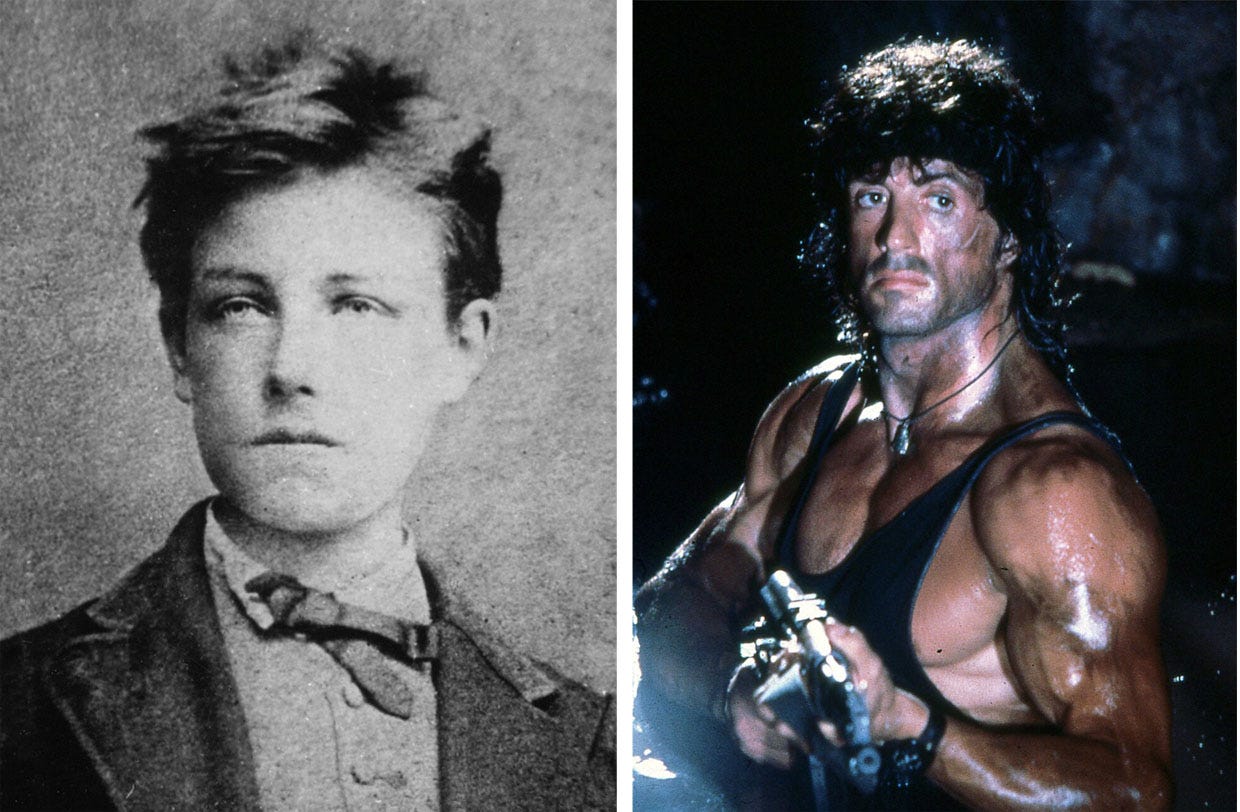
Arthur Rimbaud is not actually the muscular hero created by Sylvester Stallone. But is butch enough, in his own long-distance walking way.
Whenever I write a poetry post, I lose approximately five subscribers. But this time is going to be different. Because this time I’m writing about not just any poet but a French poet who wrote poems in French. So I’m expecting a dip in my graph of at least 10 of you realising this isn’t your stuff after all…
Also, it’s is high time I directed a post at my loyal readership in France1. According to Substack statistics, my loyal readership in France currently stands at a rather disappointing zero. Understandable as you’ve had to make do with an occasional mention of Mont Blanc – yes, unlike some Brits I am aware that Mont Blanc rises out of France – plus a brief bit about the Robert Louis Stevenson trail. Good Heavens, in two years of this I haven’t even mentioned J-J Rousseau. I did complement your guys on Annapurna though.
But, while flattering the French and trying to persuade you into some poetry: it’s also entirely about long distance walking. Honest it is!
“Tenez : je suis un piéton, rien de plus.” Look, I’m a walker, nothing more!
Letter to poet and publisher Paul Demeny August 28, 1871 – Rimbaud aged 16, before his first journey to Paris
For poets of the Romantic persuasion, long arduous outings in the outdoors were what it was all about. Their turbulent emotions could only be disciplined into metrical feet with the aid of the feet on the ends of their legs. Immersion in nature, at a speed of five or six kilometres per hour: forests and mountains; flowers in the daytime and moonlit tree trunks in the dark; emotion in motion.
Except, none of this applied to Arthur Rimbaud – who, anyway, was a Symbolist rather than a Romantic. The reason for Rimbaud’s rambling was rather less romantic. To become a poet, he needed to get to Paris. And he didn’t have the money for the train.
First time, in fact, from his home town of Charleville near the northern border of France, he walked some of it then took the train anyway. He was 15 years old. They caught him at the ticket barrier, so that his first romantic experience of Paris was suitably straight out of Victor Hugo, being the interior of a small prison.
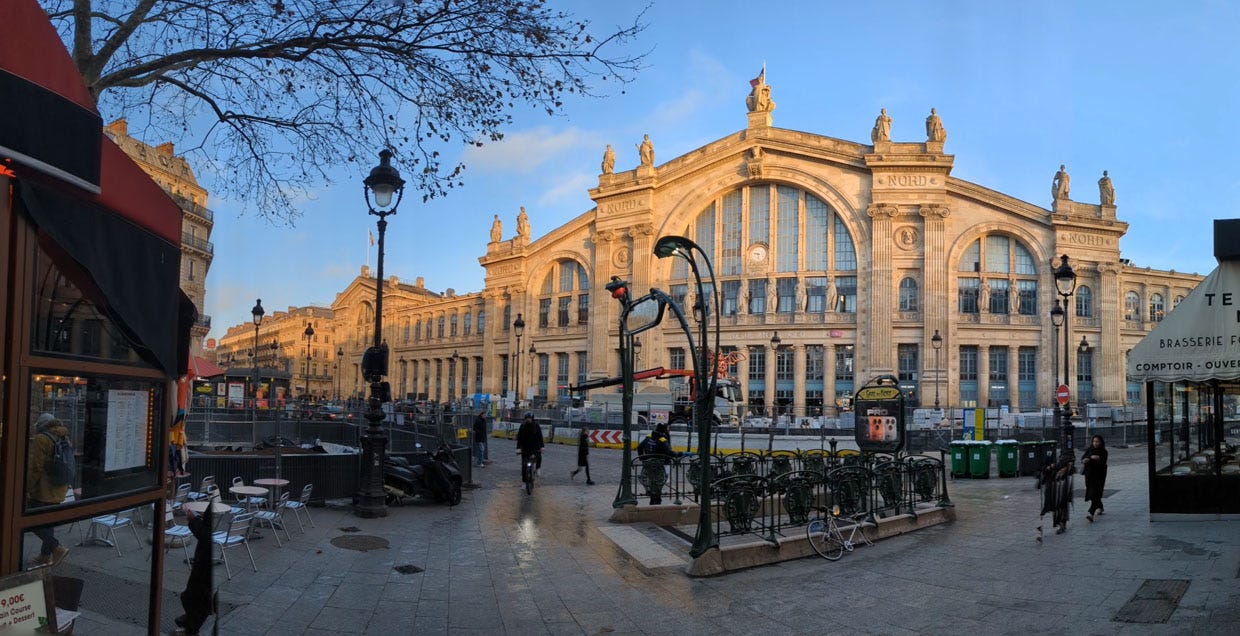
So next time, he walked. For yes: walking while being a Romantic (or for that matter a Symbolist) poet: this does become strangely addictive. For his second expedition, in 1850, he first took the train to Fumay. Then, through the Autumn, a long wander to Charleroi, Brussels and Douai, sleeping at the roadside. “My inn was at the sign of the Great Bear.”
In February of 1871, now aged 16, he’s off to Paris again. The Franco-Prussian War was going on, he scavenged for food and slept in coal barges. Then walked home again through the Prussian lines to Charleville. He made a possible return a month later, as someone thought they spotted him serving as a sniper during the Paris Commune: if so, that would have been to Paris by coal barge, back on foot.
To Paris again in Autumn 1871, about to turn 17, with an invitation from fellow-poet Paul Verlaine. This time he came by train, paid for by Verlaine, with his first major poem, ‘Le Bateau Ivre’ (the Drunken Boat) in his pocket.
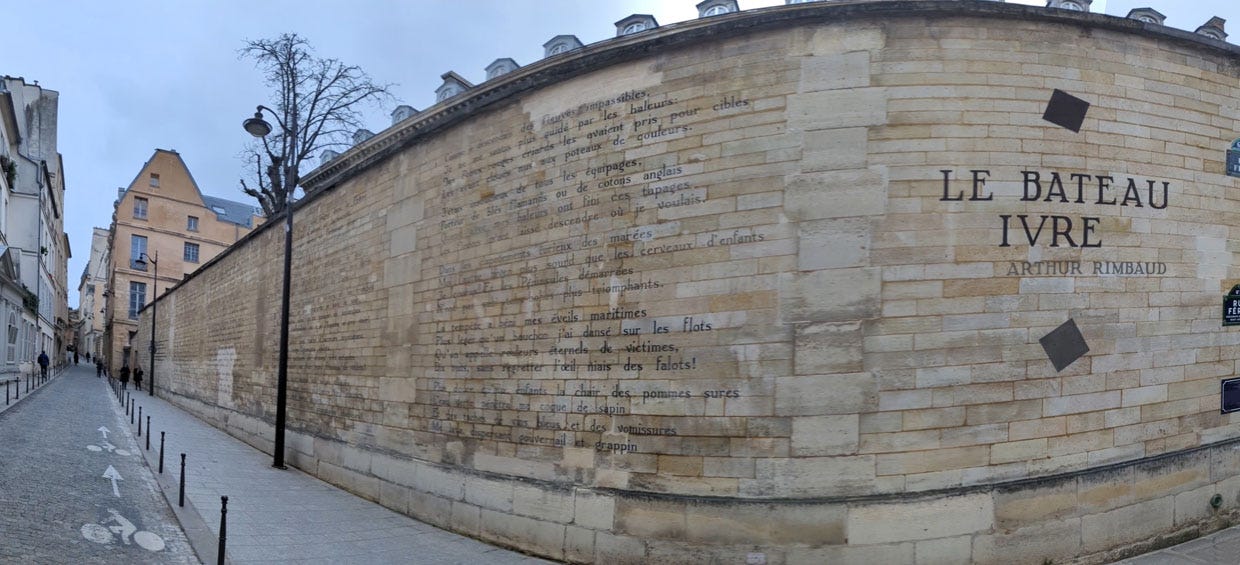
Par les soirs bleus d’été, j’irai dans les sentiers,
Picoté par les blés, fouler l’herbe menue :
Rêveur, j’en sentirai la fraîcheur à mes pieds.
Je laisserai le vent baigner ma tête nue.
Je ne parlerai pas, je ne penserai rien :
Mais l’amour infini me montera dans l’âme,
Et j’irai loin, bien loin, comme un bohémien,
Par la Nature, – heureux comme avec une femme.
From Poésies, 1870
Through the blue evenings of summer, I shall go along paths
Pricked by the wheat, to tread down the little grasses:
A dreamer, I shall feel the freshness of it at my feet.
I’ll let the wind bathe my naked head.
I shall not speak, shan’t think of anything:
But the love that’s infinite will raise me in my soul,
And I shall go far, really far, like a Bohemian or Gypsy
Through Nature, – happy as if going with a girl.2
My French is fairly fluent for evening chats in mountain huts and gîtes d’étape. But not really literary grade… This feels like a pretty good walkers’ poem to me, but I would value any opinion from proper French speakers.
The long walks complemented, while at the same time contrasted with, his parallel addictions to hashish and opium, as well as to alcohol in the particularly Parisian and poisonous form of absinthe. At the same time, in between his hikes, was his torrid relationship with Paul Verlaine, their nights of debauchery in the ‘Rat Mort’ or Dead Rat Café in Place Pigalle. It was a definite downer to Verlaine as a walking companion when his young lover stabbed him in the fingers in a fit of romantic passion. Anyway, in walking terms Verlaine is nothing but an urbanite and street-wanderer.3 Meanwhile, by the end of this post, young Arthur Rimbaud is going to walk one of his legs right off; and in fact to walk himself to death.
While at the same time writing some of the famous poetry in the French language.
J’ai embrassé l’aube d’été.
I have kissed the summer dawn.
Rien ne bougeait encore au front des palais. L’eau était morte. Les camps d’ombres ne quittaient pas la route du bois. J’ai marché, réveillant les haleines vives et tièdes, et les pierreries regardèrent, et les ailes se levèrent sans bruit.
Before the palaces, nothing moved. The water lay dead.
Battalions of shadows still kept the forest road.
I walked, waking an arm with vital breath,
While stonefields watched, and wings rose soundlessly. [three verses omitted for now]
En haut de la route, près d’un bois de lauriers, je l’ai entourée avec ses voiles amassés, et j’ai senti un peu son immense corps. L’aube et l’enfant tombèrent au bas du bois.
Above the road, near a thicket of laurel,
I caught her in her gathered veils,
And smelled the scent of her immense body.
Dawn and the child fell together at the bottom of the wood.
Au réveil il était midi.
When I awoke, it was noon.
This is analysed as a perceptive treatment of the particular difficulties of the poetic project. The dawn of inspiration; difficulties of progressing it into artistic form; with the odd consequence that he falls asleep for a while. Sometimes the poetry people can be a bit too perceptive? Not every poem can be about the problem of writing a poem, some do have to be about something else.4 This one is, pretty obviously, a poem about going for a walk.
Even if the walk is a rather short one. The poem, of course, is exactly as long as it needs to be – at least in its full version, which I’ve put down in the footnotes.5
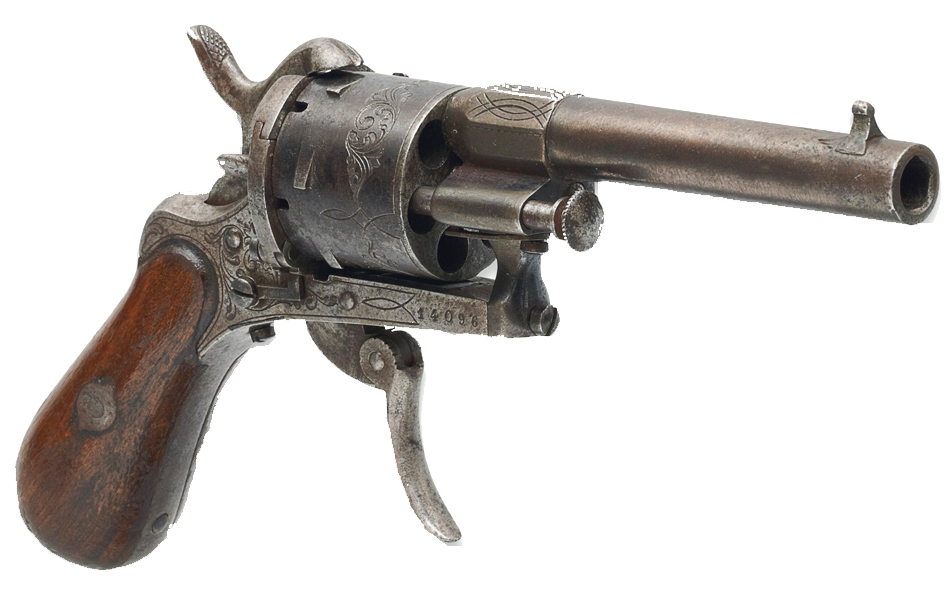
In June 1873, Verlaine in a fit of absinthe-mindedness6 shot his (admittedly very tiresome) young lover with a revolver, wounding him in the left wrist.
Verlaine got two years in gaol. Even though his left wasn’t his writing hand, the traumatised, 20-year-old Rimbaud gave up poetry for ever to concentrate on his walking. The 7mm six-shot Lefaucheux revolver later sold at Christie's, Paris for €434,500.
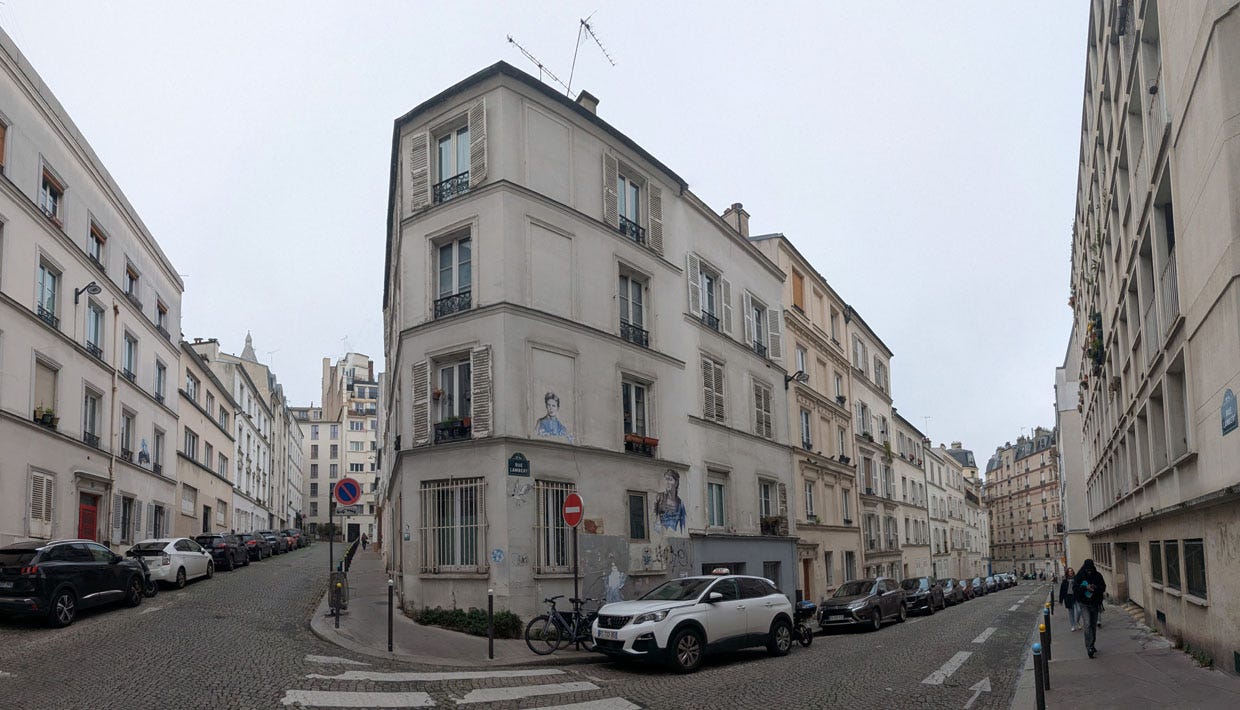
And so, at the age of 20, Rimbaud became a walker rather than a writer. His first long walk across Europe, in 1875, saw him crossing the Alps by the St Gotthard Pass, knocked out by sunstroke in north-west Italy, and repatriated by ship via Marseilles. On his second one the following year, he hoped to get into the Russian territories. But in Vienna he got himself beaten up by a coachman – possibly as a result of a bungled sexual advance, but that’s just a theory. Having run out of money, he joined up in the Dutch Colonial Army, getting posted as far away as Java before deserting, hiding out in the jungle, and eventually making it back to France.
In 1877 he got as far as Stockholm, where he was spotted working as a ticket collector for a circus. In 1878 – are you keeping up here? Of course you aren’t. Sometimes travelling by barge along the canals and great rivers, sometimes sneaking onto trains without a ticket, but mostly on foot, backwards and forwards across Europe. If only he’d been keeping a travel journal, or just stopping in the occasional bistro or brothel to write another poem. But no: this man is a serious long-distance walker, he’s not stopping till he gets to the other end. In 1878, did I say? That year was Switzerland, by way of Cyprus.
In 1879 he went down with a fever, and only got as far as Marseilles. But in 1880: that’s the year when he comes upon the long-distance hike he’s been looking for all this time. Because, here’s a job offer that nobody in the world wants to take up on: managing a trading post, on the 2000m contour, at Herat in Abyssinia. (He happened to be living in Aden at the time.)
What clinched it for him was the commute. A hike of 300km, three weeks of walking by desert, jungle and high passes. It’s clear now that I just spent far too much time on Paris and the poetry: I should be detailing this trip with a map and a gps trail, but already I’m nudging up against the email length limit. If you’re reading on email, the website version will be here .
A reader of this post, @greywyvern, has provided this link to an interesting and well written piece on Rimbaud’s time in the ancient city of Harar .
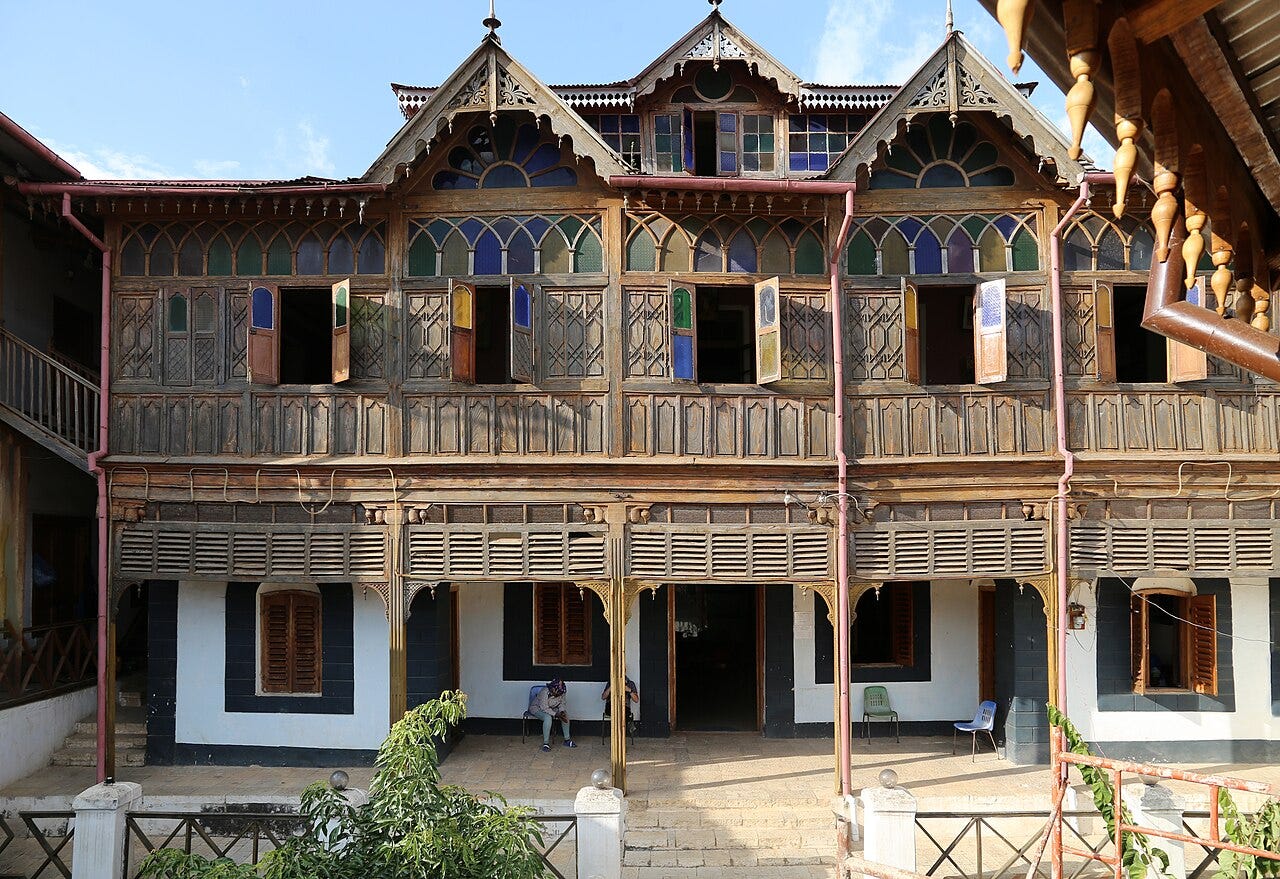
In 1886, however, he came up with a different idea. He could make money: a lot of money. (Or possibly not.) In Aden there was a consignment of condemned rusty guns, which would go down with King Menelik II of Shewa like – well, like a consignment of rusty guns. No previous poet, not even Lord Byron, has had the inspiration to become an arms dealer… But maybe what truly tempted him was the journey to get them there: fifty days’ trek across a desert of basalt rocks.
Well, you’ve already worked this out. The guns being already there, and no way Rimbaud was going to carry them all the way back. And now we come to look at them, they really are rather rusty. King Menelik offered him a cut-down price, a fraction of what he’d previously agreed. All Rimbaud got out of it was a measly 7kg of gold.
Was Rimbaud ruined? Well, yes: but not in the way you thought. In the 1880s, in Choa, Abyssinia, a decent rucksack was simply not to be had. And walking back the 50 days of desert, with seven kilograms of gold tied around his waist in a money belt: this was what did in one of his knees.
In 1891 he leaves Herat on his favourite jungle and desert commute route back to Aden – but this time being carried along it in a litter. His right leg has had it, and at Aden it has to be amputated off. Back across the Mediterranean to Marseilles, and home to Charleville on the coach.
But still, there, he dreamed of future walks. And set off once more for Africa, on one leg and a wooden one. He made it as far as Marseilles, where he was opiated, semi-paralysed, and in his delirium seeing himself again on his favourite jungle-desert walk from Herat.
But instead, he died. Leaving us with the great mystery of his life.
How come Rimbaud has such a fuss made of him as a poet? When he’s actually one of the all-time, hardass, long-distance walkers of the world.
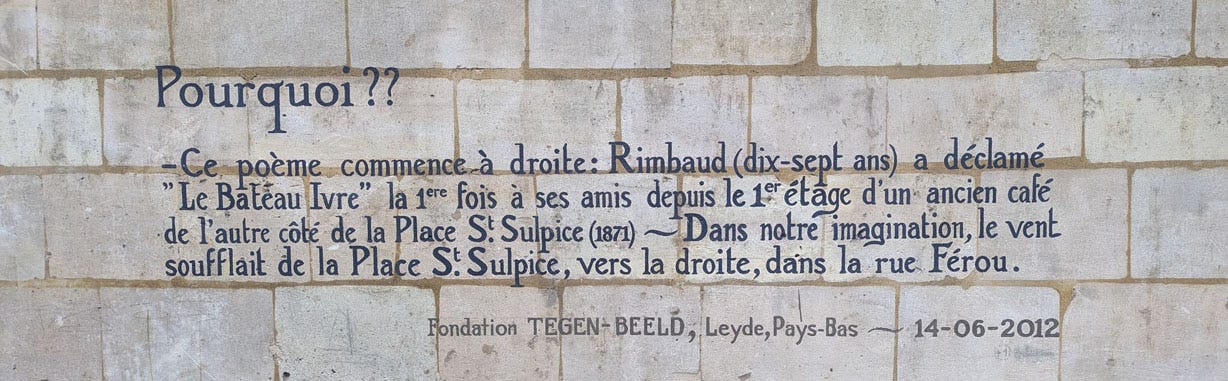
More posts: poetry (and hiking)
Pour vous les lecteurs en France (mes semblables, mes frères et soeurs) içi Rimbaud le randonneur
My own translations, with help from online dictionaries. Another, uncredited, translation here. Rimbaud was 15 when he wrote this.
Not sufficiently distanced to count as a ‘flâneur’, and anyway the term was still waiting to be invented by Charles Baudelaire.
In the same way, sandstone is made of sand; but not every rock is made out of the remains of former rock. A visit to the Auvergne helps unravel that one. Especially for you non-existent French readers.
Aube (Dawn)
J’ai embrassé l’aube d’été.
I have kissed the summer dawn.
Rien ne bougeait encore au front des palais. L’eau était morte. Les camps d’ombres ne quittaient pas la route du bois. J’ai marché, réveillant les haleines vives et tièdes, et les pierreries regardèrent, et les ailes se levèrent sans bruit.
Before the palaces, nothing moved. The water lay dead.
Battalions of shadows still kept the forest road.
I walked, waking an arm with vital breath,
While stonefields watched, and wings rose soundlessly.
La première entreprise fut, dans le sentier déjà empli de frais et blêmes éclats, une fleur qui me dit son nom.
My first adventure, in a path already gleaming
With a clear pale light,
Was a flower who told me its name.
Je ris au wasserfall blond qui s’échevela à travers les sapins : à la cime argentée je reconnus la déesse.
I laughed at the blond Wasserfall [ie waterfall! ‘cascade, chute d’eau’ wouldn’t do it.]
That threw its hair across the pines:
On the silvered summit, I came upon the goddess.
Alors je levai un à un les voiles. Dans l’allée, en agitant les bras. Par la plaine, où je l’ai dénoncée au coq.
A la grand’ ville elle fuyait parmi les clochers et les dômes, et courant comme un mendiant sur les quais de marbre, je la chassais.
Then, one by one, I lifted her veils.
In the long walk, waving my arms.
Across the meadow, where I betrayed her to the cock.
In the heart of town she fled among steeples and domes,
And I hunted her, scrambling like a beggar on marble wharves.
En haut de la route, près d’un bois de lauriers, je l’ai entourée avec ses voiles amassés, et j’ai senti un peu son immense corps. L’aube et l’enfant tombèrent au bas du bois.
Above the road, near a thicket of laurel,
I caught her in her gathered veils,
And smelled the scent of her immense body.
Dawn and the child fell together at the bottom of the wood.
Au réveil il était midi.
When I awoke, it was noon.
(Pour les lecteurs français: ‘absent-mindedness’ = distraction d’esprit. Jeu de mots, effet humoristique, entendu?)
Comments
Nothing yet. Say the first thing.
Sign in to join the conversation.