
Question 80: What is required in the tenth commandment?
Answer: The tenth commandment requireth full contentment with our condition, with a right and charitable frame of spirit toward our neighbour, and all that is his.
Question 81: What are the sins forbidden in the tenth commandment?
Answer: The sins forbidden in the tenth commandment are, discontentment with our own estate; envying and grieving at the good of our neighbour, together with all inordinate motions and affects to anything that is his. (The Westminster Shorter Catechism)
To celebrate our wedding anniversary last month, my husband and I had a nicer-than-usual bottle of wine with homemade pizza and wheeled out our desktop computer screen to watch The Castle. It was an evening well spent.
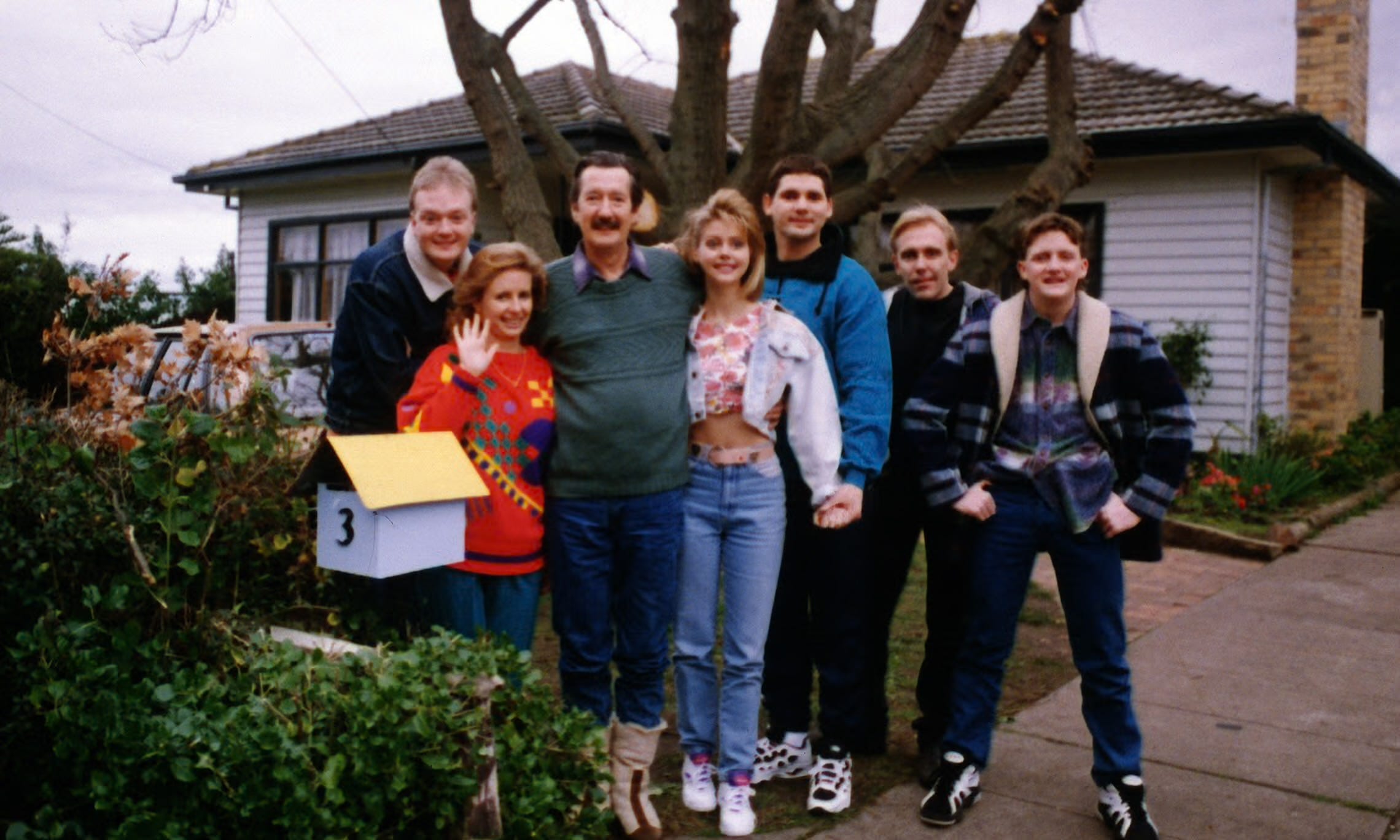
To the handful of foreign readers I have, let me introduce The Castle, a classic of Australian film. It was a small budget production from the 90s which became, and remains, one of the most beloved films of our nation. I would be surprised if it has much of a reputation beyond our shores because a large part of its charm is its representation of the most Australian of families, the Kerrigans. The Kerrigans are, amid other recognisable tropes, a 1980s edition of what Australians (generally disdainfully) call ‘bogans’: those compatriots of ours (never ourselves, God forbid!) who are lowbrow and often low-class, but not down-and-out; brash, uneducated, parochial. They are also bastions of consumerism.
Thanks for reading ab initio ad finem! Subscribe for free to receive new posts and support my work.
If a bogan has cash, he spends it on toys and holidays: a flash four wheel drive or brand new Holden ute, a jet-ski, a trip to Bali. The women get their hair and nails done regularly, in ostentatious ways that display bad taste. They often have a middle-class aspiration for lifestyle upgrades, but are unable to translate their financial capital into cultural capital. Their aspirations are for stuff. It presents as the worst of consumer culture, without any of the elements of taste and status that render consumerism more palatable to us.
But the Kerrigans — who are not wealthy but who do care a lot about stuff — provide a different spin on bogan consumerism, one that puts the more educated taste-makers and taste-keepers to shame. The genius of the film is that it spends two thirds of its running time simply charming us the with personalities and habits of the family, before racing through the legal drama plot in the final thirty minutes. One can’t but help loving the Kerrigans. Mr Kerrigan is a tow-truck driver who owns a house immediate beside a major airport runway and is constantly undertaking DIY upgrades. Mrs Kerrigan cooks, cleans and works part time as a receptionist. Of their four grown-up children, the oldest son is in jail for armed robbery, the middle son is obsessed with finding bargains in the classifieds, and the youngest hangs about and is occasionally known to dig holes in the yard. The sole daughter married young and enjoys a ‘career’ as a qualified hairdresser (of which qualification—and marriage—her dad is proud as punch). In all, there is nothing that is particularly impressive about the Kerrigan family. And yet, they are entirely loveable because they are immensely happy. It is a happiness which seems to emerge from some hidden font of goodness, a happiness which is marvellous and inexplicable to those who (whether characters within the film or viewers without) are objectively much better off than the Kerrigans.
The question raised by The Castle is this: is the Kerrigan family just so ignorant they don’t realise that things could be better, or do they actually possess the secret to a happy life?
The Castle is not a serious film, and the experience of watching it is one of continuous amusement at the inanities and ignorance of the lead characters. A recurring schtick is the disproportionate value that Mr Kerrigan in particular seems to place on the things that are his: He finds reasons to enjoy their situation beside the airport, which on anyone else’s measure (including third-party valuation) would make it poor real estate. He revels in the ‘serenity’ of their holiday cabin at Bonnie Doon, a location they seem to have to themselves because of the incessant buzz of the enormous power lines which run through it. He is unfailingly delighted in his wife’s cooking, which suits his rather unexotic tastes (‘What do you call these things again?’ ‘Rissoles. Everybody cooks rissoles, darl.’ ‘Yeah but it’s what you do with them.’). All of this while priding himself in knowing the market value of each item for sale in the classifieds. The irony is delicious.
The Kerrigans, I have said, are absolutely obsessed with stuff: their home is a bricolage of half-complete DIY upgrades, they are always buying and selling useless items, and they take unashamed pride in the fact that they are the only family they know with a holiday home. In this respect they seem to be spectacular representatives of consumerist vice. But it is not vice or folly which causes us to love them. It is, rather, that they are a specimen of a peculiar virtue: what we might call consumerism without covetousness.
A heart without covetousness is a contented heart, as the Westminster Shorter Catechism teaches. Clearly, the Kerrigans are content — until the united front of government and private developers try to take away their home and compensate them with cash. They do not want to lose what they have, yet nor do they covet what they do not have. If they see something they want, they either build it themselves, buy it or, if the seller asks too much for it, good-humouredly ‘tell ’im he’s dreamin.’
The question about the Kerrigans’ happiness is whether it is a truly virtuous contentedness or whether is only circumstantially arising from their ignorance. It is conceivable that if they had ever experienced something better, they wouldn’t find Bonnie Doon so serene. That if they’d only thought about how the 99% live, away from the disturbances of the airport runway, they wouldn’t admire the runway’s display of man’s inventiveness quite so much. But I don’t think their ignorance is a sufficient explanation, because it fails to account for another aspect of their apparent virtue: their generosity and lack of malice towards those who possess what they could never enjoy.
The evidence for this is in Mr Kerrigan’s relationship with the retired Queen’s Council who offers to represent the Kerrigans’ cause pro gratis. Mr Kerrigan is undoubtedly impressed with the barrister, whose education sets him in a class well above his own. He also knows that he could never afford to pay Lawrence Hammill QC, what he is accustomed to earn. Mr Kerrigan’s response to receiving this help is to invite him to join their family for a holiday in Bonnie Doon (delightfully, he accepts). It’s yet another amusing moment, because of course a Queen’s Council could afford far more luxurious holidays. But the Kerrigans are so confident in the goodness of what they have that not only do they enjoy it themselves, they also assume it is worth sharing. Instead of envying their richer neighbours, they are generous.
One gets the sense that Mr Kerrigan finds reasons to delight in his home and in his things simply because they are his. Although nothing in the film suggests that the Kerrigans’ delight is directed towards God, their basic orientation seems to be one of thankfulness.
In the sections of Deuteronomy which expound the tenth commandment, what we find are rituals of thankfulness and charity: The levirate duty to preserve a brother’s name and inheritance (Deut 25:5-10); a special thank offering to be made (and shared) when the Israelites reap their very first harvest in the land (Deut 26:1-11); the vow accompanying the third-year tithe which goes to the Levite, sojourner, fatherless and the widow (Deut 26:12-15). Thankfulness and generosity are antidotes to a heart poisoned by covetousness. They are also the happiness of the heart which harbours them.
I do not mean to represent the Kerrigans as emblems of Christian charity. Simply, they are a demonstration of how God-given stuff can be a true source of happiness when it is enjoyed without covetousness and all the bitter sins to which it gives rise. There is a kind of unsanctified but ‘natural’ virtue which their way of life exhibits. And from this example, we can also infer a kind of natural channel ordained by God towards this way of life, which is the attachment to things of one’s own possession.
When the Israelites are finally delivered by God into their own land, it is expected that they will want to rejoice when they receive the first harvest. The ritual noted above takes this natural joy and orients it towards the God who gave the land and harvest both. Scripture shows that new temptations also arise from possessing the land, which Israel never would have encountered while enslaved (as Moses prophesied later in Deuteronomy, ‘Jeshurun waxed fat and kicked’). But God did not give Israel their own land so that they would be tempted; he gave it so that they would rejoice before him and be a light unto the nations in their love of God and love of their neighbour. While possessing their own land may have made them susceptible to particular temptations, it also provided a new basis for rendering thanks to God.
The central piece of ‘stuff’ that The Castle is interested in is the Kerrigan’s home — that undefinable entity which refuses to be broken down into the sum of its parts and replaced by its market value. Their home, unremarkable as it is, is their ‘castle’, a source of magnified delight because it is theirs and because it is the story of their family’s past and future. It is what they enjoy together, and what they have to share.
As much as there is of our nation’s spirit to recognise in The Castle, Australia in 2024 is a very different place. Home ownership grows increasingly out of reach of many people in our country. This has implications for all sorts of aspects of personal and national happiness, but one worth contemplating is whether it could tend towards making us into a more covetous people. As the Kerrigans taught us, a home is not just a place to sleep or to store the stuff that belongs to us. Its being one’s own is a quality which transmutes into more generalised delight, a delight which can deepen the longer one has been there, the more history the place acquires, and the more widely it is shared. Renting is an uncertain basis on which to build such attachment, and therefore cannot easily issue the same delight. Without this natural source for the antidote of thankfulness, what poisonous wreck might covetousness make of our collective hearts?
Thanks for reading ab initio ad finem! Subscribe for free to receive new posts and support my work.
Comments
Nothing yet. Say the first thing.
Sign in to join the conversation.