
Open the book of Proverbs, and you’re more than likely to find a proverb exalting the wisdom of being slow to anger.
“Whoever is slow to anger has great understanding, but he who has a hasty temper exalts folly.” (Proverbs 14:29, ESV)
“A hot-tempered man stirs up strife, but he who is slow to anger quiets contention.” (Proverbs 15:18)
“A man of wrath stirs up strife, and one given to anger causes much transgression.” (Proverbs 29:22)
Cultivating the quality of being “slow to anger,” which in the Hebrew literally translates as “long of nose,” is one very important way we can image God, who is described over and over again in Scripture as being slow to anger. But such slowness certainly does not mean that God never gets angry. I would dread to worship a God who never gets angry at the injustice and brokenness of the world, and yes, the brokenness and sin in my own heart. A god whose face never burns with the hotness of anger is a terribly unloving god.
I also fear communities where anger is never expressed or channeled into a pursuit of justice. I fear churches where people do not stand up and say “enough” when confronted with the suffering of the person next to them—a suffering caused by a spouse, parent, relative, or pastor. A suffering that can often be assuaged and slowed, helped and healed, by the courage of others.
Over the season of Lent this spring, I read Tsh Oxenreider’s devotional Bitter & Sweet, and was stopped in my tracks by one of the last reading selections. She writes:
“Surprisingly, a lack of anger can be a sin. As part of human nature, anger has an appropriate role in the pursuit of good when it’s moved by a sincere desire for reasonable justice . . . Christ is angry when people succumb their hardened hearts in the face of injustice, when they look the other way in the name of righteous passivity.” (103)
Read that again.
Being raised in a religious community that centers itself on the Sermon on the Mount (and more importantly, on a particular interpretation of that passage) often means that we’re raised to be patient beyond belief, to quiet our anger and never listen to it, never display it in our response to toxic situations and relationships.1 Instead of lending itself to righteousness, such patience can lull our conscience and our God-given “alarm systems” to sleep. It erases needed conflict, erases growth. Oxenreider quotes Thomas Aquinas, who in his Summa Theologica calls this lack of anger “unreasonable patience.”
She continues:
“Failure to correct those who are guilty allows evil to persist. This lack of rebuke also leads to confusion in families and communities about what is truly right and wrong. Left unchecked, unreasonable patience toward sin, when it becomes a habit, leads even well-meaning people to tolerate corruption when they should instead be righteously angry about it.” (103-4)
How we have tolerated, what we have tolerated . . . I want to stop writing and lament for a long, long while. I know the cost of our unreasonable patience. I know the women with hearts broken beyond repair, minds and bodies bearing the awful marks of abuse; the children who are lashing out and sad and struggling to understand all that has happened to them. I know how all the cliches to “forgive and forget,” “just give it to God,” and “it’s not our place to judge,” how all of our fasting from anger, has led to us “striking each other with wicked fists” (Isaiah 58:4). All of these cliches hold some grain of truth, but the way they are applied is ruinous.
I want to shout with the prophet: “Is not this the kind of fasting I have chosen: to loose the chains of injustice and untie the cords of the yoke, to set the oppressed free and break every yoke?” (Isaiah 58:6).
Two truths can stand side by side: Patience, or slowness to anger, is a virtue. And anger can act as an indicator of something truly, deeply wrong.
The first time I felt angered by my father’s treatment of me, I was 17 years old. By that point in my life, I was accustomed to his condescension, a thinly-veiled contempt. I accepted it. I thought I must deserve it. Sure, I felt angry when he treated a sibling unfairly, or even downright cruelly. Sure, I felt my sense of justice rise up for them. I had yet to recognize that I, too, could have my God-given value violated by a man I respected so much.
The summer I was 17, I came home from a solo trip to New York City, marking the first time I had traveled alone, the first time I had been on a plane. I was coming home from a week in a place where I felt safe and loved, confident and purposeful. It had been a stretch for me to do something like this—I was notoriously bad with directions, situational awareness, and just basic get-through-the-world skills. But I had met the challenge, and away from my dad’s constant poking at my ineptitude, I had surprised myself. One day, I had even navigated the subway system all on my own, visiting Brooklyn to see a friend. I was proud of myself for that.
And then, my plane landed back in my home state. I disembarked, and I got lost. Well, not lost—I simply couldn’t find the area where my parents were waiting for me. I knew I would find it eventually; my confidence in myself had grown. But I got on the phone with my dad, asking for more clarification as to where he was parked.
The contempt broke, a thunderstorm over my head; it crackled through his voice like sharp lightning. “It’s not that hard, Abby!” he snapped.
I snapped.
I stopped. And for the first time I can remember, I burned with rage that he dared speak to me like that.
Tears come to my eyes every time I recall that moment. Why? Because I am moved with compassion for that 17-year-old girl, acknowledging the contempt and pride behind her father’s voice for the first time, absorbing the impact into her heart.
I am moved with sorrow, because I know what came after that.
Anger became the gateway to the life after that moment: a life where I could no longer hide behind false realities and my own perpetually smiling face, a life where I had to extricate myself from a slavery to my father’s approval, a life where slowly, with much counseling and a safe environment and months and years of generous time, I was able to access the immense tidal wave of grief that began to rise up in that moment, of which anger was simply the crest.
And here’s why it’s not helpful to label anger as a negative emotion, to smoosh it down or distract ourselves whenever it rears its head. Anger is needed to confront reality. And it is needed to heal from that reality. Anger can tell us something is wrong—whether in ourselves, or in another person or situation. Coach Joi, who works as the director of Center for Peace, describes anger as “a point of taking notice,” an emotion that often comes up when we encounter “an affront to us as a human being.”2 Anger says this is wrong. Anger says this needs to stop.
There are many good things that we can do, prompted by this anger, to counter harm and destruction. If we are the victims of abuse, we can protect ourselves from further abuse as much as possible. We can draw lines in the sand, back away, ask for help from people who care for us more than they care about reputations. If we are witnessing abuse in a church or community, we can speak out against it. In some situations, we can shelter a mother and her children, we can contact law enforcement, we can give financial resources. We can learn to be a safe person to share with. We can use our words in conversations to protest, push back against attitudes of entitlement and powering-over. Oxenreider notes that our reasonable anger, “coupled with control, might very well have a ripple effect in our communities” (106). Possibilities abound.
But there’s a limit to all that. The most enraging thing about abuse is that you can’t change the person who’s doing it and you can’t ultimately stop the harm and you can’t remove yourself from the suffering of it (even if you’re no longer in a relationship with the person who abused you). It goes on, and it goes on, without end. Making it all right is something we’re powerless to do.
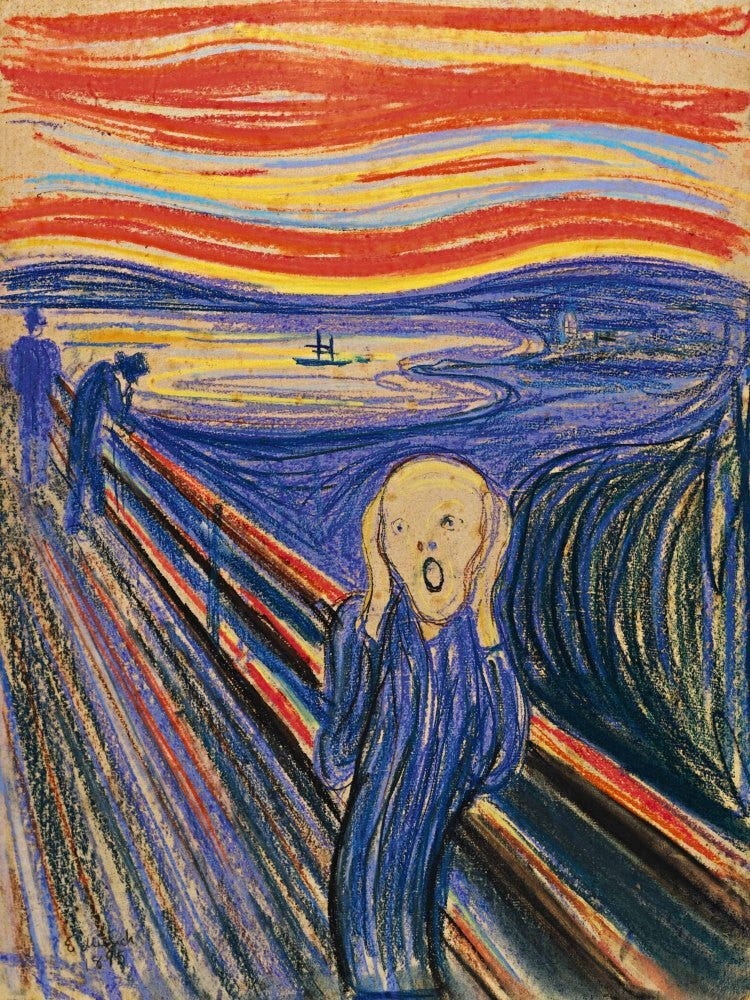
Sometimes that realization makes you burn to do bad things with your anger, too. We want to hurt as we are hurt, yell back as we are yelled at, degrade as we’ve been degraded. So our anger is necessary; our caution is necessary, too. Louisa, from the first article in this series, shares something her mother used to tell her: “I used to hate this, but it was true . . . when we’d be blowing up about Dad, she would say, ‘Yeah, he’ll answer for that. But you’re responsible for you.’”
We can’t control who’s harming us, but we can control what we do with our anger. We get to decide what we do with our bodies, how to express the physiological reactions of anger. Coach Joi again: “There’s a boss in the body, and we have to find the boss and help that boss learn how to make the best choices for our wellbeing.”
So what are some ways we can get our anger out, without vandalizing someone’s house or vehicle? Without punching someone in the face? The women from the previous articles in this series had some ideas. Mary says she journals or takes a walk. Linda says: “Journal. Journal. Journal.” I nod my head to this, remembering the night I couldn’t sleep with anger hot in my stomach, and finally pulled out my computer and typed out my rage, slamming the keys down with forceful clacks and taps. Thankfully I didn’t jam anything, and thankfully, I felt a lot better afterwards.
Coach Joi recommends some creative physical releases of anger, such as getting a large cardboard box to safely smash things in, slamming pillows, or going to a park to hit a tether ball. Sometimes she asks women to send her “an angry letter,” as if they are sending it to whomever hurt them. “And I want you to use as strong a language as you can,” she says. After discussing that letter in a coaching session, they can simply delete it or rip it into pieces if they have a physical copy.
Joy, whose story I mentioned in a previous article, told me about an experience she had writing such a letter. Her counselor recommended that she write a letter to her dad, to “say anything and everything. Do not give it to your dad. You just write it.” Recounting this, Joy paused and then looked at me: “Abby, I did that, and I was shocked at what came out of me.”
She continued, sharing how this honesty had to transfer over to her relationship with God as well: “We tend to think, you know, we pray these prayers, God bless this person, that person, whatever. But do we ever say, God, I am so angry! I’ve learned it’s all right to tell God, I am so angry at that person. . . . I’ve learned that I can be honest with God. I can just tell him exactly what I feel.”
Most women I interviewed on the subject recommended talking to good friends in order to process anger. Linda: “Tell a trusted friend who will give honest feedback.” Melanie: “I process . . . with wise friends.”
I thank God for the friends who, especially in the last five years, have listened to me pour out my hurt and rage and helplessness, who have answered the unplanned phone calls or welcomed the spontaneous visits, who have met me in all my anger without condemnation. I thank God for a husband who folds me in his arms again and again, who feels my anger and frustration with me.
But there is someone who wants, more than anyone else in my life, for me to approach Him with my anger. He is not interested in my “church face,” as Aimee Byrd terms it,3 but in my ugly-cry, red and wrinkled face. He wants to hear about my anger. The women I’ve interviewed ALL speak about this at some point or another in their stories. And that’s because, as Melanie puts it beautifully: “My anger is safe with God and He is more interested in my honest heart than in my pretended joy.”
Her observation calls to mind the imprecatory psalms of David, psalms that I often cringe away from while reading. There is a particular verse in Psalm 137 that makes me squirm every single time, especially as a parent: “Happy is he who takes your little ones and dashes them against the rocks” (vs. 9, ESV). Written as an outcry for justice, this verse didn’t make much sense to me until I watched the miniseries “The Underground Railroad.”
In episode 5 of the series, the main character Cora is being carted across Tennessee by the slavecatcher Ridgeway, accompanied by another runaway named Jasper. One night when Cora shares with Jasper about all of the loved ones she has lost to slavery, many of whom have died horrific deaths, he whispers Psalm 137:9 in response, looking up to the blackness of the sky above them: Happy is he who takes your children . . .
Amidst the brutality and senseless suffering4 of what Cora and Jasper were enduring, such a sentiment is natural, and I empathized with them. Yes, God, bring justice. At the same time, would I actually want to throw someone’s children against the rocks? Absolutely, absolutely not. Could I imagine Cora or Jasper, as they were portrayed in the show, doing that either? Again, absolutely not.
Psalm 137, I suppose, is one example of how our intense anger, grief, and rage can be expressed and entrusted to God, even to the extent of hyperbolically wishing pain on another person or group of people.5 That’s not where we want to stay, however. As we walk with the Spirit, telling Him about our anger and asking Him for grace to honor the image of God in others, He transforms our hearts and emotions, enabling us to follow the law of love laid out in Romans 12: “Repay no one evil for evil, but give thought to do what is honorable in the sight of all. If possible, as far as it depends on you, live peaceably with all. Beloved, never avenge yourselves, but leave it to the wrath of God, for it is written, ‘Vengeance is mine, I will repay, says the Lord’” (vs. 17-19).
Regardless of whether we should wish to destroy someone or something, the fact remains that we do feel such strong emotion at times. And our emotions—absolutely all of them—are safe with God. Paul invites us, with “unveiled faces,” to encounter the glory of God (2 Cor. 3:18). And I don’t know about you, but I would much rather shout my rage to God in the heat of the moment, then swing my fists or pour out contempt at another human being, whether that person is innocent or not (and sadly, often those who are innocent in our lives catch the sharp edge of our anger).
May our patience not be unreasonable; may it not be a whitewashed wall hiding the sins of others or our own sin. May our anger rise up at injustice, at our own complacency. May it be a precursor for more tenderness in our communities. May it drive us to change and call for change. May what we get angry at, and how we express our anger, reflect God’s heart for the wholeness of His people. When we are hurt, may we understand our anger is an indication of what is wrong and how we were wronged, and may we not hide it but move through it, shout it to the heavens, opening our hearts bare to the Lover of our souls, who listens, hears, and heals.
Ironically, sometimes when anger does arise around a situation involving domestic abuse or church abuse, that anger is directed at the victim(s) of the abuse, instead of the perpetrator and the beliefs that led him to abuse. Its purpose is to quiet the victim instead of working for his/her safety and healing; to shield the perpetrator instead of inviting him to repentance and change. It’s an anger (I theorize) fueled by pride and fear, but it’s not the kind of righteous anger we so desperately need.
Recorded personal interview, April 7, 2025.
The Hope In Our Scars: Finding the Bride of Christ in the Underground of Disillusionment.
Warning if you watch the series: I had to skip through many scenes, the violence is so graphic (and true to the historical reality).
Whether it was hyperbole for the original writer, I don’t know. The Israelites of the Old Testament were certainly a tribe of people well acquainted with war, blood, and death.
No posts
Comments
Nothing yet. Say the first thing.
Sign in to join the conversation.