
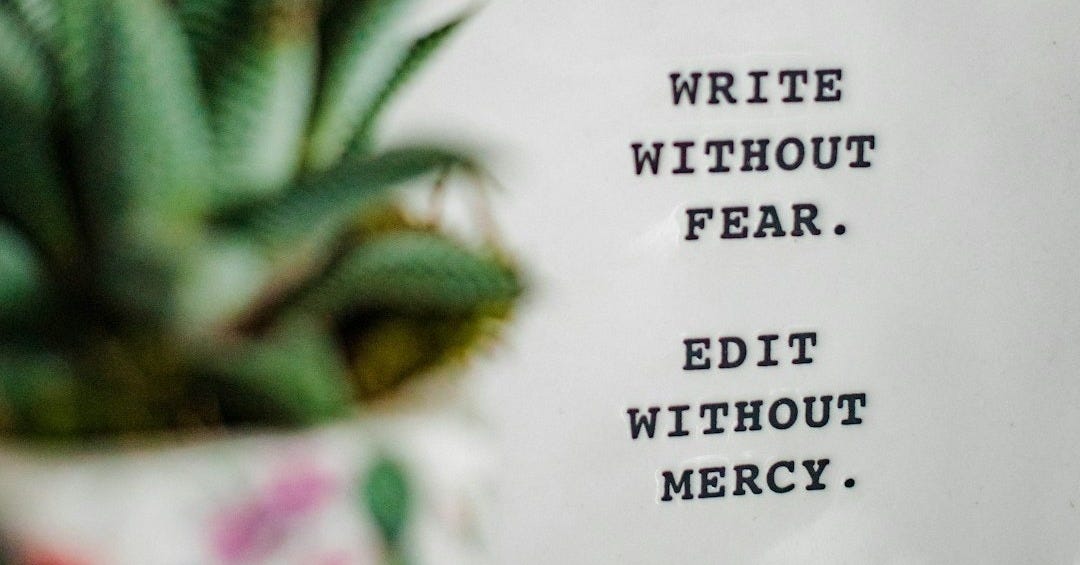
If you have ever received an editorial letter, you will know that it can be a little… overwhelming. Several pages of notes covering every element of your novel – structure, plot, voice, characterisation. It’s easy to read all that criticism, however constructive it is, and think that your novel is rubbish.
But editing is a really vital part of writing a novel. The first draft is going to be rough. It’s your best effort at getting your story down on the page, but however much you’ve planned, however great a writer you are, your best effort the first time around isn’t going to be the strongest version. Sustaining a story over 80,000+ words, capturing character arcs, and plot points, and themes, is not something you can do perfectly on the first go. You have to go over it and over it, from macro big-picture elements – are these plot points right? – right through to micro, stylistic points – is that the right word or phrase for this particular moment?
So let’s talk through it all:
Why you shouldn’t push back on the idea of making big changes;
What editors and agents mean when they ask if authors are receptive to changes;
How and when you should push back on changes;
What big changes might look like (and how not to panic).
Refusing to consider big changes is a red flag
Once an author reached out to me in my role as a freelance editor, enquiring about a manuscript assessment. He sent me the first few chapters of his novel as a sample, and also described his novel.
Comments
Nothing yet. Say the first thing.
Sign in to join the conversation.