
Text within this block will maintain its original spacing when published
but do you love my body?
I know my spirit, of course,
is a particular concern of yours
my mind I feel sure you care about
and my emotions even might be your delight
my thoughts toward you I can imagine
being lovable, as also my adoring affections
and my ineffable, luminous soul
but this body of mine—
I don’t know
I can’t begin to picture any feeling toward it
from you except for disgust
perhaps disgust is beneath you, but judgment then,
a divine decree to subdue this thing to a whisper
so weak that its cry never reaches your presence
the goal being a life so untouched by my flesh
that it’s as if I don’t have it at all
or maybe it’s apathy you feel
for you, Lord of the universe,
have far more important things to do
than care about my lungs and lymph nodes
but then again, the Hebrew word for soul
means body + spirit, a far deeper interlocking
than even Aristotle’s essence + form
then again, you spent your precious words to your chosen people
on scabs and bald spots, sores and blisters,
what clothes to wear, what food to eat
then again, your universe that you rule
you also fashioned, down to fingernails and follicles,
and then again, you inhabited a body
picked it up and made it part of you
forever—
you’re still scarred
so maybe you do love my body
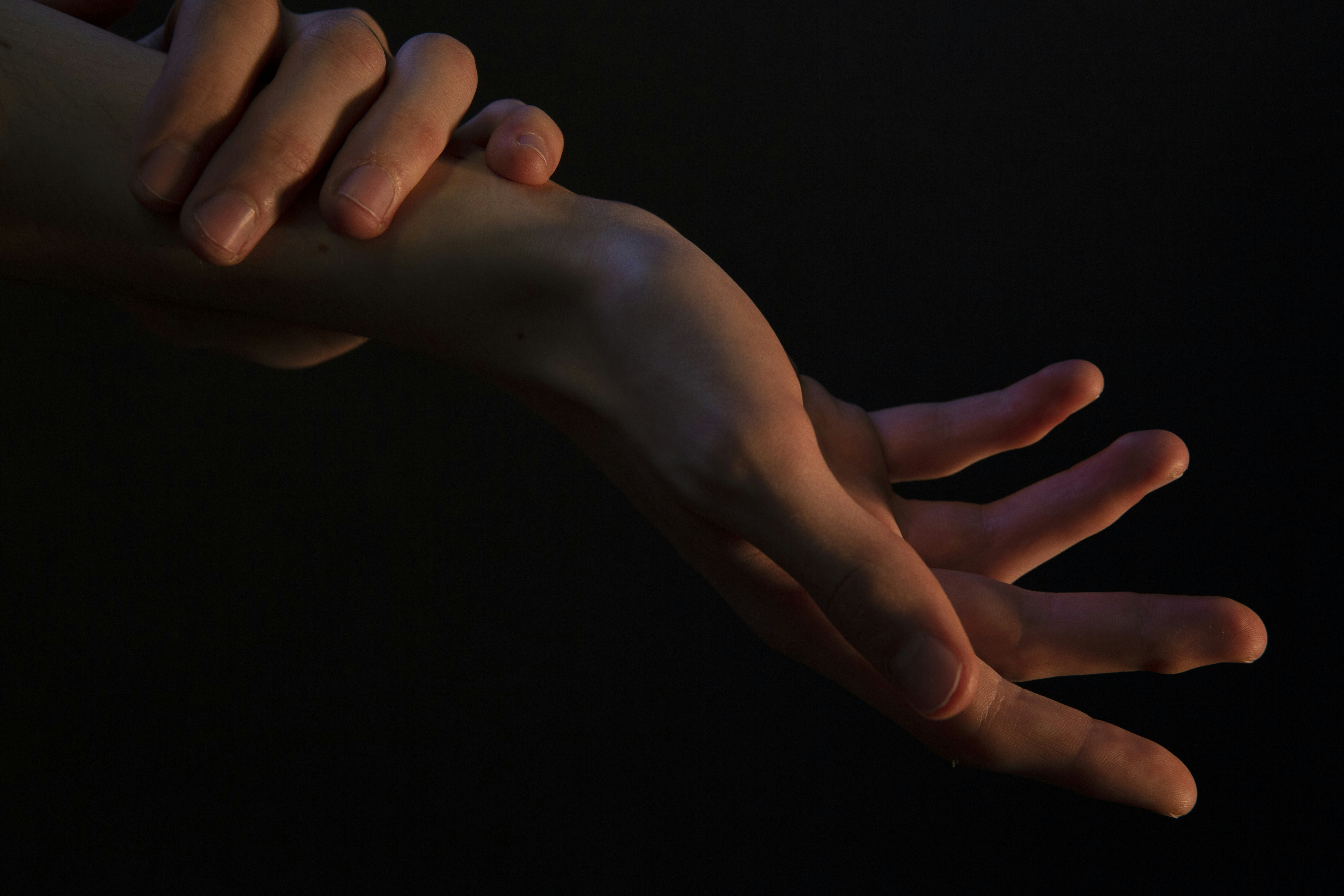
My instagram bio is “recovering gnostic,” as I’ve written about elsewhere. When I tell people what I want to study in grad school, it’s basically a version of this poem: What does it mean that Jesus has—present-tense—a body? A body with scars? What does that mean for our bodies? What do we do with these things that cause so much pain, these things without which we cannot exist? Cartesian dualism, Platonic forms, Aristotelian hylomorphism (soul + matter) … none of this is new. But I’d like to explore what it all means for this age of screens and AI, gender dysphoria and body positivity.
I feel it in my generation, a craving to get back to the embodied. If all the images we see could be AI-generated deepfakes, what can we trust but someone we meet face-to-face (barring any Mission: Impossible masks, of course)? We love our Spotify wrapped and our endlessly updating playlists, and yet we’re also returning to record players and vinyl. I know I’m in some niche circles, but I hear the swelling murmurs about third spaces and walkable neighborhoods.
When you bring in sex and gender, it gets thornier by degrees of infinity. What do you do when you feel like you’re in the wrong body? When this thing you’ve never known a day without, this thing you are always conscious of, feels like a prison, or like some alien invader? The longing for wholeness, for integration, the existential intensity of these questions—they’re pointing to something true, simultaneously deeply personal and universal, something we all must wrestle with, whatever our particular relationships to our bodies are.
Disability, aging, race, poverty—they’re all connected to the fact that we have bodies of various kinds and functions. I don’t know what exactly I’m looking to explore here. I’m probably hoping for some golden key that will unlock the foundational riddle to every human problem. Calibrate my enthusiasm, I know.
But this is where my faith—with its thousands of years of thought and practice related to bodies and God and humanity; with its sacred text full of earthy stories, instructions, puzzles, and redemptions; with its central figure of the God-Man—has something special to contribute. I mean, what would the point of it be if it didn’t address these most primal question: What are our bodies for? What do we do with them?
I think of my own relationship with being a physical creature—the first time I realized moving my body didn’t come as naturally as it did for the other girls in dance class, the feeling of freedom when swimming, the perplexity of puberty that continues to evolve with each new season, the wound of betrayal from chronic pain—and I guess I want to believe that these things matter to my God. That they have something true to say about him, about the world, and maybe even more, that he has something true and good and beautiful to say about them. And I want other people to know that the complexity of their physical experiences are a window into deeper healing, deeper delight, deeper connection with God and others. I want the church to be a place where we explore these things safely and bravely.
Jesus washed his disciple’s feet. It was a picture of servant leadership but it wasn’t just a metaphor or analogy—the literal act in itself was of value too. The sweat and dust, the dried feces probably crusted on their soles, the wrinkles on his fingers from being submerged in water, him right up next to his friends’ hairy calves and fringed tunics … he didn’t shy away from bodies. He dignified them. What does that mean for how we treat bodies, ours and others’, today?
So anyway, that’s a rambly way of saying: This is what’s on my mind, this is what I want to keep exploring, and this is a bit of the backstory behind this poem.
On a related note, I haven’t said much about this on here but as many people in my real life know, I’m hoping to attend grad school in Canada this fall to explore more ideas like this. My student visa is running into some issues, so if you think of it, would you pray that God would make a way for me to go? And if not, that I would have direction for a plan B? Thank you, friends.
On the topic of bodies (I didn’t even think about the relevance of this until now, haha—we’ll pretend I planned this), I’m incredibly honored to share that Plough magazine published an article of mine in their most recent print issue on health. My essay is called “Citizen of Two Kingdoms,” about how chronic pain has given me two different lenses for looking at life, ones that I think we can all take advantage of as people with broken bodies to varying degrees.
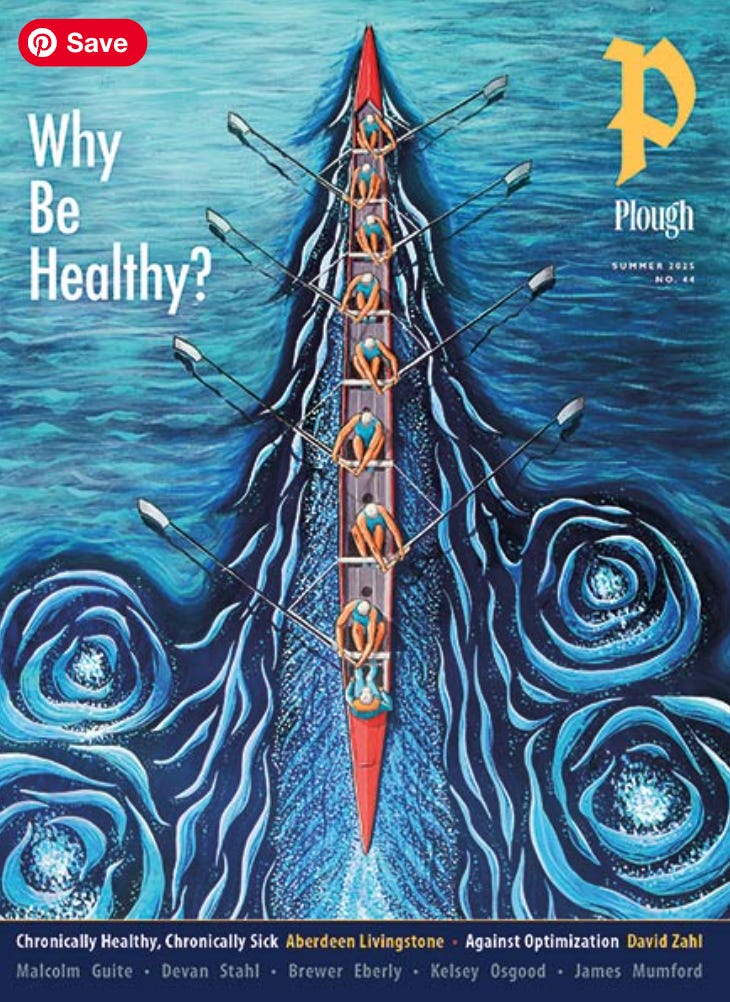
You can purchase a copy at the link above—and there are many other incredible contributors, so I think it would be money well spent. ;)
The Ministry of Time by Kaliane Bradley | 3 stars
fascinating premise, great prose, somewhat unsatisfying conclusion; too many themes left open-ended (also sexual content warning)
The Mourner’s Almanac: A Poetry Collection by Elle Rosamilia | 5 stars
full disclosure: Elle is one of my best friends; her poetry has been a north star of comfort and inspiration for me for a decade plus and this debut collection is stunning
Sense and Sensibility by Jane Austen (reread) | 4 stars
Jane is so funny and the best observer of human interactions; not my fave Austen—sometimes the characters feel too caricatured for my taste—but I mean, it’s still Jane Austen
I don’t have robust reviews for these, but here are my most recent watches:
Hitch (3.5 stars) | Isle of Dogs (3.5 stars) | Billy Elliot (4 stars) | The Parent Trap (1998) (4 stars)
Still waiting for a 5-star movie that’s not a rewatch!!
Thank you for being here, friends. Here’s to staying awake.
Aberdeen
Comments
Nothing yet. Say the first thing.
Sign in to join the conversation.