
If you’re new here, Welcome! 🌷
These musings are meant to be reflections that are unfiltered, non-refined, and as much as possible, non-reviewed. The goal is to write authentically, and not to think extensively about ‘audience’, but about ‘ideas’. You’ll read some weirdly structured sentences from English being a second language, and from a refusal to “refine” thoughts to the extent they don’t become genuine..
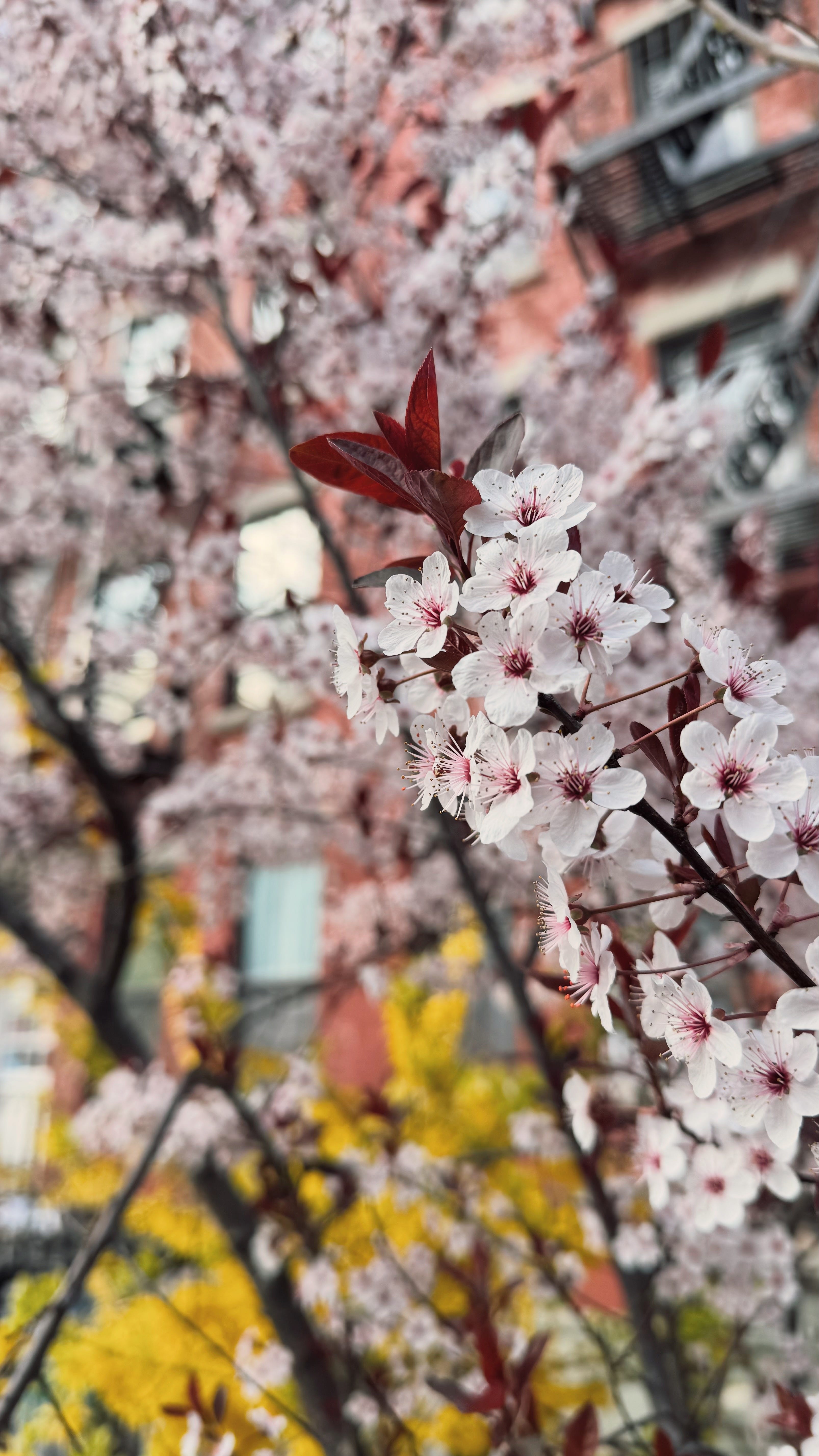
Dear friend across, hoping the spring where you are is full of beautiful rain and blooming flowers, and colorful sunsets.
I go back to continue what started in this article for what I consider one of the best novels I’ve read in Arabic. It made me even more determined to go read more of the historical fiction genre (please send recommendations!) Abdelkarim Jouaiti’s work, specifically his quartet, which this novel is its 2nd part..
Before I start, I wanted to confess that I used the help of the dreaded not-so-smart intelligence to help me shape up some of these translations, and I did some editing to make sure they’re as close as possible stylistically, in my uneducated translation efforts.
Reading parts of this in Morocco not only shaped my understanding of the novel’s locations and significance, but it was the epitome of a novel that is more than a novel. It involves a people’s history, their political ideologies, their traditions - regional and personal - and it rests on a history of dignity that shapes the whole of this novel; partly because it is about a person who leaves Russia to France to preserve dignity, and it is about a woman who goes to the village’s chief to complain about her husband’s disrespect, and about a people’s revolution in pursuit of a dignified life, and it is also about a political prisoner’s lengthy monologue to himself about his protection of dignity in front of his jailers, and his willingness to die in defense of self honor.
My travels in Morocco were heavily soundtracked by Gnawa.. While Morocco has rich and diverse sounds musically, Gnawa is its most popular export..

During one story night, the revolutionaries sit in the village’s restaurant awaiting the news on the revolution through the radio, and the protagonist says:
“I raised my eyes to the sky. The clouds were an angry and scattered mass, here and there, each drifting as though keeping an appointment with a wind that would gather and impregnate them with rain upon some distant land. I saw the stars, blazing and dim alike; I saw those that were very near and those impossibly remote, and I remembered my mother. Every time I lifted my gaze to the sky on a clear night, I remembered her, and I saw as I see in the night sky always: that boundless generosity, the chest that offers itself as a home for the sighs, that quiet guiding light, and the firm support that neither slips, nor abandons, nor betrays. And just as no one can write the history of this sky, nor the histories of all the drifting fluttering bodies within it, no one can write the history of a mother in his life. I see her turning on the bed now. With what does she console herself? With what does she fortify herself? I tell myself: had it not been for the sky and the mothers, humanity would have perished long ago, and there would be nothing that bonds one to another, no one would find content in another. There would have been none of what is the solace of faith, and the warmth of family.
I think of this passage often, and I wonder what genius moves the emotion from revolution, to the mothers and the sky.. Abdelkarim has a thing for the sky, and this is reflected in the prisoner and the jailer’s obsession with controlling the opportunity to see ‘the light’. Both in the metaphorical and literal senses.
Perhaps Man did not pass from nature into culture because he tamed fire and domesticated animals, or because he made incest forbidden, or because he moved from raw to cooked food, or because he developed his means of communication into language, or because he learned how to use tools, or because he chose to curse instead of striking with a stone or a blade, or because he came to treat his pains, wounds, and fractures. Perhaps it was rather because he learned how to conceal what he thinks, and conceal what he intends to do, and hide what is up with him. Soon enough, primitive man discovered that the uncomfortable mask he has concealed his face with has left him exposed, and no one believes him. Thousands of years of repetition taught him and inspired him to fake with his face, his speech, and his conduct that masterful mask which deceives all who sees him. He entered the realm of culture and emerged from nature the moment he was able to govern himself, concealing things even from those closest to him. A chameleon does not succeed in deceiving another chameleon, nor does a serpent rival another in the art of slithering. A tiger lurking in a thick forest may succeed in capturing prey, but it will never succeed in deceiving another tiger. Animals deceive primarily other species. Only Man is capable of deceiving his fellow Man and to manipulate him, and shows something that is different than what he conceals. Only Man cries when he’s not crying, and laughs when he is not laughing.
This one below is of my favorite parts of the novel. It encapsulates how contradicting the human soul is. The protagonist is stuck in his pit/prison cell, while his jailer is reading the Quran, and the prisoner attempts to come to grips with this person who tortures him, yet he attempts to escape through ‘repentance’. It’s such a complex emotional invocation that I still think about, long after I read this passage.
One night, he (the jailer) began to recite the Quran aloud in a voice that kept rising, and after ten days he began reading it after the dawn prayer. Then, he started to read during the day as well. I would say to myself that it was his feeling of isolation, and that staying motionless throughout the long day and night, suspended in the air in that narrow space with flies hovering about his face, left his heart bleeding, no matter how hard he tried to conceal it. He could not justify this to himself by saying he was guarding a political prisoner, while who is guarding me is only cement and steel. All these things weighed upon his heart and made him flee into reading the Quran, finding in it a kind of salvation. If it wasn’t for those hours of recitation in which I was struck not only in my ears but in my very soul as well, I would not have endured and stood firm. I would not have borne what no man can bear.
The verses were crossing through my pores, stirring my weary and exhausted body, sowing within them seeds and windows of light. They would take me by the hand and carry me far away, drawing me along as they went, telling me: the mountains will disappear, the earth will fold like a book, the seas will turn flat like a sip of water, and as for what you are in, nothing remains the same way before the creed of death. The wave, no matter how great it swells and how mightily it blows, will unfold when it breaks against the rocks of the shore.
And as he recited with that swift cadence through which the reciter is swept along by verses crowding one another to come into being, flowing over his tongue, I felt that the Remembrance1 had been sent down not for one to rise above another by it, but rather for the sake of shattered and lost hearts, for whom both people and time have turned their backs. We are the dry leaves of trees, the Remembrance tells me. We are the wind played upon by Providence, which stirs itself as it carries the leaf toward its resting place in the earth, where it shall dissolve in its depths, to become after years a nourishment striving to issue back into life in the form of a flower, or a plant’s stem, or a fruit.
I’ll stop here and I’ll probably come back to explore more excerpts later. Specially the one about the types of clouds..

I think about this novel a lot. This emphasis on the humanity within war is unmatched. Half the novel is written from the perspectives of the jailer, and the prisoner, in the 1st person style. The writer’s ability to switch it so elegantly - as if you’re reading two novels about the same incident - is so beautifully confusing and gripping. Throughout the 2nd half of the 450-pages novel, you feel both of these characters converging towards the reality of the shared destiny, and how intertwined both of their destinies are through the maddening power imbalance that exists between both of them.
Such a magnificent novel that ties in its ropes history and fiction, humanity and politics, prose and form, spirituality and psychology..
I just wish writing like this gets translated..
📷:
📚: Currently Reading:
Mirrors: Stories of Almost Everyone by Eduardo Galeano.
Inverting The Pyramid: The history of soccer tactics by . It’s the World Cup season. I’ve watched the sport for close to 35 years, and Galeano’s “Football in Sun and Shadow” opened my eyes to reading about the best sport2 there is.
Thank you friend and reader.. Till the next one..
Another name for the Quran, because it is a ‘reminder’.
No hill to die on here. Football is THE BEST sport hands down.
Comments
Nothing yet. Say the first thing.
Sign in to join the conversation.