
How do you feel about winter?
Historically, this has been the hardest season for me. The sun goes south and turns pale, and I get the morbs. For many years, we’d get to mid January or early February and I’d be a shell of a human, pulled deep into my seasonal affective disorder. (Side note: do you think they named it S.A.D. on purpose? Because that’s next level, and I fully support it.)
A couple years ago, I’d had enough. I realized that the only way to thrive through winter (without moving out of state) would be to make friends with her. I really didn’t want to. Everything I knew from my experience of winter had taught me that she’s a bitch, and I don’t tolerate bitches well.
Still, I kept running across this quote: “If you choose not to find joy in the snow, you will have less joy in your life but still the same amount of snow.”
Seriously, that quote follows me around, hounding me to learn the lesson, already. A friend even sent it to me again just a few days ago (to be seen is to be loved).
The reality is that I live in a place with four seasons, and if I can’t find joy in one of them, I’m choosing to resent a quarter of my year, every year. Added up, that’s like choosing to live a life I hate for twenty years, you guys. I’m not willing or able to move right now, so I’m left with the choice to either squander these months or relearn what winter is.
Luckily, I’m a poet.
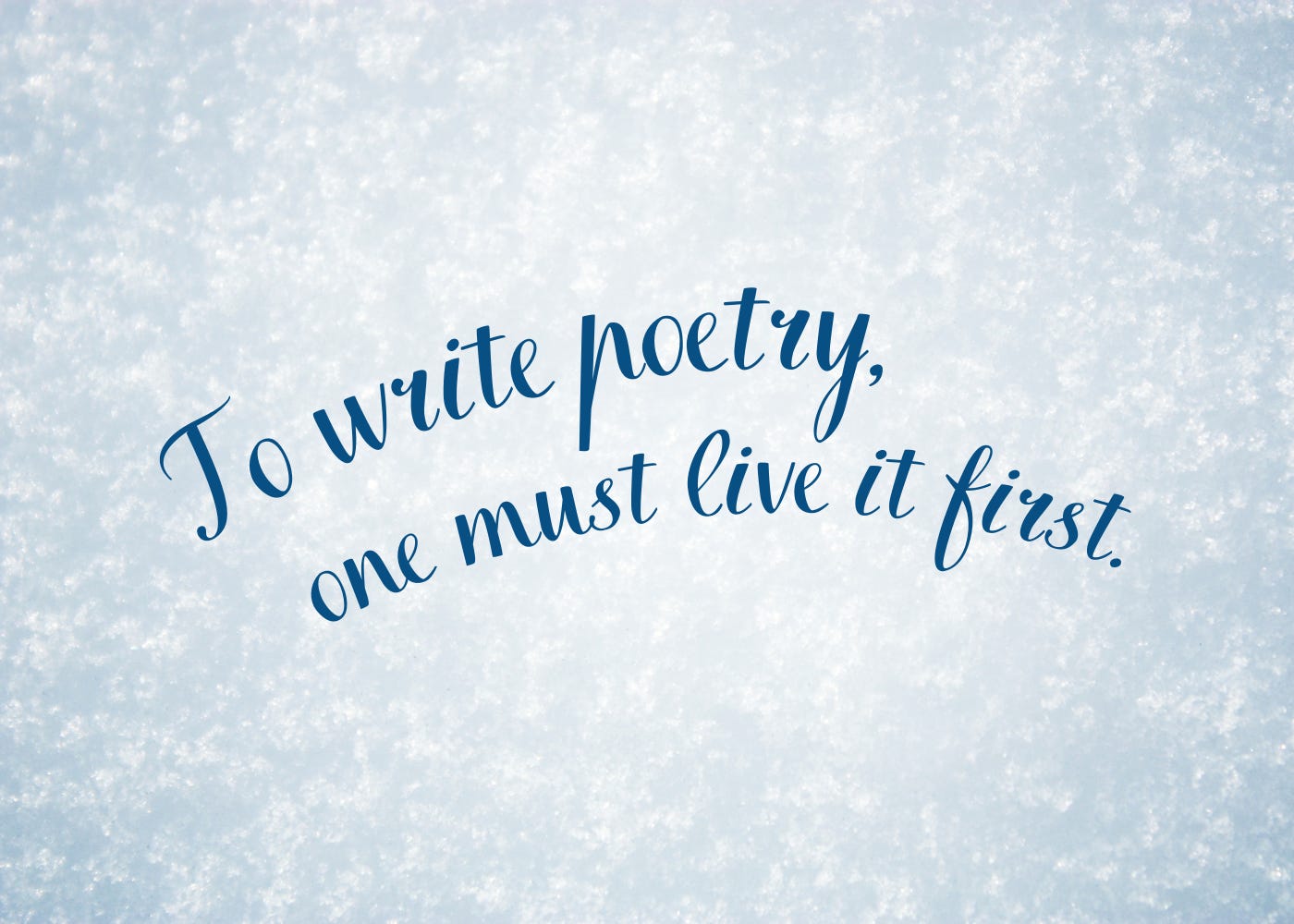
The primary job of a poet is to observe, to see the nuance and beauty in literally everything. The writing it down with pretty words part is actually secondary. Before pen meets paper, you have to learn to slow down and be present with the world exactly as it is, the good and bad. I end my poem “Blocked” with this idea: “To write poetry / one must live it first.” (You can read the rest on page 34 of my book, available most places.)
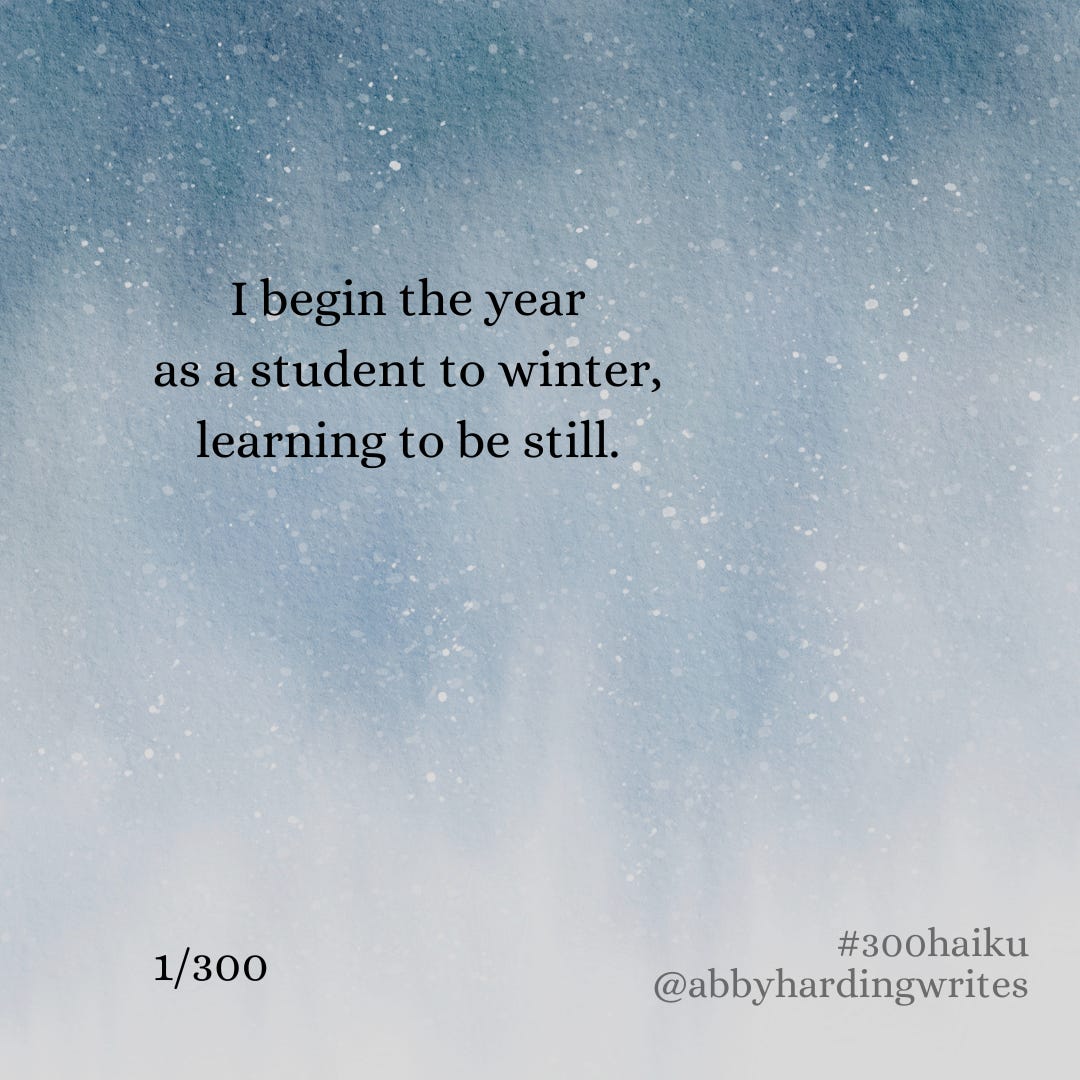
Before I can love winter, I have to see her (re: “to be seen is to be loved”). For me, that means poetry. It means studying winter through the lens of a poet, noticing where she hurts but also where she’s beautiful. Radical acceptance of who winter is and learning to love her for it.
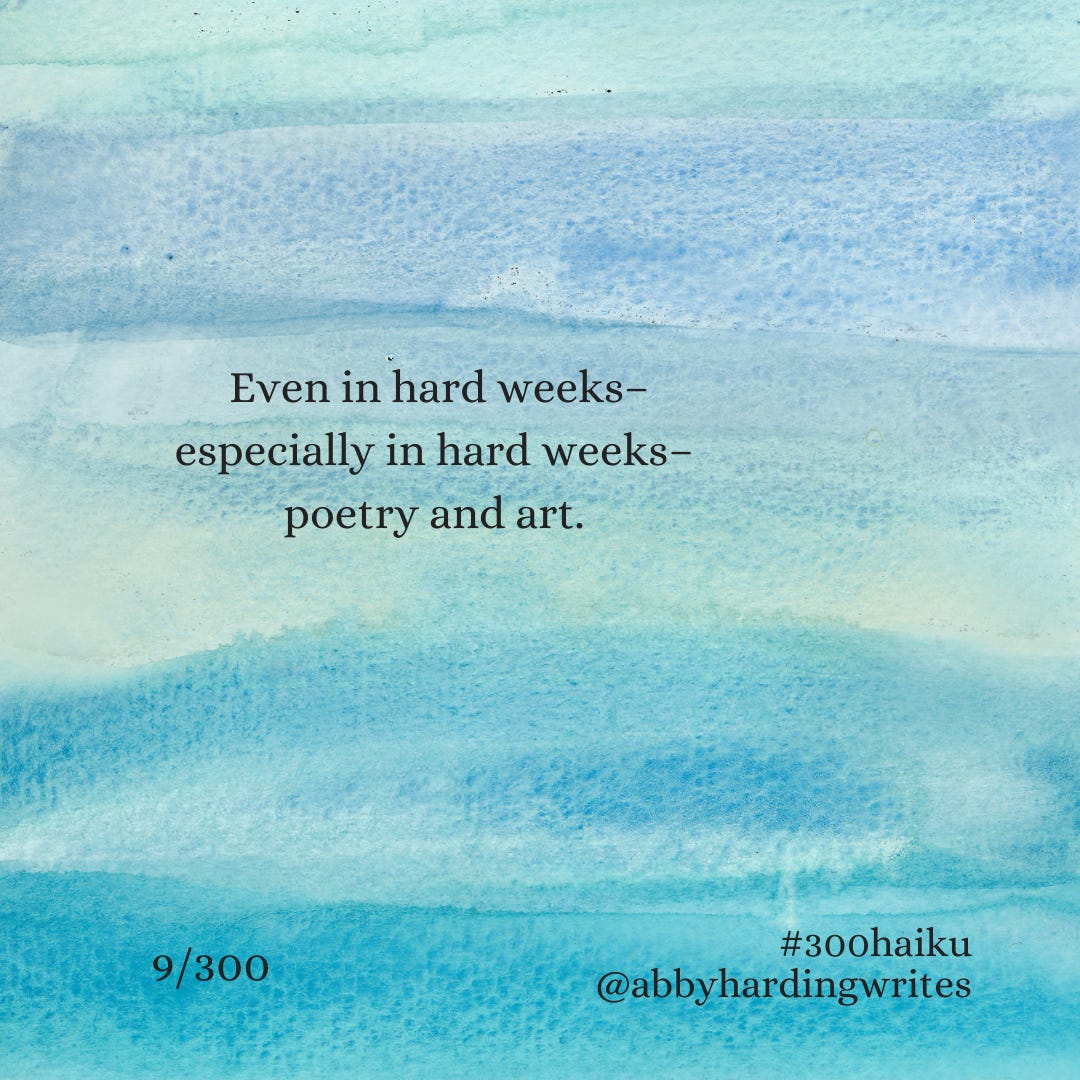
Enter the 300 Haiku project, in which I’ve committed to writing 300 haiku this year (this allows me to take a day off every week, plus a few extra skip days, no art-guilt needed).
Why haiku? Well, as a writer, I’m drawn to constraints and prompts. Partly, it’s laziness (not having to generate a place to start from), and partly it’s the challenge. Following a set of rules, especially one that limits the number of words I have to word with, just jazzes me as an artist. Haiku suits this very well, with the traditional western take on the form being a mere 17 syllables long (5-7-5). It’s also an amuse-bouche sized project I can fit into nearly any day.
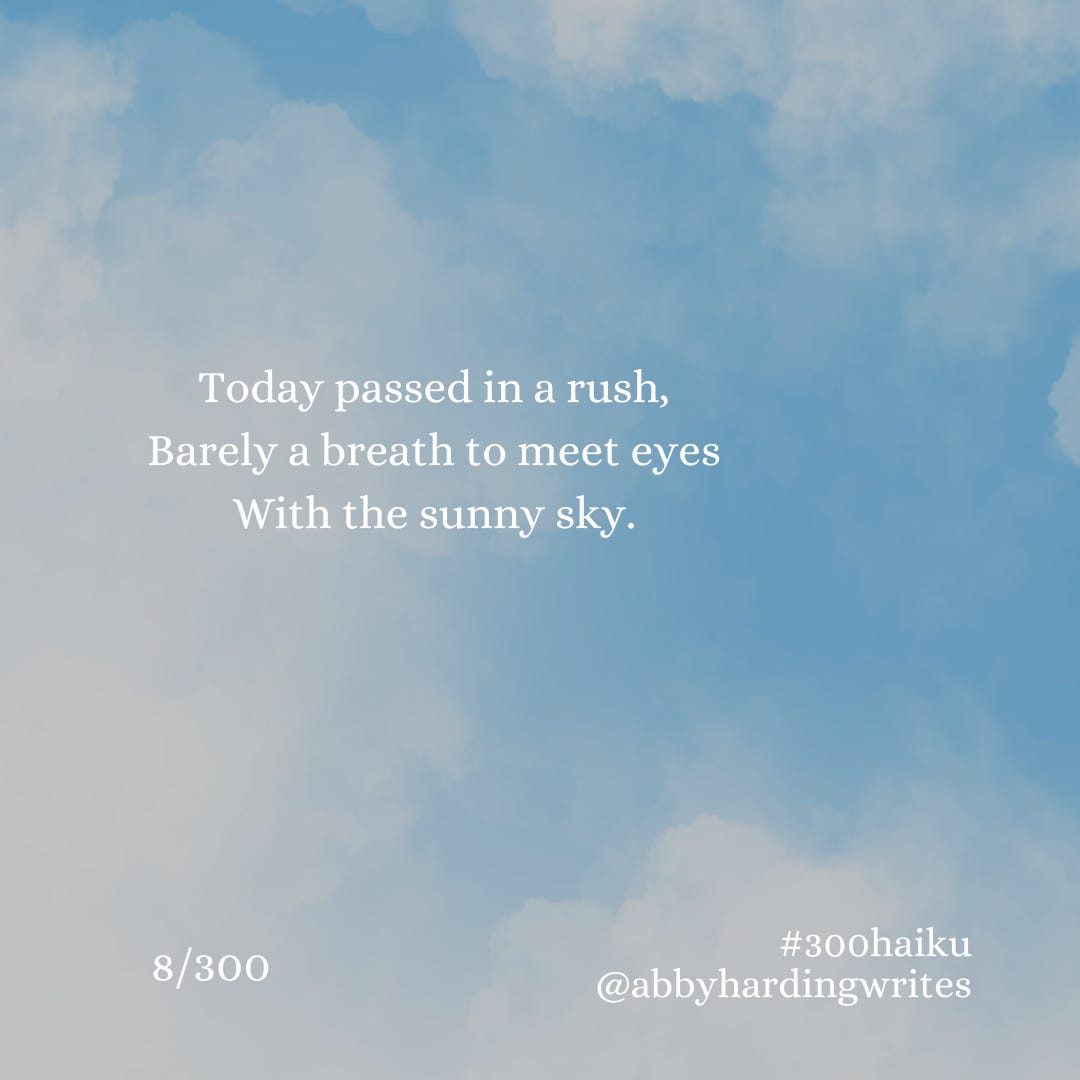
More importantly, though, haiku is a poetry form obsessed with observation, especially observation of nature and the seasons. If I’m going to be more present in my life–live like a poet–I need to practice my observational skills every day. This prompt gives me a simple, approachable way into that moment.
Even just 11 days in, this project has been a joy. The commitment to observing more has found me outside more, even in the freezing weather, and… loving it? Winter is emphatic, opinionated, and a little bossy, but it turns out she’s not a bitch. She’s actually one of the best advocates for rest and self-care out there, and if you don’t listen to her, she makes sure you feel it. She’s more than willing to be my friend–as soon as I’m done bitching about her behind her back.
So, if you’d like to follow along as I write my haiku, follow me on Instagram, Threads, or Facebook (or TikTok if the ban doesn’t shut it down). Better yet, join me! Stretch your observational muscles and write your own haiku. Feel free to use #300haiku if you post it online, and tag me if you think of it! I can’t wait to see what the year has to teach us.
On my nightstand: Big Magic by Elizabeth Gilbert
I’m re-reading this excellent exploration of creativity, and I’m feeling inspired. If you’re looking for a hopeful, joyful path to engaging with your inner artist, this is a wonderful place to start.
On my headphones: “Hasse: Serpentes ignei in deserto”
This classical music album features several extremely talented singers running through some truly astonishing repertoire. It’s a certified bop.
On my desk: 300 Haiku, plus some blackout poetry and the first few thousand words of that middle grade novel I planned to write last summer.
Comments
Nothing yet. Say the first thing.
Sign in to join the conversation.