
I’ve never thought of myself as a writer. Some of my closest friends are, and I’m awed by their gifts and craft.
I see myself as a seeker and teacher — someone who moves through the world attuning to resonance, scanning for what shimmers, and connecting thoughts and dots across fields and contexts.
And then, in moments that I can only call grace, something clicks. A pattern comes clear. A truth lands in my body.
These moments become the seeds of everything I make.
As one of my teachers says, “When it comes in that way, I trust it.”
When an insight lands, I try to catch it while it’s still alive — typing a few words into my notes app, recording a voice memo, or, increasingly, writing first drafts by hand. I’ve learned that ideas have a pulse. If I catch them while they’re still thrumming, they have a better chance of holding their charge.
Then comes the harder part: shaping the mess into something ready to share.
This is where I’m paying attention to something I used to ignore: The process of making can snuff the spark that made me want to make the thing in the first place.
Editing. Fixing. Tinkering. Tightening.
A hundred little tweaks at the computer, and the thing that shimmered starts feeling flatter. Further from its source. More polished, perhaps, but less alive.
So I’ve started using an inner litmus test, a kind of aliveness assessment:
Does this expand or contract me?
What’s driving — love or fear?
Am I all here in the making?
These questions have become my compass — not just for how I write, but how I make other things too.
I’ve started experimenting with recording one-take videos when I feel an idea surge. I’m not a selfie gal, but there’s something beautiful about the trust fall of giving myself one shot. As my friend Nick wisely says, if you do two takes, you might as well do 100.
Making something perfectly imperfect is medicine for the Enneagram 3 in me. Letting go of control makes room for what gets squelched when I’m fixated on “getting it right.”
I’ve noticed that the most alive versions of my creativity come through when I can’t edit myself. Improvised singing helps my whole body attune. Unrehearsed thoughts have a frequency the practiced pitch can’t match. Sourcing and leading The Flight School invites me to dance with the energy of emergence.
And yet, perhaps the most satisfying creative current of all is conversation. There’s nothing that enlivens me more than the resonance, surprise and spirit that flow between people who have stopped pretending.
Which has me curious about a new mode of making: recording unedited conversations with some of the wisest humans I know about the inner curriculum of remembering who we are and becoming who we’re meant to be.
Can we create something that’s more transmission than translation? More invitation than interview? More offering than output?
I can’t predict what this becomes, but I’m trusting the impulse, holding the idea lightly, and making space for what wants to emerge.
Ironically (or perfectly), as I was putting the finishing touches on this piece, I started to feel a familiar contraction. Eyes narrowing in judgment. Brain tightening around every word. Effort overpowering ease. Light beginning to dim.
So, to keep myself honest, I stepped away from the screen. I took a run, did a few handstands, and belted out some Shakira. And just like that, the channel opened and the aliveness returned.
It’s always here. We just need to remember.
Like so many of us, I’m thinking a lot about AI right now. It’s changing every medium of creation and writing is just the tip of the iceberg. I’ve written before about the ways writing alongside AI both helps and haunts my creative process.
But one of the things AI is helping me see is that the process matters as much as the product.
Writing still feels fraught for me, with or without AI. But rather than giving up on either, I’m renewing my commitment to what the creative process is for.
Aliveness.
The way we make something is integral to what we make. The state of the maker shapes the message. The how is the what.
Which is why so much of the debate about human-made versus AI-made feels like it’s missing the deeper question. I’m less interested in purity tests or abstinence pledges than in what we’re actually seeking: Does the aliveness of the person making it touch the aliveness in me?
Instead of policing the tools, let’s pay attention to how we’re showing up.
Am I bringing my full presence to the process?
Am I being honest about how I make things?
Am I protecting the pulse of the work — whatever tools I use?
Decades ago, this invitation from Howard Thurman lit a fire in me:
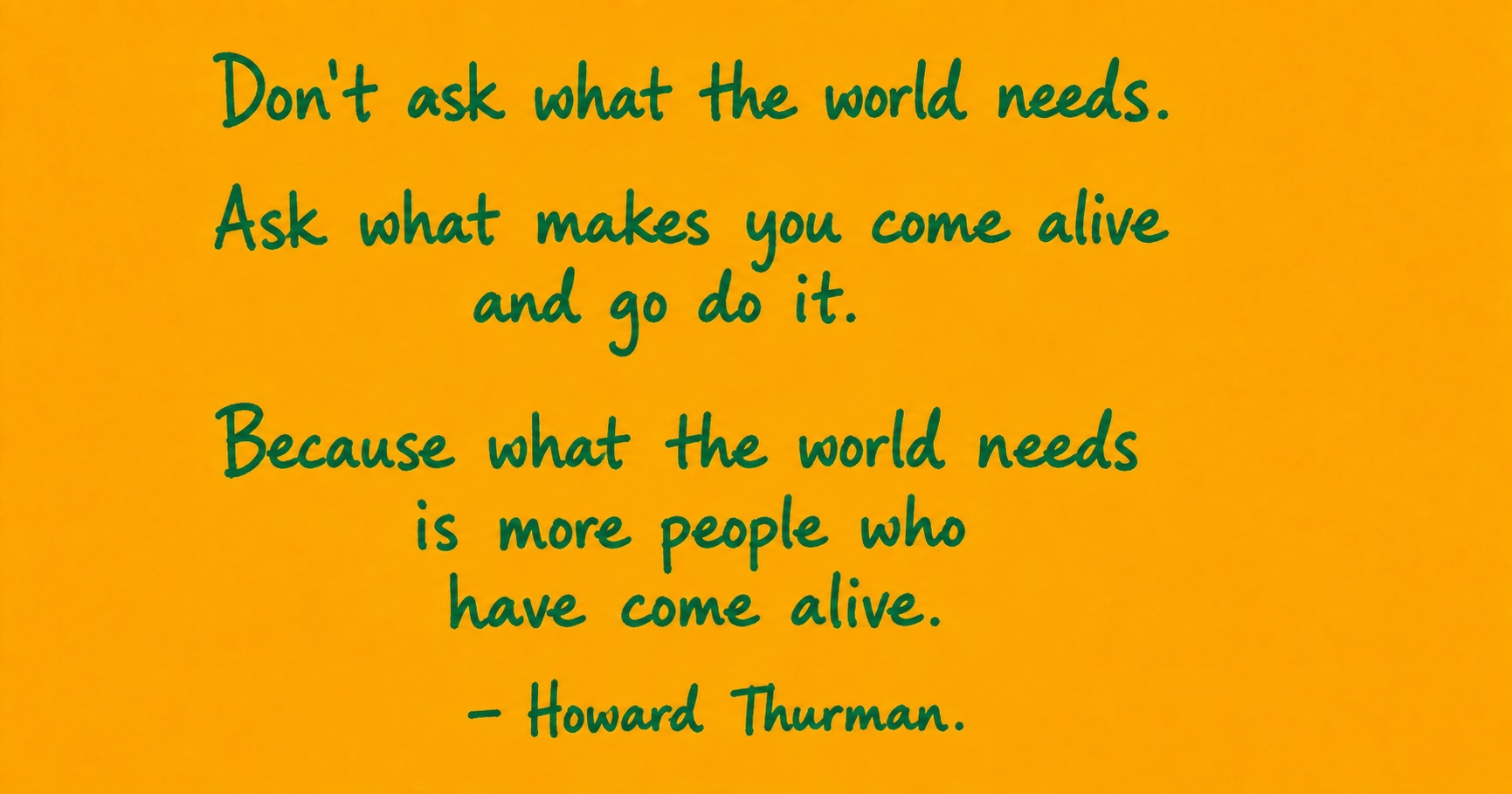
Now, as the lines blur between human and machine, alive and artificial, Thurman’s words aren’t simply an inspiration.
They’re an urgent invitation — perhaps the most important one of our lives.
A few live pulses….
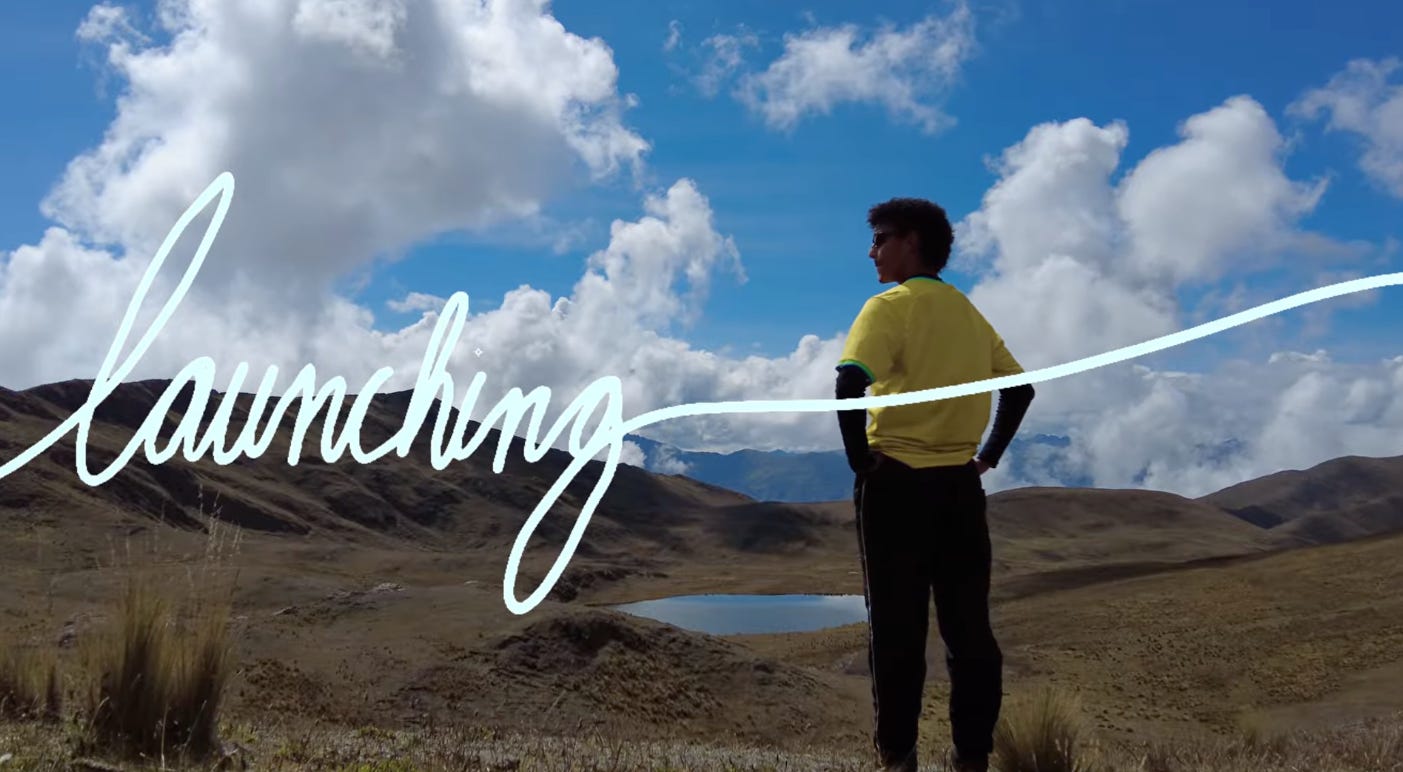
🎬 “I’d never been up that high”
One of our Fellows at The Flight School created this luminous video about the arc his Launch Year.
“If you’ve ever lived between homes, grown out of old versions of yourself, or felt the strange ache of becoming — I made this for you.” Doug
🎙️ Attention, Agency & Aliveness
My conversation with Todd Zipper on The Educated Guest, felt fresh and enlivening. We covered a lot of ground — from the unravelling of the credential economy to what comes next.
What happens when modern schooling reaches it’s logical conclusion?
🎙️ Learning as Liberation
I loved talking to Jacob Hundt on the Micro-College Podcast about the opportunity to unhitch learning from schooling.
Could the “fringe experiments” be the blueprint for what comes next?
Comments
Nothing yet. Say the first thing.
Sign in to join the conversation.