
Although this week marks the half-way point of my Medic cycle, it is far from being over, as this week I have also started full-time EMT school.
It’s been a doozy of a week, and I’ve not only learned a lot about how to tie paralyzed people up in a chair and the 50 different wrong ways to take a pulse, but also about the medical field in general. For instance, here in the United States, the EMT business is really just a glorified taxi service. Don’t believe me? Just call 911 and tell them your tummy hurts. Once the emergency responders show up, you’ll have to fight them tooth and nail to convince them that your upset stomach does not constitute a ride to the emergency room. Because at the end of the day, if no one goes to the hospital, the ambulance company doesn’t get paid, and neither do the EMTs. I’ve also learned that almost anything you do as an EMT can and will be used against you in a court of law, and even if you don’t do anything (and especially if you don’t do anything, as that’s considered negligence), that too will be used against you. The best way to combat all this is to just be really good about record keeping, making sure you notate everything according to international standards.
On top of that, you’re likely to rack up a large number of medical issues at a young age, both physically and emotionally. This means that many firefighters or EMTs are medically retired after injuring themselves (or getting cancer from all the stress) or in some cases, commit suicide after seeing some really messed up stuff (and this is all for minimum wage if you work as an EMT with an ambulance company, by the way).
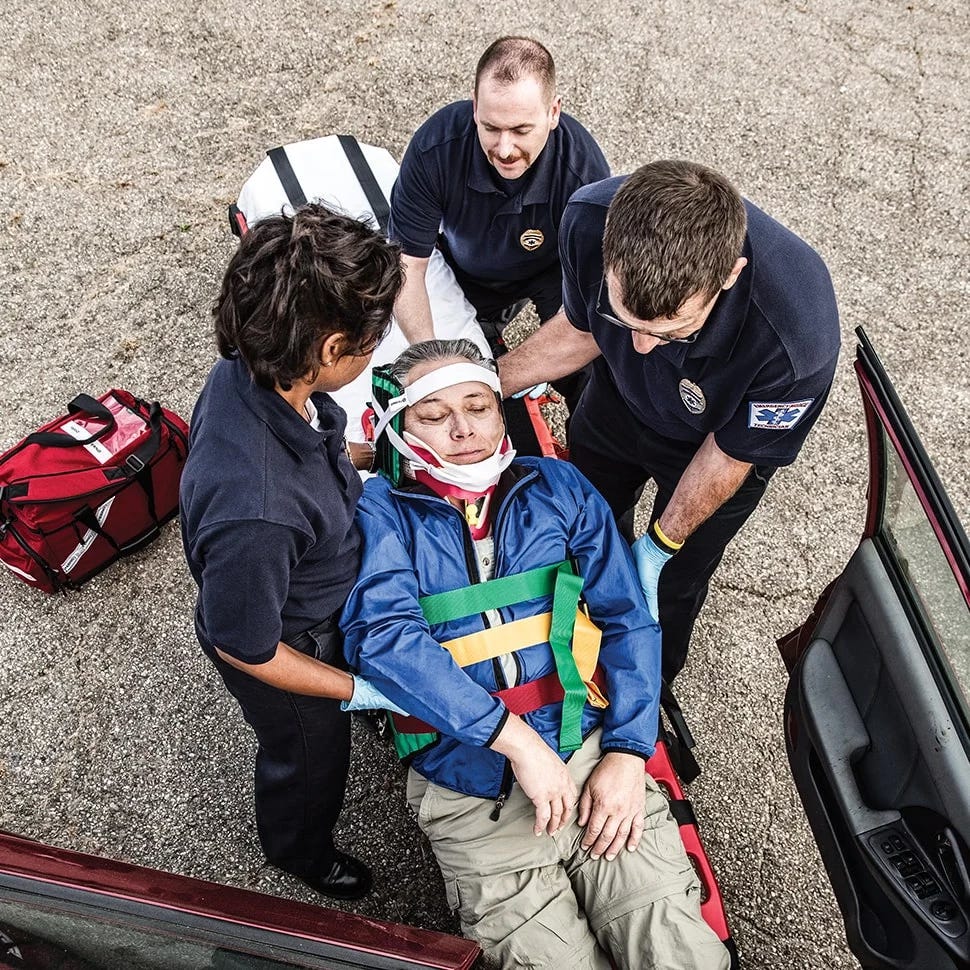
In all seriousness, the class has been informational so far and a great review of the things I already knew. One of the new skills I learned is how to use a Kendrick Extrication Device, which is a large vest made for securing paralyzed patients. It’s usually used to lift patients with suspected spinal injuries out of crashed cars. On the other hand, we had a vitals lab day and because our instructor (a medically retired fire captain) didn’t quite explain everything, most people ended up doing them wrong. People were taking pulses on the wrong side of the wrist, taking pulses with their thumb (which you shouldn’t do as your thumb has its own pulse), doing blood pressure with the BP cuff upside down, and just not taking blood pressure correctly at all. We did have a CPR day that was an all day long seminar with a test at the end, and everyone got their CPR card, so I don’t blame the other students for their earlier mistakes obviously caused by a lack of clear instruction.
Ultimately, what I’ve really learned is that there needs to be an understanding between EMS and le public so that both parties can work together to achieve the best interests of everyone involved. While EMTs and medics are taught how best to interact with their patients (as that’s literally 90% of the gig), the general populace should definitely try their best to understand some of the simple rules and regulations that govern first responders. They should also just try and have a general sense of compassion for first responders, as they are often risking life and limb to help people and then have to cope with some of the most soul-rending trauma known to man.
Sorry if this post seemed a little bit more cynical than usual, but that about sums up my take on this class so far. I appreciate the skills, but prefer a different teaching style than what is currently being implemented.
Until next time,
Abbott Springston
No posts
Comments
Nothing yet. Say the first thing.
Sign in to join the conversation.