
Welcome to Documented!
In this post, I’m sharing what’s inside my work planner. With Q2 around the corner, it felt like a good time to show how these notebooks keep me on track day to day.
Let’s nerd out on systems for a bit, shall we?
Earlier this week, I woke up in a bit of a funk—it was a rainy Monday, and the clocks had just sprung forward over the weekend. I had planned to go to a strength class, but decided against it. I could feel my brain asking for a reset after a busy stretch of travel and recovering from my wisdom tooth extraction.
Instead, I spent the morning planning and writing, easing myself back into focus with my usual flat white. There was something relieving about jotting things down for two uninterrupted hours. I moved between my PLOTTER (my adulting log1) and my TRAVELER’s notebook (my work planner)—updating past weeks, mapping out what’s ahead, and noting the goals I want to work toward.
I treat it like a monthly catch-up with an old friend. By the time I finished, I felt clear, grounded, and ready to take on the rest of the new week.
Why write?
It’s no surprise that I still write by hand most of the time. Putting pen to paper helps me slow down and think more clearly, and it’s how I turn ideas, plans, and tasks into something tangible. The digital planning comes later, especially if it involves multiple collaborators and a set deadline.
When I first moved to Berlin, my saving grace was my Monday mornings planning and journaling at a coffee shop. It kept me grounded, especially during an uncertain time in my life. This hasn’t changed, but I did reschedule it at the start or end of the month (the weekly lattes add up!).
This time block is a meeting with myself, which often rotates around these questions:
What’s on my mind lately?
What needs attention right now?
What do I want to focus on next?
I follow a monthly template2 for this in my big picture plans notebook—but here’s how it translates into my day-to-day planning.
Thanks for reading Documented! Subscribe for free to receive new posts and support my work.
The planner setup
I have two inserts in my TRAVELER’s notebook Olive cover: a monthly dated refill and a weekly undated refill. I’m using a Regular size, and since it’s slimmer than my usual A5 notebooks, it’s easy to put in any tote I bring when I’m out and about.
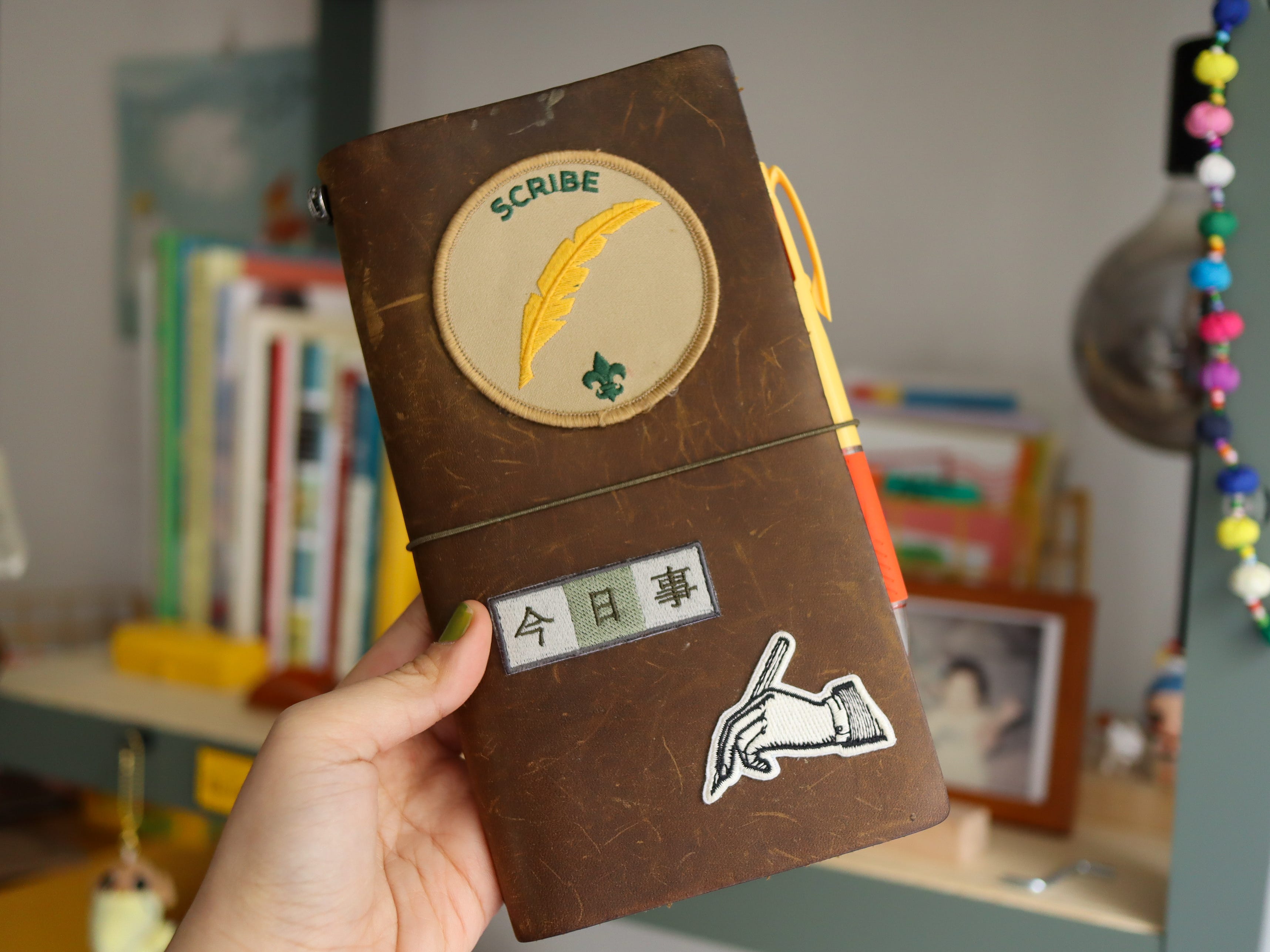
During my first trip to Chicago, I picked up this Scribe patch (which apparently is from Boy Scouts of America) from a secondhand shop in Pilsen, and stuck it on this cover ever since (that was around 2023). At that time, this was not my planner and I never reached for my Olive cover.
It wasn’t until late last year that I looked through my stash, picked up a JIYU weekly planner3, and decided to try out a more flexible and undated weekly planner system to switch things up (before that, I was writing everything either on my PLOTTER or Leuchtturm, and it was getting to me). The Olive cover was definitely fit for this role.
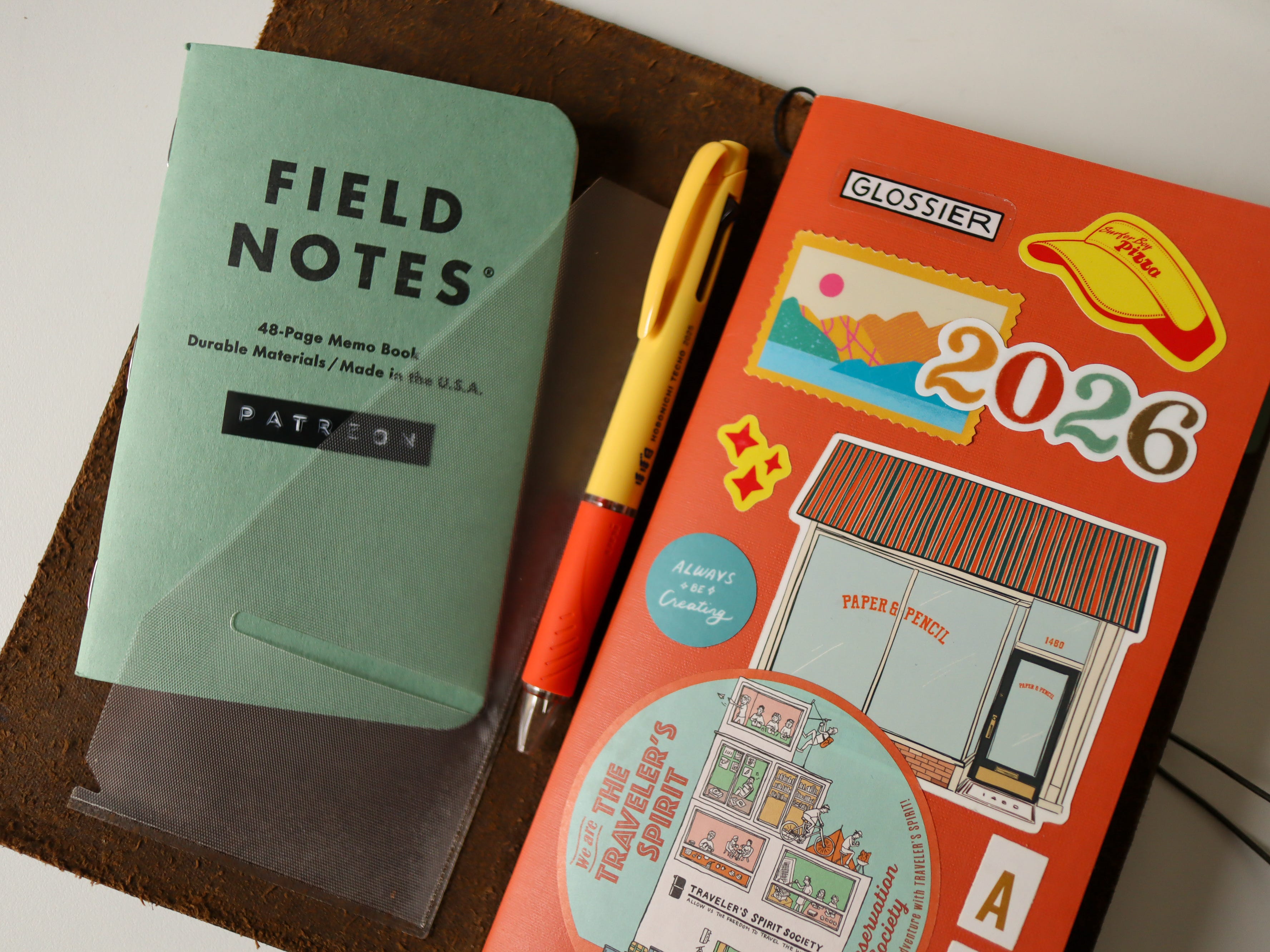
On the inside front cover is a pocket I stuck in, as it’s where I put my Field Notes for on-the-go brainstorming. Right now, I’m knee deep in planning for my Patreon, so that’s what’s currently in the pocket (it usually rotates between this and my content logbook).
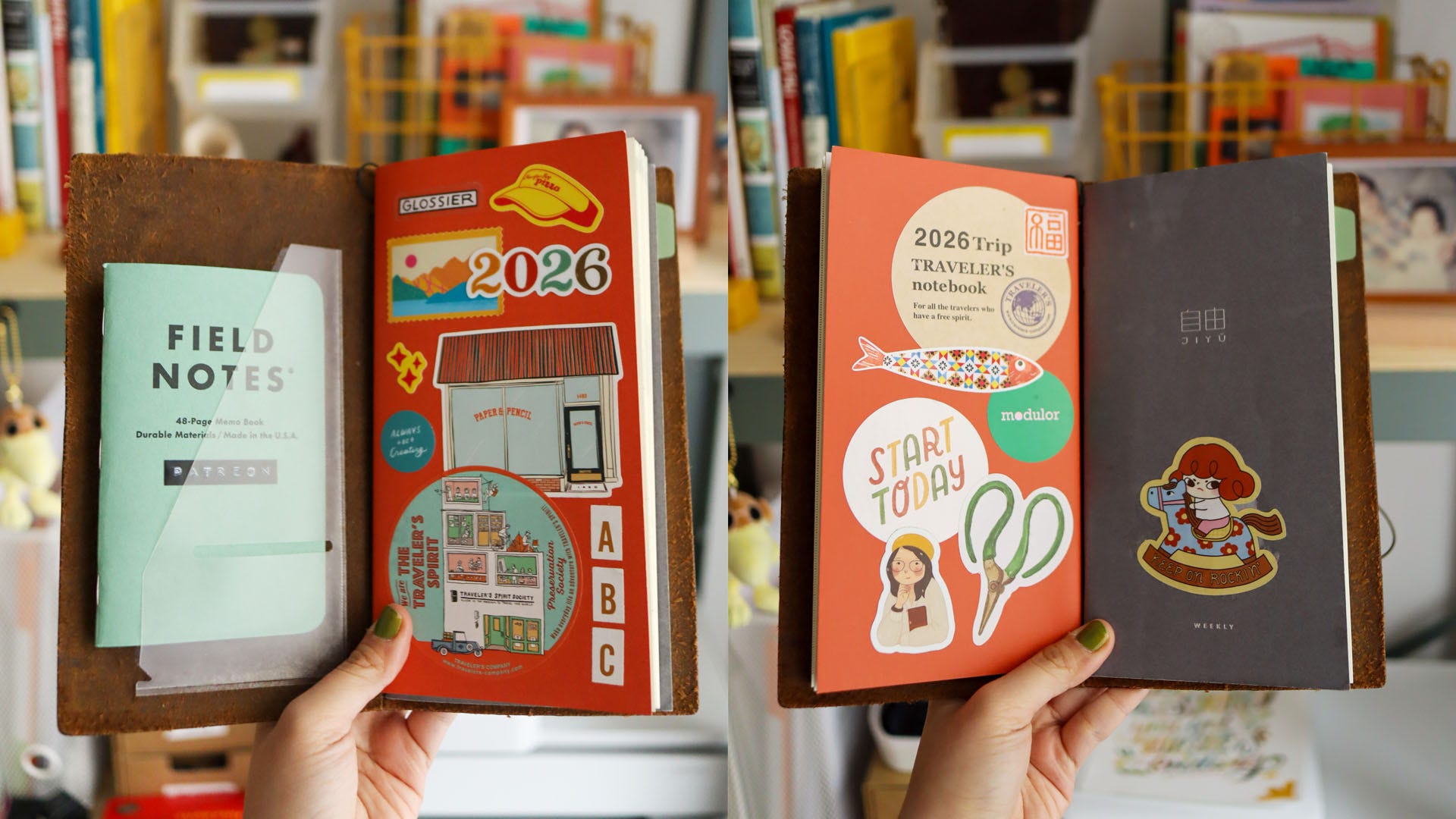
When I decided to add a monthly insert, I knew it had to be decorated (I just love the pop of orange). Meanwhile, for the weekly insert (that I have been using since August 2025), I kept it simple with a LOVESOUP sticker featuring this year’s fire horse (thanks, Sai!).
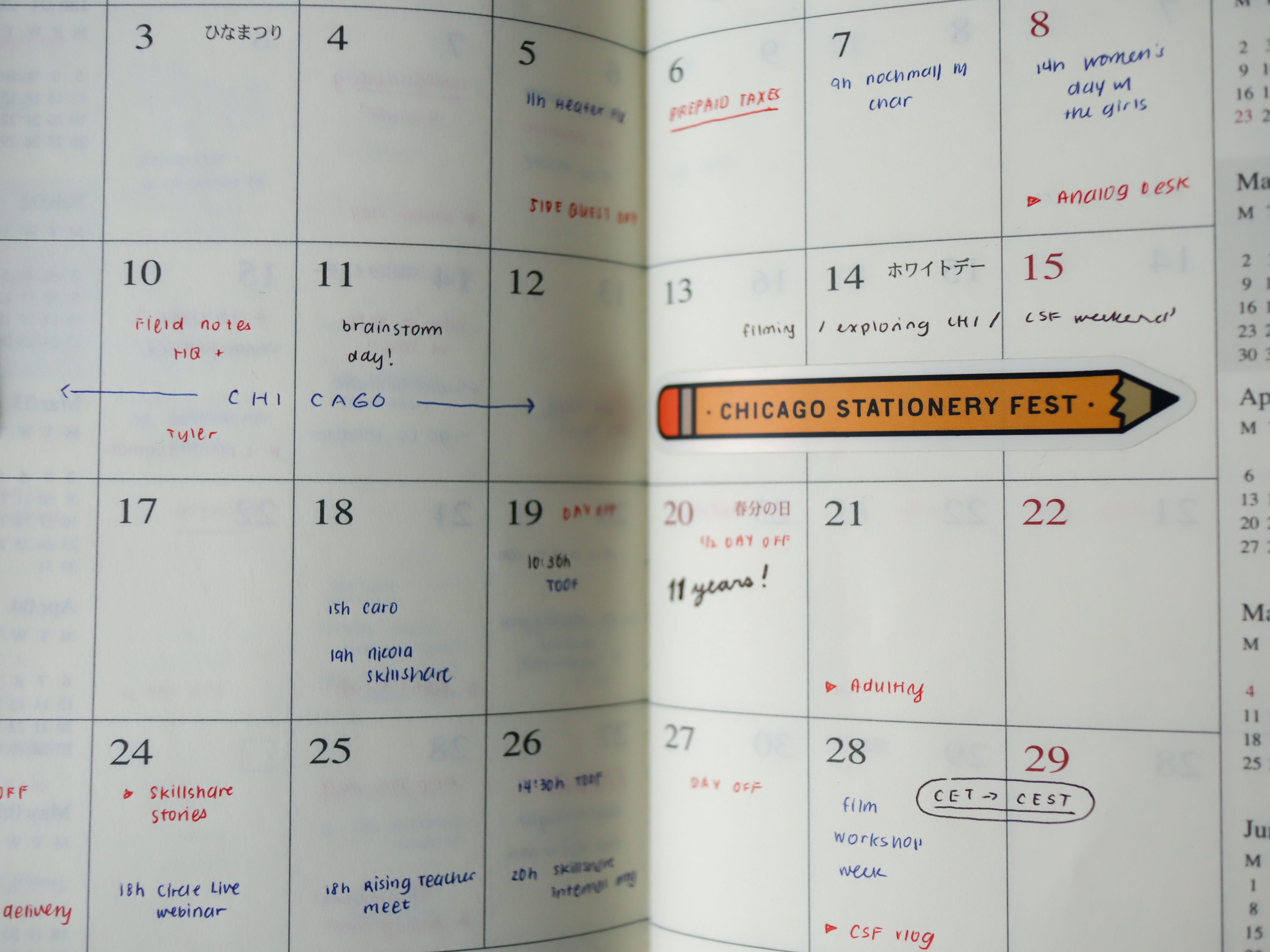
In contrast to my decorated journal pages, I keep my planner pages as functional as possible. It’s pretty evident with my scribbles and less inclination to stick in a washi tape or use fountain pens. I simply need a space to write and tick things off.
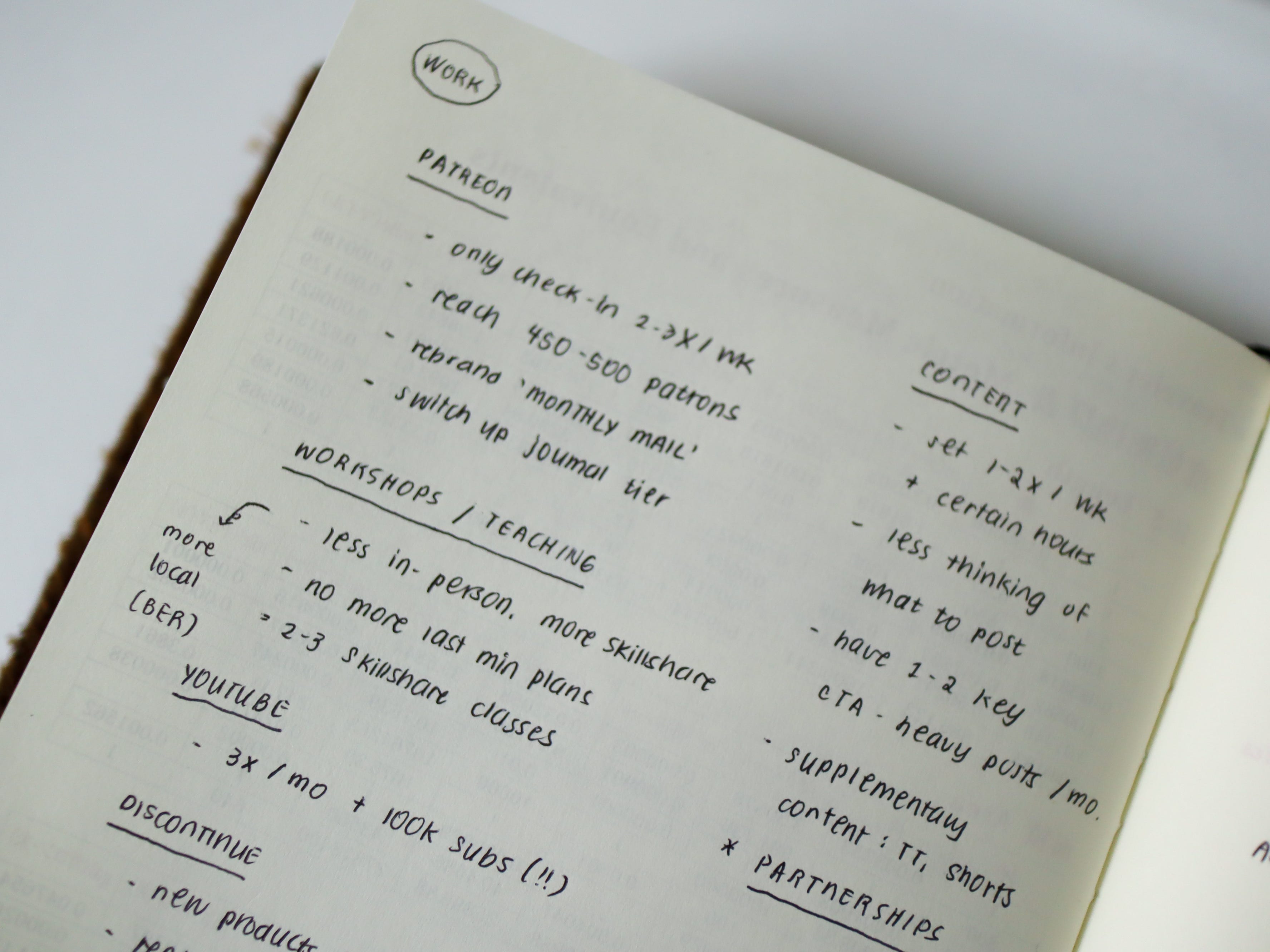
At the back of my monthly insert, I wrote every single task I do regularly, as well as my income streams for monthly and seasonal periods. I also put in my yearly goals because it allows me to figure out what growth will look like this year (not only in terms of money). It serves as a reference point for me, because I get easily lost as I do so many things4 to run my creative business.
I could have typed all of this down in a Notion page (which I did, by the way, when I presented my business model to my tax advisor), but I keep forgetting to look at it if I’m not doing my accounting. Turns out, flipping through the back of my planner was a quicker option.
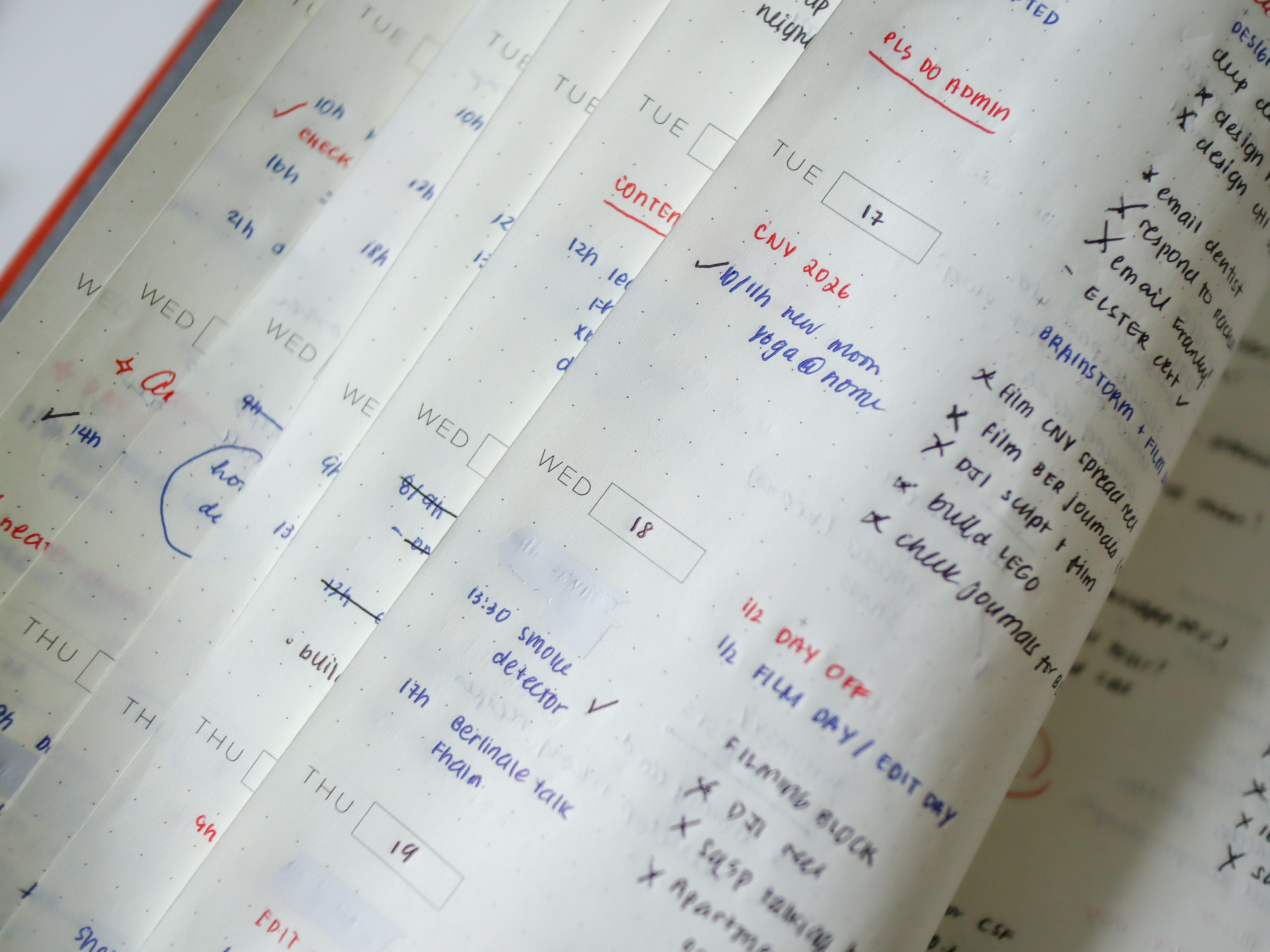
My pen of choice is a Uni Jetstream. I’m using the 3-in-1 pen from Hobonichi (that comes free for every online order) and as much as I use black ink, I cannot live without the red and blue. Red is for deadlines, blue is for set appointments, while black is for everything else.
Right now, I’ve been reacquainting myself with using Mildliners, so I plan to incorporate more of those down the line.
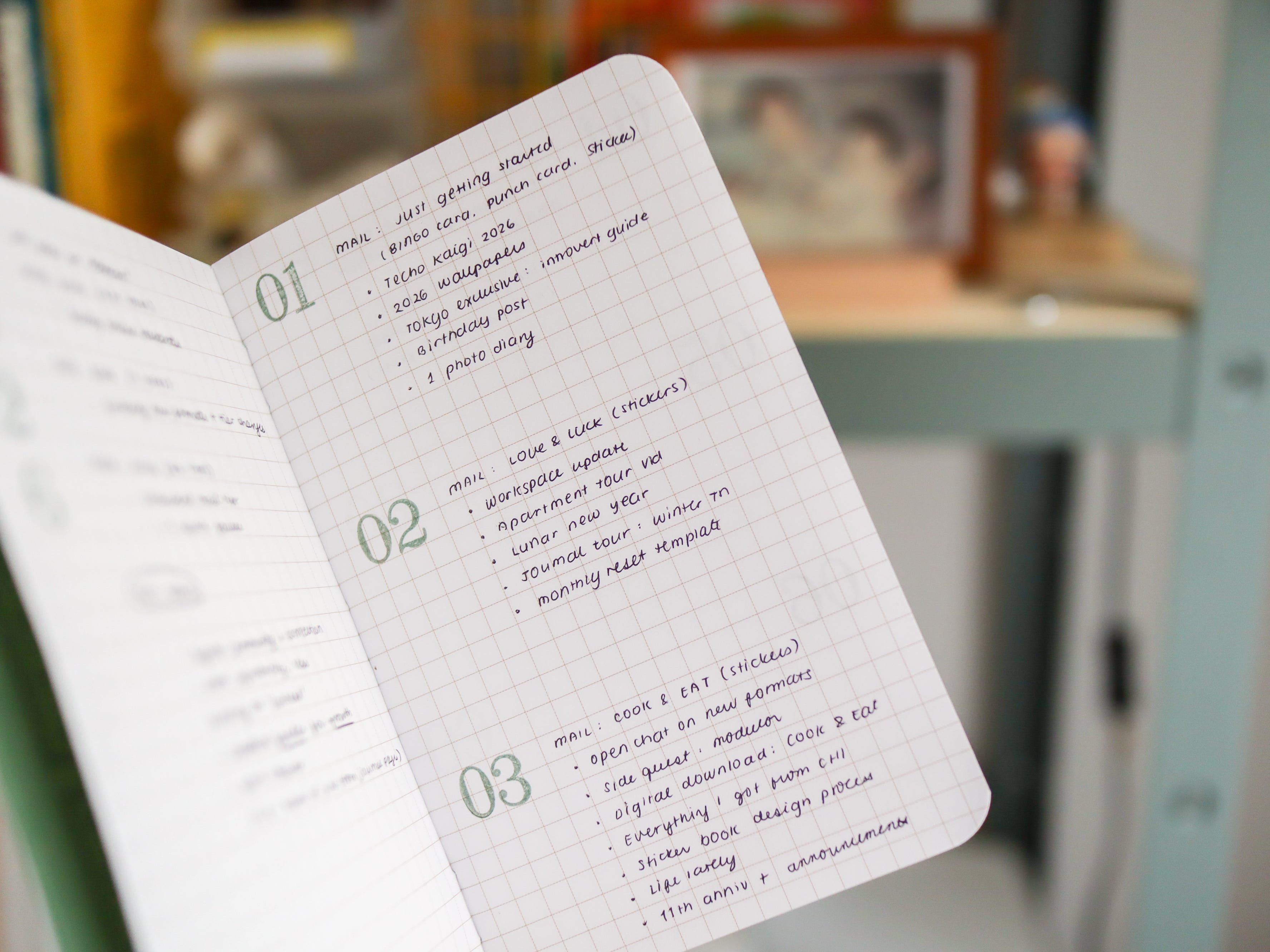
I had been using my Field Notes5 memo books for content planning, but after getting into a rabbit hole of setting up pocket notebooks recently, I decided to set my Patreon notes up more intentionally, complete with page numbers (it’s just 40). I’m excited to keep populating this one!
Here’s an in-depth look at how I usually plan on Mondays:
What worked (so far)
Every year, I find myself experimenting between different planner iterations depending on my season of life and/or projects assigned to me. But I think this one is (hopefully) here to stay.
Some of the reasons why I think this setup has been working:
Separating work and life planners (here’s a more in-depth video about my adulting planner setup). I found that I can focus more with having them separated!
The weekly planner being undated. If I’m traveling, I don’t write those dates anymore, and it keeps things flexible.
Adding or removing as I go. I used to have a weekly log here and realized it made my setup bulkier, and logging my time felt suffocating, so I discontinued it.
Keeping my tools simple and accessible. I bring a Penco pencil case with me all the time, like a student. If not, both my TN and pencil case are on my work desk.
Honestly, the way I personalized it has made it even more exciting for me to reach for it every morning!
Figuring out a planning system is never easy. It’s a constant process of experimenting: finding what works for you and what’s available. The sweet spot is rare, but when it clicks, planning ahead feels more exciting and far less intimidating.
How does your planning system look like?

Related reading:
I share more about my PLOTTER as an adulting log in this episode of Creative Refills (thanks Job and April for having me!)
I’ve always worn many hats and found that I thrive in this setup more. It keeps things fun and adds variety!
I’m a Field Notes affiliate! Enter 10ABBEY for 10% off when you shop at Field Notes.
Comments
Nothing yet. Say the first thing.
Sign in to join the conversation.