
On a vacation abroad, tourists visits museums, picnic in parks, explore iconic monuments, shop till they drop and sample the culinary delights a city has to offer. The last place they’d want to go to is a hospital. The mere thought of a medical emergency on holiday would give even the most seasoned travellers jitters.
Yet, that is where I found myself on a sweltering afternoon in Strasbourg, the capital of France’s Alsace region. Thankfully, I hadn’t broken a limb nor was I felled by the energy sapping high heat and humidity levels. After a grab-and-go sandwich lunch, I landed up at the Cave Historique des Hospices de Strasbourg, a 14th century wine cellar located in the basement of the city’s public hospital. Since 1996, a collective of 22 winemakers from Alsace have aged and stored their wines in long rows of oak barrels that are stacked together. Built in 1395, the original purpose of the cellar was to store wine, grain and other perishable goods. In the 17th century, it dawned upon the French that patients needed medication and, on occasion, surgery to recover. Just relying on wine, even it was produced in a hospital cellar, wouldn’t be enough. The march of medical and scientific progress spelt doom for the cellar’s wine production. By 1994, the cellar was no longer in use. Its wooden barrels were either rotting or drying up and hospital authorities were convinced that it would make way for something else.
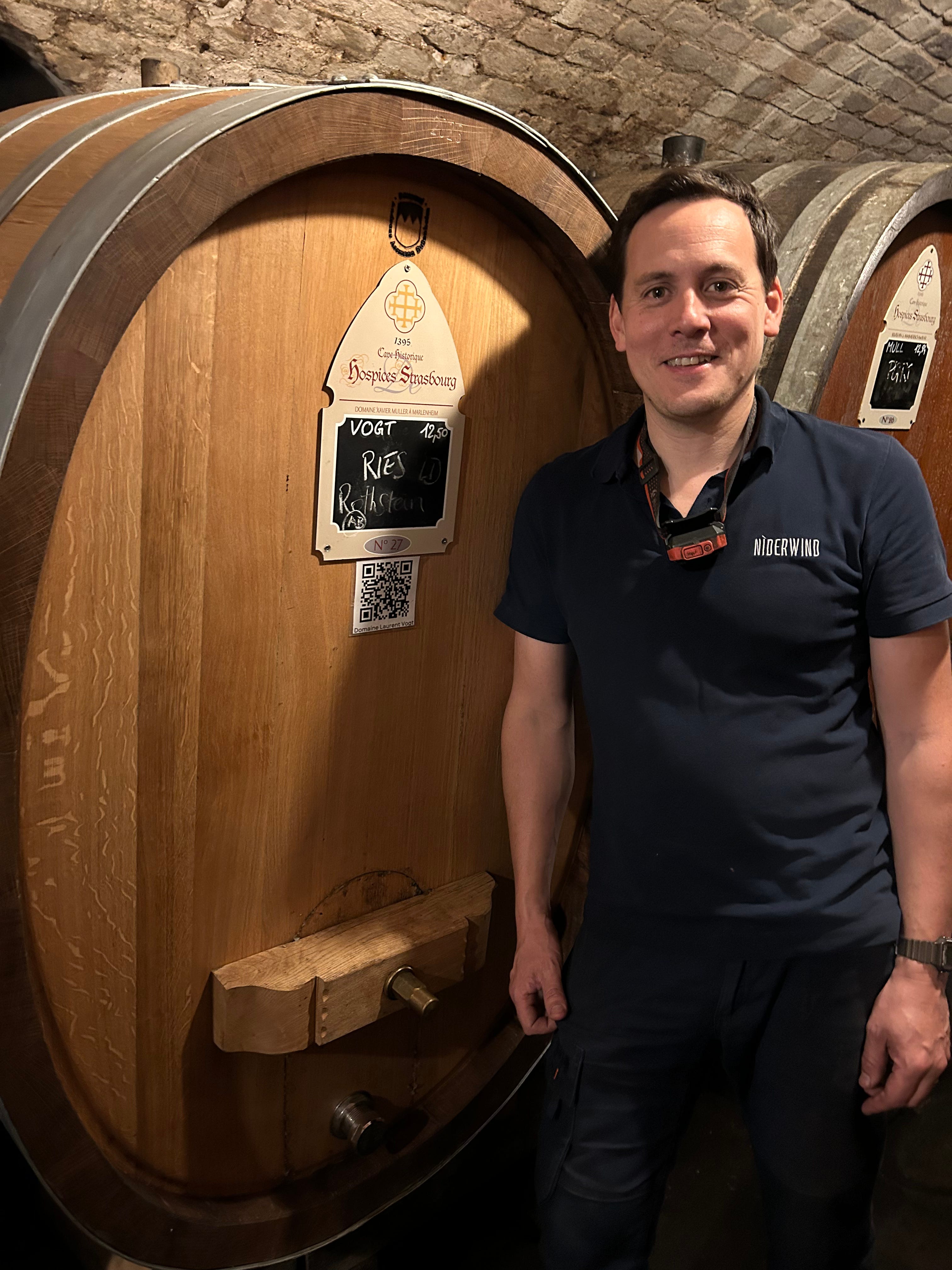
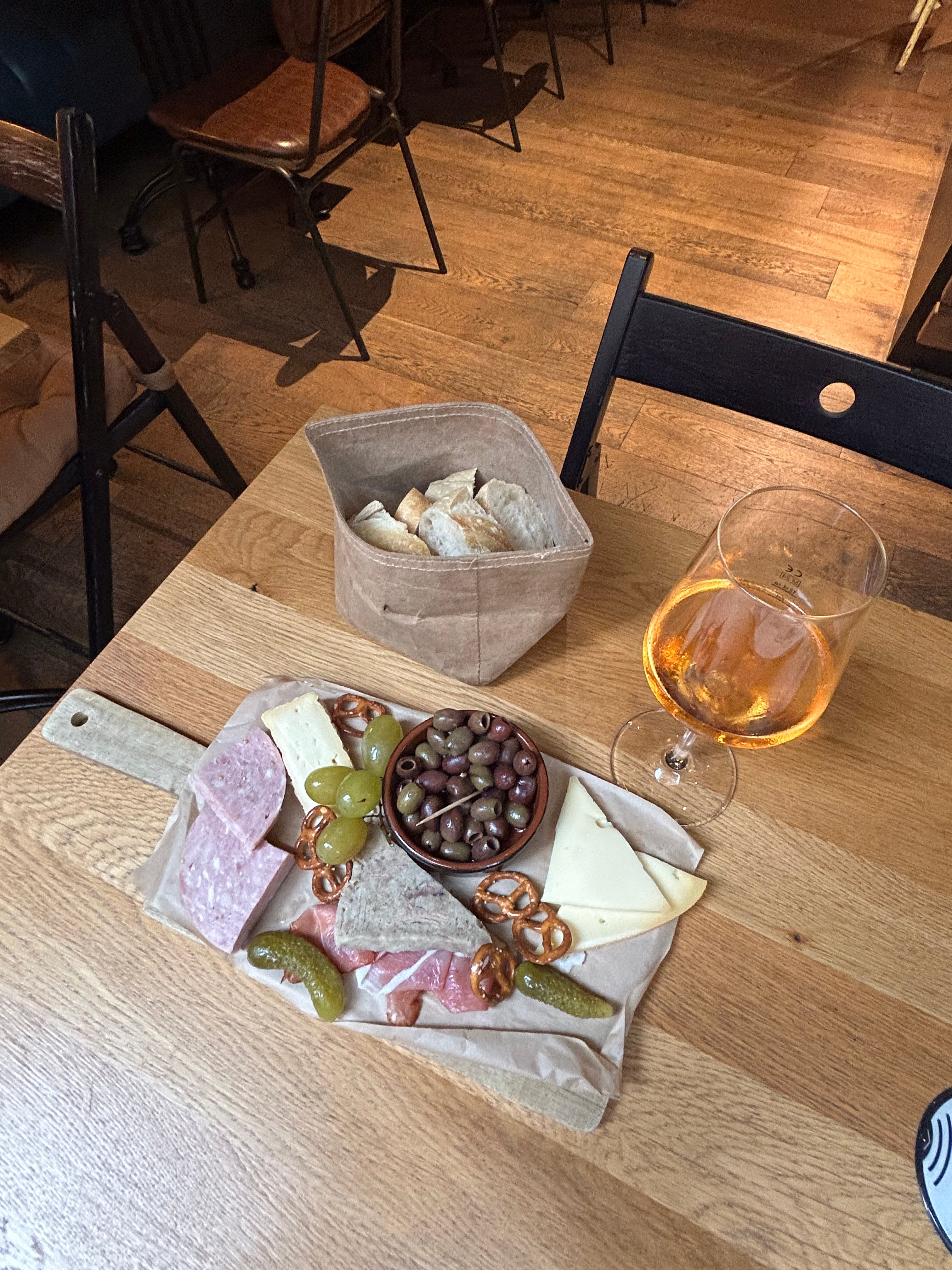
Nothing threatens the French more than the looming spectre of a wine cellar falling into disuse or ceasing to exist. The mere thought jolted a clutch of winemakers in Alsace to come together and form the Society of Agricultural Collective Interest (SICA), which restored the cellar. Today, they use the Cave Historique des Hospices de Strasbourg to age and store some of their best wines. Igor Monge, the founder and oenologist of Niderwind wine is among them. It was on his unexpected invitation that I cancelled a day trip to neighbouring Colmar and landed up at the cellar. A short backstory here for context: the previous evening, I’d spent a couple of hours sipping on Niderwind’s fabulous orange wine at L’Alsace à Boire, one of Strasbourg’s hip wine bars recommended to me by my old pal Nicolas Magand (check out his blog about technology, media and the internet here). As is now customary, one must upload a photo of one’s holiday shenanigans on Instagram because did you even go on vacation if you didn’t put it “on the ‘gram?”. I did exactly that and tagged Niderwind. To my surprise, Igor responded with an invitation to the cellar within a few hours. The next day, I cancelled a trip to neighbouring Colmar and landed up at the hospital.
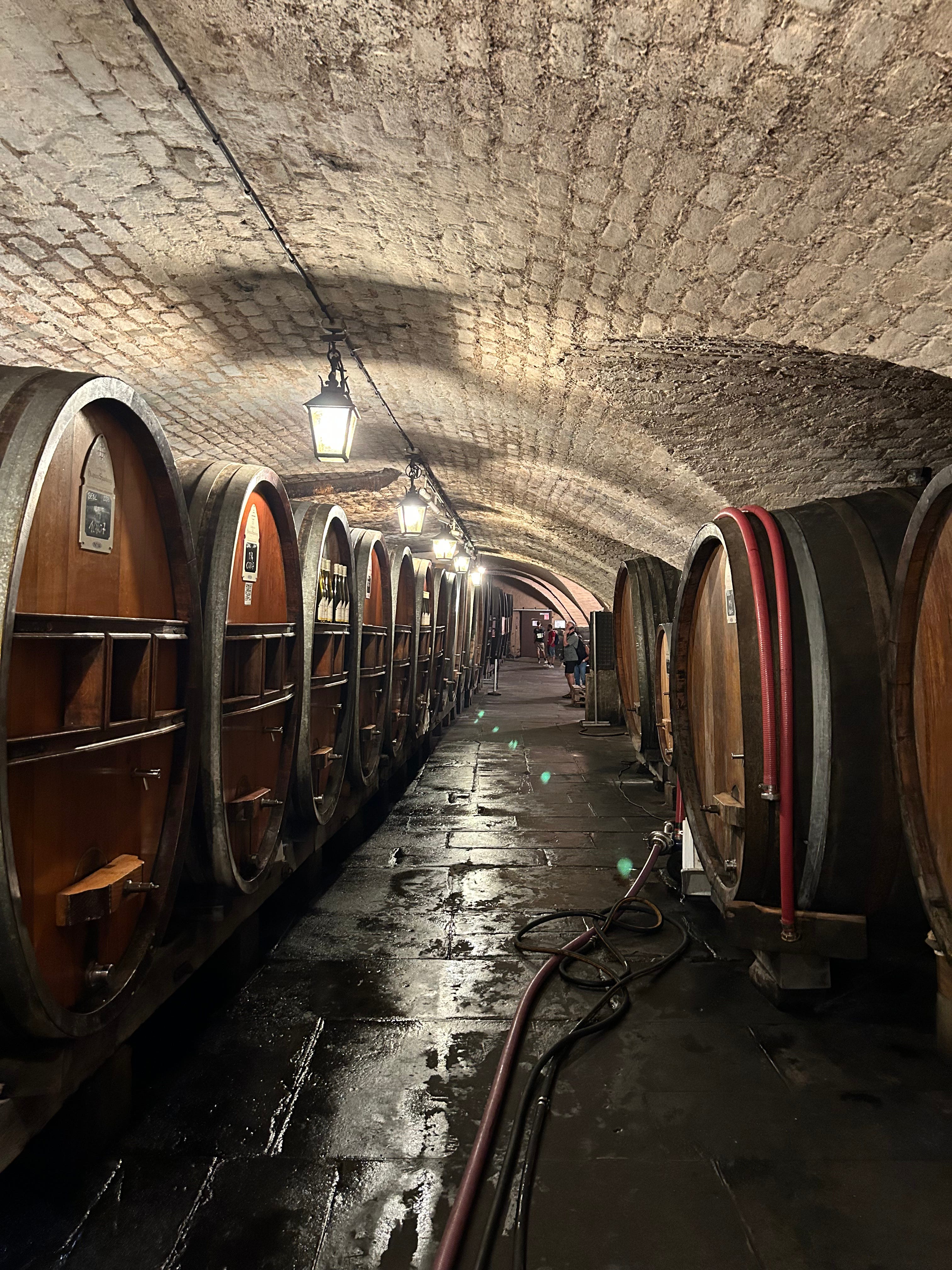
Up until that day, I had only heard about cellars, vineyards and barrels from cousins who’d visited them on their trips abroad. Or I had seen them in movies and TV shows. In 2023, while I was pursuing my Wine and Spirits Education Trust (WSET) certification in Mumbai, I read about these as part of the course. I had never been to a vineyard in my life, didn’t have a clue of what a cellar looked like and thought that barrels were part of rifles that dacoits from decades past used to bump off their enemies. Until, of course, I was in Strasbourg. As Igor and I walked the corridor, I was mesmerised. What I had seen on screen or read in textbooks came alive in front of my eyes. Here were these tall, handsome and gigantic oak barrels, home to thousands of litres of fine wines (a lot of them organic), waiting to be bottled and united with their eventual consumers.
On this tour, Igor introduced me to Sylvaner and Heiligensteiner Klevener, two Alsace grape varieties that are relatively less well-known compared to their four noble counterparts – Gewürztraminer, Riesling, Pinot Gris and Muscat. I half-jokingly asked Igor if I could taste the wine in one of the oak barrels and, to my pleasant surprised, he agreed. Igor pulled out a small wrench from his pocket, stuck it into one of the barrels, twisted its bolt and poured some freshly aged wine into a glass for me to taste. To say that I was left enamoured would be an understatement.
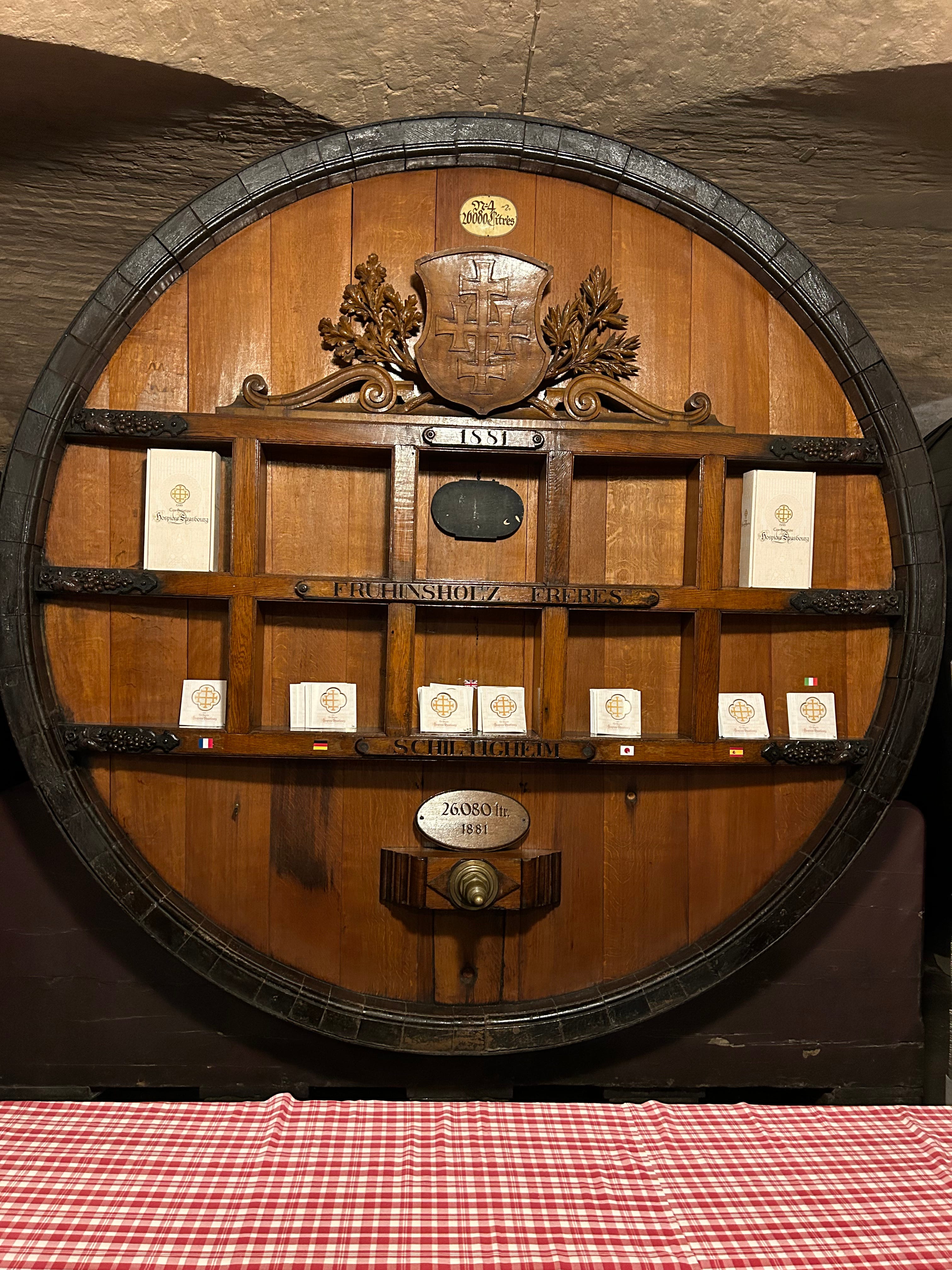
At one end of the corridor, there were centuries-old barrels that were no longer in used and were put up for display. One of them was gifted to the court of Louis XVI, another served as a wedding gift in 1895 and the third, built in 1881, could store over 26,000 litres of wine. Behind a metal door adjacent to the barrels lay a “strange room” which medical students used for dissections (we are in a public hospital, remember?) in the 14th century. It was hidden from the outside world due to strict laws prevalent at the time. Towards the end of my visit, Igor informed me that the SICA pays the hospital rent not just to use the cellar but also to use the hospital’s name as a label on wine bottles. So if a bottle has Cave Historique des Hospices de Strasbourg written on it, it means it was aged exclusively at that cellar.
As my visit drew to a close, I couldn’t help but wonder how wine is so much more than just another form of alcohol. It is the result of a confluence of history, nature, science and human intervention. I understood that much like human beings, no two bottles of wine can be the same – even if they’re from the same grape variety. The year grapes were harvested, their ripeness levels, the manner of fermentation, the terroir where they were grown and the winemaker’s intention all played a key role. So a Sylvaner from 2020 could taste quite different from the one created in 2023. Most importantly, standing in that 14th century cellar made me realise that the arc of history is long and that us humans would be nothing without nature. In Alsace, (as in much of France), this marriage of history, human and natural sciences takes the form of fine wine. As the fashion designer Christian Dior once said, “A glass of Alsace wine is like a summer dress or a flower in spring, it's the ray of sunshine that simply makes life brighter.” Can’t disagree with that.
A slightly different version of this piece appears in the forthcoming issue of Liquid magazine. Follow @aayushsoni and @partnerinwineindia on Instagram for social media updates.
No posts
Comments
Nothing yet. Say the first thing.
Sign in to join the conversation.