
Each year in November, an assortment of attendees across age groups, dressed sharply in business suits, with a purposeful look in their eyes and a brisk pace in their walk congregate at the sprawling Jio World Convention Centre in Mumbai’s Bandra Kurla Complex (BKC) to embark on a sensory tour of the world. Inside pavilion numbers two and three of this air-conditioned bubble, white aluminium booths are arranged in a grid-like pattern, manned by nationals from across the world, eagerly await the arrival of these visitors. Their patrons would move from Japan to Italy, from France to Australia, from Ireland to Spain with a confident stride that is rooted firmly in a sense of belonging. Indeed, a first-time visitor might feel a bit out of place watching these men and women – young and old, Indian and foreign, but all above the age of 25 – walking the aisles, peppering conversations with phrases like “harvest season”, “fermentation”, “ex-cellar pricing,” and “yield per hectare”. That’s because all of them belong to a rainbow of professions that fall under the hospitality and alcoholic beverages (alcobev) industries. They are sommeliers, hoteliers, importers, restauranteurs, distributors, journalists and the ubiquitous wine and spirits enthusiasts who attend ProWine India 2024, one of country’s largest trade fairs for the alcobev industry.
First organised in 2018, ProWine India is part of ProWein, the original trade fair for the industry that started 30 years ago and is held annually in Dusseldorf, Germany. Its sister fairs are held in Shanghai, Singapore, Hong Kong, São Paulo, Tokyo and together all of them constitute the ProWein World network. However, unlike the flagship fair at Dusseldorf, which is predominantly a wine fair with a smaller section for spirits, the Mumbai version has an equal number of both. Amrut, a pioneer of Indian single malt whiskies, East Side Distillery and Pumori gins too had booths at the fair. Even importers like VBev India and Red Elan were exhibiting spirits from their portfolio.
Thanks for reading Partner in Wine and Spirits! Subscribe for free to receive new posts and support my work.
I first heard about ProWine India last year when, as a freshly minted WSET L2 certificate holder in wines, I wondered what I could do in the industry. Well-meaning friends who knew a thing or two about the alcobev sector suggested I attend ProWine India; it would give me a chance to meet industry professionals and, most importantly, taste wines from across the world. So in November 2023, I attended the trade fair for the first time and was blown away by the sheer range of wines and spirits on offer. In a span of two days, I must’ve tasted at least 30 wines, if not more. By the end of the fair, my gums were screaming for mercy from the fermented grape juice. I promised myself that I’d be back the next year. And so, I was at the Jio World Convention Centre again last week for an encore.
In comparison to the 2023 edition, there were noticeable changes to ProWine India 2024. The most prominent among them was the absence of some of India’s key alcobev players. Brindco Sales, Chenab Impex, Monika Alcobev, Gusto Imports and Sonarys – some of India’s leading wine and spirits importers – were not exhibiting at ProWine India 2024. They had already participated in VinExpo India held earlier in September and didn’t want to do a repeat for the same audience. Sula Vineyards, India’s biggest winemaker, was also absent possibly for the same reason.
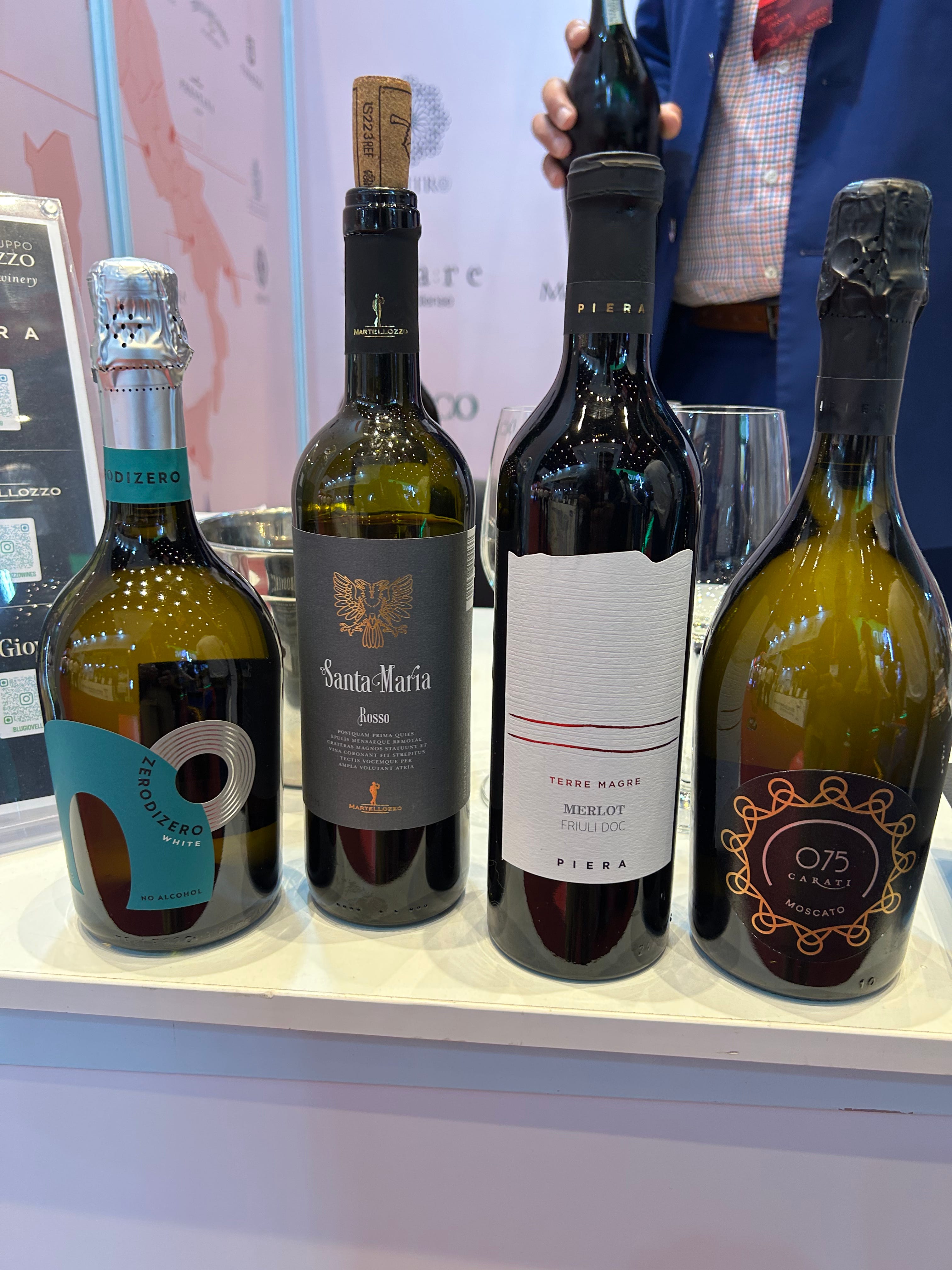
Instead, there were a lot more international wineries that were present this time around. A significant amount of them belonged to Italy but those from Spain and Portugal too were present. They were a mix of family-owned/boutique/small-batch wineries as well as large winemakers. Nonetheless, the common thread that bound almost all of them was top quality. All the wines that I tasted – whether they belonged to the winery’s entry level range or the premium segment – were remarkable. Take, for instance, the wines from Piera, a winery based in northeastern Italy’s Friuli region. The representative made me taste a crisp Pinot Grigio that had a lot of salinity and wasn’t overly fruity. I wouldn’t classify it as exceptional but was it plonk? Certainly not. It was an easy drinking, comforting wine, that had zest, a clean flavour and did justice to its European retail price point of 8-9 Euros.
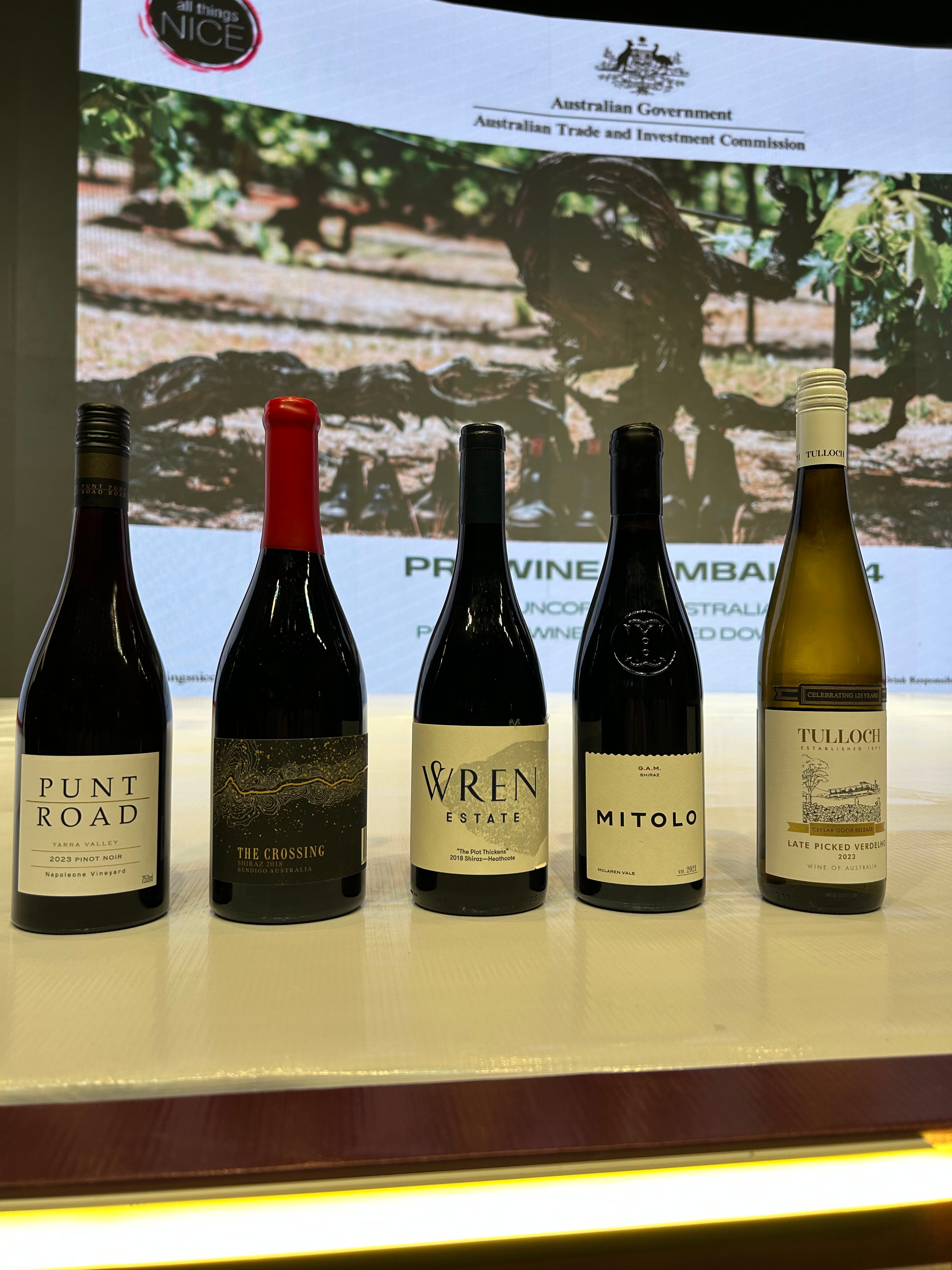
As was the case last year, this year too Australia had a large pavilion with at least five wineries showcasing their products, in the hope of finding an importer who’d bring them to India. They’re resting their hopes on the Australia-India Economic Cooperation and Trade Agreement (ECTA), which came into force in 2022. One consequence of this free trade agreement is that customs duties on products imported from Australia (including wine) will be considerably lower than those imported from other countries. Under the terms of the agreement, the levy on wines priced above US$5 has dropped from 150 percent to 85 percent on their cost, insurance and freight (CIF) value. Further, every year, the rate will be reduced by a further five percent and by 2031, the rate will come down to 55 percent.
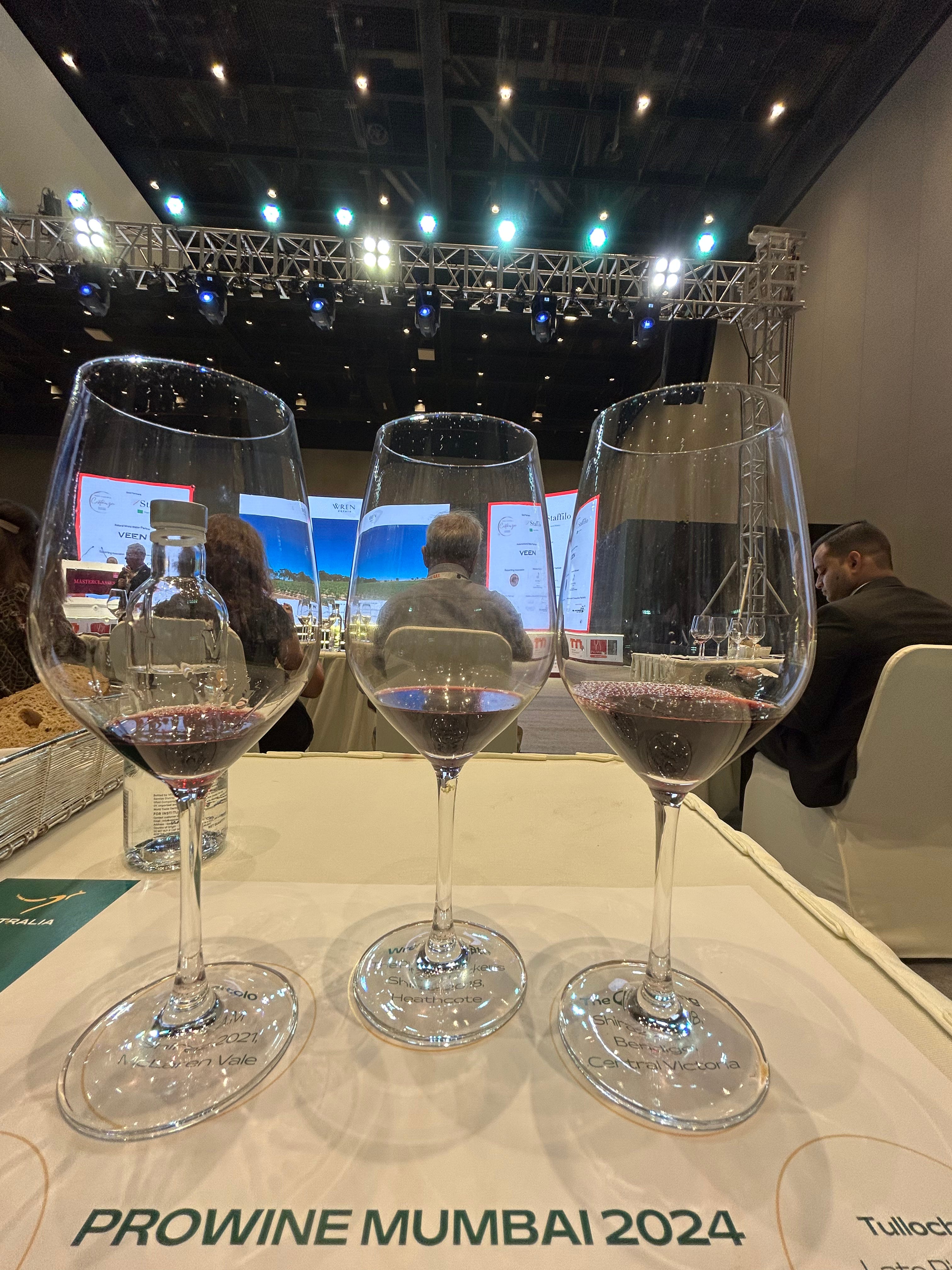
The Australian government and its High Commission in India wants to make sure that their wines get as much exposure in India as possible. It partners with ProWine India 2024 to organise wine tasting on the sidelines of the event. It was hosted by Nikhil Aggarwal, a co-organiser of ProWine India, and the makers of the wines were themselves present to talk about their products. During the hour-long session, we tasted five exquisite Australian wines – one Pinot noir, three Shiraz and a Verdelho. What was astounding was the variation am
ong the three Shiraz wines. Although the grape variety was the same, each tasted completely different. The first one had notes of black fruit but was a bit understated, the second one was unabashedly fruit-forward on the nose and the palate while the third one was much more complex with aroma profiles of tobacco, coffee, leather and vanilla. All of them were full-bodied (as Shiraz wines tend to be) and I do hope that they find enthusiastic importers who will bring them into India.
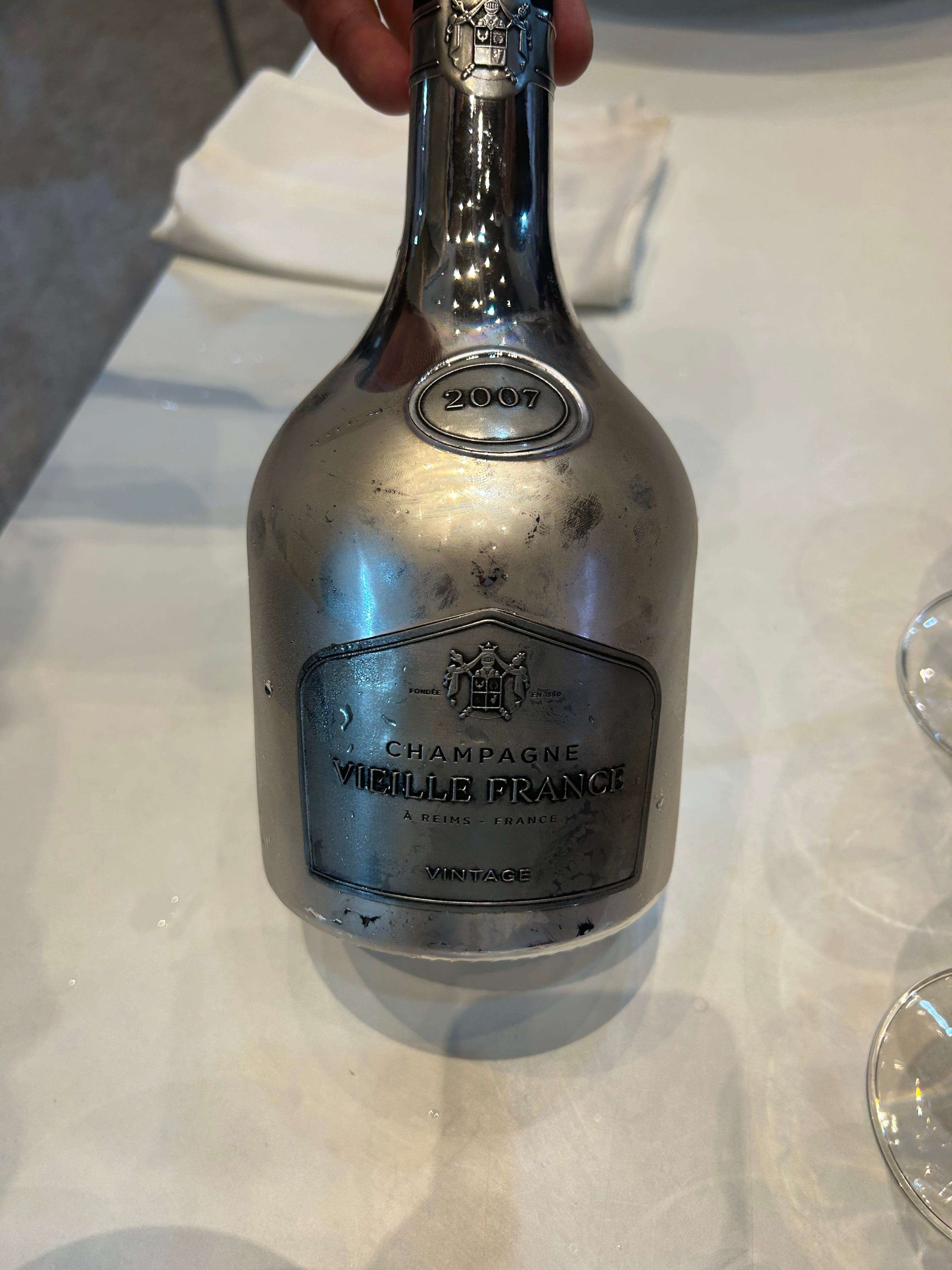
One of the joys of attending ProWine is that I get to meet Bombay-based friends and acquaintances – among them Antoine Lewis and Bhisham Mansukhani. Both are veteran food-n-drink writers who know more about wine than I do. Bhisham, especially, has a knack for finding some real gems at an event overflowing with wine and spirits, while Antoine does a skilful job of telling everyone within earshot how the wine industry in India and across the world is in danger. On the first day, I was in the company of these two fine gents at the Taste France booth where we tasted the most exquisite champagne I’ve ever had. Vielle France, a champagne house from Reims, had some bubbly on offer and the company’s representative decided to make us taste a 2007 vintage. On the nose, there were notes of biscuit and brioche bread – the signature of a well-aged vintage. In the mouth, I could taste apples and apricots and the bubbles felt like soft cream. The three of us ran out of superlatives in praise of the bubbly and hoped that it found an Indian importer. There’s a paucity of vintage champagnes in India that needs to be rectified soon
Vielle France wasn’t the only champagne I tasted though. Cellar33, a wine import and export agency, had brought to ProWine 14 champagnes. What made these bubblies special was that they had the Récoltant-Manipulant classification. In other words, the winemakers use grapes grown exclusively on their own vineyards to make the champagne. So in order to recognise the artisanal quality of the bubbly, it is given the Récoltant-Manipulant classification. As I tasted the flight of champagnes, I could taste the subtle differences in each of them. Some had more pronounced aromas of fruit (apple and pear), while others had biscuity notes, indicating that they were aged.
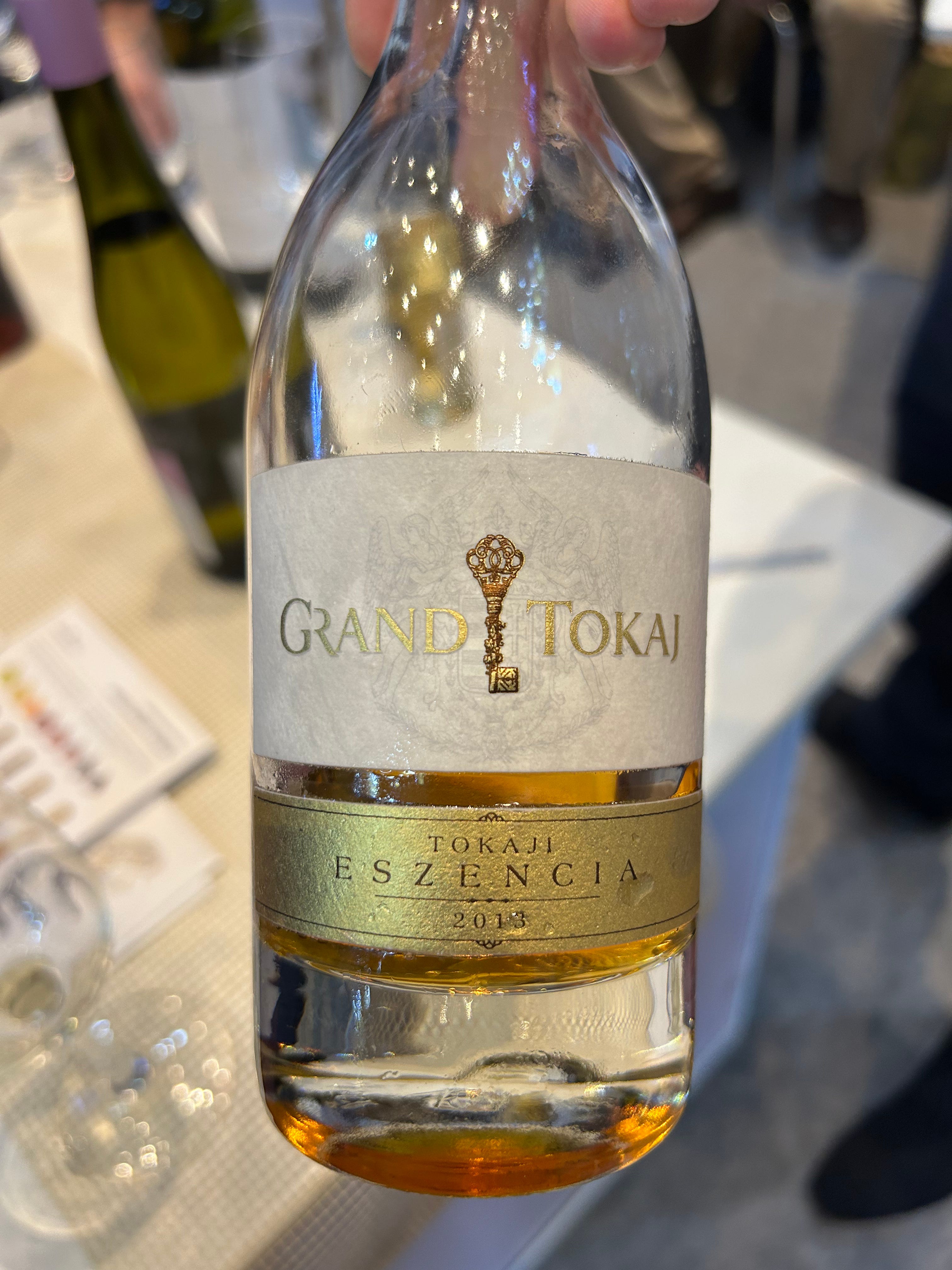
Another striking feature of ProWine is that there is always one country’s booth that attracts the curiosity of attendees. This year, that honour went to Hungary which is known to produce some of the best wines in Europe. Grand Tokaj, a winery set up by the Hungarian state in 1948, put on show some of its finest wines for attendees to taste. For my final tasting at ProWine, I had a flight of five wines and the sweetness quotient kept increasing with every pour. The piece de resistance however was the Tokaji Eszencia 2013 - a 375 ml bottle that was hidden under the table and served very discreetly only to a select few. As I wondered aloud about how sweet a wine could get, the lady from the Hungarian Embassy said “well it’ll taste like gulab jamun”. After I sipped the wine, I felt like I was tasting a liquified form of Indian dessert even if it wasn’t quite the one she warned me about. Its retail price in Europe was 150 Euros and since there was only one bottle available, the Hungarians had to be judicious with it.
As you can probably tell, I enjoyed my time at ProWine immensely. As a relatively new entrant into the world of wines, the event offered me a chance to sample a whole range of wine varieties that are not commonly available in India. More importantly, I got the impression that Indian wines, no matter how good they are, still have a long way to go before they can match their international counterparts in terms of quality. Don’t get me wrong; I quite like Indian wines (Fratelli’s Sette is a particular favourite) but the price-quality ratio isn’t quite balanced – something that wine importer Sanjay Menon also spoke about in his interview with me. Compared to Europe, we pay a higher-than-usual price for wines that are good quality. But are they exceptional? The jury is still out on that.
Postscript
Barring the odd Irish liqueur, I didn’t venture beyond the universe of wines, simply because there was too much to taste and too little time. Perhaps the organisers might want to extend the fair by a day next year, so that visitors can do full justice to it.
The next edition of ProWine India will be held in Mumbai on October 31 and November 1, 2025. Check the trade fair website and its Instagram handle for updates.
Follow @aayushsoni and @partnerinwineindia on Instagram for social media updates
Thanks for reading Partner in Wine and Spirits! Subscribe for free to receive new posts and support my work.
Comments
Nothing yet. Say the first thing.
Sign in to join the conversation.