
A knight and his beloved were walking along the bank of a river. The bank was full of tiny blue flowers. She admired them. The knight leaned down to pick a bunch for her, but his armor was heavy. He slipped, fell into the river, and the water current pulled him away.
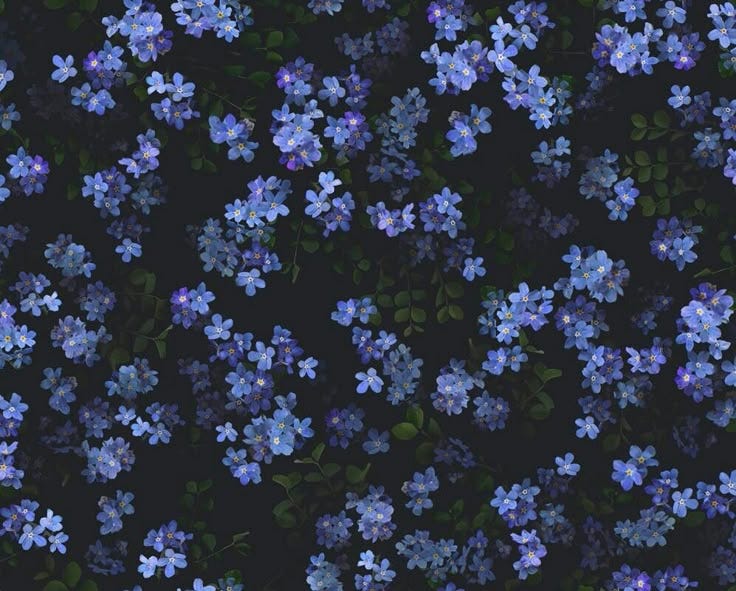
As he was drowning, he threw the flowers towards her and screamed, “Forget me not.”
No rescue. No miracle. Just a final request to be remembered.
What lingers is not love, but the economy of the request. He does not ask to be saved, understood, or mourned correctly. He asks only to remain. The story survives because it reduces a life to its smallest possible unit that is memory.
And perhaps that is why it repeats. Not because people want eternal love, but because most lives do not get a closing scene.
People often say they want to be remembered, but rarely for anything grand. Not for achievement. More often, by smaller choices. The things they like without explanation. The habits that shape their day quietly. The way they show up when nothing important seems to be happening. There is this hope that these ordinary moments might survive, that someone might recall them accurately.
This is why traces are left behind. Not always consciously, and not always for an audience. A note was kept. A habit repeated. A preference mentioned more than once. People place these fragments where they think someone might notice, where memory might catch. It is less about being admired and more about being in the right place.
But memory rarely cooperates. It simplifies. It reduces people to a single story, often the most convenient one. Someone is remembered when it suits the moment. Not because others are careless, but because remembering fully requires effort. And so the person becomes smaller and smaller in recollection of their life.

This creates quiet contradiction. We want memory without permanence and permanence without exposure. We do not want to occupy everyone’s attention, to live endlessly in someone else’s seven minutes. We only want to avoid being erased. To matter lightly, without being fixed forever.
Life produces massive noise. Noise of daily actions and routines, half-finished thoughts, private conversations, and contradictions. Only the strong and repeated signals persist. Extreme emotions our minds go through, the conflicts we once had, and novelty with narrative clarity.
Most people are not forgotten because they didn’t matter. They have forgotten because their signal never crossed the threshold. And then this question appears with quiet anxiety: Was I loud enough to be stored?
I think forgetting isn’t cruelty. It isn’t a failure of care or intention. It is entropy. Memory, like everything else, tends towards disorder. Without repetition, without deliberate return, details loosen and fall away. What remains is not what matters, but what was easiest to hold.
This is why absence fades faster than presence. What survives is not truth, but structure. Not depth but pattern.
Forget-me-nots don’t demand explanation, justification; it’s a low bandwidth marker that says: I was here. Not who you were, not why you matter. Just presence.
xoxo,
Aayushi.
And don’t forget to subscribe ♡
No posts
Comments
Nothing yet. Say the first thing.
Sign in to join the conversation.