
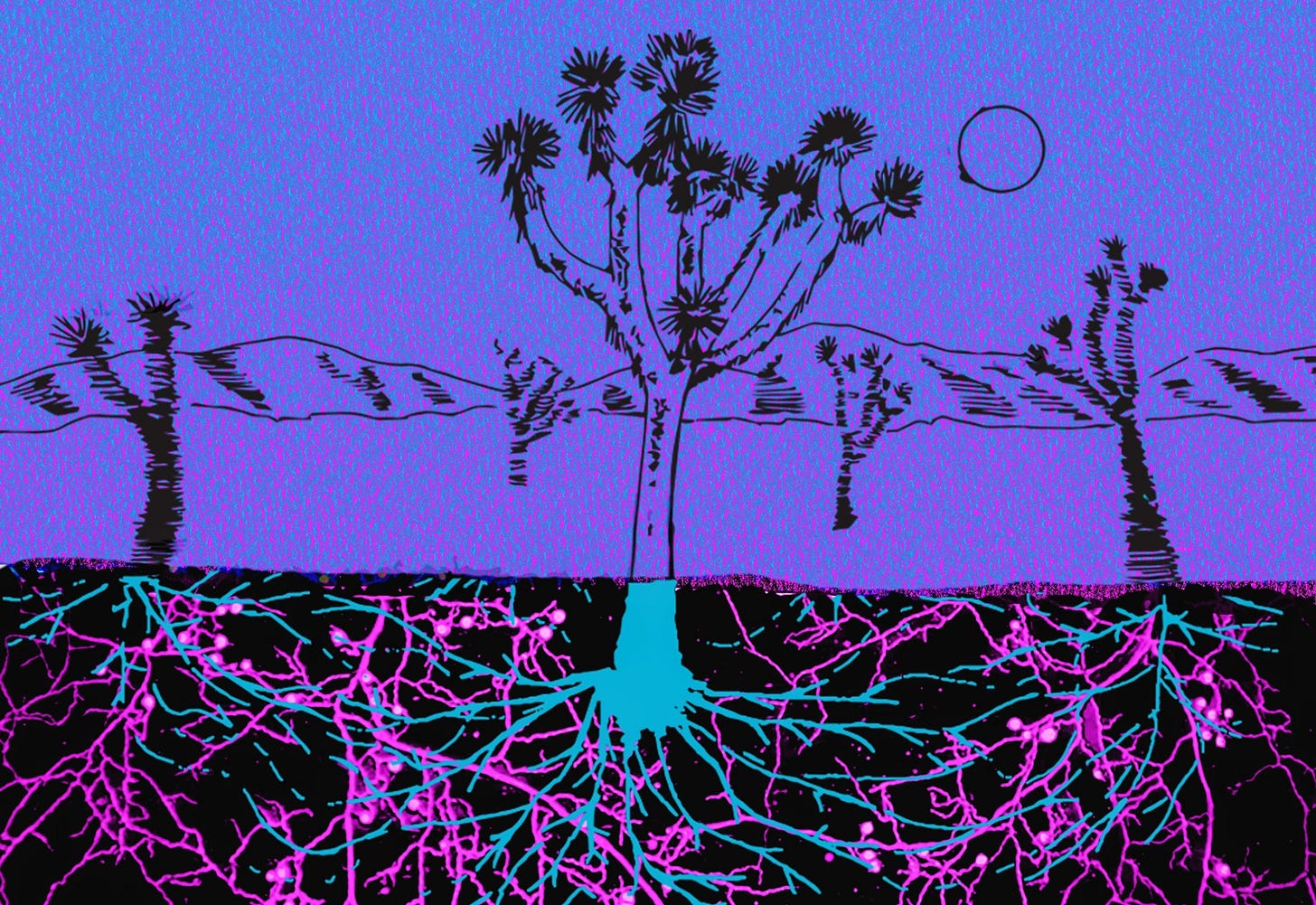
We made the news! Why mycorrhizal fungi networks need more protection – High Country News
It’s exciting to see fungi continue to receive more recognition for their vital contributions. Mycorrhizal research is making the news, escalating the noise to start protecting them. I was featured alongside the Society for Protection of Underground Networks, Centre for Applied Ecological Remediation, and others in High Country News about the mushrooming conservation movement here in the west. This past week the ***front page of the LA TIMES featured fungal conservation*** featuring SPUN’s research in the HCN article that in order to save the Joshua Trees from going extinct, we need to protect the fungi.
One of the first steps to protect mycorrhizal fungi, is to learn more about who they are and what they do. Something we surprisingly know so little about when it comes to Joshua Trees’ relationship with fungi.
We are only just beginning to understand who the native fungi of Southern California are. Yet our work as conservation mycologists, including my own work, has largely been defunded in CA.
“Climate change is already altering ecosystems faster than scientists can document their fungi, Tupac said, so conservationists shouldn’t wait until fungal species are threatened or endangered to take decisive action or unlock financial support. “My colleagues in the fungal conservation world are saying, ‘Perhaps we don’t have to just think about what is rare and scarce,’” they said. ‘“Why not make the case for protecting what is abundant?’”
Fund the fungi!
Check out June & July’s Exploring the Mycoverse offerings!
Monday, June 8th, 7pm, free by donation
(Note we’re trying something different, we’re meeting earlier at 6pm!)

For pride this month we invite you to join us we learn how to enter the world of fungi and explore how fungi can queer us and our ways of living, rotting what no longer serves us. We will be following instructions and a deck of cards created by Riita Ikonen and Michael Crow call the Third F Manual to lead us into the world of fungi.
Our discussion is inspired by a queer mycology essay by Elliana Efird from last year asking the question, “how does one theorize with fungi?” The essay reflects on the state of queer mycology and how we can continue to grow on the foundations of one of this new mushrooming field of inquiry which started with the paper The Science Underground: Mycology as a Queer Disclipline by Patricia Kaishian (author of Forest Euphoria which we discussed last year) and Hasmik Djoulakian.
Aaron will also share a little about their new book about queer mycology coming out this November 2026, Meeting the Mushrooms of Los Angeles: Curiosity, Queerness, and How to Love a Fungus which you can pre-order on their website here.
Note: prior knowledge of mushrooms may be helpful, but prior experience in mushroom exploration is not required.
Monday, June 22nd, 7pm, free by donation
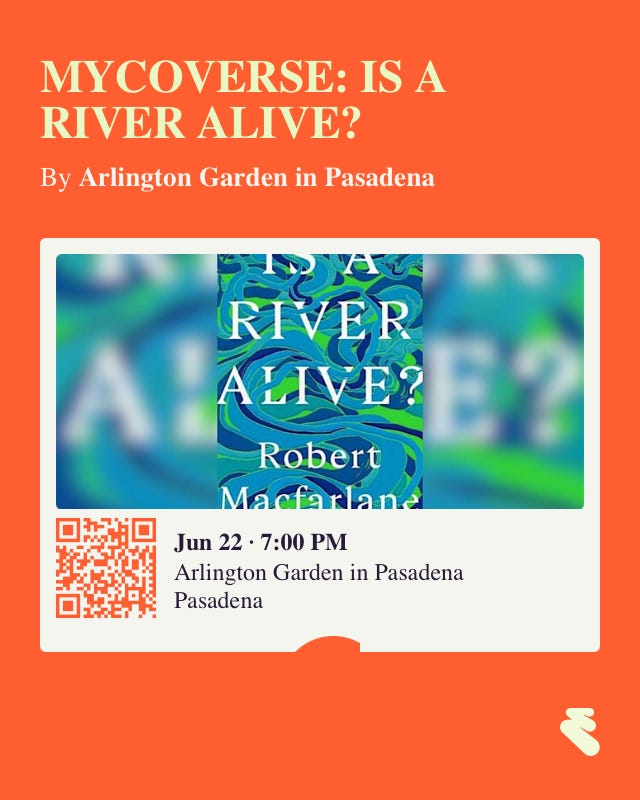
As Exploring the Mycoverse grows, questions about what does a future with fungi look like have been a primary interest amongst the Mycoverse myconauts. To explore this question, we will take a step back and consider larger conservation movements of nature through Robert Macfarlane’s 2025 NYT’s besteller Is a River Alive?
In our discussion, we will explore how rivers and fungi can inspire us to rethink the conservation and stewardship of nature.
From the publisher:
Named a Best Book of 2025 by The New Yorker, Economist, Guardian, Minneapolis Star-Tribune, Kirkus Reviews, and Publishers Weekly • One of TIME’s 100 Must-Read Books of 2025 • One of NPR’s “Books We Love” for 2025 • One of Smithsonian Magazine’s Ten Best Science Books of 2025 • A Chicago Public Library Top 10 Favorite Book of 2025 • A Washington Post Notable Work of Nonfiction for 2025
“Is a River Alive? is a joyful, mind-expanding exploration of an ancient, urgent idea: that rivers are living beings who should be recognized as such in imagination and law.
Macfarlane takes readers on three unforgettable journeys teeming with extraordinary people, stories, and places: to the miraculous cloud-forests and mountain streams of Ecuador, to the wounded creeks and lagoons of India, and to the spectacular wild rivers of Canada—imperiled respectively by mining, pollution, and dams. Braiding these journeys is the life story of the fragile chalk stream a mile from Macfarlane’s house, a stream who flows through his own years and days.
Powered by dazzling prose and lit throughout by other minds and voices, Is a River Alive? will open hearts, challenge perspectives, and remind us that our fate flows with that of rivers—and always has.”
Monday, June 8th, 6pm, free by donation
(Note we’re trying something different, we’re meeting earlier at 6pm!)
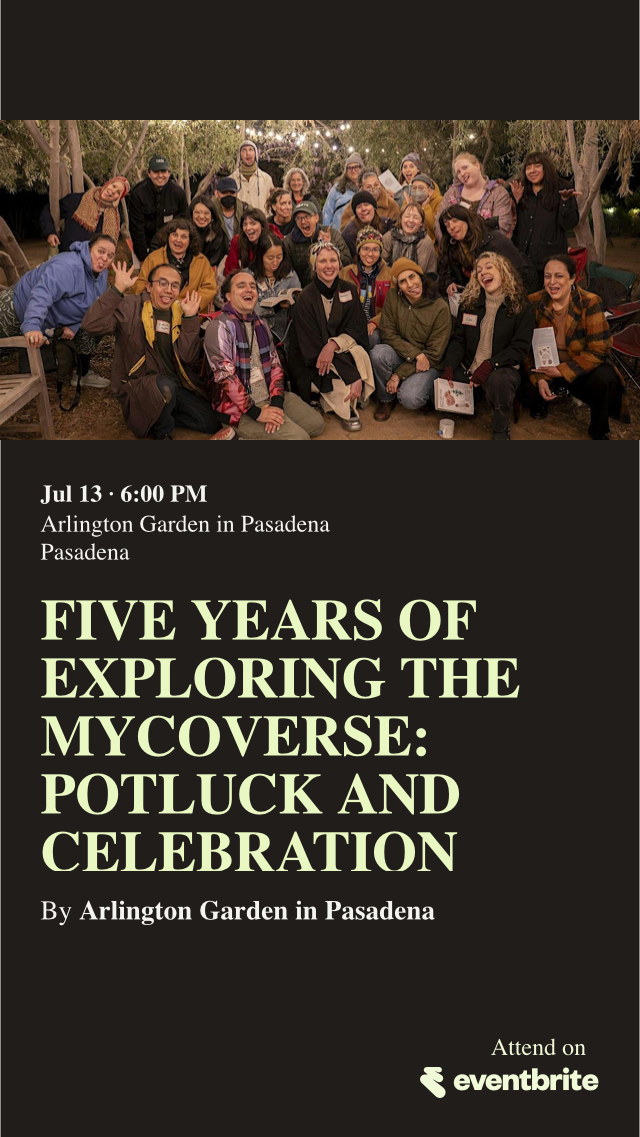
You are invited to join us to celebrate our fifth anniversary of gathering and sharing our love of fungi together. We have grown and myceliated to have reached over 1,000 people these past five years of over 100 free, open to the public workshops.
We will celebrate be sharing food together, watching a short ethnomycological film together, and revisiting a few of our favorite fungi-inspired activities we’ve done together including activities from the feminist ethnomycological zine, Learning and Collaborating with Fungi by Lenka Vráblíková and Elspeth Mitchell.
Monday, June 8th, 7pm, free by donation
(Note we’re trying something different, we’re meeting earlier at 6pm!)
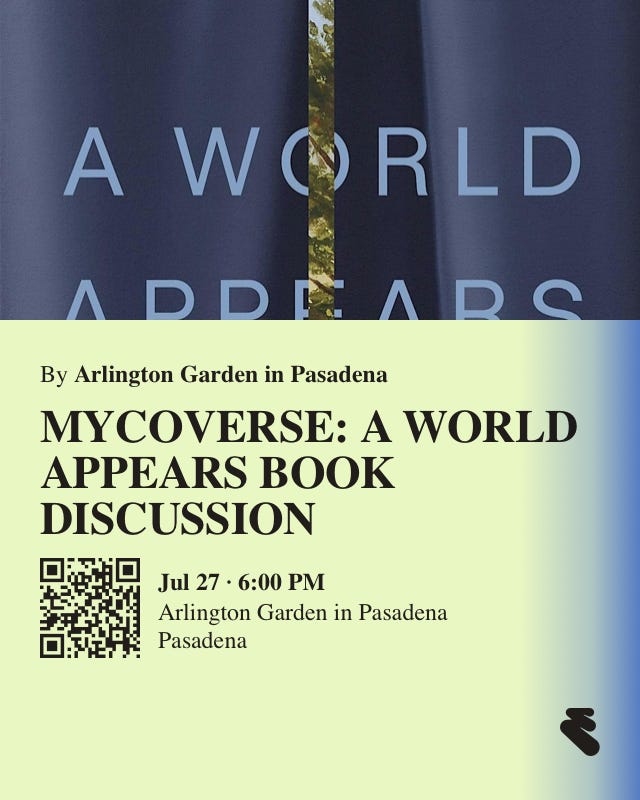
Join us as we explore how the recent research about the consciousness of natural world is connected to the future of conservation. Michael Pollan’s new book sets the stage for the high stakes of who we consider to be conscious deserves legal rights and protections. Along with the rise of AI technologies and their trillion dollar industry, comes the claims for legal for protection and rights – arguments centered around consciousness.
We will be discussing the book in its entirety. If you don’t get a chance to read the book, we invite you to please watch Michael Pollan’s talk about A World Appears he gave at this year’s Bioneers conference, a conference centered on building better relationship with the natural world.
From the publisher:
When it comes to the phenomenon that is consciousness, there is one point on which scientists, philosophers, and artists all agree: that it feels like something to be us. Yet the fact we have subjective experience of the world remains one of nature’s greatest mysteries. How is it that our mental operations are accompanied by feelings, thoughts, and a sense of self? What would a scientific investigation of our inner life look like, considering we have as little distance and perspective on it as fish do of the sea? In A World Appears, Michael Pollan traces the unmapped continent that is consciousness, bringing radically different perspectives—scientific, philosophical, literary, spiritual and psychedelic—to see what each can teach us about this central fact of life.
When neuroscientists began studying consciousness in the early 1990s, they sought to explain how and why three pounds of spongy grey matter could generate a subjective point of view—assuming that the brain is the source of our felt reality. Pollan takes us to the cutting edge of the field, where scientists are entertaining more radical (and less materialist) theories of consciousness. He introduces us to “plant neurobiologists” searching for the first flicker of consciousness in plants; scientists striving to engineer feelings into AI, and psychologists and novelists seeking to capture the felt experience of our slippery stream of consciousness.
In Pollan’s dazzling exploration of consciousness, he discovers a world far deeper and stranger than our everyday reality. Eye-opening and mind-expanding, A World Appears takes us into the laboratories of our own minds, ultimately showing us how we might make better use of the gift of awareness to more meaningfully connect with our deepest selves.
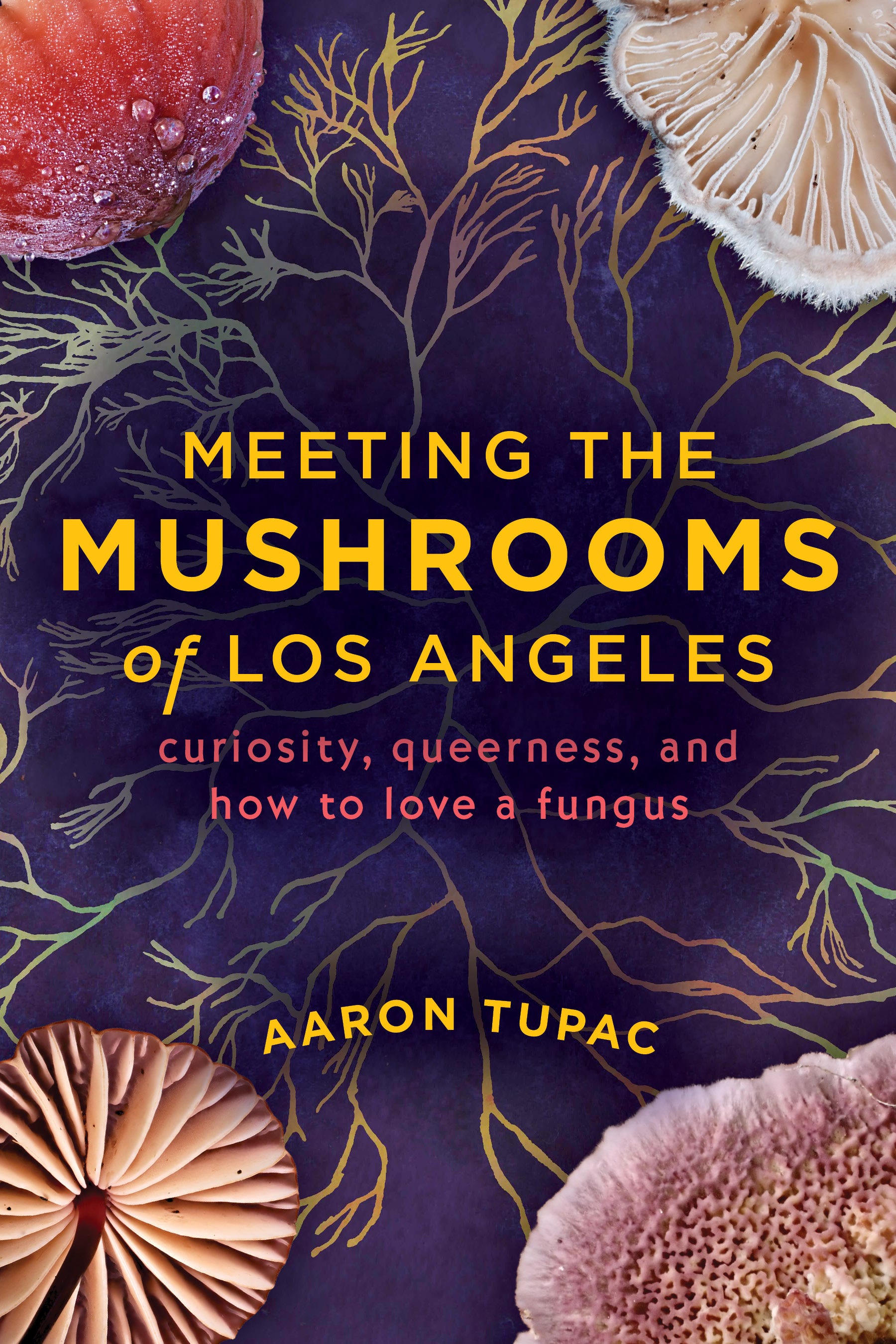
You can now preorder my book Meeting the Mushrooms of Los Angeles: Curiosity, Queerness, and How to Love a Fungus via my website or wherever you buy books! If you purchase through my website you directly support me and my work. I am offering signed and personalized inscriptions (fun for gifts!) through my website. I am so excited for you to read it. From the publisher:
“Welcome to the Mycoverse of Los Angeles! In this wondrous guide to common local mushrooms, Aaron Tupac opens Angelenos' eyes to the mycelial ties that bind us all together. From the San Gabriel Mountains, across the sprawling metropolis, and clear out to the coast, Southern California is teeming with fungal life, whose underground networks support an array of ecosystems. Organized by habitat, and featuring full color photos to aid in identification, this guide will help you spot and marvel at mushrooms burgeoning throughout the cityscapes, sand dunes, oak forests, and deserts that surround us. These fungal neighbors have lessons to teach us, too: through loving observations and stories, Tupac shares our latest understanding of mushrooms' radical reciprocity, vibrant gender fluidity, and the incredible imaginative possibilities that fungi bring into our lives.”
Joey Santore (crime pays but botany doesn’t) book talk at Non Human Teachers tonight, June 2nd 8pm (Glassel Park)
Activating Community discussion & book tour Wednesday June 3rd 6:30pm (USC / NHMLA)
Maria Pinto in the Guardian – ‘It didn’t seem real’: the Black mushroom hunters unearthing the US’s essential fungi
Lyre birds not only are incredible song birds but are also truffle-eating foodies
Looking sporeward,
Aaron
No posts
Comments
Nothing yet. Say the first thing.
Sign in to join the conversation.