
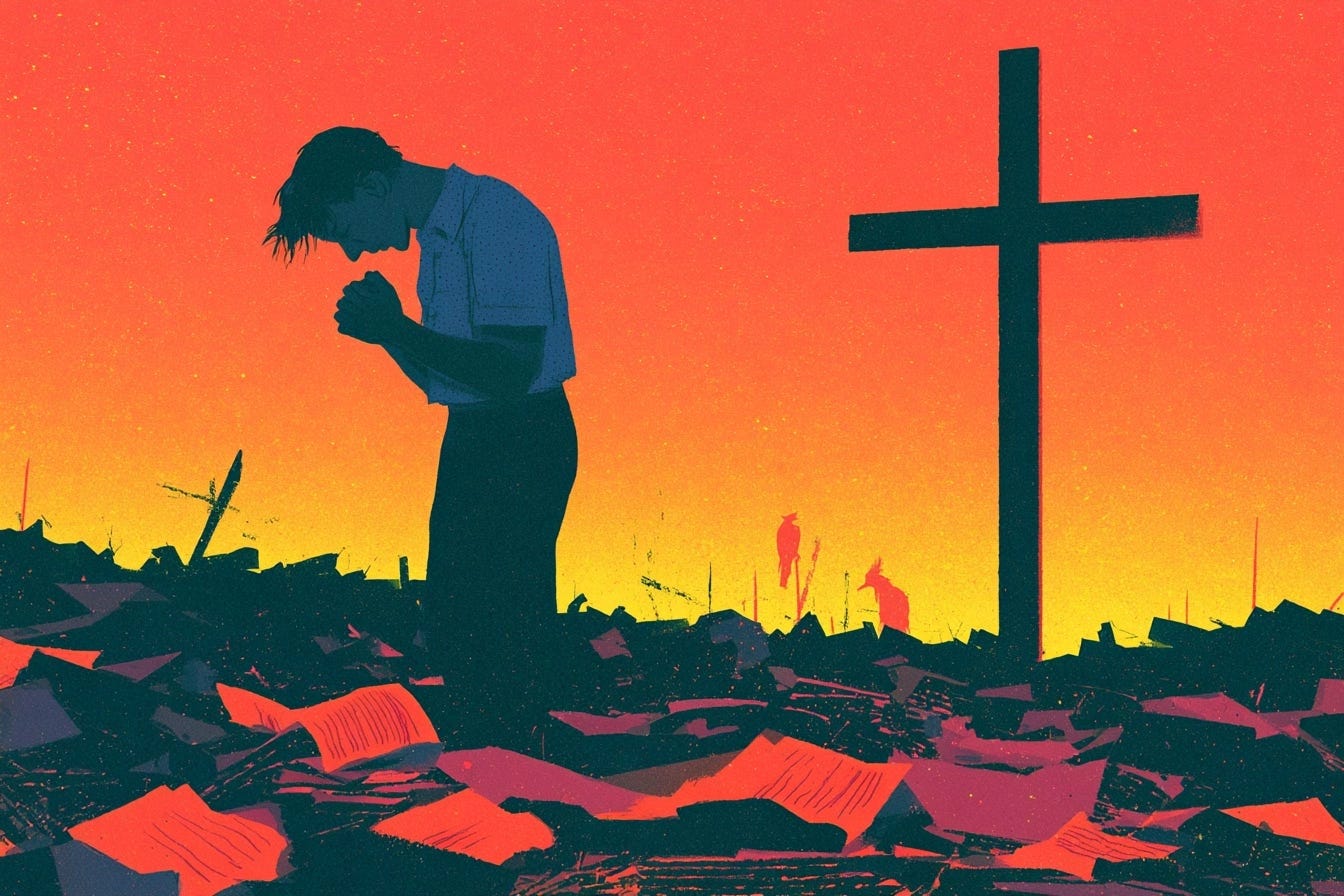
I was chatting with a pastor friend recently, and he said something that hit me like a Shoryuken dragon-punch to the soul.
We were talking about exhaustion…. The sort that grows beyond the typical “boy, ministry sure is tiring” complaint.
Too many hats. Too many plates spinning. For both of us, the exhaustion was DEEP… In the mind first. Then bleeding into the soul and heart. Thinking and feeling get harder.
Past the skin. Absorbed into the bones.
Where you could drink every pot of coffee in the building and still feel it standing over your shoulder scowling like a schoolmarm.
My friend looked at me and said:
“Hey, dude... question: why do you think it sometimes feels like resting is actually more dangerous than burning out?”
I remember thinking, Oh, dang, he’s right.
As I drove home through downtown Yukon, I kept turning that word “dangerous” over and over in my mind.
Dangerous.
Why would rest feel dangerous? Risky? Why would it feel like something to avoid?
What are we afraid of?
I think the answer is actually shame… and I think it has something to do with this simple fact:
Burnout usually comes with a war story.
Rest Doesn’t Sound Like a War Story
Think about it.
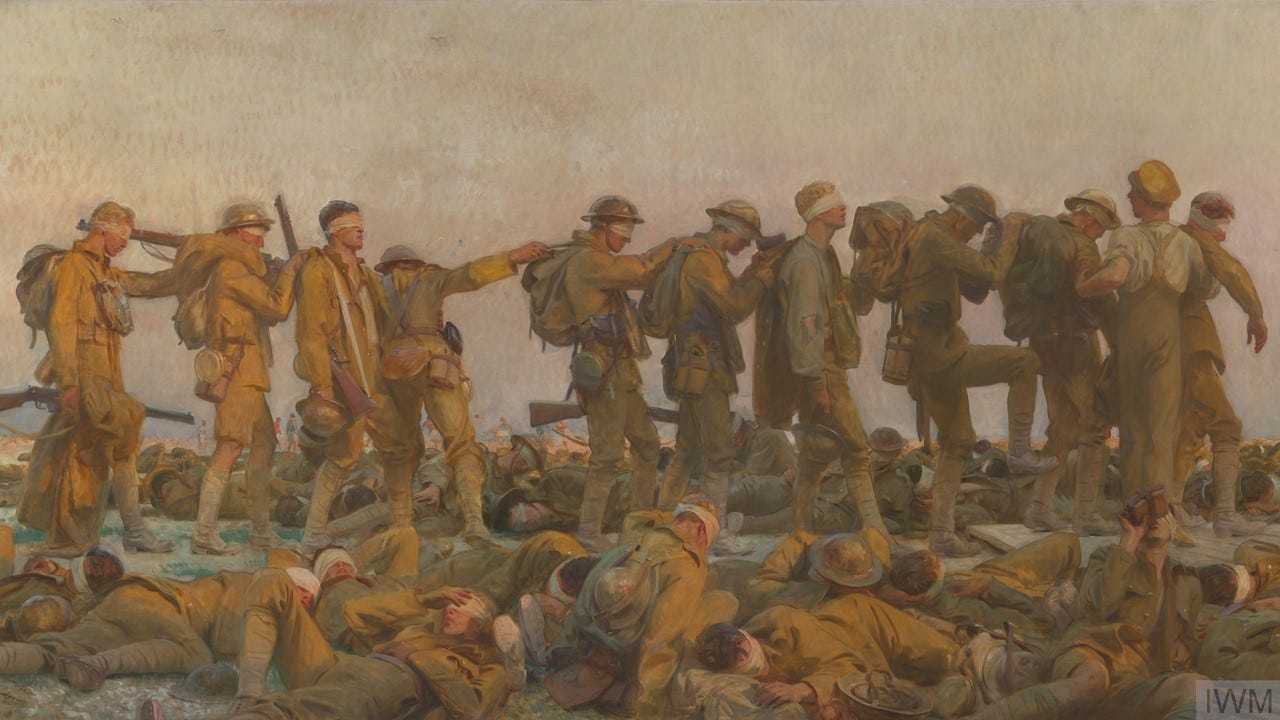
A pastor who burned out can say:
“I was called to the work, and it was hard. There were late nights. Lots of grinding. Lots of hustling. We burned the midnight oil week after week, month after month, year after year. We were all in the trenches together, building something for the Kingdom. Eventually, the stress caught up with me, and I burned out.”
We hear that story and think, dang, that guy’s a hero!
A war veteran.
“Good sir… You have ABSOLUTELY earned your rest. Please accept this appreciatory social media post that an intern named Joey used ChatGPT to write, along with a six-week sabbatical and one tasteful black-and-white photo of you looking bravely exhausted.”
And somewhere in the back of our minds, the rest of us begin wondering whether we are working hard enough.
After all, we have not burned out…. yet.
Therefore… we gotta keep hustling. We’ve got to jump higher, run faster, and twirl harder, all for the mission and the Kingdom.
Intentional rest sounds much less impressive.
Someone says:
“Yeah, I reached a point where I felt convicted that I needed to do less. I was doing too much. I needed to step back, reevaluate, and take some time to exist with the Lord and with my family. Nothing dramatic happened. I just knew I needed to slow down.”
That sounds nothing like a war story.
To many of us, it sounds like... laziness.
We think: “You have been given this monumental mission from God, and all these giftings, all these abilities. How dare you sit around and do NOTHING with it?”
It sounds like somebody sitting in a coffee shop, sipping chamomile tea, all snuggled up with a copy of John Mark Comer’s Ruthless Elimination of Hurry1, while the rest of us are out here slaving away like the last of the loyal Narnians2, still working for a kingdom somebody else is currently running into the ground.
I think a big part of the problem is this...
We have this tendency to look at somebody who is holding up so much weight that it crushes them, and we go:
“Man, what an absolute hero!”
But then we look at somebody saying:
“Huh... I better set down this weight before it crushes me... And I should probably release some of this burden to Jesus and trust God more with my limitations.”
We go:
“Hmm. That seems suspicious.”
“That guy must be a lazy bum who hates working hard for the Kingdom.”
It’s this very specific backwards paradigm.
And it reveals how our measure of faithfulness is deeply, deeply broken.
In the words of desert father Abba Antony…
“He who sits alone and is quiet has escaped from three wars: hearing, speaking, and seeing. But there is one thing against which he must constantly fight: that is, his own heart.” — Abba Antony
Man, that hits hard!!
When you allow silence, you’re escaping the war of hearing: the constant noise of everybody else’s opinions.
You’re escaping the war of speaking: always feeling like you have to have the right thing to say, the perfectly worded essay, the perfect defense against any criticism.
You’re escaping the war of seeing: the overwhelm of information that’s bombarding us every day across our screens, causing not only eye strain, but the strain of the heart and the mind.
But I’ve definitely found that even in my most monastic moments, I can’t escape the battle in my own heart.
My heart, left to itself, is a liar.
My heart, untended by grace, is an accuser.
My heart, when it forgets the gospel, becomes a braggart, a coward, and a little throne-building villain.
The heart is deceitful above all things
and beyond cure.
Who can understand it?
- Jeremiah 17:9
The Warehouse Gospel of Productivity
I think a lot of us learned to feel shame about resting long before we ever set foot in ministry.
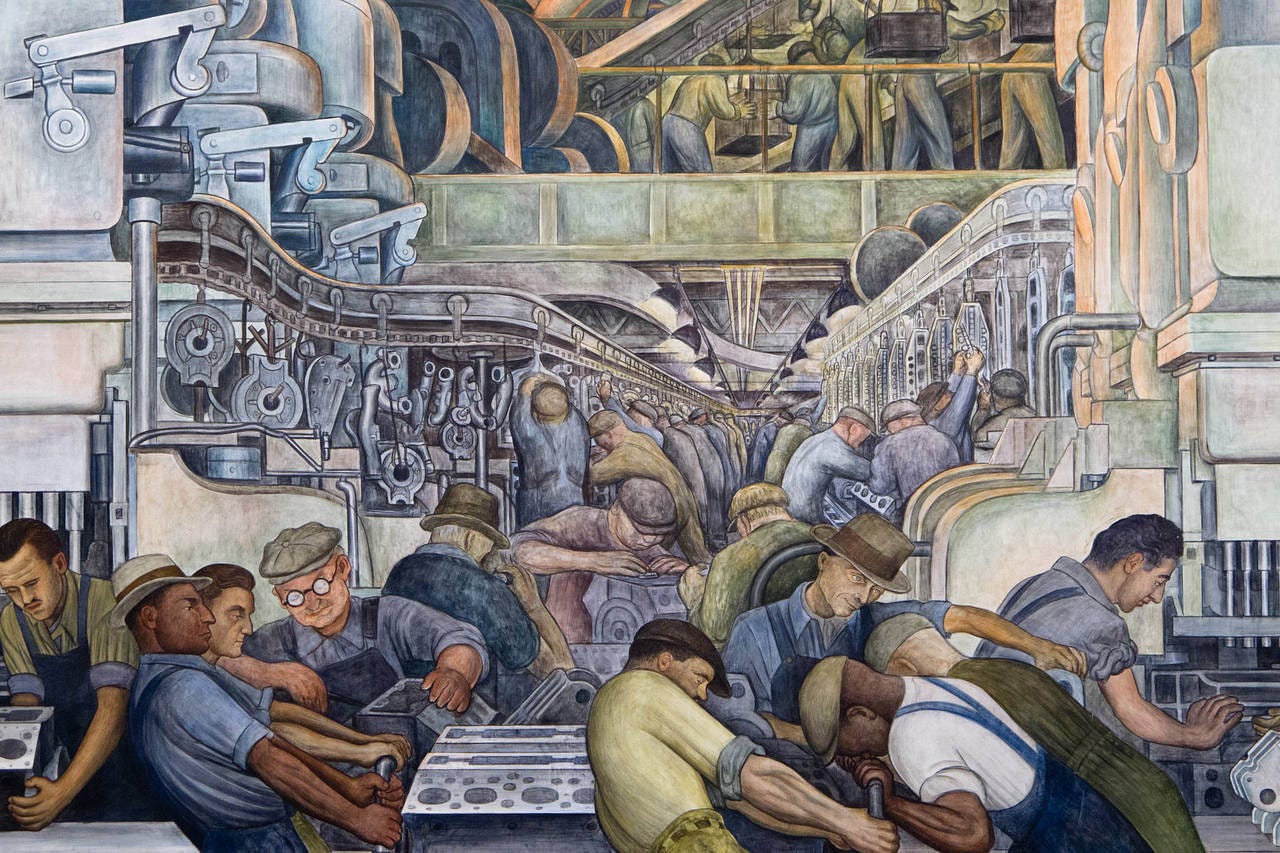
My first job was in a warehouse. I was the guy who pulled the lever that made packing peanuts fall into cardboard boxes.
A sacred vocation, obviously.
An entire empire of optical-health products depended on my wrist strength.
It was soul-crushingly boring.
I had a coworker named Mike. Mike was able to rest because he was a smoker, he could go outside and take a pleasant little smoke break. Lewis and Tolkien would approve.
Eighteen-year-old me was not a smoker, and nobody was gonna give me a “go outside and daydream while you look at the clouds” break.
Anyone who’s ever worked an entry-level job knows the phrase.
“If you’ve got time to lean, you’ve got time to clean.”
I know for so many of us, we absorb that deep, deep down into our Protestant work ethic-drenched souls.
We look at any empty moment... any moment of silence... any moment of stillness... and we go:
“That is a wasted moment.”
“That is laziness.”
“Oh, you want to rest? You want some Sabbath in your life? Yeah buddy, that’s got to be earned. It’s got to be justified.”
It’s got to be explained to a supervisor peering over your shoulder who is already halfway suspicious that you are not pulling your weight.
Then, for a lot of us, we walk into the ministry world... and we end up baptizing the whole thing.
Because it’s the culture that’s been passed down.
It’s the air that we breathe.
That’s the water that we swim in.
This is why I see so many pastors (including myself) who look at an empty square on their calendar and feel like a personal failure.
A Saturday with nothing to do makes us feel like we’re a waste of space.
A quiet day with nothing important that contributes to the bottom line or metrics feels morally suspicious...
Like we’re going to get to heaven and show up at the pearly gates, and God is going to bring up that exact moment and say:
“Hey... why did you not do something significant with the time that you had on Saturday morning, July 25th? You had a perfect window to go plant a church, and you just missed it, buddy… What the heck was that?”
I am a part of the problem.
I used to fill every silence in my life with a podcast episode, a TED Talk, or a seminary lecture on YouTube. I struggled to justify silence because, in my mind, a leader was supposed to be constantly learning and growing.
Even my rest needed measurable outcomes!
I think of my mother, who is an absolute saint, but is wired a lot like me.
Whenever she had a spare moment with nothing to do, she would rearrange all the furniture in the living room.
Apparently, peace was acceptable, but only if the couch was facing a different wall. 😂
It is easy to laugh at our compulsions and anxieties. It is easy to minimize them. To make fun of them. To shrug and say, “That’s just how I’m wired.”
But I think underneath all of that junk is something far more serious.
Busyness as Anesthetic
Some of us are terrified of what might happen if we finally stop.
I learned this after my cousin died in a car accident.
Driven by grief and a restless desire to help… I got on the first flight I could find to California. Once I arrived, I started moving from person to person in my family and friends, trying to comfort them.
There were many long conversations, hugs, tears, and prayers.
I tried to be whatever each person needed me to be.
A son. A cousin. A nephew. A pastor. A steady presence in the room.
After a few days, I was lying awake in the guest bed at my grandparents’ house, staring at the ceiling.
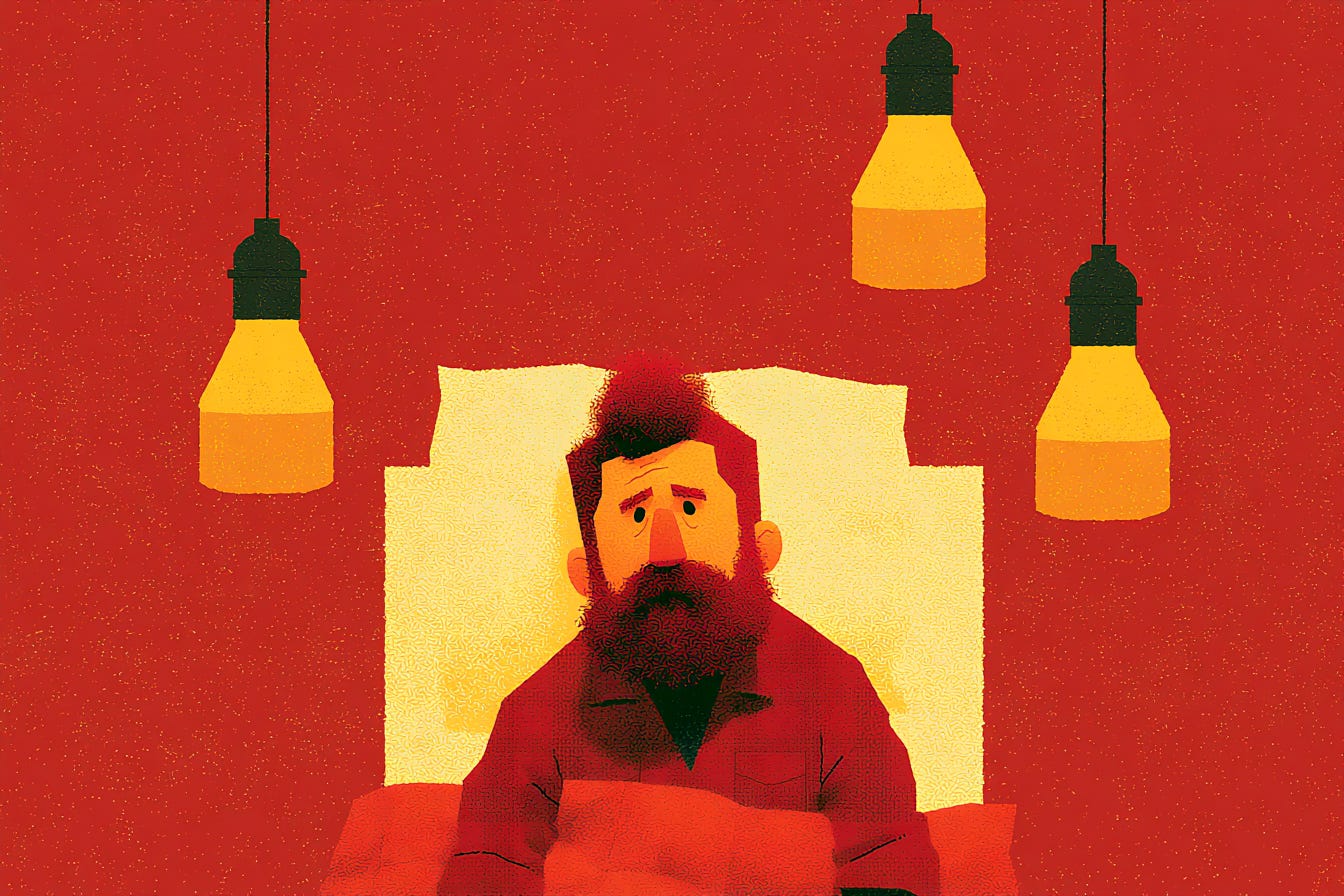
Suddenly, it hit me:
I had barely taken a moment to acknowledge that Tony had died.
He was gone. Vanished from my life. I could never get him back… at least not in this life. My future kids would never meet him.
That hurt like hell.
I had been so busy helping everyone else carry their grief that I had never stopped to feel the full, painful weight of my own.
That is one reason many of us have such a difficult time slowing down.
Busyness can become an anesthetic. It numbs the ache.
As long as we stay busy, we get to avoid feeling everything. We get to dodge the grief, anger, confusion, disappointment, and fear that keep trailing us from room to room.
As long as we keep moving, maybe it stays a step behind.
But eventually, the room gets quiet.
We stare up at the empty nothingness of the ceiling, and suddenly we are overwhelmed by the immense weight of all the things we have been trying to outrun.
Stillness feels dangerous, because stillness tells the truth.
The truth that God is God, and we are not.
Confronting the Demons of Usefulness
There is another fear, especially for those of us in ministry.
It is one of the most haunting questions a minister can ask:
What if I finally stop doing all this stuff for God and realize I was actually doing it… for me?
What if I loved the energy and activity of doing things for Him?
What if I loved how it made people look at me?
What if I loved the excitement? The camaraderie. The sense of fulfillment. The feeling that I was part of something important.
What if God’s love was simply the carrot I chased rather than the ground I stood upon?
That question stings the ego. You will never find it in a leadership podcast episode called “Five Ways to Maximize Your Kingdom Impact Before Breakfast.”
Stillness exposes us.
But that is part of the problem.
When the work stops, the applause fades, and the next project waits to begin, we are forced to ask whether we actually know how to be with God while empty-handed.
Then comes another haunting question:
How do I know whether I am serving God or simply trying to feel like I matter?
Everybody wants to feel like they matter.
I think a lot of times many of us spend countless hours litigating our worth as a defense mechanism against the feeling of “not mattering.”
I remember sitting in my little office, back when I worked at a church.
Before I was ever a pastor. I was the graphic designer. I remember one time two other pastors walked into my office and said,
“Bro, what do you even DO all day? Where does all your time go? Seems like you have a lot of time to kill. Must be nice.”
My 20-something ego was instantly wounded. I was infuriated.
I was doing graphic design for about eight different departments. The men’s ministry. The women’s ministry. The youth ministry. The Spanish ministry. Pretty much everybody.
Some nights I’d have to stay until midnight just to cut the bulletin with a giant machine that resembled a guillotine .
What hurt the most about that moment, in all honestly, was simply feeling like my efforts did not matter.
We are all searching for the assurance that someday someone will remember us. We want someone to look at our lives and say:
“Yes. It mattered. You made a difference.”
That is when we begin pulling out the résumé.
Look at all the things I have done.
Look at the ministries I have led.
Look at the mission trips I have taken.
Look at the sermons I have preached.
Look at the things I have built.
Look at the people who follow me.
Deep down, many of us are wondering, “Do I actually matter to anyone besides myself?”
And in the silence that follows, we are forced to wrestle with the dark demons of our own subconscious.

The demon of usefulness says,
“You are only valuable when you are useful to others.”
The demon of productivity says,
“You are only valuable if you can produce and keep producing.”
The demon of workaholism says,
“You have not earned rest. Keep grinding yourself into dust until I say so.”
These voices teach us to use our output to define our identity.
“We must arm ourselves in every way against the demons. For they attack us from outside, and they also stir us up from within; and the soul is then like a ship when great waves break over it.”
- Amma Syncletica

We become like the Genie in Aladdin, existing to ask everyone around us,
“What do you need? What do you need? What do you need?”
We become a plot device in everybody else’s story.
Our entire sense of self gets tied to our ability to fulfill other people’s wishes.
Of course, unlike the Genie, we lack phenomenal cosmic power. We have Google Calendar, caffeine, and, in my case, lower back pain that constantly reminds me I am no longer 22… or 32.
But the impulse is the same. As long as I stay busy, I get to skip the anxiety of whether I matter. The busyness TELLS me I matter.
I can slip on the mask, pump in the sweet, sweet N₂O of productivity, and rest in my ability to accomplish and drive and produce. But that doesn’t silence those demons.
They must be confronted.
They need to be battled through the unhurried rhythms of grace.

Stillness is warfare.
The Desert Fathers3 understood something we’ve forgotten in our manic, productive, platform-building version of Christianity.
"There is no labor greater than that of prayer to God. For every time a man wants to pray, his enemies, the demons, want to prevent him, for they know that it is only by turning him from prayer that they can hinder his journey... Prayer is warfare to the last breath."
- Abba Agathon
To stand perfectly still is one of the most violent acts of revolution a modern man can commit!
Stillness is taking up arms against every power that insists your value is measured by your insane output.
You fight by refusing to let your crossed off tasks become your savior… and acknowledging that doing so is committing an error of the highest order!
We must realize that our constant busyness is often just a frantic attempt to manufacture and sell a self that God already loves for free.
It is declaring that Jesus is King, and admitting you are nowhere close to being a king. You’re a doorman.
And that is a very good thing for your soul!
We must remember that a doorkeeper in the house of the Lord has the best view of the festivities!
We are not the captains of the ship, we are the passengers learning to trust the Navigator.
How silly we are. We scream at the waves because we are terrified that if we stop, we will cease to exist.
Meanwhile, He is right next to us, grinning… calming the storm… saying…
“Rest, my friends. I am here. :)
You are loved. You are safe.”
When we embrace the warfare of stillness, we are free to say,
“I rest in His righteousness instead of my self-righteousness. I can be loved without being useful. The Kingdom of God does not collapse when I rest in the arms of the Father.”
We must remember that the Father is not looking for His children to be efficient little machines.
We’re not androids...
We’re kids.
He wants children who do not cling to the toy of self-importance, but know when it is time to let go.
The King Who Slept Through the Storm
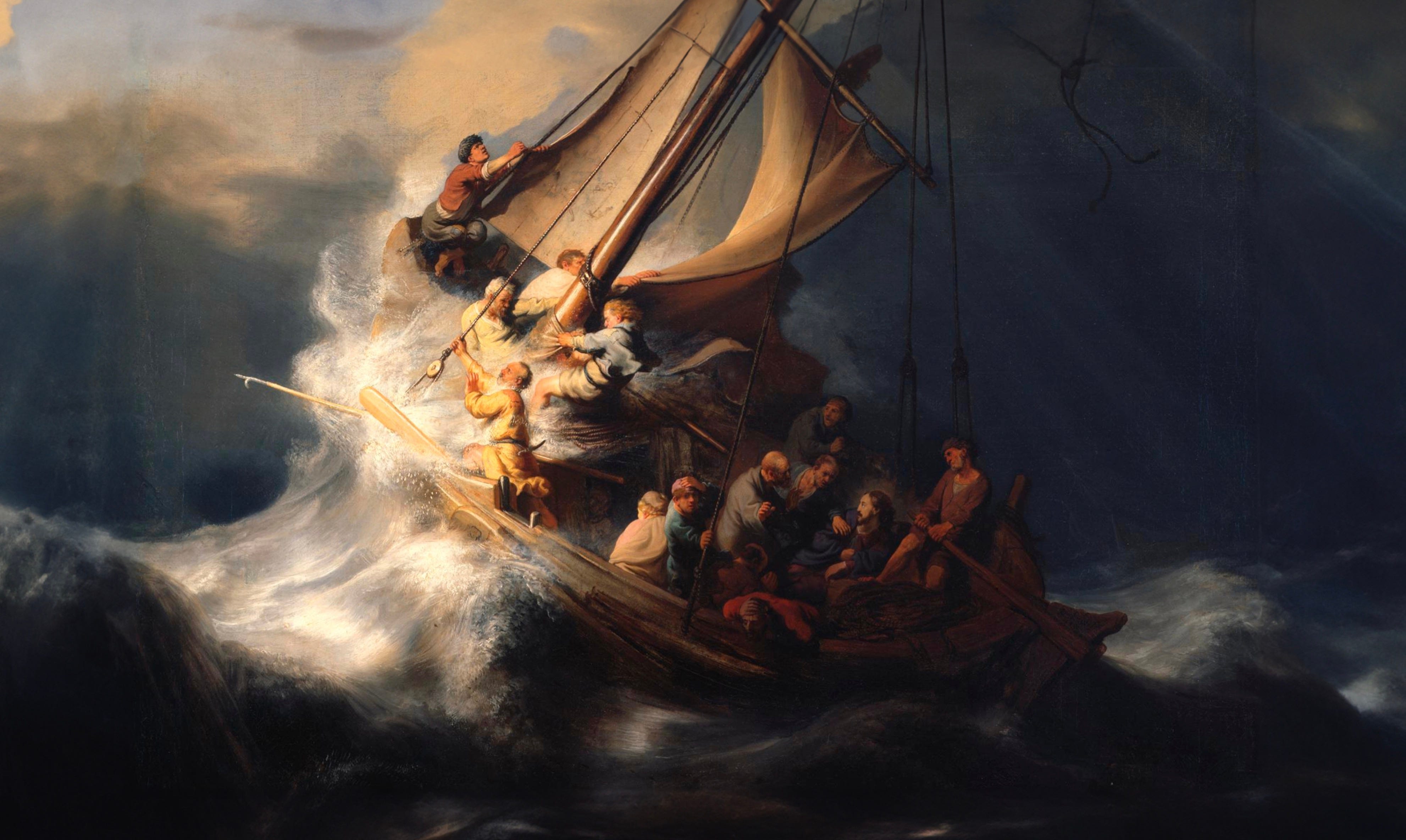
Consider the kind of King we follow.
Instead of laying siege to the gates of Rome, Jesus spent forty days in the wilderness fasting and praying.
He would go out to lonely places on a regular basis.
He would sleep in a boat even as a tempest was swirling around Him.
Pause for a moment and consider how exasperatingly aggravating this must have been for those poor disciples.
The boat is taking on water.
The wind is screaming. The waves are throwing themselves against the hull like they’ve got something personal against these guys.
Several of these men have spent their entire working lives on this exact water. They know boats. They know storms. And they are absolutely, positively convinced they are about to die.
Meanwhile...
Their fearless leader is asleep.
Not “resting His eyes.” Not “praying with them closed.” Asleep. Chilling. Slumbering. Dead to the world on a cushion in the stern.
If any of you have had the horrific pleasure of working for a sinking-ship organization you know exactly what it feels like to watch the water rise around your ankles while the guy steering the ship is nowhere to be found.
You don’t need your leader to fix the storm. You just need him to look remotely concerned.
Pretend to check the radar. Mutter something about “we’ll get through this together.” Anything.
So... no wonder they lost it.
“COME ON Jesus!!!”
“For crying out loud, at least pretend to be alarmed!”
“Come on, at least show some kind of fake concern!”
“Wake up. Look at the dark, ominous clouds!”
“Say something vaguely comforting! Cite a Psalm!”
But no.
He is taking a nap on a pillow.
Only a Divine Master can allow Himself the luxury of taking a nap amidst a raging storm.
Being a present-day Okie, this thought crosses my mind very often, especially when I am hiding in the storm cellar. :)
The point of the matter is Jesus absolutely, straight up, refuses to act like our genie. He’s the King who chooses to serve, but He’s, not an indentured servant.
The Lord of heaven and earth is NOT gonna answer all our prayers and fulfill all our wishes just because we rubbed the magic lamp of reading our Bible and praying for twenty minutes!
The truth is, our lives still have many, many more problems left to be solved.
This is a hard thing... but the trusting in the middle of the hard is actually a good thing.
For us to demand that the Creator of the universe play the part of a cosmic wish-fulfillment servant... that is an utter failure of the Christian imagination.
I would assert that Yahweh operates on His own timeline, under His own conditions. He is entirely independent of our worries and plans.
That doesn’t mean He does not care about our worries and plans. But He is not beholden to them.
I daresay He is like a great author who has already written the final page of His story.
We are merely the characters in His tale... who find it difficult to trust that the ink of His will has actually dried on the page in a way that has our best interests in mind.
Trust in God is not safe, but it’s very good.
Trusting... that is to say, resting... because trusting is the same thing as resting.
It is acknowledging the fact that we know less than He does.
It is our task to take one step at a time, to follow Him, to draw closer to Him and fall in love with Him each day.
We rest in knowing that, despite all the struggles and pains we deal with on a daily basis, our Father is well aware of the end of the story... and of where the long and winding road leads to.
Pharaoh’s Bricks and the Father’s Invitation
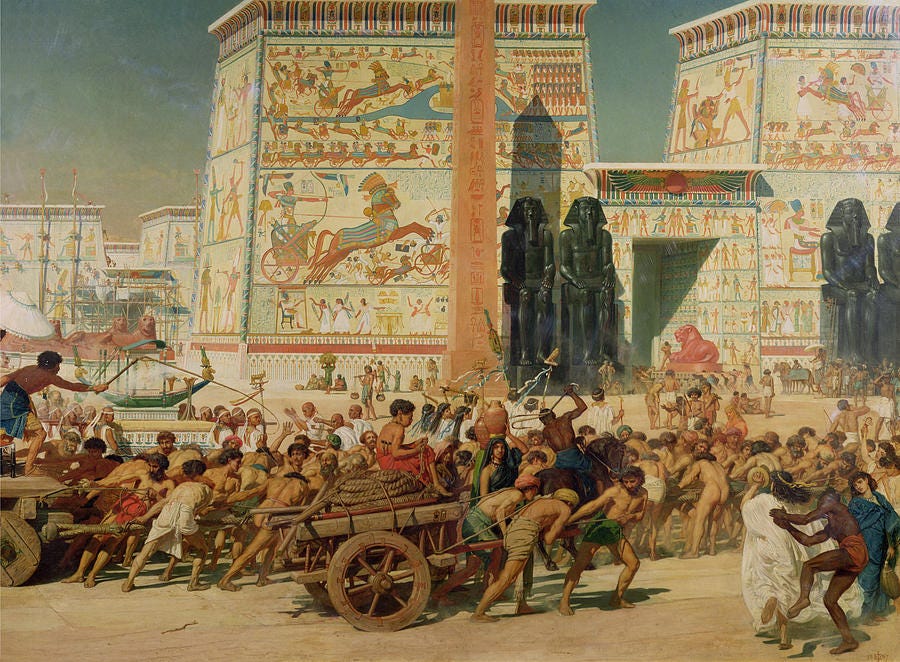
The enemy seeks to grind us into the dust, the way Pharaoh crushed the Israelites under endless work.
Lay more bricks.
Use less straw.
No rest for the weary.
No freedom for the oppressed.
No separate identity for you apart from what you can produce.
But our Heavenly Father asks,
“Who told you it was your job to save the world?”
God has made it very clear that He is the One saving the world.
He has invited us into His work, and it is His joy to do so, but He takes no pleasure in watching us worry ourselves into the grave.
How much of our labor is merely a noisy disguise for our own lack of trust? Sometimes… when the laptop lid closes, the soul’s eyes finally open to God.
Now do not mishear me. Of course we should keep working, keep trying, keep pursuing the glory of God’s Kingdom through our lives and efforts here on earth.
Rest looks nothing like detachment, apathy, laziness, or indifference.
Rest sits beside faithful work. It does not replace it.
Rest is the absence of the delusion that everything depends upon us.
For me, rest has begun to mean trusting God during the weeks when I feel successful, and equally during the weeks, months, even years, when I feel like an utter failure.
The seasons when nothing I am doing seems to make a difference.
The seasons when my life sits nowhere close to where I thought it would be.
The seasons when the doors I expected to open stay slammed shut.
Rest means looking at the Father in those moments and saying:
“I trust that what You have done for me is enough.”
“I trust that, in You, I am enough.”
“I trust You with my calling.”
“I trust You with the work You have given me.”
And then, somehow, by grace, stepping out of the home office.
Closing the door.
Letting the room get quiet.
Letting the world keep spinning without my supervision.
It is not my job to save the world. It is just my job to follow the Savior of the world.
And learning to believe that the Father is still at work, even when I am still.
He laughs at the dark powers that strive and scramble and rage against Him.
And He laughs in the face of our anxieties around whether or not we are enough. Not a mocking laugh. A kind one.
The sort of laugh a father makes when a child asks in a panicked voice,
“Daddy… do you still love me!?!”
The father chuckles warmly and says,
“Child, you know I do. Come close.”
We are enough in Him. That case is closed.
He is just waiting for us to open our eyes and accept the fact that He already made the decision a very long time ago.
I love engaging with people’s questions. It has been one of my greatest joys in ministry. If you would like to submit a question for me to potentially tackle in an essay, you can do so here.

GoodLion Theology is made possible by readers like you. If this work has been valuable to you, you can support it here.
Footnotes
No shade to Comer, Ruthless Elimination of Hurry is a wonderfully good book, and John Mark has been a massive blessing to me. I'm mocking the aesthetic of hurry-elimination-as-lifestyle-brand, not the book itself. :) Although I do have an essay in mind that dives into whether or not it's possible to actually eliminate hurry from your life, I'll save that for another time!
Shift the Ape convinces Narnia that a donkey in a lion skin is Aslan, and the loyal Narnians spend the last days of their kingdom logging trees for an occupying army that's using their own faith against them. - The Last Battle
The Desert Fathers and Mothers were third- and fourth-century Christians who fled to the Egyptian wilderness to get as far away from comfort and applause as physically possible. Their sayings survive as some of the sharpest & most brutal spiritual writing in church history.
Comments
Nothing yet. Say the first thing.
Sign in to join the conversation.