
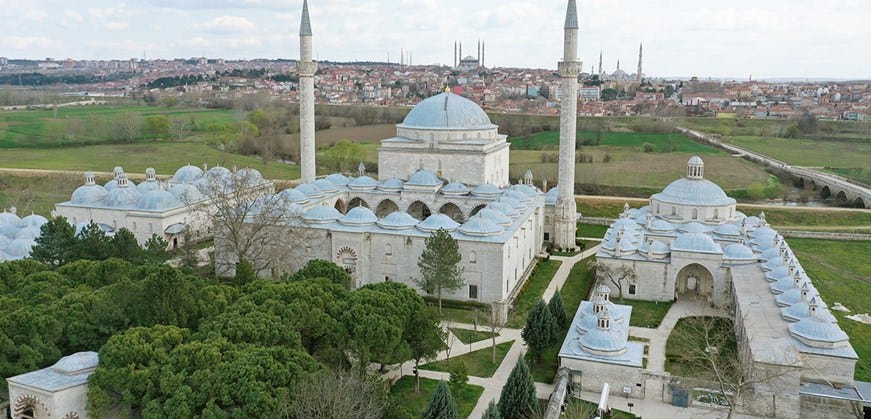
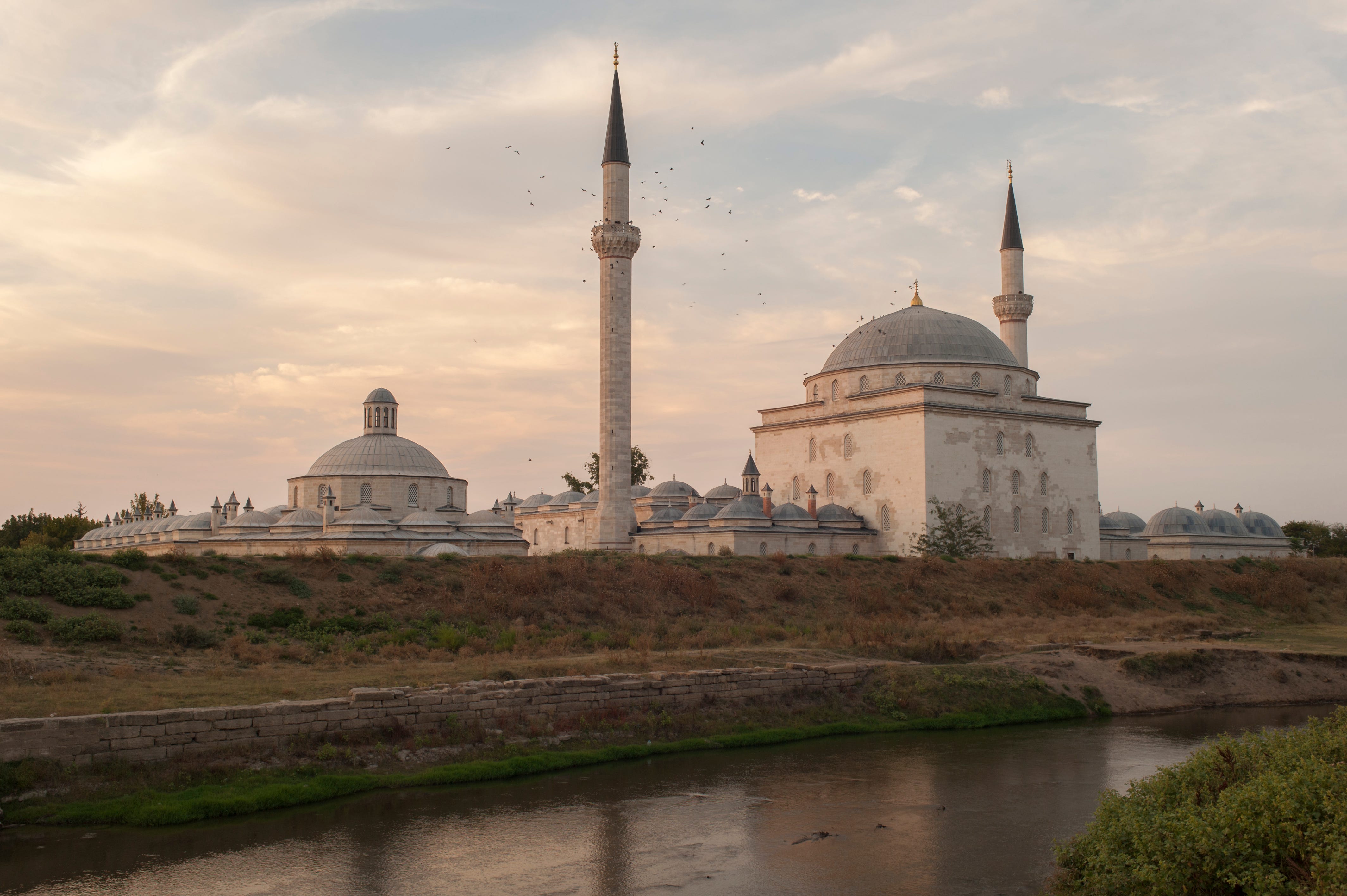
In the heart of 15th-century Anatolia, a groundbreaking approach to healing was taking root, combining the arts, nature, and medicine in a way that seems avant-garde even by today’s standards. At the Sultan Bayezid II Complex in Edirne, Turkey, physicians’ patient treatments included, among other things, musical notes tuned specifically for different mental and physical ailments.
Why music? Because, as they intuitively understood, sound has a unique way of reaching into the mind, soothing the spirit and creating vibration in the body that assisted the healing process. This wasn’t just folklore—it was part of their medical practice, and it is still practiced today.
The hospital used a variety of instruments, including ney flutes, tambourines, and lutes, playing specific musical modes (makams) tailored to treat different conditions. The hospital, still standing today, symbolises the deep historical roots of music as a recognised and respected intervention for mental and physical health.
These ideas have only recently begun resonating in our modern world, where we look to music not just as entertainment but as therapy, capable of fostering resilience, reducing stress, and uplifting communities. What the doctors and musicians in Edirne intuitively practised centuries ago aligns with what research in music therapy and cognitive neuroscience validates now.
The complex wasn’t isolated from its community—it was a place where local culture and healing intertwined. Patients, families, and physicians shared a space where the arts were a common language, accessible to all. The rhythms of tambourines and the serene tones of ney flutes not only calmed the mind but also reinforced the social bonds that supported each patient’s journey to health. This focus on a communal healing experience is not a well-known practice in the modern world but is a powerful reminder of the power of collective care in building health.
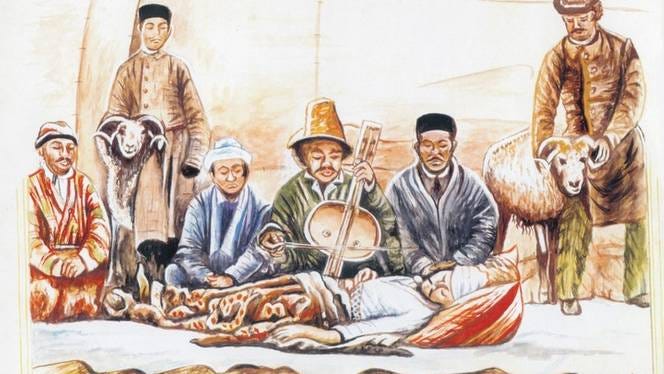
Another fascinating aspect of the Edirne Hospital was its early use of personalised therapies. Physicians carefully selected musical modes, or makams, attuned to specific physical and mental needs. Each makam was believed to evoke unique emotional responses, tailored to treat conditions ranging from melancholy to insomnia. While modern science only recently caught up, with studies proving that tailored music therapy can help address anxiety, depression, and PTSD, this ancient practice encourages us to continue researching how specific types of sound affect different mental health challenges.
This idea of Makam therapy serves as a reminder that sound’s influence on mental health isn’t one-size-fits-all. Different music genres and tones resonate uniquely with individuals based on their emotional needs, a principle that can now be enhanced with insights from neuroscience. It intuitively makes sense, perhaps our taste in music is linked to the types of sound that will be most beneficial to our bodies?Personalised music therapy could unlock new ways to harness music’s power, allowing us to create more effective interventions in mental health care.
The Sultan Bayezid II Complex also illustrated the importance of environment in the healing process. The hospital was designed with a keen awareness of nature, complete with gardens, flowing water, and open spaces. This synergy between nature and sound therapy wasn’t just beautiful—it provided a calming backdrop that supported the therapeutic work being done, and increased the effectiveness of treatments. Today, we see similar trends in biophilic design and sound therapy that encourage incorporating elements of nature into health and wellness spaces.
There are many musicians who have continued this healing work, however, one of them is Oruç Güvenç, whose work helped revive this ancient wisdom. His work and music was deeply rooted in Ottoman and Sufi traditions.
His emphasis on the healing properties of makam music—based on the complex modal scales developed over centuries—represents more than a simple therapy technique. It embodies a philosophy that views music as a direct bridge to the spirit, capable of realigning both mental and physical health. By delving into these culturally rich musical structures, Güvenç revived ancient healing knowledge that goes far beyond symptom treatment, aiming instead for a holistic transformation of the patient’s well-being.
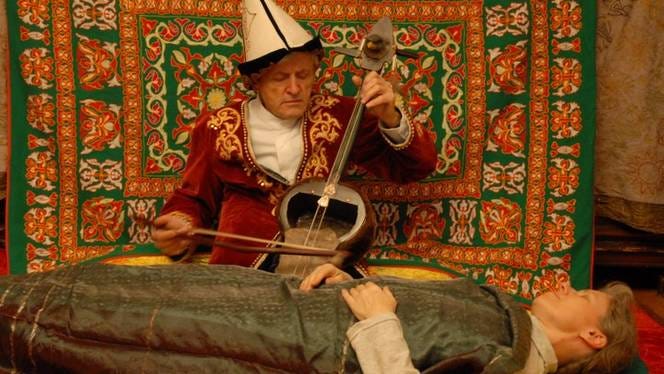
Güvenç’s worked with the concepts of “active” and “passive” makam therapy. Active music therapy invites patients to engage with the music—dancing, clapping, or playing simple instruments—thereby involving the body as a means of bringing suppressed emotions to the surface. Passive therapy, on the other hand, uses carefully selected makams to subtly influence the patient’s state, from soothing anxiety to relieving physical tension. Both approaches reflect Guvenc’s belief that music, in its rhythmic and tonal complexity, can resonate with and rebalance the human mind and body on multiple levels. Today, active music therapy in the West draws from these roots, often involving patients in group sessions that aim to foster a communal, uplifting atmosphere.
Another aspect of Güvenç’s approach was his use of pentatonic scales, a common note structure found in music across the world—from the huge variety of music across Africa to Native American chants. Güvenç argued that these five-note scales held a certain purity, unencumbered by the complexities of modern tonal systems, making them especially potent in connecting with human emotions. He even proposed that children should be exposed to pentatonic music during their formative years to foster natural mental and emotional development. Although seemingly unconventional, this idea aligns with modern research suggesting that early exposure to specific musical scales can positively influence neural development and emotional processing. Check out one of my favourite TED talks showing how our brains are intrinsically linked with the pentatonic scale.
Yet, Güvenç’s legacy also highlights the challenges faced by traditional therapies in today’s world. Despite his Turkish roots and dedication to Ottoman healing traditions, Güvenç’s therapy has gained more recognition abroad than in his homeland. This paradox sheds light on a broader issue: as countries modernise, indigenous and traditional practices can sometimes be overshadowed by Western models. A worthwhile challenge is bringing these human and intuitive practices into modern healing. This is a part of why this newsletter, ‘we the sound’, came about, as well as SPOKE, and the thousands of other movements and projects working to prove music as a serious intervention.
In the global spread of Güvenç’s work - prominently in Austria and Germany, interestingly - we have a model for how traditional, culturally rich healing practices can thrive in new contexts, contributing to a diverse and inclusive vision of modern therapy. The Sultan Bayezid II’s hospital is a living example of music’s essential place in healing, and people across the world have created research to validate Makam therapy within modern science (e.g, e.g). Their practice teaches us that by embracing the cultural, emotional, and scientific dimensions of healing, we can design better interventions.
Bridging history with contemporary practice may be one of the ways to help us move toward holistic, community-focused mental health care. The healing potential of sound is not bound by time or place but is instead an enduring human inheritance. The accessibility of this healing is powerful, now that we can share and connect in more ways than ever before. To leave you, please enjoy this recording of one of Güvenç’s sessions.
I’d love to hear any thoughts or questions in the comments!
You may have seen that I’m making a lot of changes over at SPOKE, so the next newsletter will be the story of how we built the app and community, some big lessons, and where we are going from here.
Disclaimer: Please excuse any potential errors. In my quest to get these newsletters out regularly amongst my many other responsibilities, I am unable to spend as much time as I’d like perfecting and adding links. Thank you for understanding :)
Comments
Nothing yet. Say the first thing.
Sign in to join the conversation.