
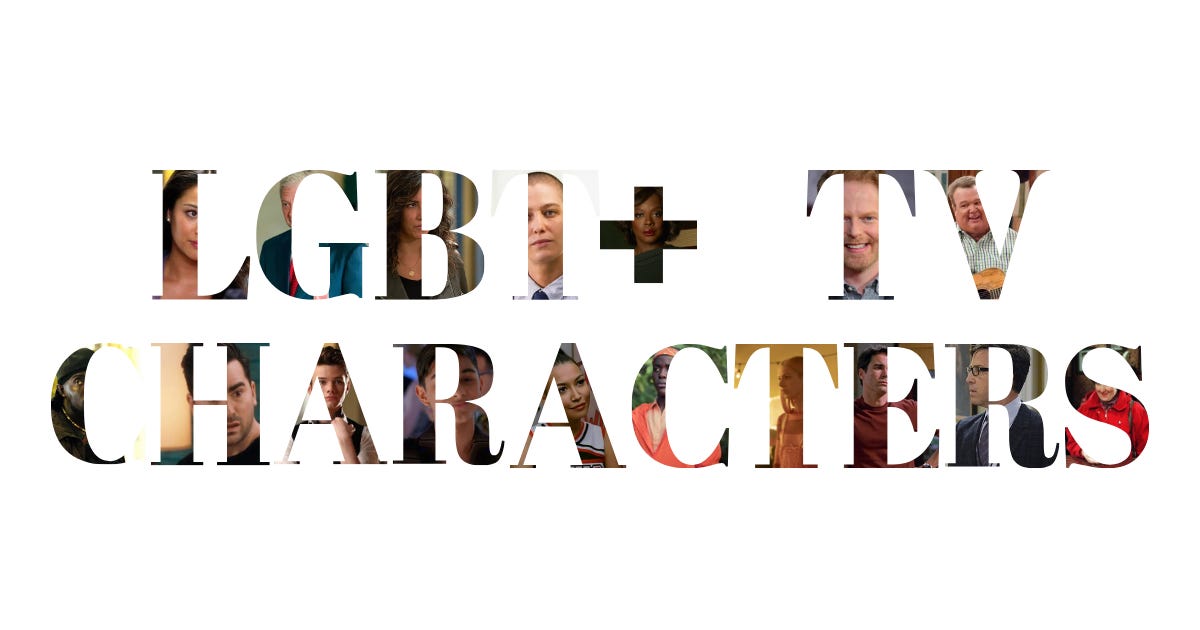
Happy Pride! In honour of Pride Month, I made a series of film recommendations via my TikTok and Instagram. These were films which touched me deeply and for me, felt that they showcased the a range of the LGBTQ+ experience. There were many I could have included, but did not have time to! It’s quite easy for filmmakers and creatives to pin down the experience and create narrow boxes and roles. The gay best friend for example was a popular archetype in television and film and represented one of very few LGBTQ+ roles for characters.. Over time, representation has evolved and still is evolving. This got me thinking. I could point to so many incredible LGBTQ+ films and I could have made a much longer list, but could I do the same for television? I sat down and thought about the shows I have watched and loved and realised there are great examples of LGBTQ+ representation I wanted to highlight in them. This list is by no means exhaustive, but it does contain a few of my favourite shows and characters.
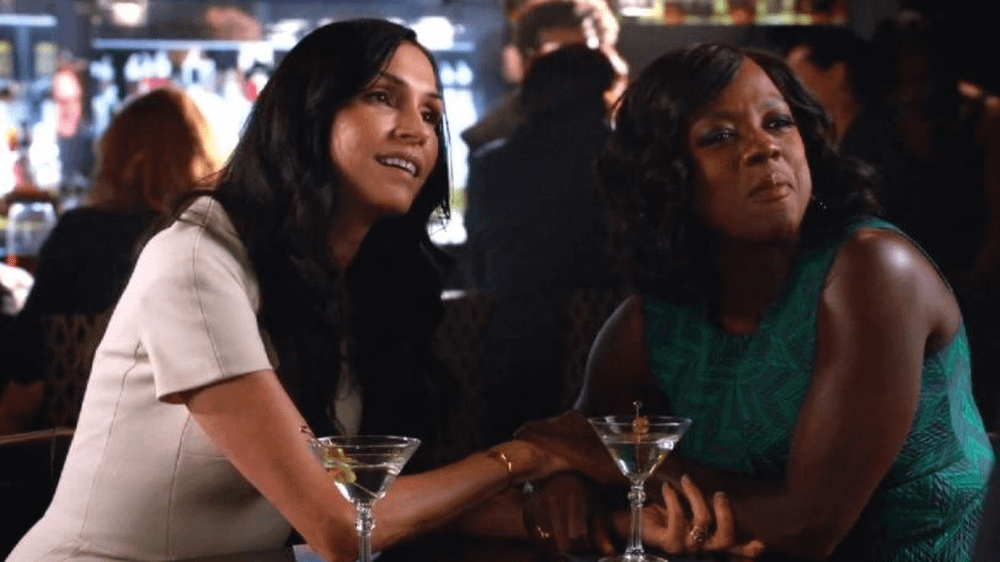
We’re introduced to Annalise Keating as a powerful defence attorney who incorporates her work into her university class. She goes through a lot during the course of How to Get Away with Murder. Her character begins married to a man, who she later discovers is not what he seemed at all. As the show progresses, we begin to learn about her history including previous relationships. The husband she married began as a therapist who she left her law-school girlfriend Eve Rothlo for. It is in that second season, we learn there is more to Annalise’s sexuality. Within film and television, there can be the tendency to create LGBTQ+ characters and conceive of their histories and storylines in ways which solely focus on their sexuality and/or identity. With Annalise, her character is portrayed with layers of complexity. She is powerful and vulnerable in equal measure, she is considered simultaneously a hero or villain (depending on who you ask). Namely, she is not perfect nor does purport to be nor is she defined by her sexuality.
Who I am is a 53-year-old woman from Memphis, Tennessee named Anna Mae Harkness. I'm ambitious, black, bisexual, angry, sad, strong, sensitive, scared, fierce, talented, exhausted - and I am at your mercy.
I felt the way How to Get Away with Murder explored Annalise’s sexuality to be a great example of battling internalised homophobia. She is a black woman, the daughter of a religious mother and grew up in a community, where it was difficult to accept who she was, let alone come out. In law school, she had what seemed a great relationship with Eve and ultimately left her for a man. She was scared of being perceived as gay. Scared of being rejected, subjected to further discrimination and for many people of her generation, they grew up in an intolerant society. Observing the government’s inaction towards the AIDS crisis, the ridicule and bullying people faced for being gay or because people suspected they were and a time before gay marriage was legal. Simply put, it is understandable that Annalise would grapple with coming to terms with who she, let alone come out. The course of the show subtly weaves in Annalise’s journey to explore her sexuality alongside the main plot. It’s meaningful. Annalise ultimately labels herself as someone who is bisexual in a beautiful speech and it’s a really long journey she’s gone through to get to that point. Over time, we may label ourselves with labels which make sense at a specific point of time, and then we may use different labels.
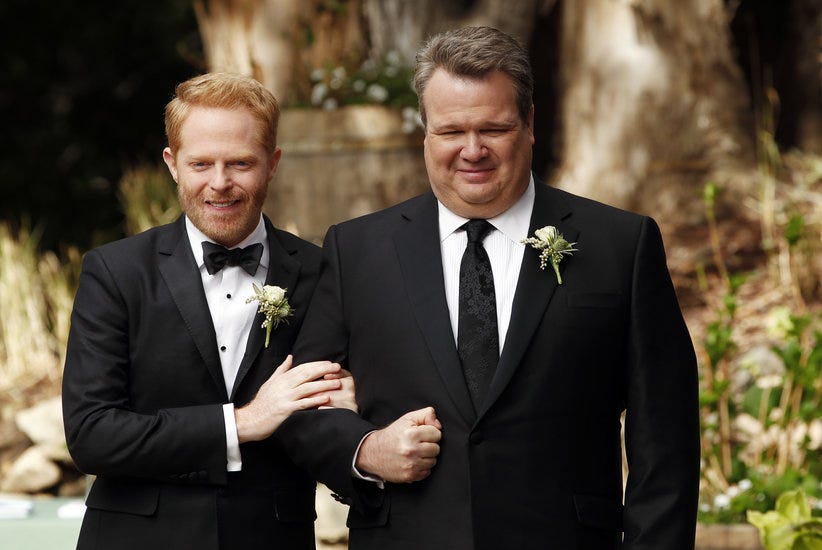
Modern Family is a show I got into over the last couple of years. It’s a go-to comfort show and funny and heartwarming. At the time it aired on television, it was transformational at the time in its portrayal of the LGBTQ+ community, especially gay men. I chose to include Mitchell and Cameron as a couple, because it would be a disservice to focus on one of them. They come as a partnership and its their portrayal of partnership which helped shape attitudes towards LGBTQ+ people. In the very first episode, we learn they are a couple and have recently adopted a daughter from Vietnam, Lily. They may not look like the typical American family, but they’re still a family and are portrayed in a mockumentary style alongside two other families. Their on-screen relationship is an example of how media can reflect changing attitudes in society and shape them. Mitchell and Cameron were an example of how the nature of family was changing. There are of course some stereotypes presented in the show - Cameron is extremely flamboyant, theatrical and dramatic. Easily a character who could embody the stereotypes of gay men. We learn that he was an ex-college football player who loves the sport with as much zeal as he loves music and the theatre.
With respects to how it redefined gay and family representation, there are many things to draw upon. First, research has found that knowing a gay couple (real or fictional) brings more support for gay marriage than knowing a gay individual. Within the context of the US, Republicans were most likely to associate gay men with promiscuity. There is nothing wrong with gay men being promiscuous. Straight men who are promiscuous are applauded in shows, like Barney in How I Met Your Mother. They own a black book of women they’ve slept with and their body counts are celebrated, as if they are some sort of achievement. However, the views held by Republicans that gay men are inherently promiscuous is a harmful one. People’s attitudes towards groups of people are shaped by their experiences and also parasocial contact with fictional characters. Mitchell and Cameron are faithful to each other during the course of the show, in contrast to Claire and Phil, a heterosexual couple where a recurring gag is Phil being attracted to Claire’s mother in law and other women in the show. The commitment to their relationship and each other makes their relationship one of the strongest and consistent.
In relation to family, Modern Family featured two gay men taking care of a daughter. How many shows about family have existed with the mother or daughters doing the main household duties? How much of this is justified under the idea that a man could not do a good enough job? Weaponised incompetence. Having two gay men raise a child really dispelled that notion that women are inherently better caretakers and should shoulder the burden of childcare and housework. Their sexuality and gender did not make them better or worse parents, merely, the fact that they were committed to their family. I don’t think there’s such thing as perfect representation, but in the context of the society it was released in, Modern Family was able to tap into this change in society. The typical American family has traditionally consisted of a mother, a father and two children (one boy, one girl). Modern Family showed us that times were changing, the composition of families were changing and the sexualities of parents did not factor into their ability to parent.
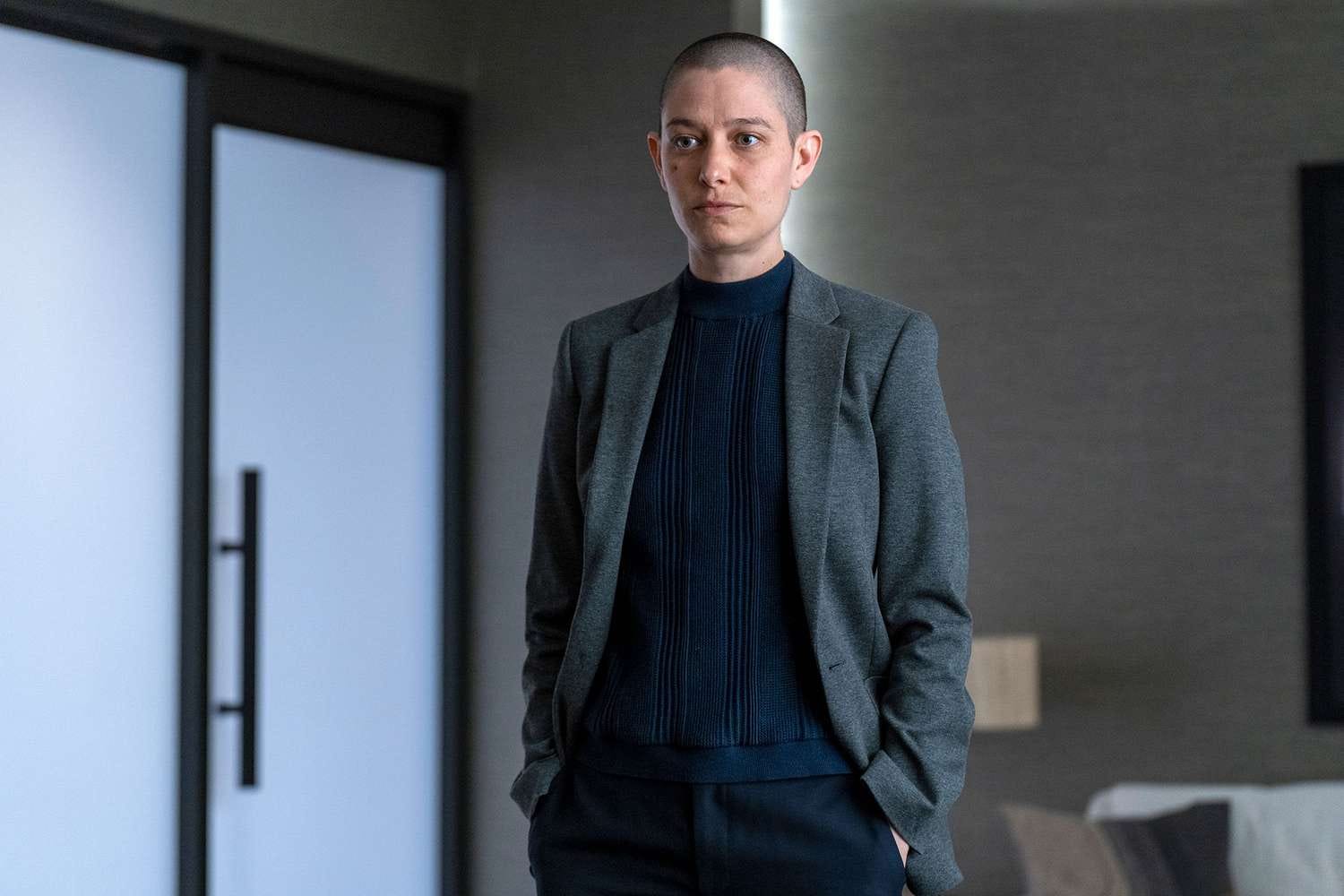
Before I developed a huge love for Succession, Billions took its place in my heart as rich and powerful people doing terrible things. I was 16 in my first year of A-Levels and my Business A-Level teacher recommended it to me. The show simply boils down to this premise of a cat and mouse game between a US Attorney and a hedge fund manager. I never anticipated the show would become the first mainstream US television show to feature a non-binary character. In the second season, we’re introduced to Taylor. Taylor is non-binary and stands out amidst the sea of macho attitudes, sex-obsessed and frat bro’s that make up the hedge fund of Axe Capital. Finance is a boys club. It serves to be an incredible environment to introduce a non-binary character. From the outset, Taylor is effective, exceptionally gifted and is indifferent to the sorts of stuff their fellow traders love (drugs, money, sex). First impressions count and we do not learn Taylor’s gender identity or pronouns immediately, we’re in a position where we’re assuming. It’s an interesting way to portray a non-binary character in this environment. Taylor’s first big part in the show is where they intervene to show their manager, Mafee a way to save Axe Capital $10 million.
Axelrod (also known as Axe) of course wants to meet Taylor, they’re skilled and proven valuable to the company. Axe assumes Taylor goes by he/him pronouns, again due to the company being a boy’s club. He meets Taylor who introduces themself with their pronouns. Axe simply remarks, okay. He immediately respects them and does not make it an issue. Nor does the majority of Axe Capital. I also enjoy the fact that everyone in this show is not accepting. Sounds weird to say, but it would be incredibly strange for everyone to be kind and respectful, especially in the climate and direction society has taken. Taylor does experience discrimination - some of their adversaries respect their pronouns acknowledging their issue with them is through their loyalty to Axe Capital and position, but other adversaries take it personal through misgendering. Including Taylor’s own father. Similar to Cyrus Beane in Scandal, I enjoy the turn Taylor’s character takes. They’re different to everyone in Axe Capital, because they don’t have the same vices or attitudes. We’re lulled into a false sense of security where we think Taylor might be one of the only redeeming rich people on this show. But they aren't. Their identity does not preclude them from being morally bankrupt. And I’m glad this isn’t the case. Billions is a show about frauds, sleaze, corruption and immoral behaviour. Taylor is the same as the other cisgender heterosexual characters. We can say eat the rich and mean it equally when we talk about Axelrod, about Chuck Rhoades and crucially, about Taylor.
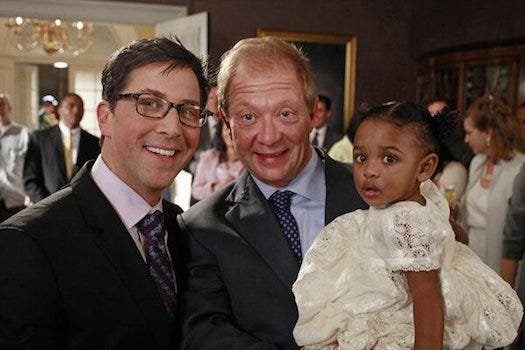
One of my favourite sayings is ‘be gay, do crimes’. It quite literally applies to Cyrus Beane, one half of Scandal’s gay couple. I chose similar in my decision to include Mitch and Cam from Modern Family as a couple to incorporate both Cyrus and his husband, James Novak. This will mainly focus on Cyrus’s characterisation in Scandal, he has a much larger part in the show and is a very interesting character. Cyrus Beane is the first gay character presented in a conservative way on a major show. He is a staunch republican, committed to his values and the moderate Republican president who he serves as Chief of Staff. From the outset, we are introduced to both Cyrus and James as a couple and we later learn the story of their love. It’s a Washington-esque love story. Cyrus was working on the Grant presidential campaign and James was a journalist covering the Grant campaign. At first, their love is a secret affair and transactional. James is keen to rise the ranks in journalism, but lacks the connections and inside scoops to do so, Cyrus is well-connected and powerful and can give him secrets. Cyrus is initially concerned about their relationship, of course he’s a republican in Washington, and gay. In a similar vein to Annalise, he also was alive during the time where the Republicans launched and continue to launch a major conservative campaign against LGBTQ+ individuals, including the inaction on the AIDS crisis. He soon gathers the courage to come out, after being tipped off, that their relationship is an open secret. They get married.
Over the course of the show, we learn more about their relationship. They’re the complete opposite of Mitchell and Cameron - they’re mainly stable and conflicts are smaller and resolved easily. For Cyrus and James, there is a significant conflict throughout the first season or so. Cyrus is not bothered about having a child and is averse to the idea, but James wants a child desperately and it causes arguments. Until Cyrus placates his husband by adopting a daughter. Problem solved, right? Not at all. Cyrus agrees to starting a family, because James is close to uncovering a government scandal implicating him and the administration which would pose career-ending scandals and prosecution. The reason I believe this situation in particular is great representation, is because I could easily imagine a husband trying to placate his wife by agreeing to start a family. Their relationship is full of passion, tension and disagreements and it’s complicated. Cyrus in particular is an interesting character. Similar to Taylor in Billions, his sexuality does not make him immune from being morally corrupt. If anything, he is one of the more evil characters we face. He is power-hungry, he wants to protect the administration no matter the cost. We see this through the many illegal acts he commits. Him being gay does not give him a different moral compass and I love that he is as shitty as the rest of them.
The list of characters I could have featured could have been much larger. These are a few I thought represented n interesting range of the LGBTQ+ experience, especially in roles like Cyrus’s and Taylor’s where they are/become morally corrupt people. Other characters I would have loved to include are Rosa (Brooklyn Nine-Nine), Kurt and Santana and Britney (Glee), Emily Fields (PLL), Eric (Sex Education) and Clare (Derry Girls).
If there’s any characters I missed that you love, please do let me know in the comments below. And again, Happy Pride!
No posts
Comments
Nothing yet. Say the first thing.
Sign in to join the conversation.