
When Snap acquired Gfycat in 2020, many assumed it was the beginning of a larger media strategy around GIFs, short-form content, and lightweight video communication.
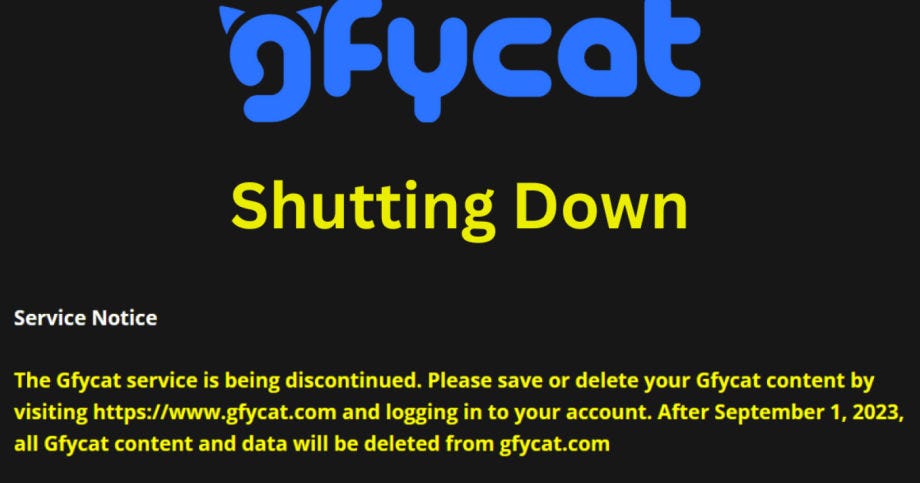
Three years later, Gfycat was shut down.
To outsiders, the decision looked irrational:
Why buy a company, spend time integrating it, then kill it shortly after?
But in the corporate tech world, these “buy and kill” scenarios happen more often than most people realize.
And contrary to popular conspiracy theories, they are usually not evil masterplans.
Most of the time, they are the result of:
chaotic corporate strategy,
defensive acquisitions,
failed integration,
changing market conditions,
or something Silicon Valley calls an “acquihire.”
Gfycat was founded in 2013 and became one of the internet’s major GIF and short-loop video platforms.
At its peak, it was known for:
high-quality GIF hosting,
fast video encoding,
lightweight looping media,
and strong integration with online communities and forums.
In 2020, Snap acquired the platform.
At the time, the acquisition made strategic sense:
Snapchat was heavily investing in:
visual communication,
short-form media,
AR and avatars,
expressive messaging,
and lightweight mobile video experiences.
Gfycat’s infrastructure and engineering expertise aligned naturally with that vision.
However, by 2023, the platform was effectively abandoned:
uploads reportedly stopped working,
support became unresponsive,
security certificates expired,
and eventually Snap announced the complete shutdown of the service.
TechCrunch later confirmed the shutdown officially.

Most people assume acquisitions happen because:
“The buyer wants to grow the acquired product.”
In reality, many acquisitions are not about the product at all.
Sometimes companies are buying:
engineering talent,
infrastructure,
patents,
encoding technology,
data pipelines,
or simply market positioning.
This is where the term “acquihire” comes from:
an acquisition primarily made to absorb a talented team or strategic capability.
The original product may survive…
or may quietly disappear.
Gfycat was never as culturally dominant as Giphy.
But technically, it was respected.
The platform specialized in:
video-based GIF rendering,
lightweight compression,
fast looping playback,
and efficient media delivery.
Those capabilities were likely more valuable to Snap internally than the public-facing Gfycat website itself.
The acquisition may have been less about owning a GIF website…
and more about owning a media engine.
In tech, companies sometimes buy startups not because they love them…
but because they do not want competitors to own them.
This is especially common during platform wars.
At the time:
Meta acquired Giphy,
TikTok was exploding,
short-form media was becoming the dominant communication layer online.
Owning Gfycat may have prevented:
a competitor acquisition,
future platform leverage,
or another ecosystem from gaining strategic infrastructure.
Sometimes buying a company is cheaper than competing with it later.
One of the biggest misconceptions about large tech companies is that they operate with long-term consistency.
They often do not.
A strategy approved during a growth boom can become irrelevant within 12–18 months.
The tech environment changed dramatically after 2021:
interest rates increased,
investors demanded profitability,
advertising markets weakened,
tech layoffs accelerated,
and companies started cutting “non-core” projects aggressively.
Suddenly, experimental or low-revenue platforms became liabilities instead of strategic bets.
Gfycat likely became one of those casualties.
Acquisitions look beautiful on PowerPoint presentations.
Reality is messier.
Post-acquisition integration often fails because:
cultures clash,
engineering systems conflict,
monetization never materializes,
leadership priorities shift,
or the acquired product simply does not fit the parent company anymore.
This happens constantly across the tech industry.
Many acquired products slowly enter maintenance mode before eventually disappearing entirely.
Hosting media at scale is expensive.
Especially:
video,
looping animations,
CDN delivery,
storage,
bandwidth,
and transcoding.
Meanwhile, GIF platforms historically struggled to monetize effectively.
Users consumed enormous amounts of content…
without generating proportional revenue.
That imbalance becomes dangerous during economic downturns.
Acquisition does not always mean success.
And it definitely does not guarantee survival.
Many founders imagine acquisition as:
validation,
permanence,
or a “happy ending.”
But large corporations evaluate products differently.
Sometimes the startup survives.
Sometimes only the technology survives.
Sometimes only the talent survives.
And sometimes the company was acquired simply to disappear quietly inside a larger ecosystem.
The Gfycat story is not really about GIFs.
It is about how modern tech corporations operate under pressure:
fast decisions,
defensive moves,
shifting priorities,
and constant restructuring.
What looks “fishy” from the outside is often something simpler:
corporate chaos mixed with strategic uncertainty.
And in Silicon Valley, that combination kills products all the time.
Comments
Nothing yet. Say the first thing.
Sign in to join the conversation.