
APRIL 2026
Written By Dr. Manali Kumar, Executive Director
April has underscored a defining feature of today’s geopolitical moment: disruption is no longer episodic, but systemic. With the war in the Middle East far from resolution and cascading energy shocks across the Indo-Pacific, states are confronting a world in which traditional supply routes are no longer reliable and strategic vulnerabilities are being exposed in real time. As one consequence, attention is shifting to unlikely alternatives — including the Arctic’s so-called “Polar Silk Road”, where melting ice and geopolitical fracture are opening new, if imperfect, pathways for energy and trade.
Our regional review this month finds the Indo-Pacific adapting not through alignment, but through hedging under constraint. Middle and rising powers are balancing relationships across competing blocs, managing energy insecurity, and improvising policy responses to external shocks. As our brief explores, the emergence of routes such as the Northern Sea Route is emblematic of a broader shift: states are not seeking efficiency, but optionality, building redundancy into supply chains and strategic partnerships in anticipation of further disruption.
While Washington remains deeply engaged in conflict, Beijing is consolidating its position indirectly by strengthening supply chain control, expanding regional influence, and leveraging partnerships such as its Arctic alignment with Russia. The result is not a binary contest, but a fragmented system in which power is exercised through networks, access, and resilience rather than formal alliances alone.
Amidst these shifts, a more pragmatic order is taking shape. States across the Indo-Pacific are prioritising survival, flexibility, and access. The question is no longer whether the system is fragmenting, but whether these adaptive strategies will be enough to manage the risks of a more volatile, energy-constrained, and contested global order.
9DASHLINE delivers the sharp, timely analysis you need to stay ahead of the curve.
Subscribe now.
Written By Isaac B. Kardon, Senior Fellow, Carnegie Endowment for International Peace
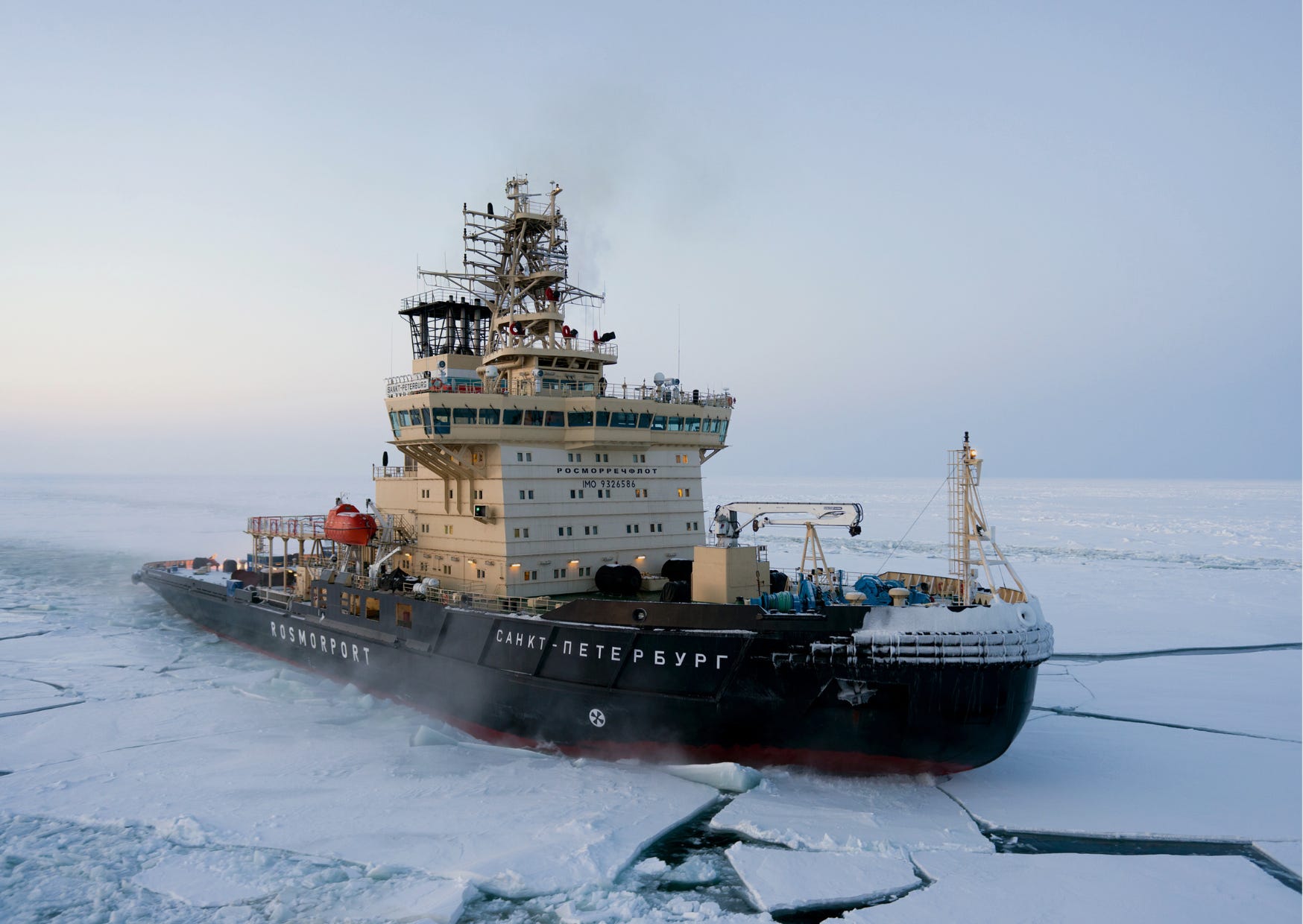
As the Hormuz Strait energy supply crisis cascades across global markets, renewed attention is falling on less volatile shipping lanes a world away. The so-called Polar Silk Road connects the abundant resources of the Russian Arctic to Europe and Asia — but most importantly to China, Russia’s primary patron and export market. With new Russian liquid natural gas (LNG) resources coming online just last year (LNG 2), and surging volumes coming from existing fields still not fully sanctioned by European consumers (Yamal LNG), the Northern Sea Route (NSR) is fast emerging as a major geoeconomic factor.
Stretching from Russia’s boundaries with Scandinavia on the Barents Sea to its boundary with the US in the Bering Sea, the NSR is the only flowing Arctic passageway. The waterway lies entirely within Russian jurisdiction and has been heavily restricted by sea ice and inadequate shipping infrastructure until the last several years.
China is the most interested and motivated partner for resource-rich, capital-poor Russia when it comes to Arctic energy resources. Xi branded the route as China’s “Polar Silk Road” (冰上丝绸之路) on a visit to Moscow in July 2017, then folded it into the Belt and Road Initiative in a subsequent PRC Arctic White Paper declaring China a “near Arctic power”. China’s geography certainly does not validate that claim of proximity, but the “no limits” Sino-Russian partnership and Russia’s total commitment to its war in Ukraine make the Russian Arctic an increasingly welcoming environment. This is far more than a simple commercial consideration, as the NSR offers a vital conduit for ensuring what Xi Jinping calls “economic security”, representing a unique, if partial, solution to the so-called “Malacca Dilemma” that has vexed Chinese leaders for decades.
Observable shipping patterns show that the NSR corridor remains orders of magnitude behind the world’s primary shipping lanes, but melting sea ice and cleavages in world politics are generating rapid growth — likely even faster than we can observe, due to the prevalence of shadow-fleet vessels and various methods of obscuring cargos and transits. China managed to import 22 LNG cargoes from sanctioned Russian projects in 2025 — most notably, the heavily-sanctioned and left-for-dead LNG-2 project, all routed to the Beihai port terminal in Guangxi. China’s state oil giants CNPC and CNOOC together hold twenty per cent of Arctic LNG 2, and are now the only players capable of improving shipping and the energy infrastructure in the Arctic. The Hormuz crisis makes China uniquely motivated to do so in a shorter time frame. Regardless of the corridor’s viability for larger-scale flows than currently observed, it will be increasingly consequential in 2026 and beyond, not due to its gross tonnage but the state of every other corridor, in the context of a fast-fracturing global trade system that increasingly features managed trade arrangements.
With 12.8 million tonnes per year of Qatari LNG capacity offline for three to five years and force majeure declared on Chinese contracts, Chinese industries are especially hungry to replace lost LNG. The corridor does not need to be efficient, only available, and to provide a source of hydrocarbons whose origin can likely be obscured. However, the sanctions regime and shadow fleet campaign underway by the US Navy may evolve in the future.
Afghanistan and Pakistan reportedly agreed to explore a ‘comprehensive solution’ to their conflict, which broke out last October, during peace talks in China in early April. However, violence persists: the Afghan Taliban claimed that mortar and rocket attacks this week killed four and wounded 70, an allegation Islamabad denies.
Meanwhile, Pakistan has emerged as a key mediator in the US-Iran conflict, although the first round of talks in early April failed to produce a deal, and a second round has yet to materialise. Saudi Arabia has pledged USD 3 billion in support to help Pakistan bridge a financing gap linked to an upcoming repayment to the UAE. Earlier this month, Pakistan also supported Saudi Arabia’s defences, deploying fighter jets and support aircraft following Iranian strikes on key Saudi energy infrastructure.
In Sri Lanka, the government announced a record USD 320 million relief package over three months for farmers, fishermen and low‑income households hit hardest by soaring energy costs linked to the Middle East war. Keen to avoid a repeat of the 2022 economic crisis when inflation soared to 70 per cent and triggered a USD 46 billion sovereign default. Authorities have also reversed last month’s four-day working week after it failed to deliver expected energy savings. In a separate incident, hackers breached the finance ministry’s systems and stole USD 2.5 million that was part of a bilateral debt repayment to Australia.
Nepal’s new government has moved to tackle corruption by establishing a panel to investigate the assets of former politicians and officials. However, early instability is evident: two cabinet ministers have already exited, with Prime Minister Balendra Shah dismissing his labour minister over misuse of office, while the minister of home affairs resigned amid scrutiny of his investments.
Bangladesh launched an emergency vaccination drive to contain a high-intensity measles outbreak, with more than 100 children reported dead amid falling immunisation rates. The UN reported over 18,000 suspected cases by mid-April. At the same time, concerns are mounting over a potential backtracking on recent democratic gains after at least 23 reform-related ordinances introduced by the Yunus-led interim government — spanning human rights, judicial oversight, and anticorruption — were allowed to lapse or repealed after failing to secure parliamentary approval. Opposition alliances have staged protests, questioning the BNP government’s commitment to reform. The government has, however, introduced a ‘Farmer’s Card’ scheme aimed at expanding direct support, streamlining subsidies, and modernising agriculture, which contributes around 12 per cent of GDP.
India’s diplomatic momentum continued into this month, with New Delhi signing a ‘once-in-a-generation’ free trade agreement with New Zealand to deepen economic ties and expand market access. The deal will cut or eliminate tariffs on 95 per cent of New Zealand’s exports to India, while making all Indian exports to New Zealand duty-free, alongside a USD 20 billion investment commitment over 15 years. India has also expanded cooperation with South Korea in energy, critical minerals, shipbuilding, semiconductors, and steel, with both sides aiming to double trade to USD 50 billion by 2030. Talks with Washington resumed, with ‘constructive and positive’ discussions on market access, non-tariff measures, and technical barriers.
New Delhi is also poised to sign a USD 8 billion deal with Germany for six conventional submarines as it seeks to bolster capabilities amid growing Chinese presence in the Indian Ocean. In parallel, India also approved a USD 25 billion military modernisation package, including new air-defence systems from Russia and remotely piloted strike platforms.
Domestically, India ramped up coal and gas output as power demand hit record peaks, with temperatures crossing 40°C in parts of New Delhi. Oil imports from Russia are near record highs. The government has also launched its delayed decadal census, a USD 1.24 billion exercise covering 1.4 billion people, which will be conducted digitally via smartphones for the first time, and — in a contested move — include caste data for the first time since 1931.
Southeast Asian countries continue to reel from the global energy crisis that has sent oil and gas prices soaring over the past two months following the US and Israel’s coordinated strikes on Iran in late February. Regional views of the United States have soured as a result of the economic and geopolitical instability, deepening perceptions that the US is no longer a reliable partner.
On regional perceptions, the ISEAS-Yusof Ishak Institute published its latest survey, The State of Southeast Asia, on 7 April. Trust in the United States declined slightly from the previous year (from 47.2 per cent to 44 per cent), while distrust increased from 33 per cent to 35.5 per cent in 2026. It is worth noting that the survey was completed prior to the war in Iran; moving forward, it will be important to monitor confidence in the United States.
Despite declining confidence in Washington to uphold global peace and security, Beijing does not appear to be piling on the United States or actively cheering on narratives of US decline. Chinese policymakers may be following the old maxim attributed to Napoleon Bonaparte, “Never interrupt your enemy when he is making a mistake”, confident that they will reap the strategic benefits over the longer term.
Meanwhile, Chinese Foreign Minister Wang Yi completed a regional tour, including stops in Cambodia, Myanmar and Thailand, from 22-25 April. China and Cambodia held an inaugural 2+2 strategic dialogue in Phnom Penh on 22 April, involving the two sides’ foreign and defence ministers. Wang Yi met with Thai Prime Minister Anutin Charnvirakul, where the two officials discussed deepening cooperation to combat transnational crime and cyberscam operations, which have flourished in Cambodia and Myanmar, frequently targeting Chinese citizens.
Wang concluded his trip with a stop in Naypyidaw, where he met with Myanmar junta leader Min Aung Hlaing. According to Chinese media, Wang emphasised that, “China firmly supports Myanmar in following a successful development path that suits its national conditions and is supported by its people…[and] in safeguarding its national sovereignty, security and territorial integrity”.
Finally, Indonesia and the US announced a Major Defence Cooperation Partnership (MDCP) on 13 April, including plans to expand joint training, bilateral exercises and professional military education. The two sides signed the agreement during a visit by Indonesian Minister of Defence Sjafrie Sjamsoeddin to the Pentagon. Indonesian President Prabowo Subianto was in Moscow to meet with Russian leader Vladimir Putin on the same day, signalling Jakarta’s enduring commitment to a free and active foreign policy. During a five-hour meeting with Putin, the two leaders discussed cooperation in the energy and mineral resource sectors, bilateral investment, education and technology exchange.
In Japan, Prime Minister Sanae Takaichi’s Cabinet approved a major overhaul of defence export rules, scrapping limits that had confined arms transfers to five non-combat categories and opening the way for exports of warships, missiles, drones, and other lethal systems. A Japan Maritime Self-Defence Force vessel transited the Taiwan Strait on April 17, the first since June 2025 — drawing condemnation from China. Separately, the Japan Self-Defence Force joined the US–Philippines Balikatan exercises for the first time, including live-fire exercises. Taken together, these moves point to a more forward-leaning Japan on regional security amid growing instability and US pressure to step up.
China moved to institutionalise control over supply chains, part of ongoing efforts to enhance economic security, introducing sweeping regulations that allow authorities to retaliate against foreign firms deemed to undermine China’s supply chain stability and restrict exports of critical inputs such as tech components. Beijing has also reportedly blocked Meta’s USD 2.5 billion acquisition of AI startup Manus, ordering it to restore its Chinese assets and signalling to founders and investors that attempts to take sensitive technology offshore will face direct state intervention. Meanwhile, rising energy costs are beginning to impact China’s export-driven economy, with factory closures triggering labour unrest in southern manufacturing hubs.
In Taiwan, Kuomintang (KMT) Chairwoman Cheng Li-wun met with Xi Jinping during a six-day visit to China, seeking to signal that her party will bring peace and predictability to cross-strait relations. The trip was seen domestically as well-handled. However, her message was undercut just days after her return, when multiple countries denied transit to President Lai Ching-te en route to Eswatini under pressure from Beijing. For more on the political calculations behind Cheng’s China visit, see “Cheng’s Gambit”, published in 9DASHLINE last month.
South Korea expanded its role as a defence and strategic partner, upgrading ties with Poland to a “comprehensive strategic partnership” centred on tanks, artillery and joint production, building on a USD 44 billion arms framework signed in 2022. Seoul also elevated relations with France to a “global strategic partnership” focused on defence, energy and industrial cooperation. Meanwhile, with Seoul’s export-oriented economy heavily dependent on Middle Eastern energy, the Iran conflict is reshaping South Korea’s energy and trade landscape, adding impetus to diversification efforts.
Bougainville’s autonomous government has launched a state-backed airline as part of a broader push to demonstrate economic self-sufficiency ahead of unresolved independence negotiations with Papua New Guinea. In PNG, the reinstatement of Starlink following a court ruling overturning a regulatory ban underscores tensions between state control and foreign technology providers, while Digicel has secured approval to expand rural 4G infrastructure. PM James Marape’s visit to China signals continued efforts to attract investment and diversify economic partnerships. Separately, China’s deployment of a hospital ship to PNG highlights its ongoing strategy of medical diplomacy.
In the Solomon Islands, political tensions are intensifying around PM Jeremiah Manele’s leadership and China policy, with opposition figures warning of a deterioration in its governance and the role of external influence in shaping domestic decision-making. Fiji’s military has issued a public warning citing unspecified national security threats, heightening concerns over its domestic security environment. Vanuatu has denied reports of a security agreement with China as it seeks to manage external perceptions while simultaneously preserving its strategic flexibility.
Cook Islands PM Mark Brown has defended a new security arrangement with New Zealand as consistent with a sovereign partnership, as opposition mobilises ahead of, as yet, unscheduled elections. Meanwhile, environmental groups have criticised a proposed deep-sea mining-linked corporate merger as an erosion of national control over seabed resources, increasing scrutiny over foreign involvement. In Samoa, the government is facing criticism over governance reforms and legislative direction, with opposition and civil society raising concerns about transparency and executive authority. Qantas has launched new Apia-Auckland flights to strengthen regional connectivity and tourism flows. In Niue, voters head to the polls on Saturday, 2 May, amid ongoing structural challenges, including economic dependence and outward migration.
The Marshall Islands are reinforcing their strategic alignment with the United States through joint committee engagements under the Compact framework, while warning that exposure to volatile global fuel markets continues to constrain economic stability. In Kiribati, discussions with China on potential deep-sea mining cooperation point to expanding resource-sector engagement with Beijing, raising governance and environmental concerns. Taiwan is deploying a zero-emissions tourism vessel to Palau as part of a climate diplomacy initiative aimed at reinforcing ties with its remaining regional partners.
The United States continues to expand its military footprint on Guam, with local responses divided between economic opportunity and concern over increased strategic exposure amid intensifying US–China competition.
In the French Pacific, Defence Minister Sébastien Lecornu held separate talks with rival pro-independence and loyalist leaders in New Caledonia, underscoring Paris’ fragmented engagement strategy as it tries to break political deadlock over institutional reforms and the territory’s future status. Tonga’s post-eruption recovery is being constrained by heavy repayments on a Chinese Exim Bank loan, absorbing a large share of government spending and thereby limiting funds for infrastructure development. Tuvalu has increased coastal patrols as it battles to defend itself against a surge in drug trafficking.
New Zealand continues to take a more active role in regional security, with a maritime patrol aircraft detecting a suspected North Korean sanctions breach. Wellington subsequently defended the legality of its operations amid Chinese criticism. NZ defence minister is actively pushing a more tightly integrated force posture with Australia — including alignment of capability planning, joint force structures, and operational coordination — as both governments move toward a de facto combined military framework designed to respond more rapidly to regional contingencies. Meanwhile, the proposed installation of a “comfort women” memorial in Auckland has seen diplomatic friction with Japan.
Australia continues to strengthen regional engagement, with FM Penny Wong advancing trade and security cooperation with Japan and South Korea as part of a broader strategy to diversify its partnerships. At the same time, a UK parliamentary report has raised concerns over the cost, industrial capacity, and timelines associated with the AUKUS submarine programme, highlighting growing questions among partners about the project’s long-term feasibility.
This month’s top reads examine how ambiguity, coercion, and strategic recalibration are shaping security and diplomacy across Europe and the Indo-Pacific. In Europe, Thijs Stegeman highlights how Russian grey-zone drone activity is exposing gaps in Europe’s deterrence posture, drawing lessons from Indo-Pacific states that have adopted clearer signalling and stronger enforcement mechanisms. Meanwhile, Hans Horan explores the growing impasse between Washington and Pyongyang, arguing that North Korea’s rejection of denuclearisation as a precondition to diplomacy forces a rethink of long-standing US assumptions.
Elsewhere, political strategy and regional agency come into focus. Daniel McIntyre analyses Kuomintang chair Cheng Li-wun’s outreach to Xi Jinping as a high-risk attempt to reshape cross-strait relations — exposing domestic divisions and the difficult balance between engagement and deterrence. At the regional level, Dr. Aniello Iannone examines ASEAN’s efforts to negotiate a South China Sea Code of Conduct, arguing that internal divisions and external asymmetries limit the organisation’s ability to produce a meaningful and enforceable framework.
These articles underscore a common challenge: how states and institutions respond to pressures that fall short of open conflict but steadily reshape strategic environments. Whether through clarifying red lines, rethinking diplomatic preconditions, or strengthening regional cohesion, the central issue lies in moving from reactive ambiguity to a more coherent and credible strategy.

Under mounting pressure from suspected Russian drone incursions across European NATO territory, Europe’s fragmented and largely implicit response to grey-zone aerial activity is being tested. Thijs Stegeman examines how the use of unmanned systems mirrors patterns long observed in the Indo-Pacific, where China has deployed drones to probe defences, signal intent, and complicate political decision-making. These developments expose gaps in Europe’s deterrence posture and raise concerns about the normalisation of persistent, low-level territorial violations.
Stegeman argues that Europe’s current ambiguity — marked by inconsistent national responses and unclear thresholds for engagement — risks enabling further grey-zone activity. Indo-Pacific actors such as Taiwan, Japan, and the Philippines illustrate an alternative approach, combining explicit signalling of consequences with sustained investments in detection, interception, and partnerships. These cases demonstrate how ambiguity, if left unmanaged, can be exploited to operate below escalation thresholds while gradually reshaping security environments.
To address this challenge, Europe may need to consolidate its responses into a more explicit and coherent deterrence framework. While initiatives such as Operation Eastern Sentry and the EU drone wall signal growing awareness, their impact remains constrained by fragmented implementation and the absence of clearly defined red lines. A more effective approach would centre on communication, capability, and credibility — articulating firm thresholds, investing in integrated defence systems, and ensuring commitments are backed by visible enforcement and allied coordination. Without such alignment, Europe risks entrenching the ambiguity that allows grey-zone drone activity to persist as a normalised feature of its security landscape.

This month, Kuomintang (KMT) chair Cheng Li-wun took a political gamble by engaging directly with Xi Jinping in Beijing, framing the move as opening up a route to peace in cross-strait relations. Daniel McIntyre, associate editor at 9DASHLINE, argues that this meeting — the first of its kind in nearly a decade — constitutes a high-risk political strategy, given significant opposition from within the KMT and broader public scepticism that her approach will ultimately either improve the party’s electoral prospects or Taiwan’s overall security.
McIntyre argues that Cheng is staking her leadership on the assumption that deeper engagement with Beijing will induce moderation, with little reason to expect that it will. In recent years, Xi Jinping has prioritised sustained military, economic and diplomatic pressure to constrain the Democratic Progressive Party (DPP) government. Against this backdrop, Cheng is effectively tying the party’s electoral prospects to the expectation that Beijing will reciprocate, without a clear indication that it will. With key elections approaching in November and moderate KMT figures increasingly concerned about the political costs, her margin for error is narrow.

Amid enduring negotiations over a Code of Conduct (COC) in the South China Sea, ASEAN is confronting a fundamental test of its cohesion and strategic agency. Dr. Aniello Iannone argues that the COC process is not a single negotiation but three overlapping ones: between ASEAN and China, within ASEAN itself, and between legal principles and geopolitical realities. These dynamics are shaped by divergent national interests and threat perceptions among member states, alongside a persistent asymmetry of power vis-à-vis China, which together constrain the scope of any meaningful agreement.
Iannone suggests that these structural constraints — internal divisions and external imbalance — limit ASEAN’s ability to produce a robust and effective code. Claimant states such as the Philippines, Vietnam, Malaysia, and Brunei face direct security pressures, while others prioritise economic ties with China and favour a less confrontational approach. Separately, Indonesia occupies a distinctive position as a non-claimant with significant diplomatic weight, allowing it to act as a potential broker while still facing indirect pressures in areas like the Natuna Sea. This divergence complicates consensus-building and weakens ASEAN’s bargaining position, raising doubts about whether the COC can meaningfully regulate behaviour — or simply reflect the lowest common denominator of agreement.
For the COC to serve as more than a symbolic framework, ASEAN must translate negotiations into enforceable guardrails that shape conduct at sea and reduce grey-zone tensions. Its effectiveness will depend on whether it can institutionalise mechanisms that encourage restraint, clarify expectations, and enable predictable de-escalation. Failing this, the process risks reinforcing existing asymmetries and exposing the limits of ASEAN’s agency in managing competition in the South China Sea.
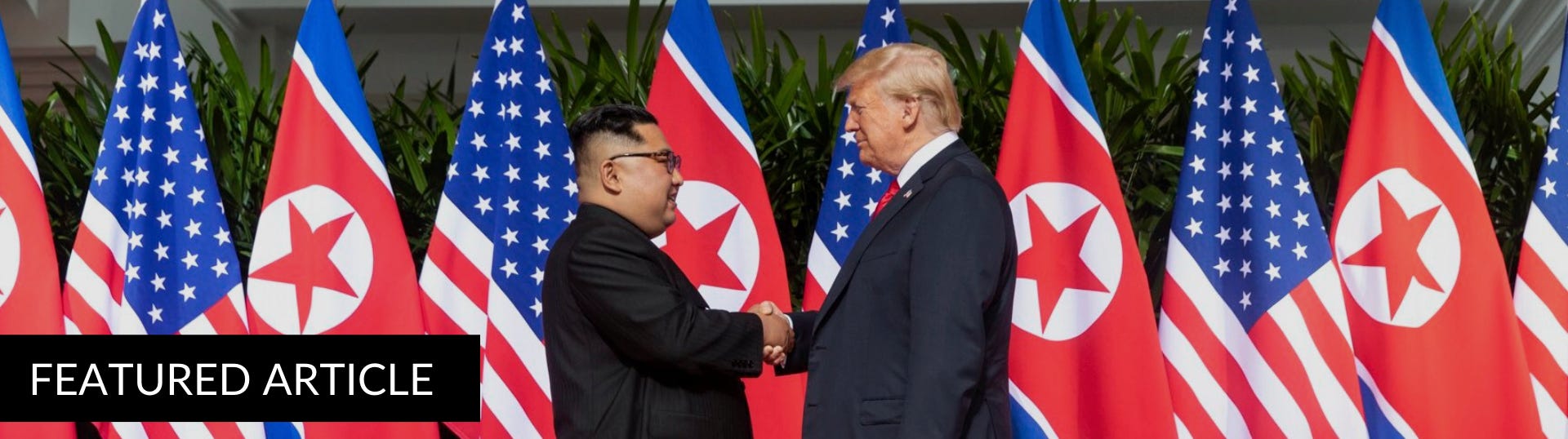
Following Kim Jong-un’s declaration that denuclearisation is “irreversible and permanent”, Washington faces a narrowing diplomatic pathway with Pyongyang. Hans Horan argues that North Korea remains open to dialogue — but only if the US abandons denuclearisation as a precondition. This creates an impasse: while Washington continues to prioritise complete denuclearisation, Pyongyang now treats its nuclear arsenal as non-negotiable, forcing US policymakers to reconsider the terms of engagement.
Horan outlines that insisting on denuclearisation upfront has rendered meaningful negotiations impossible under current conditions. Instead, past diplomatic efforts succeeded not because of coercion alone, but because they aligned with North Korea’s strategic incentives at specific moments. With those conditions no longer present, a rigid adherence to denuclearisation risks foreclosing dialogue altogether. This reflects a broader shift in which North Korea’s advancing capabilities and changing threat perceptions have reduced its willingness to trade nuclear concessions for economic or political incentives.
To reopen diplomatic space, Washington must adopt a more flexible, phased approach that prioritises engagement without immediately resolving the nuclear issue. This could involve lowering initial expectations, exploring interim arrangements, and creating conditions under which dialogue becomes strategically valuable for Pyongyang again. While such recalibration carries risks — including the perception of legitimising North Korea’s nuclear status — the alternative may be a diplomatic deadlock, in which the absence of engagement further entrenches the realities Washington seeks to change.
At 9DASHLINE, we are your Indo-Pacific experts. We provide sharp and timely analysis on the complex geopolitical landscape of a region brimming with economic and strategic opportunities. Our bespoke consulting solutions empower you to make informed decisions that navigate this dynamic environment.
We welcome your enquiry.
The Navigator is produced by:
Dr Hunter Marston, Daniel McIntyre, Luana Correia, Dr Manali Kumar, and David MacSweeney.
SUBSCRIBE NOW
HELP US BY SHARING — THANK YOU!
Comments
Nothing yet. Say the first thing.
Sign in to join the conversation.