
This is the third behavioral piece we have published in the last month. We think it is important to clarify why we are writing more about behaviour Vs usual company deep dives (those will return, our promise). The thoughts below won’t come as being related to each other but more like different aspects that we want to cover. We will use break between the different sections to guide our readers.
Over the last few years, as we have gone deeper into running Nine One Capital and as we have watched ourselves, our clients, and investors around us navigate different phases of the market, a simple conclusion has emerged. Stock selection matters, but it is not the biggest driver of long-term returns. Behavior is.
The best research note in the world cannot help an investor who sells at the bottom. The cheapest stock in the market cannot help someone who refuses to buy it because the chart is red. A concentrated portfolio can compound beautifully, but only if the owner of that portfolio stays invested through the drawdowns.
We have come to accept something that is obvious in retrospect. Our job is not only to find good businesses at good prices. Our job is also to help investors, including ourselves, survive the emotional cycle of owning those businesses. Over time, we have concluded that the behavioral layer contributes more to returns than any single stock pick ever will. The picks matter. The temperament around them matters more.
We will repeat this even at the cost of sounding repetitive, because it sits at the core of how we think about what we do. The goal of Nine One Capital is not to recommend the best return-generating stocks. The goal is to help our clients stay invested in those stocks long enough to actually make the money. Seeing a recommendation go up on the screen is not the same as making money from it. The gap between those two things is behavior. Closing that gap is the work we consider ourselves genuinely responsible for.
One more thing before we go further, and this one is personal. The thoughts we share in these behavioral pieces are not abstract. They are feelings we have experienced ourselves, repeatedly, over the years. Writing them down for our readers has given us a reason to go deeper into those feelings and become better observers of our own emotions. In a real way, writing these pieces has made us better investors (this only time will tell though :-)). The act of articulating what we are feeling has helped us understand and manage it.
That process has only been possible because of you. The readership, the affection, and the engagement we have received have inspired us to keep writing honestly, and that writing has, in turn, sharpened our own emotional discipline. So this is also a small thank you. To every reader who has followed our work, engaged with it, and pushed us to think harder. We are grateful.
With that said, let us get into it.
—
Since the beginning of 2026, the conversation was about bear markets. How to recognise them. How to position through them. How to survive them.
Today the conversation is different.
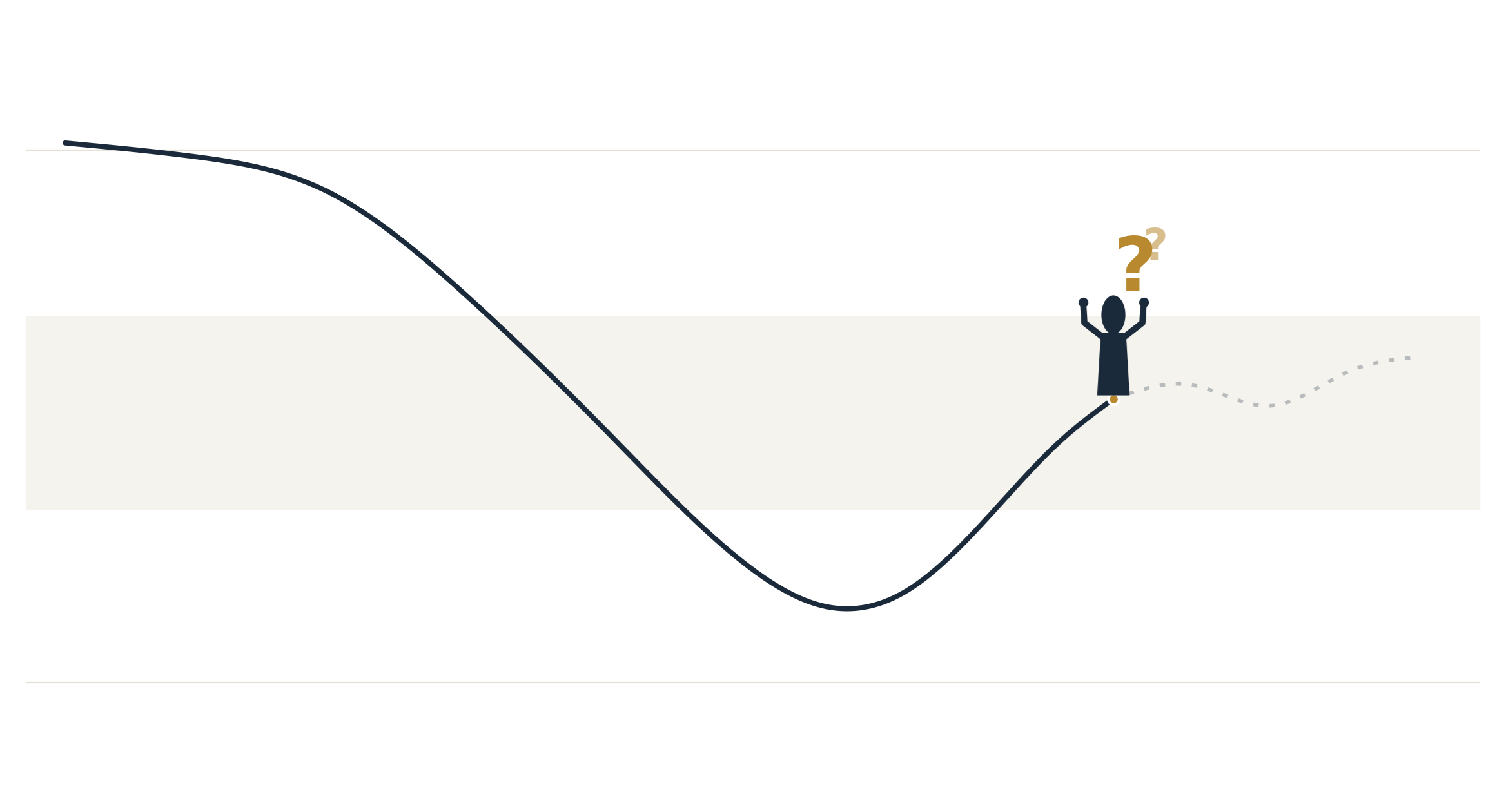
Indices have moved 20 percent off the lows. Many small and micro-cap names have moved further. But we are nowhere near fresh highs, and we are not making new lows either. The market is sitting in an uncomfortable middle, and nobody can tell you with any confidence whether the worst is behind or whether another leg of decline is waiting.
This is, in our experience, the hardest phase to invest in.
In a falling market, the decision is painful but clear. Prices are cheap, sentiment is dark, every instinct says wait. In a rising market, the decision is easy. Momentum carries everyone forward, cash feels foolish, and conviction feels cheap.
But this middle phase, where the bottom may or may not be in, where stocks have moved but not re-rated fully, where news is still mixed but no longer terrible, this is where most investors freeze and left confused on what to do.
When the market rallies 20-25% from the lows, investors tend to collapse into two positions. Either the bottom is in and I need to go all in, or the bottom is not in and I should stay in cash.
Both positions are wrong. Not because one of them will turn out to be incorrect. But because the thinking itself is flawed.
Market bottoms are confirmed only in hindsight, typically three to six months after they occur. By the time there is enough evidence to be certain, the evidence has already been priced in. The question “is the bottom in” is not answerable in real time. It is only answerable later.
If you require certainty before you act, you will always act late. And in small and micro-caps, acting late can cost you thirty to fifty percent of the move.
The correct question, therefore, is not whether the bottom has been made. The correct question is whether the business you are looking at is still reasonably priced relative to its own history and its own earnings power. That is a question you can actually answer today.
A small note to the reader before we go into this section. What follows is us writing our mind out as we experience this phase. The thoughts in this section may feel slightly disjointed in places because they are arriving as we write, not as polished conclusions. We are working through this in real time too. Apologies in advance, and bear with us.
We want to be careful here because we have enormous respect for Howard Marks, and what we are about to say could easily be misread as contradicting him. It is not. We want to build on him.
Marks’ pendulum framework is one of the cleanest mental models we have encountered. Markets swing between undervaluation and overvaluation. They spend very little time at the “happy medium” of fair value. The pendulum does not rest in the middle. It passes through it on the way to somewhere else.
We agree with that completely. The happy medium is not a resting place for markets.
The layer we want to add is this. Within that pendulum swing, not all points are equally brief. The extremes themselves are the narrowest windows of all. Extreme cheapness, the kind where stocks trade at 0.6 times book or 6 times earnings with decent underlying economics, closes faster than almost any other window in the market. Capital flows respond. Institutions start to accumulate. Liquidity returns. Sentiment stabilises. The window shuts.
The discomfort of buying during that window is the entry cost. If you could buy there without discomfort, everyone would, and the window would not exist.
Extreme expensiveness, at the other end, is similarly brief. The pendulum does not hang at euphoria for long before it starts reversing.
But between extreme cheapness and fair value, there is a zone we will call decent cheapness. Stocks below their long-term average multiples. Not at historic lows, not the once-a-decade bargain, but reasonably priced with reasonable visibility. In our experience, the pendulum travels through this zone more slowly than it travels through the extremes. Not because it stops. It does not. But because the distance is longer and the emotional acceleration is weaker. This is where most real investable decisions get made.
So our practical view is this. Extreme cheapness is not something you can wait around for. If you miss it, you usually miss it for a long time. Prices rarely revisit the same lows quickly, and the investor sitting in cash hoping for a second chance at the exact bottom is usually waiting for a train that has already left. But decent cheapness is often still available, even after a rally of 30 or 40 percent. The stock has moved. It may still be investable.
The operational question is not “has it gone up.” The operational question is “where is it relative to its historical valuation band.”
A stock that moved from 0.8 times book to 1.2 times book looks expensive if you anchor to the low. But if the long-term range is 0.8 to 2.5 and the long-term average is 1.8, the stock is still on the cheap side of normal. Still in that decent-cheap zone. Even after the rally.
Anchoring to the recent low is one of the most common behavioral errors we see. It feels like discipline. It is actually memory or being biased to recent lows.
—
At this point in the cycle, investors broadly fall into two groups. Their decisions are completely different, and they should not borrow each other’s framework.
At Nine One Capital, our own philosophy is to remain fully invested. We do not take cash calls. We do not believe we can consistently identify when the market will top, and we do not believe we can time our re-entry after a decline. Almost every instance we have seen of a sophisticated investor moving to heavy cash has ended with them deploying later at higher prices than where they exited, or worse, not deploying at all. Staying invested through drawdowns is not comfortable, but it is the approach we have found most consistent with long-term compounding in the small and micro-cap space we operate in.
So when we describe the investor sitting on cash below, we are describing a situation we observe, not one we practice. We are trying to help investors who find themselves in that position think about it more clearly. We are not endorsing the approach.
This investor is already participating in the recovery. Existing positions are moving up. Money has been made somewhere in the book. The problem, to the extent one exists, is optimisation.
This is the comfortable position. Not because it is easy, but because opportunity cost here is relative, not absolute. It is a switching decision, not a deployment decision. The bar for any new idea is simply whether it is better than what is already owned. The market having moved does not really hurt this investor. It just changes what they rotate into.
This is the harder position. And it is harder for behavioral reasons, not analytical ones.
The investor who held cash through the decline and did not deploy when opportunities were obvious now faces regret. Regret that the bottom was not bought. Fear that buying now means buying late. Anxiety that another leg down would prove the wait correct, or that a further rally will leave them behind entirely.
This creates paralysis. And paralysis is a decision too. It is just an invisible one.
Ideally, cash should have been deployed while markets were falling and opportunities were emerging (easier said than done). That is when risk-reward is best, and that is when the window of extreme cheapness is open. But in practice, most investors, including experienced ones, do the opposite. They hold cash through the decline out of fear, and feel pressure to deploy after the rally out of FOMO.
This is not a failure of intelligence. It is a feature of human wiring. We are most confident when prices have already moved, and most cautious when they have not. The professional work is not to eliminate this wiring. It is to build a process that partially corrects for it.
—
You will never catch the exact bottom. Not consistently. Not reliably. Not as a professional.
We have been doing this long enough to say that plainly. Every investor we respect has missed bottoms, bought early, bought late, averaged up, averaged down, and made peace with all of it. Precision is not the goal. Participation is.
What separates the long-term compounder from the chronic waiter is not timing accuracy. It is the willingness to act on imperfect information when the risk-reward is reasonable.
You do not invest when the bottom is confirmed. You invest when the business is reasonably priced relative to its earnings power.
Once prices have moved, you cannot invest based on the price that existed last month. You can only invest based on the price that exists today.
This sounds obvious. It is not. Most investors, when faced with a stock that has rallied, immediately start comparing the current price to the recent low. The mental anchor becomes that low. Every decision is then framed as “but it was cheaper a month ago.”
That is not an investable framework. That is a backward-looking regret frame dressed up as discipline.
The professional frame is different. You look at the chart in front of you. You compare the current price to long-term valuation bands, not to last month’s low. You assess whether earnings over the next two to three years can justify today’s price, not whether the price is higher than some arbitrary point in the past.
Regret is backward-looking. Risk-reward is forward-looking. They point in different directions. You can only invest with one of them.
__
For the investor still sitting on cash, we have found the following process helpful. It does not eliminate the discomfort. It contains it.
Accept that the bottom may already be behind you. Missing the bottom does not mean missing the opportunity.
Compare current valuation to long-term history, not to recent lows. Look at the stock’s 5 to 10 year range of P/E, P/B, and EV/EBITDA. Is it below the long-term average? Is it in the lower half of its historical band? That answer tells you something useful. “Has it gone up from the bottom” tells you nothing useful.
Assess whether earnings can support the valuation. A stock is not cheap just because it trades below its historical multiple. It is cheap if it trades below its historical multiple and its earnings are likely to hold or grow. Ask whether demand is stabilising, whether margins are protected, whether the balance sheet has strengthened, whether return on capital is trending in the right direction. Multiple expansion without earnings support is fragile. Multiple expansion with earnings support compounds.
Deploy in phases, not in one shot. We prefer a staged approach. An initial allocation when the thesis is clear and valuation is reasonable. A further allocation if the business delivers on the thesis. A final allocation during the inevitable bouts of volatility every recovery brings. This structure removes the pressure of calling the exact entry point. It replaces a single high-stakes decision with a series of smaller, more defensible ones.
Stop grading yourself on bottom-catching. The grade that matters is whether you built a good portfolio at reasonable valuations that compounds over the next three to five years. Whether you caught the lowest tick is irrelevant to that grade.
The bear market was a survival exercise. This phase is a decision exercise.
During the decline, the work was emotional. Holding on. Not selling quality at the wrong price. Not letting drawdowns turn into capitulation. The discipline was about doing less.
Now the work is different. The discipline is about acting in the face of ambiguity. Not waiting for certainty that will never arrive in time to be useful. Not anchoring to prices that no longer exist. Not mistaking regret for analysis.
You have already done the hard part. You survived the bear market. The task now is to allocate with process, not with emotion. To work forward from today’s prices, not backward from last month’s lows.
Markets move in cycles. Valuations move in ranges. Extreme cheapness is a temporary window, and it closes faster than most investors are emotionally ready for. Extreme expensiveness eventually corrects too.
You will not catch the bottom. You will not catch the top. What you can do is build a process that deploys capital when risk-reward is reasonable, and that holds through the cycles. That is the whole game.
The work we do at Nine One Capital is essentially what this post describes, applied every day. We research businesses in the sub 3,000 crore market cap universe, where institutional attention is structurally absent. If you would like to understand our research process in more depth or explore how our advisory services can support your investment journey, you can reach us at gaurav.a@nineonecapital.in or fill in the form here (link).
Comments
Nothing yet. Say the first thing.
Sign in to join the conversation.