
When Queensland reserve scrumhalf Kalani Thomas become the 995th Wallaby in the last Test Match of the year, against France last November, it properly kicked off months of pondering among Australian rugby fans as a very significant milestone loomed on the horizon.
Pushing nearly 130 years since the first ever Australian rugby representatives took to the field, Wallaby no.1000 was now very much in sight.
The just-completed July leg of the Nations Championship edged us ever closer. Brumbies lock Lachie Shaw won Cap no.996 against Ireland and Sydney, his ACT teammate and flyhalf Declan Meredith won Cap no.997 against France in Brisbane, and NSW lock Miles Amatosero became the most recent Wallaby, winning Cap no.998 in the big win over Italy in Perth.
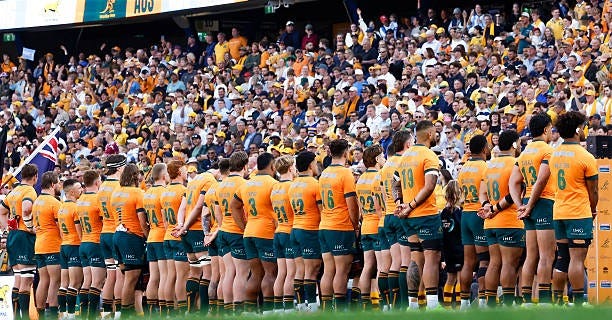
Two Tests against Japan are next on the list, and Les Kiss’s first Wallabies squad includes one uncapped player. And the question stands: could it happen during this Japan Series, or are we waiting for the Argentina tour and the rest of the not-Rugby Championship?
8/9 Rugby on Substack is a reader-supported publication. To receive every new post, make comments, access special Q&A sessions and support our work, consider becoming a paid subscriber.
Before we get to Cap no.1000, it’s probably worth a quick history lesson. The official Wallabies cap number lists were never kept from the start and were created well after the fact. And in fact, until around 2010 or 2011, caps were evidently still being handed out alphabetically, rather than numerical jersey number order. It does appear that bench players were at least bumped below starters in games from the 1970s onwards.
It’s why the official lists have Queensland prop Patrick Carew as Cap no.1, winger William Evans as Cap no.6, and New Zealand-born NSW flyhalf Peter Ward as Cap no.14. All were obviously earned in Australia’s first official Test Match, against the touring British Isles team (the precursor to what we now know as the British & Irish Lions) at the Sydney Cricket Ground in 1899.
It’s also worth remembering here that the then-International Rugby Board didn’t standardise player numbering until 1967, when the current system (1–15, with 1 being the loosehead prop and 15 being the fullback) was formally adopted - which means that back in 1899, Peter Ward may not have worn no.10 anyway.
Thankfully, the records have now been created and continued, and the major Wallabies milestone is now closer than ever.
Comments
Nothing yet. Say the first thing.
Sign in to join the conversation.