
Lately, I have been thinking about the John Wilson exhibit I saw at the Met when I was in New York earlier this month.
Witnessing Humanity: The Art of John Wilson is an incredible, comprehensive retrospective of the famed artist’s career, taking visitors from the painter’s early life through his major politically charged works.
Born in 1922 in Roxbury, Massachusetts, Wilson’s parents were British Guinean immigrants. With their strong support, he became highly educated in Fine Art, ultimately graduating from Tufts University before moving to Paris for his MFA fellowship. During his career, Wilson’s work took on many influences, like the Cubist teachings of Fernand Léger or the social realist themes present in José Clemente Orozco’s style. With those two components in mind, Wilson highlighted Black life, depicting Black folks in the armed forces, in divested neighborhoods, and amid racist unrest.
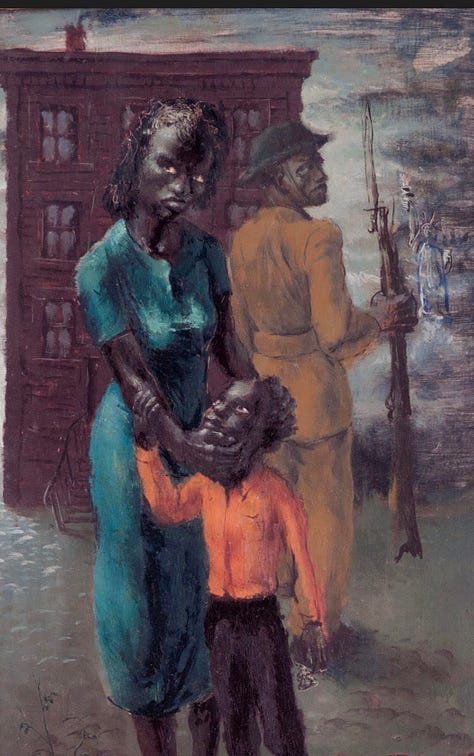
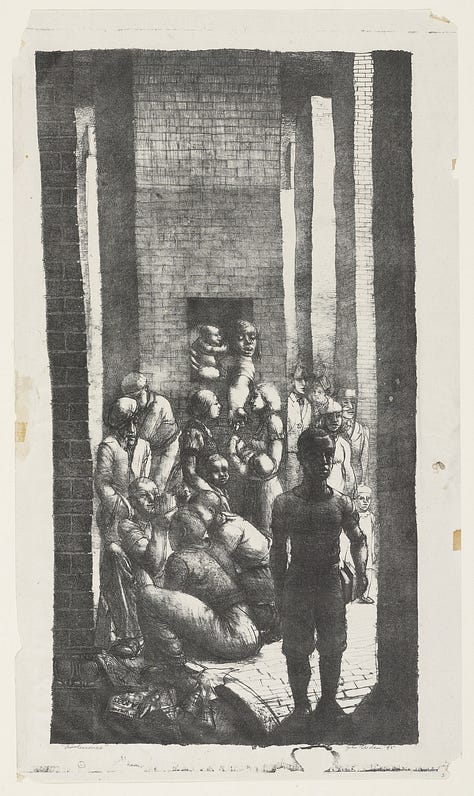
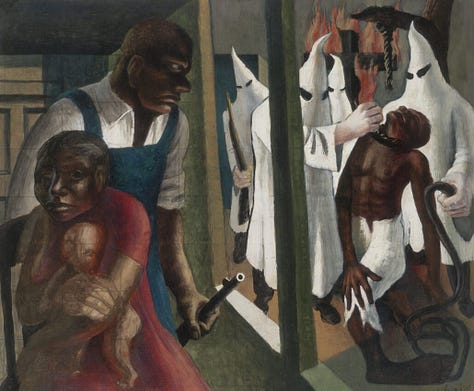
Wilson did not see his cross-cultural or cross-continental influences as a dilution of his Blackness or his perspective on Black existence and activity. Rather he saw Léger and Orozco not only as mentors worth heeding but also as unique tools that could further, deepen, and sharpen his perspective and his art. His works, therefore, take the aesthetics of rising artistic movements and visual political thought to fashion a potent voice that gathers strength from the multiplicities of his era and world to tell the story of a people’s singular strength.
So you’ll excuse my annoyance that upon Brigitte Bardot’s recent passing — she died at the age of 91 — that so many people squirmed themselves into knots to toe a fine line that was actually quite wide and obvious.
Comments
Nothing yet. Say the first thing.
Sign in to join the conversation.