
Your price isn't low because the market won't pay more.
It's low because you're not sure it'll work.
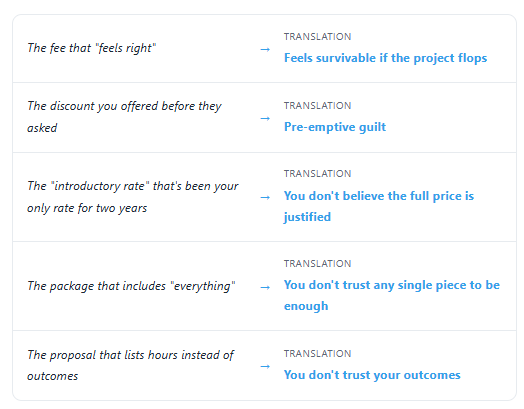
The discount is your hedge. You priced it to feel safe if you fail.
Your price is the most honest document in your business.
So you defend the discount.
You call it accessibility.
You call it building goodwill.
You call it being competitive.
You call it knowing your market.
You call it humility.
You take another call where you cave at the last minute. You agree to a “trial rate.” You scope it bigger to justify the price.
What you have is a price that telegraphs your insecurity to every serious buyer who reads it. They don’t think “what a great deal.” They think “this person doesn’t believe in their own work.”
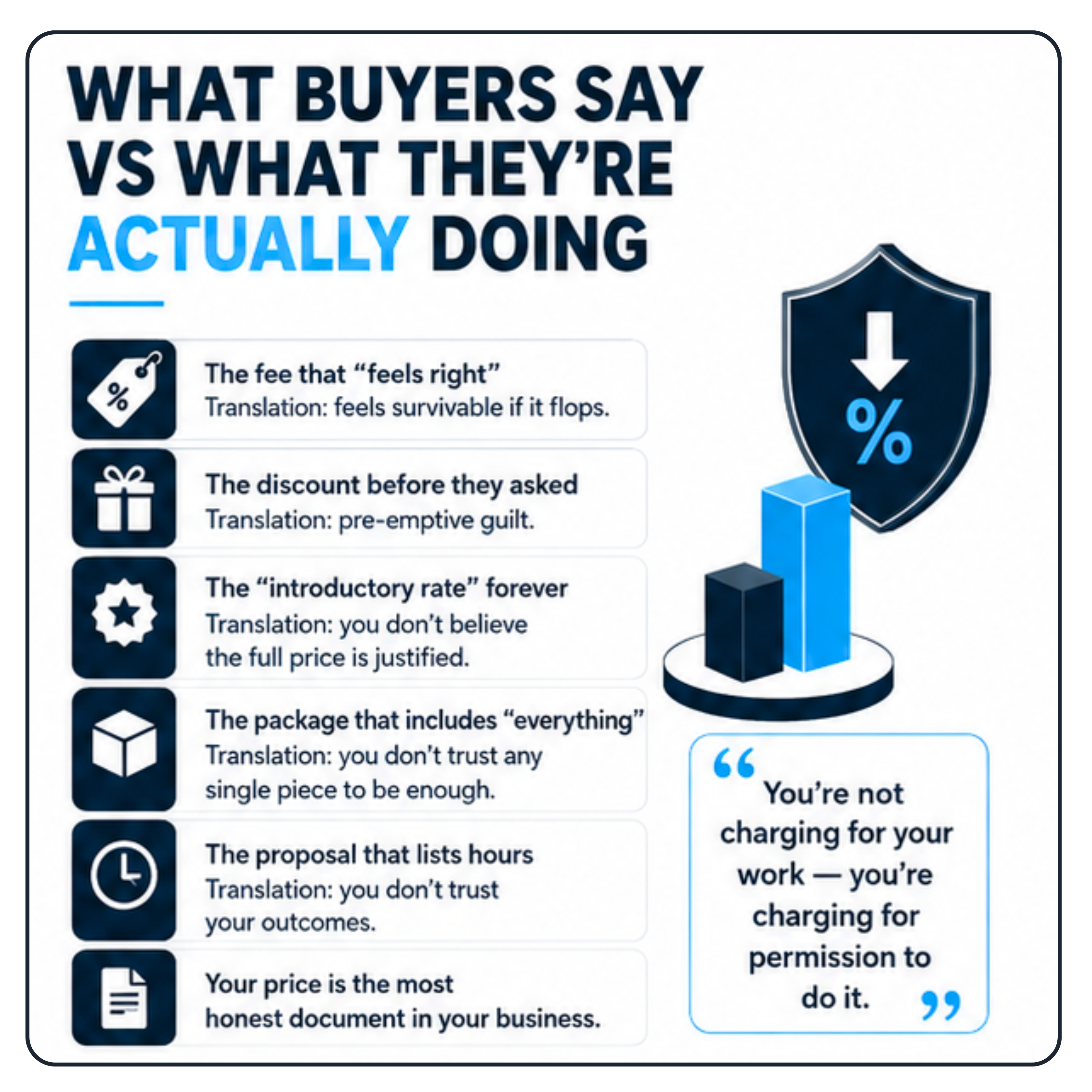
Are you actually charging for your work — or charging for permission to do it?
A founder prices for the outcome they’re confident they deliver. Someone unsure prices for the version of themselves that might mess it up.
Here is what under-pricing actually costs.
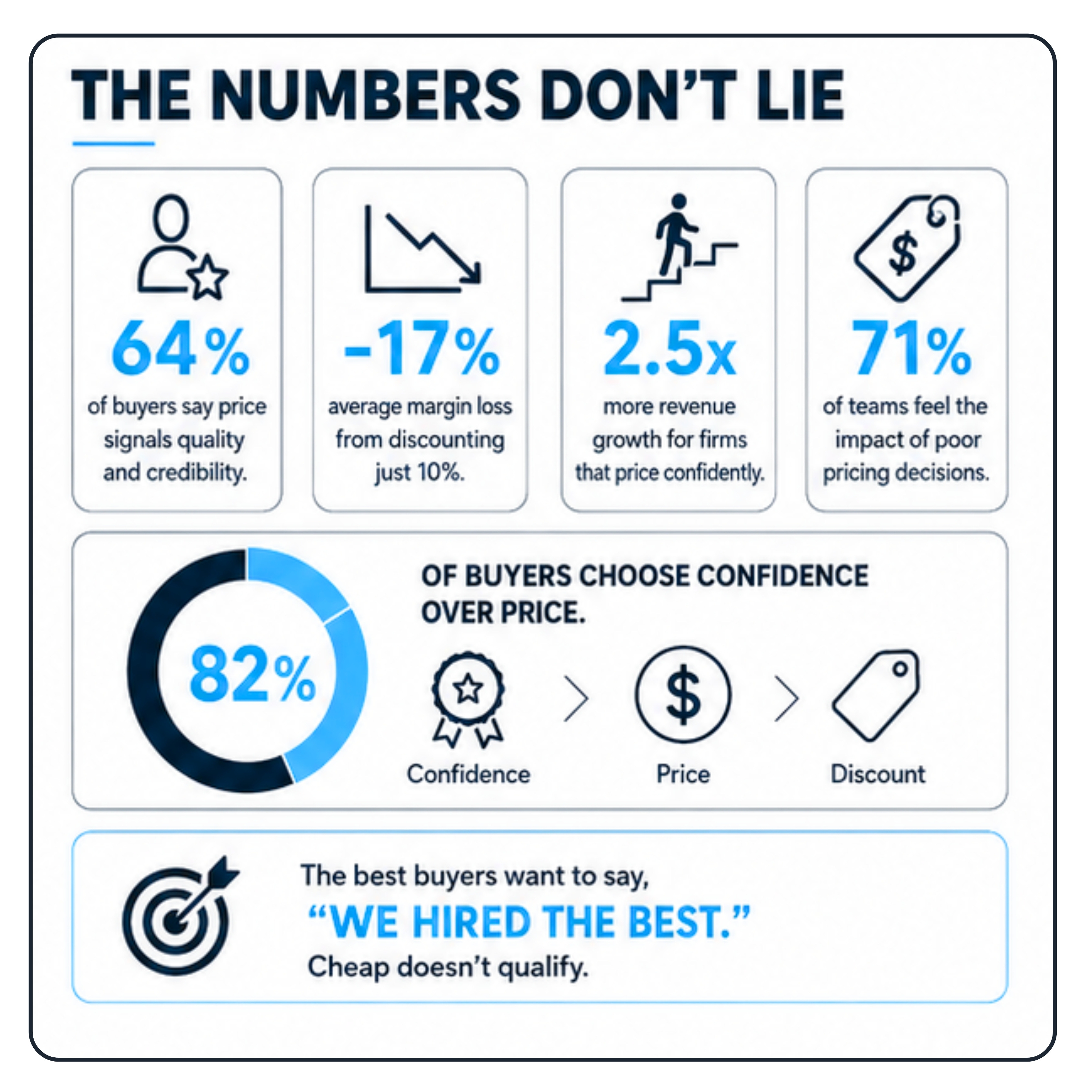
It costs you the buyers who use price as a signal. The serious ones look at your number and conclude you’re not for them. They want to be able to say “we hired the best.” Cheap doesn’t qualify.
It costs you margin. Every percentage point you discount is a percentage point you can’t reinvest in delivery, team, or product.
It costs you confidence. Every time you cave on price you train yourself that your work is negotiable.
It costs you the next year, because the price you charge today sets the ceiling on what you can charge next.
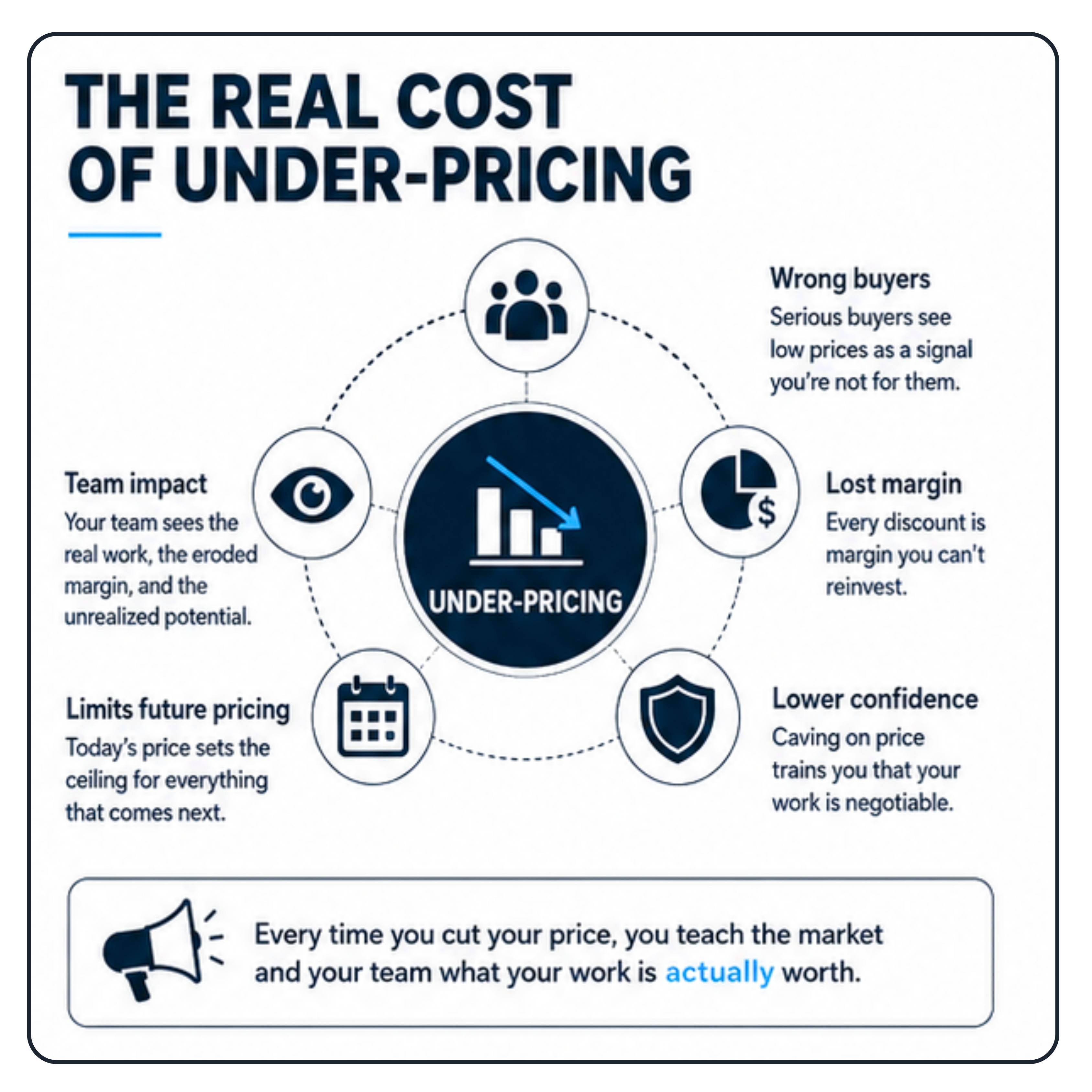
Your team already knows the pricing is wrong. They see what the work takes. They watch the discounts erode the margin and the bandwidth. They are not impressed by your accessibility. They are wondering whether you’re aware of what you actually deliver.
Every time you cut your price, you teach the market and your team what your work is actually worth.
SECTION 01
The standard.
The price reflects the outcome, not the hours.
If the outcome is real, the price is defended without apology.
You don’t justify it. You name it. They decide.
Discounts erode confidence — yours, the team’s, the market’s.
SECTION 02
The 24-hour fix.
Look at your current pricing. Write down the outcome it delivers — the actual change in the buyer’s business. Now pretend that outcome belonged to someone you respect. What would you advise them to charge? That number is closer to right than yours is.
Tomorrow, raise your price for the next prospect. Not the current clients. The next one. Quote it cleanly. No softening. No “this is normally…” Watch what happens.
If the next prospect doesn’t blink, the old price was the discount.
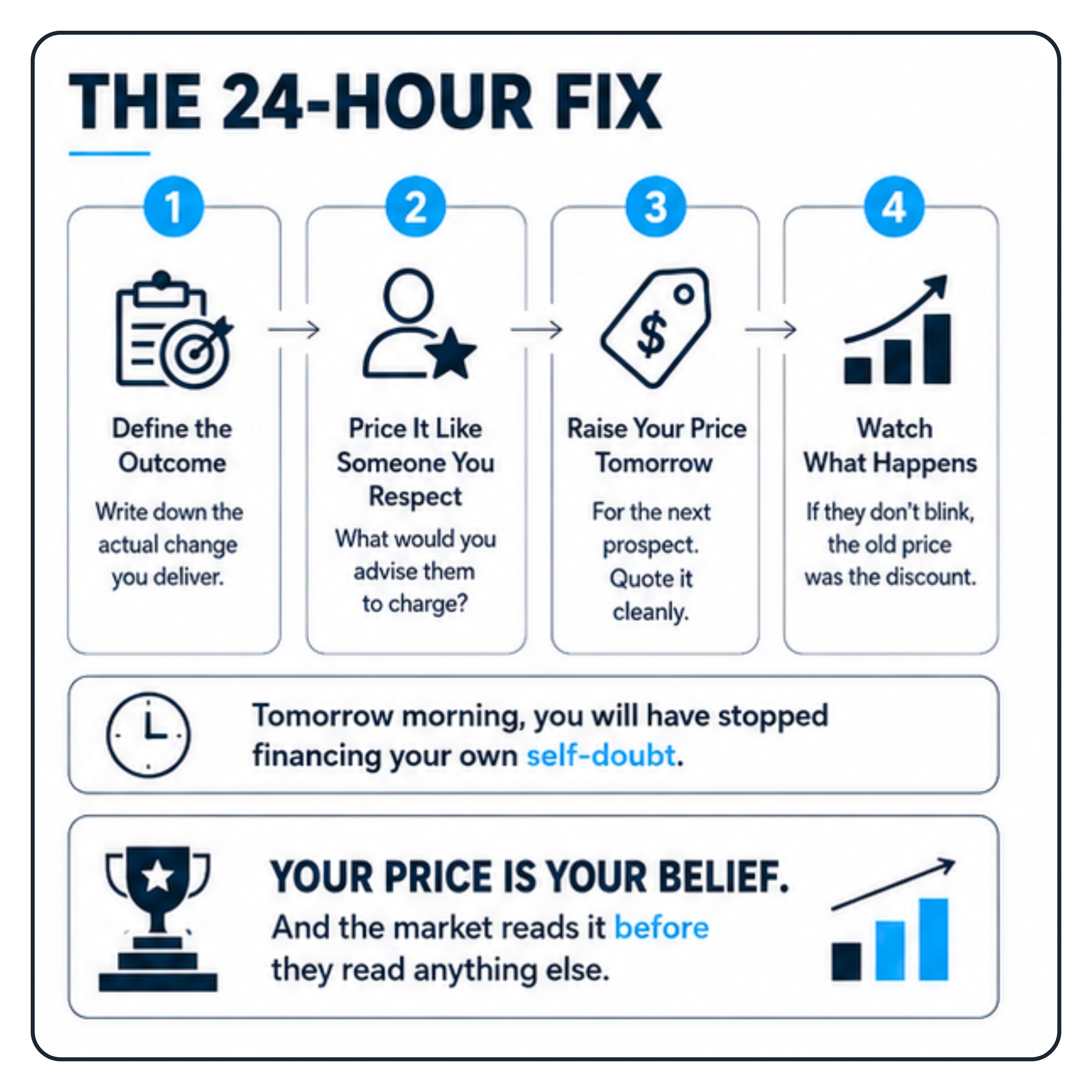
Tomorrow morning, you will have stopped financing your own self-doubt.
The founders who price with confidence inside 24 hours are the ones I’m writing for. The rest will keep cutting their fees and calling it strategy.
Your price is your belief.
And the market reads it before they read anything else.
“You already know the price is wrong. You knew it when you sent the proposal. The question isn't whether to raise it. The question is whether you're going to keep financing your own doubt, or whether tomorrow's prospect is going to meet the real number. One of those paths compounds. The other one doesn't.”

Comments
Nothing yet. Say the first thing.
Sign in to join the conversation.