
6G news and analysis for the week ending Friday, 26th June, 2026.
This past week highlighted how unevenly the foundations of 6G are being laid. The US FCC closed its AWS-3 spectrum auction with more than $3.5 billion in proceeds and analysis suggests US spectrum values are still rising even as they fall by roughly two-thirds elsewhere. The reason, as analyst Richard Haas sets out, is how thoroughly America has turned spectrum into a tradeable financial asset, complete with “spectrum landlords” leasing airwaves back to operators. Europe is watching, and its draft Digital Networks Act borrows the idea of indefinite licences, though cultural attitudes to public resources may stop it short.
The week’s second story is the continuing movement towards AI-native. China Mobile used Mobile World Congress Shanghai to recast “mobile” as computing and AI as much as communication, with the world’s largest operator betting its 6G direction on AI demand. In Japan, KDDI and partners NVIDIA, Keysight and Samsung began building a high-fidelity RAN digital twin, a simulated network in which to train and validate AI safely before deployment.
Meanwhile, the research-centre build-out continued. Ericsson and Telia launched a SEK 300 million pre-commercial 6G test centre in Sweden, and India’s C-DOT opened its fourth academic centre of excellence, this time with IIT Hyderabad. A UNIST chip that both switches and computes rounds out this week’s news, alongside four research papers spanning ISAC, agentic AI-RAN, greener model adaptation and a new real-world dataset for 6G world models.
US spectrum defies the global value slump

The FCC has closed its AWS-3 auction (Auction 113), raising more than $3.5 billion and returning 200 long-idle mid-band licences to commercial use. Bidding ran for 72 rounds from 2 June, with 17 qualified bidders. Analysis by New Street Research, cited by analyst Richard Haas in his excellent newsletter, put the result around 4% above what EchoStar/DISH paid for comparable spectrum in 2015. That matters because spectrum values elsewhere have fallen sharply, with NERA estimating a roughly two-thirds decline globally since the 2017 peak. FCC Chairman Brendan Carr said auctions were “finally back” after years on the sidelines and confirmed the Commission remains on track for an Upper C-band auction by July 2027.
What’s new: The genuine news is the divergence, not the headline figure. US licences are indefinite, tradeable, leaseable and technology neutral, which has created a market of “spectrum landlords” that buy spectrum and lease it to operators. Haas notes T-Mobile owns 718 licences in the 2.5 GHz band and rents a further 1,198 from third parties.
Why this matters: Spectrum is the foundation of every mobile generation and these auctions establish the holdings on which 6G will eventually run. The contrast with Europe is instructive. The European Commission’s draft Digital Networks Act proposes indefinite licences as the norm, a model openly inspired by the US, and we covered the RSPG’s 6G Spectrum Roadmap earlier this year. Haas is sceptical that Europe will follow all the way, citing different cultural attitudes towards public resources. The US is also routing up to $3.3 billion of the proceeds into its “rip and replace” programme, a reminder that the auction funds the removal of Chinese equipment as much as it funds the future.
Implications for 6G standards: Standards are technology neutral, but the financial structure of spectrum shapes which operators can afford early 6G airwaves and on what terms. A liquid US secondary market lets carriers assemble upper mid-band holdings ahead of the Upper C-band and 7 GHz processes that will feed FR3 deployments.
View source material to read more — FCC
View source material to read more — Richard Haas analysis
China Mobile places AI at 6G’s core

China Mobile used the 2026 Mobile World Congress Shanghai to set out a strategy that places artificial intelligence at the centre of its next-generation network plans, pledging to steer 6G research through the demands of AI. Chairman Chen Zhongyue said the operator wants to redefine “mobile” from mobile communication to also mean mobile computing and mobile AI. The account was published by China Daily, a state-owned outlet, so be mindful of the framing. Chen said: “The AI revolution is reshaping production and daily life, offering operators unprecedented space for growth and deeper service capabilities.” On infrastructure, the company is advancing 5G-Advanced, 10-gigabit optical and integrated space-ground networks, while shaping 6G to meet AI workloads in industrial automation, telemedicine and the low-altitude economy.
What’s new: China Mobile detailed two platforms underpinning the strategy. MobileClaw is an agent framework meant to move AI “beyond conversation to action”, and MoMA is a model platform hosting more than 300 AI models in what it calls a “token supermarket”. The operator is also building a unified computing network with an edge-to-core hierarchy for model training and agent deployment.
Why this matters: China Mobile is the world’s largest operator by subscribers and one of the most prolific 3GPP contributors, so its strategic direction carries weight in the standards process. The “communication to computing to AI” framing is consistent with its 6G Workshop submission and the task-driven AI-native architecture paper we covered in April, rather than a fresh departure. It reflects a wider operator consensus that 6G must earn its return through compute and AI services, not connectivity alone, given 5G’s disappointing revenue record. The emphasis on integrated space-ground networks and the low-altitude economy also aligns with China’s broader NTN ambitions. As ever with a flagship keynote, the strategy is clearer than the evidence that it will deliver.
Implications for 6G standards: An AI-native, compute-centric agenda from China’s largest carrier reinforces the direction already visible in Release 20 study items on AI/ML for RAN and core. Chinese contributions tend to convert such positioning into concrete normative proposals, so this signals the shape of Release 21 inputs to come.
View source material to read more
KDDI builds a RAN digital twin for 6G
KDDI and KDDI Research, with NVIDIA, Keysight Technologies and Samsung Research America, have launched a collaboration to build a high-fidelity RAN digital twin. This is a virtual replica of a live radio access network, used to train and validate AI before deployment. The partners aim to deliver a scalability prototype by the end of March 2028, then extend and validate it on KDDI’s commercial network by the end of FY2030. KDDI already runs cooperating AI agents for base-station area optimisation across its commercial network, and frames the twin as the safe environment in which to train such systems at scale. Soma Velayutham, VP of Telecoms and AI at NVIDIA, repeated the company’s now-familiar line that “6G will be born in simulation”, describing the platform as an “AI-RAN gym”.
What’s new: Two use cases anchor the work: a training and evaluation platform for AI network optimisation, and a field-trial platform for new AI-based RAN features, including the “AI air interface” in which AI predicts and assists RAN processes. The twin runs on NVIDIA’s Aerial Omniverse Digital Twin, with Keysight providing user-equipment emulation and Samsung contributing vRAN. KDDI Research is developing the radio-propagation prediction that gives the twin its fidelity.
Why this matters: AI-native networks need vast training data that cannot be gathered from networks which do not yet exist. Digital twins answer that, which is why they ranked among the top requests at the 3GPP 6G Workshop. The concept is not new this week. Nokia launched a comparable twin on the same NVIDIA platform in February, and the “born in simulation” line is a recurring NVIDIA talking point. What distinguishes this effort is its operator-led shape and a named commercial validation path on KDDI’s own network. The multi-vendor line-up, pairing Samsung vRAN with Keysight emulation, also shows how AI-RAN validation is consolidating around NVIDIA’s compute platform.
Implications for 6G standards: Physically accurate simulation is becoming the proving ground for the AI models that 6G operations will depend on, and for validating performance claims before standards-relevant trials. A live-network validation milestone in 2030 would generate exactly the deployment evidence that Release 21 work needs.
View source material to read more
Ericsson leads Sweden’s pre-commercial 6G test centre
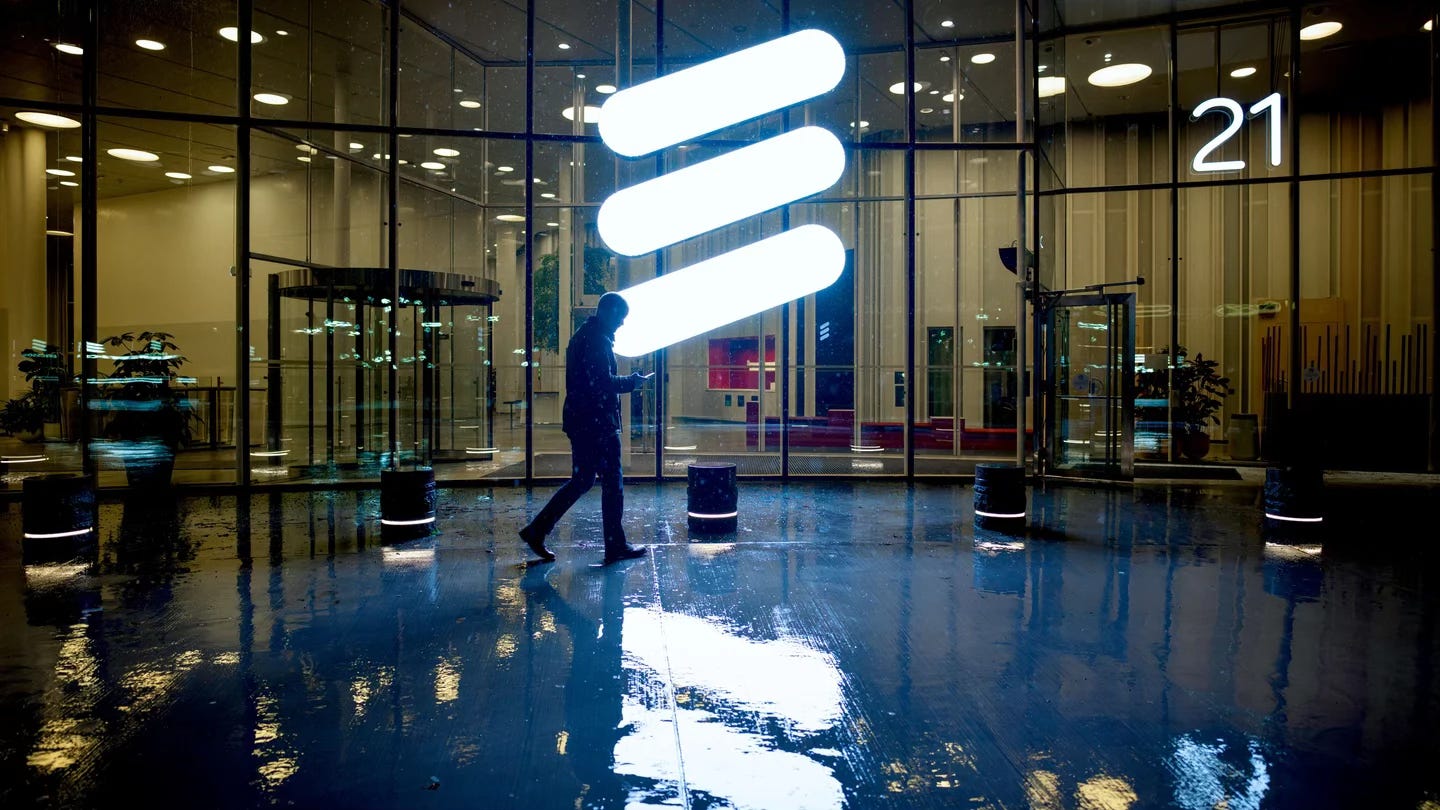
Ericsson, Telia and partners have launched Digital Arena Sweden, a national 5G, 6G and AI test centre backed by more than SEK 300 million. Supported by the Swedish innovation agency Vinnova, the initiative also brings in RISE Research Institutes of Sweden and its AstaZero subsidiary, Future by Lund and others. Ericsson is responsible for a pre-commercial 6G test environment built with Lund University and KTH Royal Institute of Technology. Erik Ekudden, CTO at Ericsson, described the aim as “one of the world’s first test environments for the combination of 5G, 6G and AI, several years before the technology becomes commercial”. The centre is intended to serve sectors from mining and transport to defence and medtech, with insights feeding the global 6G standardisation process.
What’s new: The named commitment and funding provides substance to Ericsson’s Swedish 6G testbed, which until now appeared mainly as a destination for partner access, including the Telstra exchange we covered in May. Digital Arena Sweden builds on the Telia-Ericsson NorthStar 5G innovation programme and adds a shared portal and common testing framework.
Why this matters: National test environments are becoming a competitive instrument, as governments seek to anchor 6G research and the supply chains around it. Ericsson is explicit that this is pre-commercial and years ahead of deployment, a welcome contrast to the premature commercialisation language heard elsewhere. The defence and sovereignty framing, echoed by Telia, highlights the entanglement of 6G with European security policy. Sweden’s existing strengths in radio, and the involvement of Lund and KTH, give the centre real research weight.
Implications for 6G standards: Trial evidence from a multi-sector, pre-commercial environment can feed directly into 3GPP contributions on use cases and deployment scenarios. Ericsson’s standards influence means results here have a credible route into Release 21 work.
View source material to read more
C-DOT and IIT Hyderabad open 6G research centre
India’s Centre for Development of Telematics (C-DOT), the R&D arm of the Department of Telecommunications, has signed an MoU with IIT Hyderabad to establish a Centre of Excellence in Advanced Communication Technologies. The centre will pursue 6G, AI-enabled networks, cybersecurity and quantum communications, with named work on very large-scale MIMO, integrated sensing and communication, quantum key distribution and post-quantum cryptography. It is the fourth such centre C-DOT has established, after IIT Kanpur, IIT Gandhinagar and IIT Roorkee. The initiative is framed around India’s Viksit Bharat and Atmanirbhar Bharat self-reliance goals. C-DOT CEO Dr Rajkumar Upadhyay used the launch to highlight the Bharat 6G Vision and India’s standards ambitions.
What’s new: The centre extends C-DOT’s academic network and builds on its earlier work with WiSig Networks, an IIT Hyderabad startup, on disaggregated 5G Open RAN. Its scope deliberately spans 6G, AI, security and quantum rather than a single technology.
Why this matters: India continues to build the institutional scaffolding for a larger role in 6G, and its TSDSI is a 3GPP Organisational Partner. As we have noted before, this is institution-building rather than a deployment milestone, and the announcement carries the now-familiar self-reliance rhetoric. The breadth of scope is both a strength and a risk, since covering 6G, quantum and post-quantum cryptography in one centre is ambitious for a single MoU. Set against persistent challenges, including uneven 5G rollout and lower R&D spend than leading nations, the value will lie in whether the centre produces standards-relevant contributions rather than announcements.
Implications for 6G standards: Work on very large-scale MIMO, ISAC and post-quantum security maps onto live 3GPP study areas, giving India potential contribution pathways. Sustained output, not the MoU itself, will determine any influence on Release 21.
View source material to read more
UNIST chip merges RF switching and compute
A team at South Korea’s UNIST, led by Professor Kim Myung-soo, has built a memristor device that works as both a millimetre-wave RF switch and in-memory computing hardware on a single platform. Made by thermally oxidising the two-dimensional semiconductor molybdenum disulfide, the device is non-volatile, holding its state with no standby power. The reported switching energy is about 140 picojoules, with operating power under 1 milliwatt, and switching verified to 67 GHz. It comes from the same UNIST lab behind the flexible polymer RF switch we covered in January, though the device and its aim differ. The work was reported by the Seoul Economic Daily.
What’s new: The new device uses a different material system and adds a capability the earlier one lacked. It computes as well as switches, folding signal processing into the switch itself and removing the separate conversion and data-movement steps that consume power.
Why this matters: Power and area constraints are acute for satellite and edge 6G hardware, where solar budgets and physical space are limited. A non-volatile switch that draws no standby power and performs in-memory computation addresses both at once, at least in the lab. The claimed advantages over phase-change memory and MEMS alternatives are notable but, as a single research result, unproven at production scale. Component research like this rarely reaches commercial maturity quickly, as the long road from concept to deployment for many radio technologies shows. Even so, the integration of switching and compute is a genuinely interesting direction for energy-efficient 6G signal processing.
Implications for 6G standards: Component advances do not change specifications directly, but the feasibility of ultra-low-power, compute-capable RF hardware shapes what 6G can realistically support in space-based and edge deployments. In-memory processing aligns with the broader push to cut the energy cost of AI in the radio.
View source material to read more
Selected research papers published this week
Event-level sensing to deepen 6G ISAC
This paper argues that integrated sensing and communication must move beyond “target-level” sensing, which captures fragmented snapshots, towards “event-level” sensing that models continuous-time states to recognise and predict intent and behaviour. It reviews enabling techniques across waveform design, target tracking and event recognition, focused on connected vehicles and the low-altitude economy.
Why this Matters: ISAC is one of the defining new capabilities proposed for 6G and features in nearly every major 3GPP 6G Workshop submission. Pushing from detecting objects to interpreting behaviour is what would let networks support proactive functions such as collision avoidance and drone management, though the sensing accuracy and processing demands remain considerable.
View source material to read more
Agentic AI to manage RAN energy
Researchers propose an agentic, AI-native RAN architecture that bridges O-RAN’s structured control with the unified vision of AI-RAN. Using semantic intent abstraction and large language model coordination, the framework aims to orchestrate performance, latency and energy across competing workloads, resolving conflicts that current policy-driven controllers handle poorly.
Why this Matters: Denser, AI-heavy 6G RANs are expected to consume significantly more energy, and existing O-RAN controllers are largely policy-driven rather than adaptive. An agent-based approach to energy-aware orchestration is timely, but LLM-driven control in the RAN raises its own questions of latency, predictability and cost that the paper acknowledges remain open.
View source material to read more
When does domain adaptation turn green?
This study asks whether adapting AI models to shifting conditions in 6G networks saves energy or costs it. It compares unsupervised domain adaptation, which avoids relabelling data, against retraining from scratch, and proposes a way to find the minimum number of target domains at which adaptation becomes the more energy-efficient choice.
Why this Matters: Data-driven network models degrade as conditions drift, and the usual fix, retraining, is energy-intensive and label-hungry. Framing adaptation as an energy and labelling trade-off is a practical contribution. It gives operators a basis for deciding when continual adaptation is genuinely the greener option, rather than assuming it.
View source material to read more
Real-world dataset for 6G “world models”
WiWorld-RealData is a real-world, multi-band, multi-modal dataset for training 6G “wireless world models”, which jointly learn physical environments and channel behaviour. It pairs measured channel responses at 3.7 GHz and 6.775 GHz with camera images, LiDAR point clouds, mmWave radar and GNSS trajectories along outdoor routes, totalling more than 10 terabytes. A path-loss prediction case study reached a mean absolute error of about 2 dB.
Why this Matters: AI-native 6G depends on models that can reason about radio propagation, and those models need aligned real-world data that has so far been scarce. A measured, multi-modal dataset with environment-to-channel correspondence supports digital-twin and world-model research directly, complementing the simulation-led work seen elsewhere this week, such as the KDDI twin.
View source material to read more
Thanks for reading 6G Futures! Subscribe for free to receive new posts and support my work.
Comments
Nothing yet. Say the first thing.
Sign in to join the conversation.