
US jobs data weaker than expected; Fed hike bets fall and S&P 500 hits record; Eyes now on US CPI this week; China's inflation slows; ANZ's Sharon Zollner on pick-up in NZ card spending

US stocks are buoyed by a weak labour market because that means the Fed is less likely to hike rates. There’s new uncertainty over the opening of the Strait of Hormuz. China’s inflation cools.
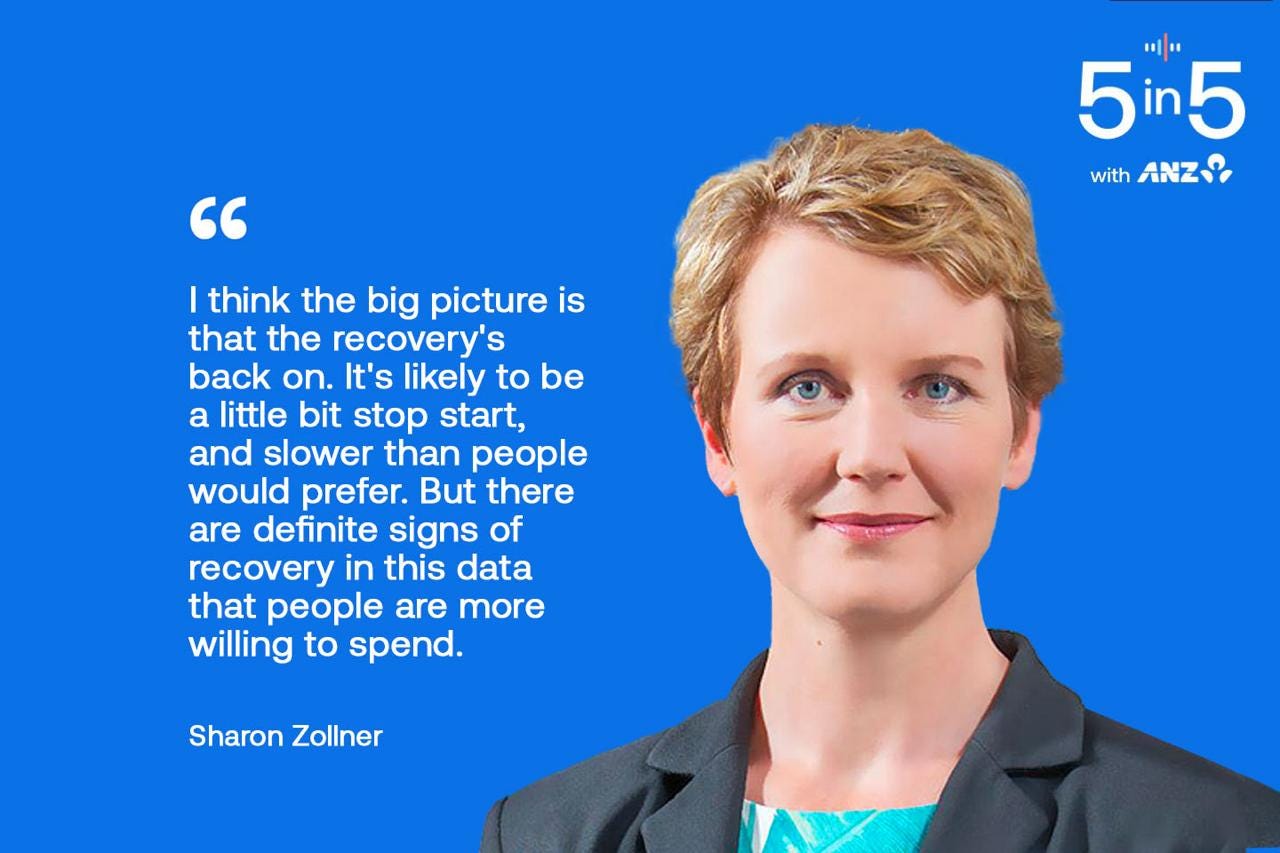
In our deep-dive interview, ANZ New Zealand Chief Economist Sharon Zollner says ANZ’s latest card spending data for July shows Kiwis are getting out and spending more.
5 things to know in 5 minutes:
US stocks closed at record highs on Friday as traders lowered bets that the Fed would raise interest rates this year. That’s because the US job market was weaker in July and in previous months than forecast. Non-farm payrolls fell 23,000 in the month against the 80,000 rise expected. While the unemployment rate fell slightly to 4.1%, ANZ Economist Henry Russell says that was due to a shrinking labour force.
Henry says revisions to the previous two months subtracted 103,000 jobs from previous estimates.
Attention now turns to US CPI inflation data this week. ANZ Group Chief Economist Richard Yetsenga says ANZ Research is expecting headline CPI rose 0.1% and core inflation rose 0.2%, with data indicating peak pricing pressures have passed.
China’s consumer and producer price inflation growth both eased in July due to lower oil prices, says ANZ Economist Vicky Xiao Zhou. The CPI was up 0.5% from a year ago, down on the 1% seen in June. The PPI was up 3.5%, down on June’s 4.1%.
China’s trade remained resilient in July as both exports and imports recorded double digit percentage growth from a year ago. Vicky says the recent tech sell-off hasn’t shaken demand for AI-related hardware.
Cheers,
Alex.
PS: Catch you tomorrow with a preview of the RBA’s rate decision. Also, Bernard is on leave now until early September.
Comments
Nothing yet. Say the first thing.
Sign in to join the conversation.