
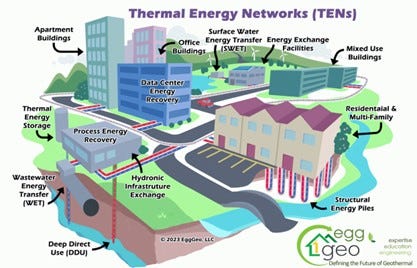
Thermal Energy Networks (TENs) are systems that provide heating and cooling to buildings through a network of underground water pipes, facilitating the exchange of heat between buildings and various energy sources. These sources can include geothermal energy, wastewater systems, and bodies of water like lakes and rivers. TENs can employ technologies like SHARC’s to make this process more efficient and sustainable versus traditional heating systems like gas furnaces.
Are you new to the SHARC story? Read our introductory post here
How TENs Work:
TENs can utilize several methods but the most efficient is through the use of ambient temperature water loops to transfer thermal energy. This design allows for the reuse and redistribution of thermal energy within the network . For instance, systems in Boise and Denver leverage geothermal and sewer heat recovery systems to provide sustainable heating and cooling solutions.
Efficiency Enhancements:
The efficiency of TENs are significantly boosted by technologies such as heat pumps or SHARC’s systems, which are crucial for maximizing the performance of these networks. The integration of storage solutions also enhances efficiency by allowing excess heat to be stored and used later, smoothing out the demand for energy and reducing reliance on peak electrical grid times.
SHARC’s leləm̓ Village
SHARC has installed a great example of a TENs network in leləm̓ Village on the campus of UBC . The leləm̓ Village is a 21.44-acre masterplanned community owned by Musqueam Capital Corporation, an Indigenously owned business. The development is situated in the University Endowment Lands, located in the old-growth forests of Pacific Spirit Park on the western edge of the City of Vancouver.
For more information on leləm̓ Village refer to our previous post here:
List of Thermal Energy Network Loops in North America

Adoption and Benefits:
Globally, various geographies are exploring and adopting TENs, with active systems in places like New York, Massachusetts, Minnesota, and Colorado, where legislation supports the development of these networks. The benefits of adopting TENs range from reduced greenhouse gas emissions and improved public health due to better air quality to cost savings on energy bills.
Challenges and Future Potential:
While the adoption of TENs is growing, challenges remain in terms of scaling up the infrastructure and managing upfront costs. However, with ongoing technological advancements like those provided by SHARC, and increasing legislative support, TENs are positioned as a key solution in the transition towards sustainable urban energy systems.
TENs represent a significant step forward in building decarbonization, offering a replicable model for communities worldwide to reduce their carbon footprint and enhance their resilience against climate change.
Comments
Nothing yet. Say the first thing.
Sign in to join the conversation.