
For as long as I can remember, I’ve been quietly obsessed with the hidden margins of history, specifically the ancient, apocryphal texts that the cult of religion tried so hard to bury. Having been raised in a strictly Orthodox household, Sunday mass was never a choice, and for eight years, I served as an altar boy at the centre of church ritual. But around the age of 16, something shifted. The certainty eroded, the ideology felt fundamentally off, and I walked away to begin asking the questions I was never allowed to ask.
Breaking away opened the floodgates. I began diving into non-canonical Gnostic works - including the Gospel of Mary and the Book of Enoch - realising just how much political gatekeeping and institutional fear had shaped the narrative we were handed. I recently wrote an in-depth piece exploring this exact pattern - the deliberate, patriarchal effort to erase the Gospel of Mary and dismantle the authority of the sacred feminine. Investigating that history made one thing painfully clear: those in power actively sanitise the past to preserve centralised control.
Which brings us to 1885, and one of the most compelling historical riddles of narrative control: the strange, coded world of a provincial priest in southern France.
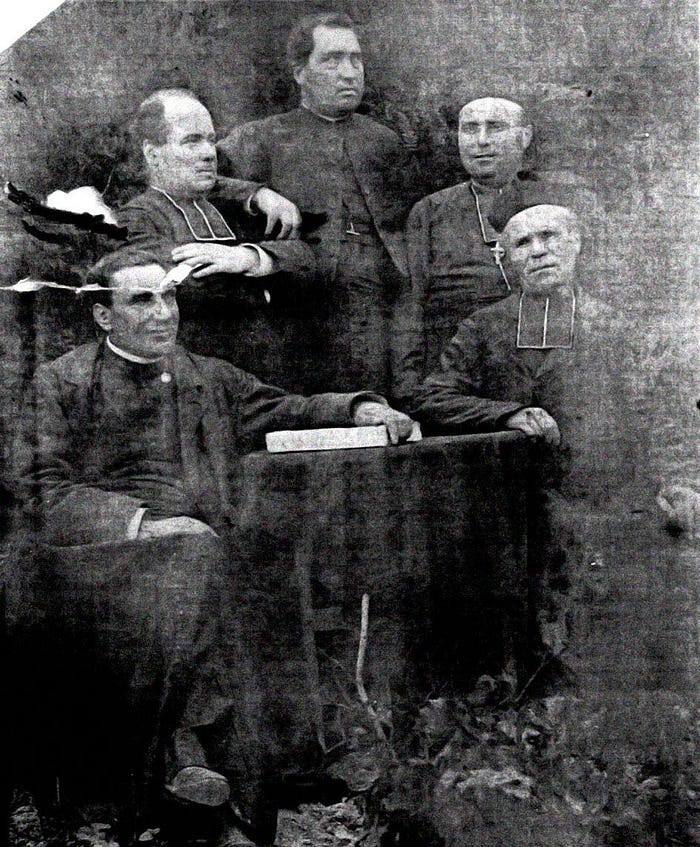
The story of Bérenger Saunière, a Catholic priest assigned to the remote hilltop village of Rennes-le-Château in southern France, has become a nexus of intrigue, speculation, and historical contention. What began as a relatively obscure tale of a provincial cleric’s sudden and inexplicable wealth has spiralled into a wide-ranging debate involving suppressed Gospels, royal bloodlines, secret societies, and coded art.
The question is not merely whether Saunière discovered something of value, but whether that discovery was leveraged to manipulate, conceal, or provoke the guardians of religious and historical orthodoxy.
Before we dive in, some historical contexts are worth considering before evaluating the implications of Saunière’s presence in the village.
Appointed to Rennes-le-Château in 1885, Saunière inherited a dilapidated church dedicated to Mary Magdalene. The building, like much of the surrounding region, bore the architectural scars of earlier centuries, most notably the Visigoths and the Cathars, both of whom played pivotal roles in the region’s layered history of religious dissent. In 1891, Saunière began renovations on the church, funded at first by modest parish donations and personal savings. But shortly thereafter, his financial circumstances changed. And they changed dramatically. He embarked on a lavish reconstruction of the church and presbytery, commissioned new artworks, landscaped elaborate gardens, and constructed the Villa Bethania and the Tour Magdala, each project far beyond the means of a rural priest.
The account that has drawn the most attention begins with the claim that, during the early renovations, Saunière discovered one or more parchments hidden within a hollow pillar supporting the church altar, allegedly Visigothic in origin. According to reports circulated decades later, these documents contained genealogical or esoteric information linked to either a lost royal bloodline or a suppressed theological truth. Unfortunately, no official record of the parchments exists in ecclesiastical archives (the Vatican perhaps?). Most of the documentation comes from secondhand testimony and books published long after Saunière’s death.
One of the earliest popular accounts was published in 1967 by Gérard de Sède in his book “L’Or de Rennes,” which presents Saunière not merely as a priest but as a possible discoverer of ancient secrets with the potential to challenge Church authority. De Sède’s narrative draws heavily from material provided by Pierre Plantard and Philippe de Chérisey, whose documents, deposited in the Bibliothèque nationale de France, speak of the “Prieuré de Sion” (Priory of Sion), a shadowy organisation claimed to have guarded the bloodline of Jesus and Mary Magdalene for centuries.
Plantard’s documents list a succession of “Grand Masters” of the Priory, including Leonardo da Vinci, Isaac Newton, and Victor Hugo. Although it has since been proven that some of these documents were forged, their influence can’t be dismissed. The forgeries themselves introduced a storyline that merged cryptic symbols, apocryphal Gospels, and suppressed dynastic claims. The fabrication didn’t extinguish belief in the theory; rather, it ignited a broader cultural phenomenon, culminating in works like “Holy Blood, Holy Grail” (1982) by Henry Lincoln, Michael Baigent, and Richard Leigh, which expanded on de Sède’s material with considerable scholarly gloss and a more ambitious narrative.
The core thesis of “Holy Blood, Holy Grail” is that Jesus survived the crucifixion, married Mary Magdalene, and fathered children whose descendants intermarried with the Merovingian line of Frankish kings. The survival of this line was allegedly protected by the Priory of Sion, which maintained a hidden influence over European history. The book draws connections to the Templars, Cathars, and Rosicrucians, suggesting that religious and chivalric orders became vessels for preserving this sacred lineage.
Complementing this view, Margaret Starbird’s “The Woman with the Alabaster Jar” (1993) argues that Mary Magdalene represents not only the consort of Jesus but also the lost feminine principle in Christian theology. Her research, though speculative, attempts to rehabilitate Magdalene from her alleged and unsubstantiated role in history as repentant prostitute to that of wisdom bearer, priestess, and mother of a royal bloodline.
Mary Magdalene became widely identified as a repentant prostitute largely due to Pope Gregory I’s 6th-century sermon, which conflated her with other biblical figures - a characterisation the Vatican has since officially repudiated, clarifying that there’s no scriptural basis for labelling her a prostitute.
Laurence Gardner, in his book “Bloodline of the Holy Grail” (1996), echoes this sentiment, suggesting that the Roman Church actively suppressed both the bloodline and the theological implications of Magdalene’s authority. If the Grail were not a cup, but instead a womb - the vessel of divine inheritance - then the entire metaphysical foundation of orthodox Christianity would be challenged.
This alternative interpretation of the Grail, as “Sangreal,” or royal blood, recurs in “The Messianic Legacy” (1986) and “The Temple and the Lodge” (1989), both of which attempt to tie these ideas to the broader evolution of secret societies and esoteric thought. Yet none of these sources offer direct, verifiable evidence. They rely instead on patterns, symbols, linguistic ambiguities, and the cumulative weight of coincidence.
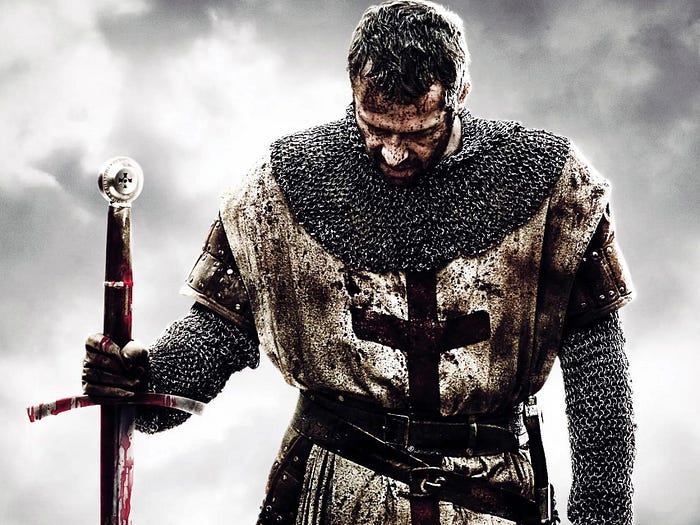
One of the more controversial associations in this web of theories involves the Knights Templar. Following their brutal dissolution in 1307, the Templars were accused of heresy, idol worship, and hidden rites. Some researchers suggest that the Templars excavated key texts and relics during their time at the Temple Mount in Jerusalem, which may have included Gnostic Gospels or family records related to Jesus and Magdalene. The Languedoc region, where Rennes-le-Château is situated, was also a stronghold for the Cathars, another persecuted group accused of harbouring heretical knowledge. The proximity of these threads suggests a regionally persistent lineage of religious dissent, secrecy, and alternative Christianities. I explored this dark history in depth in my essay on the brutal dissolution of the Knights Templar and the heresy charges that followed, examining how institutional power ruthlessly targets and dismantles any movement threatening its authority or harbouring secret knowledge.
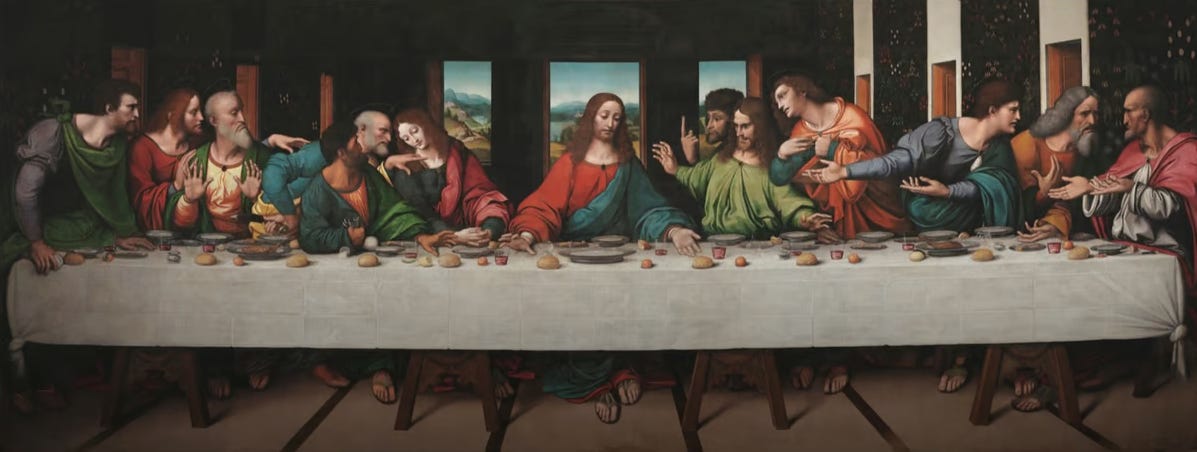
Leonardo da Vinci, often cited as a Grand Master of the Priory of Sion in Plantard’s documents, becomes central to the symbolic argument. In “The Last Supper,” da Vinci famously omits the Holy Grail as a physical object and places a distinctly feminine figure beside Jesus, interpreted by some as Mary Magdalene. While most mainstream “art historians” identify the effeminate figure as John the Apostle, the flowing hair and curiously feminised features have fuelled claims that da Vinci embedded heretical messages in plain sight. The hypothesis remains speculative, but its implications resonate with the broader narrative of coded resistance to Church orthodoxy.
This symbolic ambiguity extends into the very term “Sangreal,” which has been interpreted in two distinct ways depending on where the word is split:
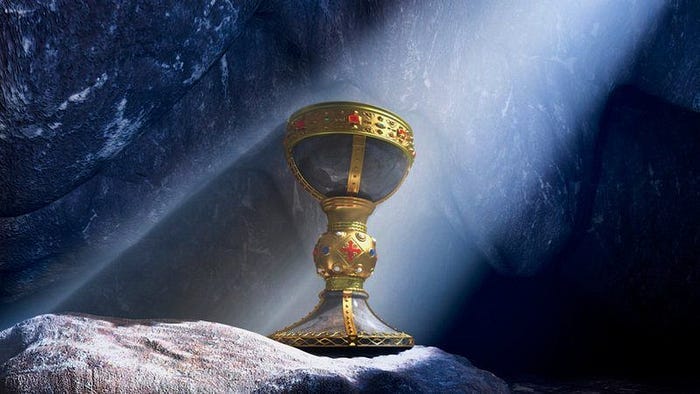
The traditional rendering, San Greal, translates from Old French as “Holy Grail,” reinforcing the medieval legend of a sacred chalice used at the Last Supper and sought by Arthurian knights.
However, when rendered as Sang Real, it takes on an entirely different meaning: “royal blood.” This linguistic duality opens the possibility that the Grail was never intended to be an object at all, but rather a veiled reference to a bloodline carrying spiritual or dynastic significance. Proponents of this interpretation argue that such a double entendre would not have been accidental.
In medieval Europe, where allegory, secrecy, and layered meanings shaped both religious and political discourse, the ambiguity may have been intentional, designed to hide profound theological and genealogical claims within a term that could pass unnoticed by those lacking the necessary keys to decode it.
The question, then, is not whether the Grail exists, but whether its true meaning has been intentionally obscured by centuries of doctrinal control and selective translation.
Dan Brown’s 2003 novel, The Da Vinci Code, catapulted these themes into global consciousness. He borrowed, quite liberally, from Lincoln’s “Holy Blood, Holy Grail,” a fact that led to a failed lawsuit by his co-authors, Baigent and Leigh. Yet Brown’s contribution lies not in originality, but in making the subject accessible, a fact he later acknowledged as key to his novel’s success. By weaving these elements into a thriller, he introduced millions to the idea that Christianity may have originated from a suppressed union between divine masculine and feminine energies. The Church’s swift dismissal of the book as fiction did little to stem public fascination.
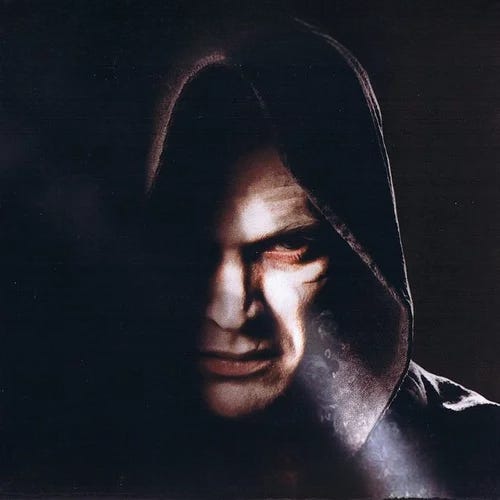
What, then, are we to make of Bérenger Saunière? His wealth was real; his Church reprimands for “trafficking in masses” are documented. Yet these accusations don’t account for the full extent of his spending, nor do they explain the elaborate symbolism integrated into his renovations. He ordered statues and inscriptions that appear to contain coded messages, including an enigmatic Latin phrase above the church entrance: “Terribilis est locus iste” (“This place is terrible”), a biblical quote that takes on new meaning in the context of a heretical secret.
Hypothetically, what if the parchments discovered by Saunière were inauthentic, deliberate forgeries designed to attract attention, or to test the response of ecclesiastical authorities? And what if, in attempting to exploit them, he stumbled into a deeper and more dangerous tradition, one that predated even Christianity? Is it possible that his actions brought him into contact with living members of a suppressed sect, or initiated a chain of events he could not fully control?
Another possibility, rarely explored in depth, is that the concept of the holy bloodline was never meant to be genetic. Rather than a lineage of flesh and blood, it may have referred to a priestess line; a sacred succession of feminine initiates charged with preserving divine gnosis. If so, the Roman Church’s suppression of Mary Magdalene and her symbolic lineage would represent not just misogyny but a strategic erasure of an entire ritual framework. The Priory of Sion, whether real or invented, could have been a deliberate misdirection, a decoy placed in the path of seekers to keep the true legacy hidden beneath layers of mythology.
None of these theories can be proven outright.
But the convergence of Saunière’s mystery, the Templar legacy, Magdalene’s rehabilitation, and the symbolic richness of Renaissance art suggests that we are dealing with more than mere coincidence.
The story of Rennes-le-Château endures not because it offers answers, but because it provokes deeper questions:
Who decides what history is remembered?
What happens when religion becomes a tool of suppression rather than revelation?
And if the Holy Grail was never meant to be found, but understood, what have we misunderstood all along?
“L’Or de Rennes” by Gérard de Sède https://www.goodreads.com/book/show/1972565.L_Or_de_Rennes
“Holy Blood, Holy Grail” by Baigent, Leigh, and Lincoln https://www.goodreads.com/book/show/106092.Holy_Blood_Holy_Grail
“The Woman with the Alabaster Jar” by Margaret Starbird https://www.goodreads.com/book/show/93794.The_Woman_with_the_Alabaster_Jar
“Bloodline of the Holy Grail” by Laurence Gardner https://www.goodreads.com/book/show/731578.Bloodline_of_the_Holy_Grail
“The Messianic Legacy” by Baigent, Leigh, and Lincoln https://www.goodreads.com/book/show/106093.The_Messianic_Legacy
“The Temple and the Lodge” by Baigent and Leigh https://www.goodreads.com/book/show/106095.The_Temple_and_the_Lodge
“The Da Vinci Code” by Dan Brown https://www.goodreads.com/book/show/968.The_Da_Vinci_Code
The references listed above are provided solely for reader exploration and context. While several informed the research and thematic framing of this piece, not all were directly cited or relied upon in the writing. Their inclusion doesn’t imply endorsement of their claims in full.
Thanks for reading! This post is public so feel free to share it.
Comments
Nothing yet. Say the first thing.
Sign in to join the conversation.