
320 Sycamore Studios publishes original kids stories served fresh monthly, plus essays, book recommendations, and news about people living their books life. Everything is 100 percent Jeff-written.
There ought to be flags flying from every light pole, I’m thinking as we drive into Mainz. Bunting-festooned buildings. Bookshops on every corner. Marching bands, baton twirlers, the Gutenberg “G” blazing from every scrap of city signage. There ought to be souvenir shops full of glorious, schlocky, bookish merchandise (Hats! Scarves! Keychains! T-shirts!). Everything should be named for Gutenberg. Restaurants, bridges, parks, arenas. Come to think of it, the town should be named Gutenbergstadt or Gutenberg-am-Rhein some such. Biplanes ought to be flying overhead pulling banners shouting “Birthplace of books”. And how about a theme park! Welcome to Bookland, everybody. Plus books everywhere, in bookstores and bouquinistes and little free libraries and big free libraries and endless bookage strewn about every bistro and coffee house and biergarten. Books ought to fall from the sky.
Because this is the place that launched the biggest tech revolution of the last thousand years or so. The place that shifted the tectonic plates of the human intellect. Lifted human consciousness up from a medieval state of mind. Rewrote the meanings of religion and law and science and entertainment and selfhood and began the great rewiring of the human brain. Mainz, Germany, the capital of the German state of Rhineland-Palatinate, riding the left bank of the Rhine … Mainz is the city where Johann Gutenberg invented the printing press with movable type.
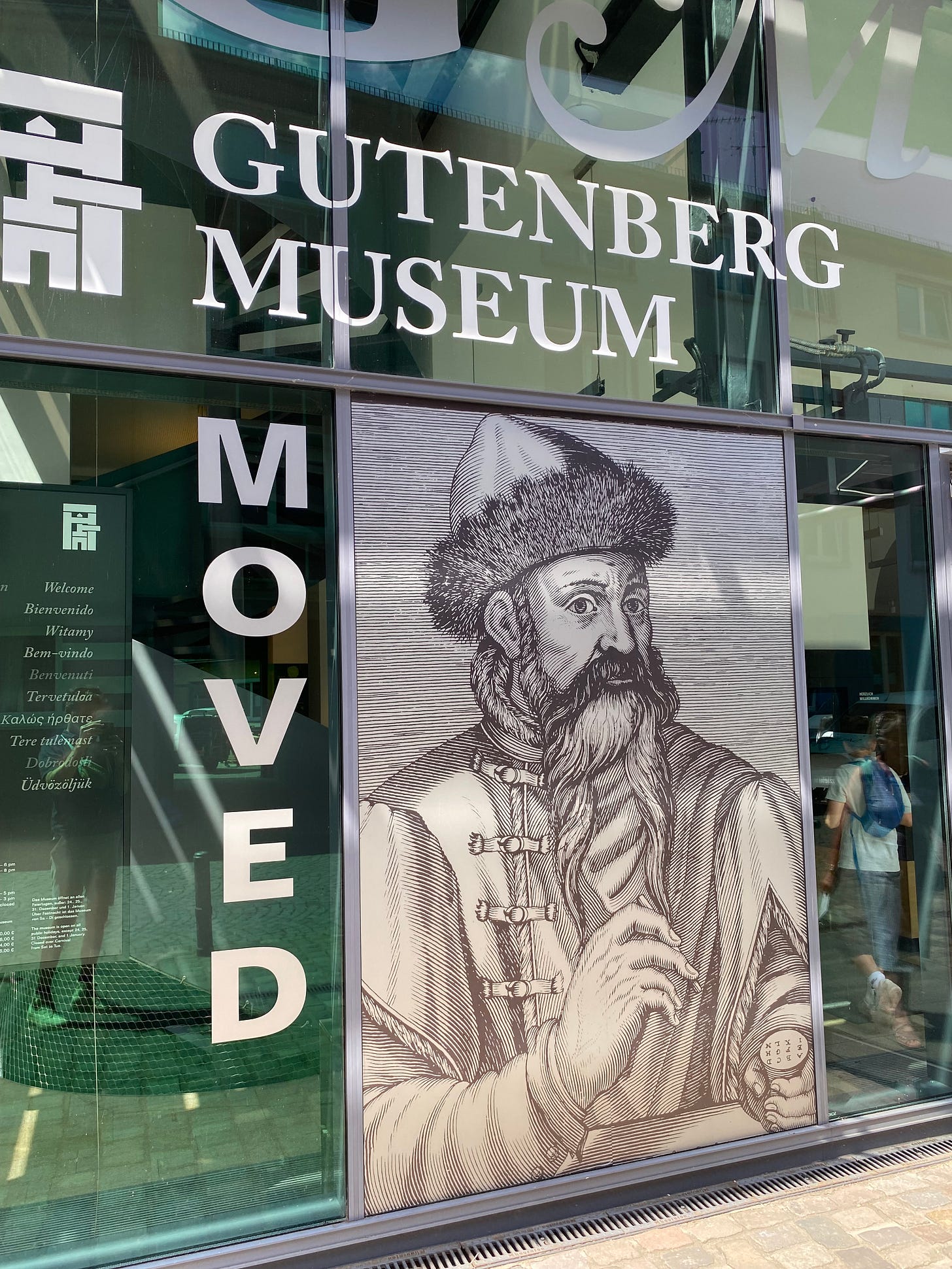
Mainz gave us the book. You’d think they’d shout it from every street corner and you’d happily forgive them their braggadocio. Instead, you drive into the city and it’s like driving into most European towns. Functional, low-slung, and geometric on the outskirts, haphazardly postcard-glorious in the central old town. The place is lovely, but it feels like it should be more ... Gutenbergy.
Instead, Gutenberg doesn’t even get his own museum, at least at the moment. (The old location in the Liebfrauenplatz across from the Mainz Cathedral is being renovated.) Rather, the museum shares the space with the Natural History Museum. You enter the building, buy your ticket, and turn left before you hit the mastodon.
I may have set my expectations too high.
I blame the late, great cultural critic Neil Postman.
I read his book “The Disappearance of Childhood” recently. There’s a chapter in it called “The Printing Press and the New Adult”. The printing press with movable type, Postman argues, was civilization-altering. It changed our relationship to time and altered our consciousness of ourselves. It transformed how we thought, the symbols we thought with, and the things we thought about. And the printing press had another effect. It created the modern idea of childhood:
“The press created a new symbolic world that required, in its turn, a new conception of adulthood. The new adulthood, by definition, excluded children. And as children were expelled from the adult world it became necessary to find another world for them to inhabit. That other world came to be known as childhood.”
So all that was on my mind as I wandered the museum.
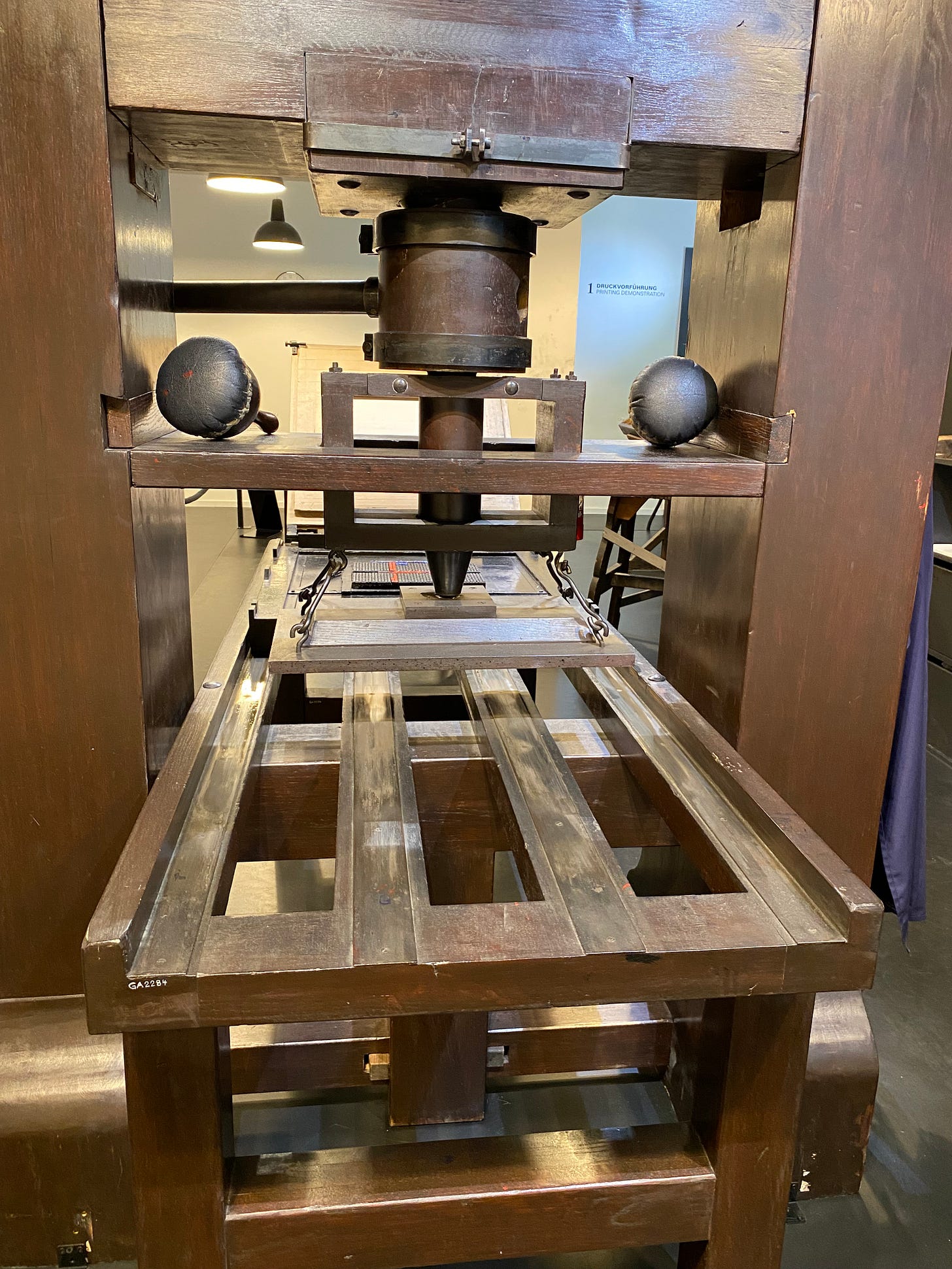
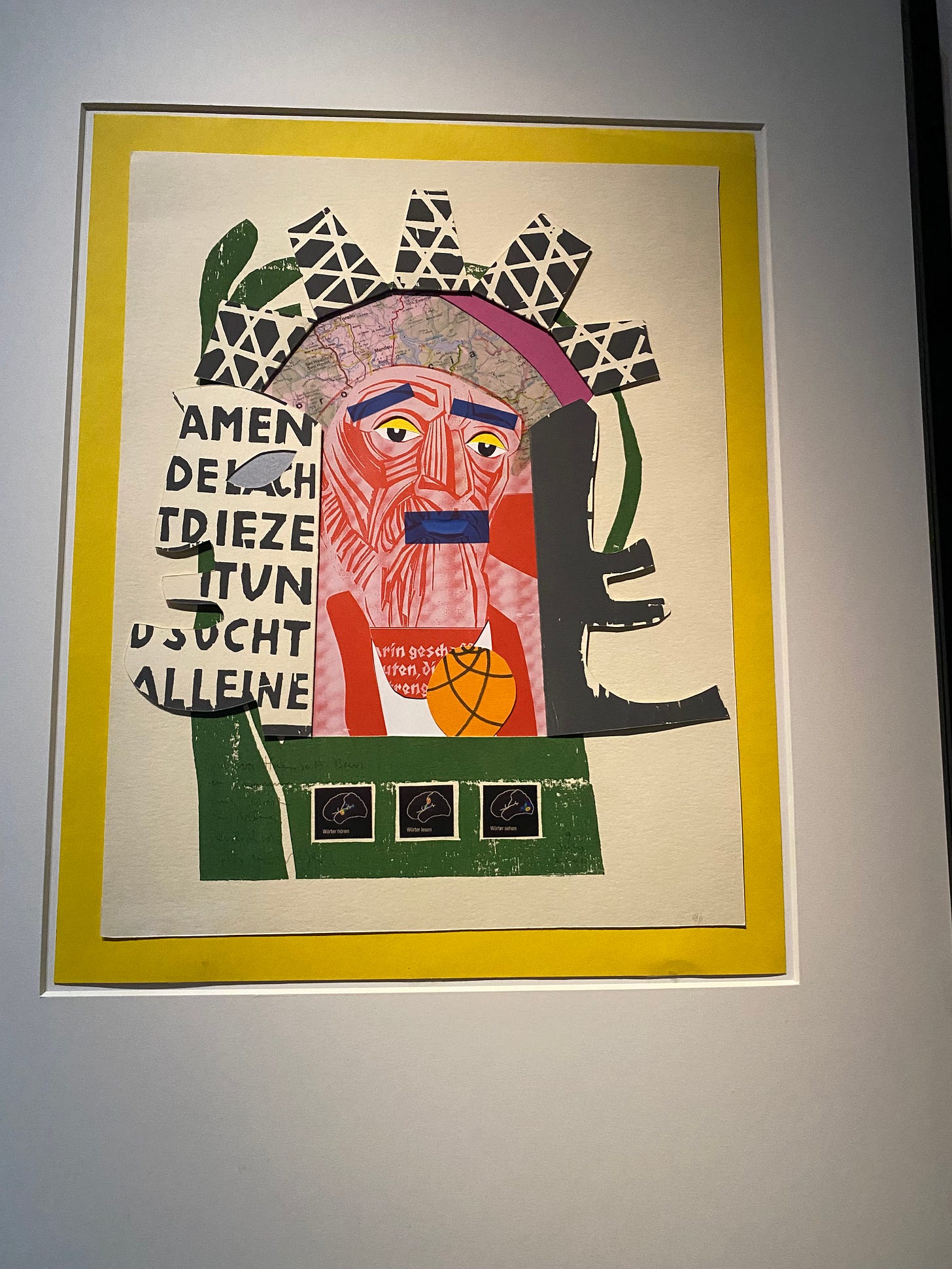
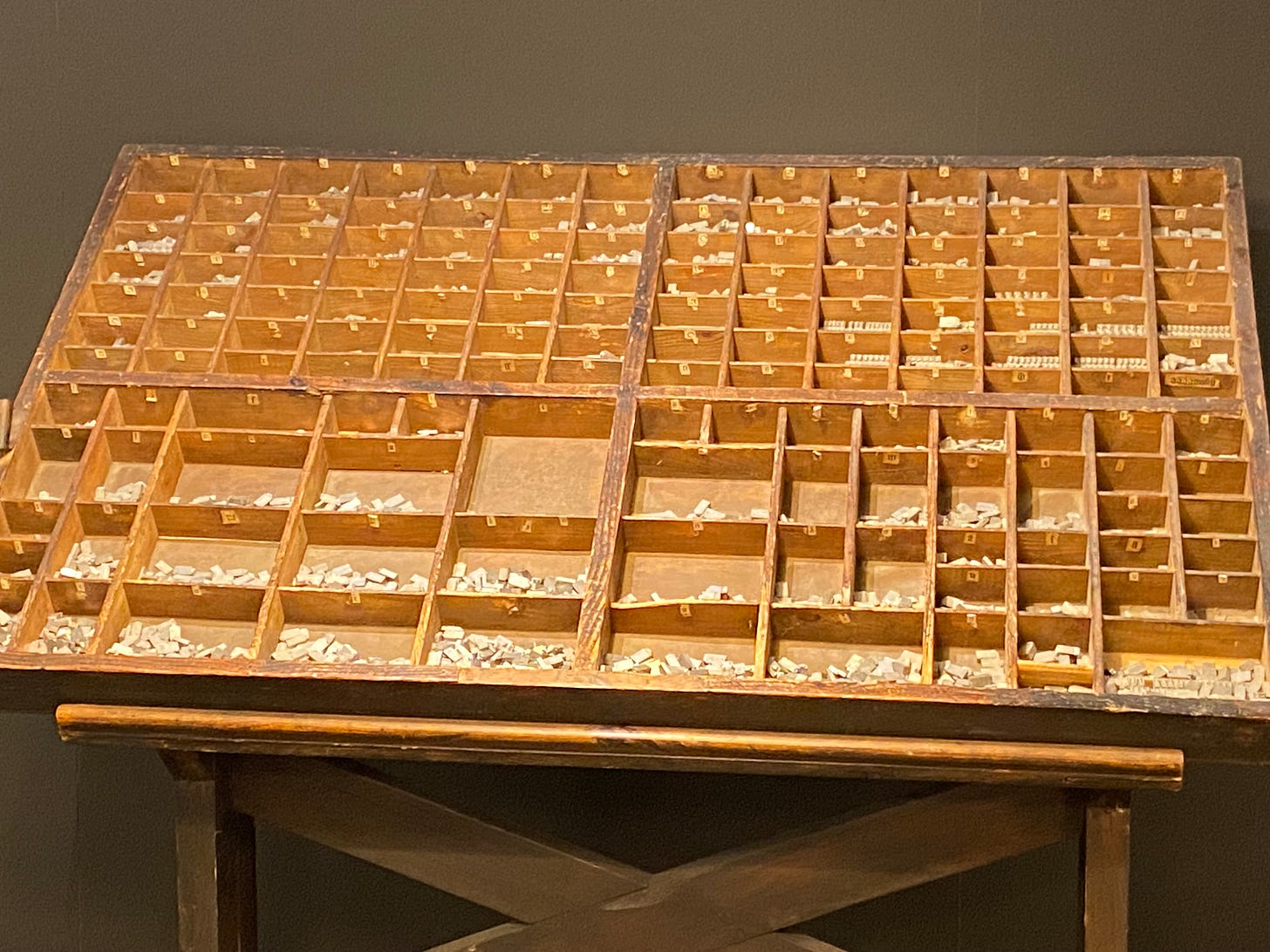
Despite the lack of marching bands and biplanes, the place was pretty great. You see the modern book emerging from a variety of texts, illuminated manuscripts, posters, block books (books made with inked woodcuts). There are portraits of Gutenberg (all guesses, since they were painted long after he was dead). A relief map of medieval Mainz. Printing tools — patrices, matrices, sorts, casters, composing sticks, galleys, ink balls, a type case, and a replica of Gutenberg’s press.
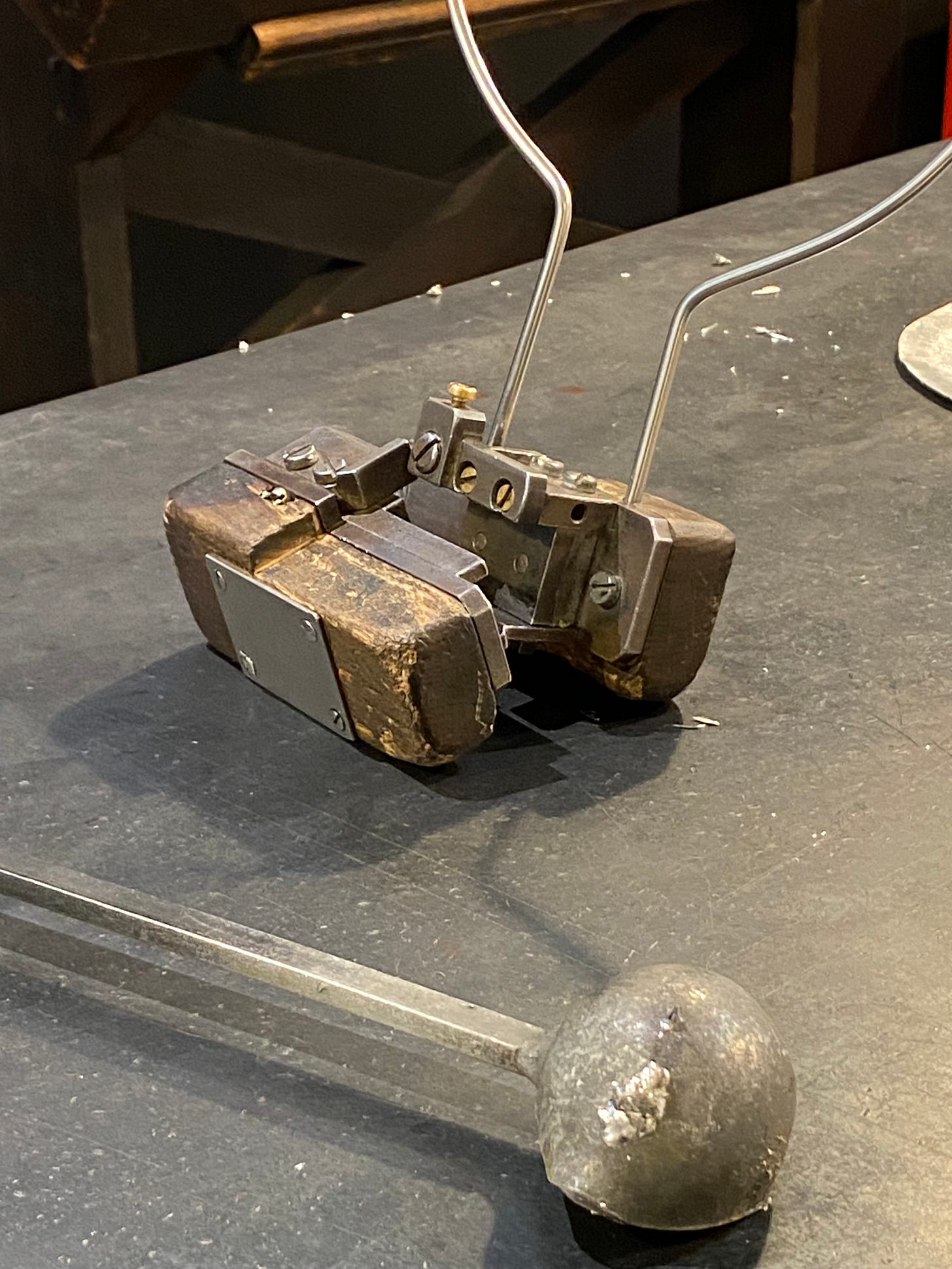
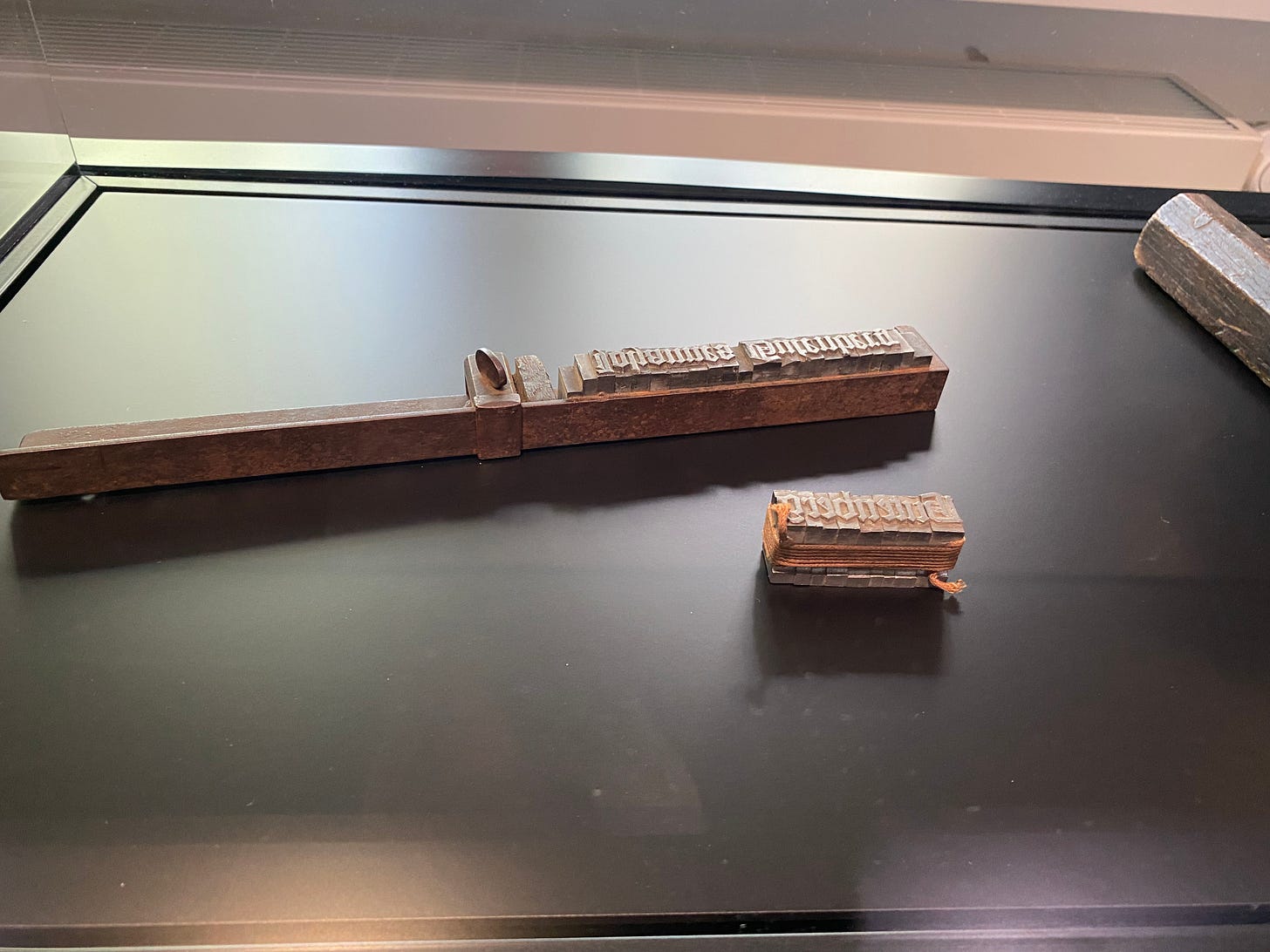
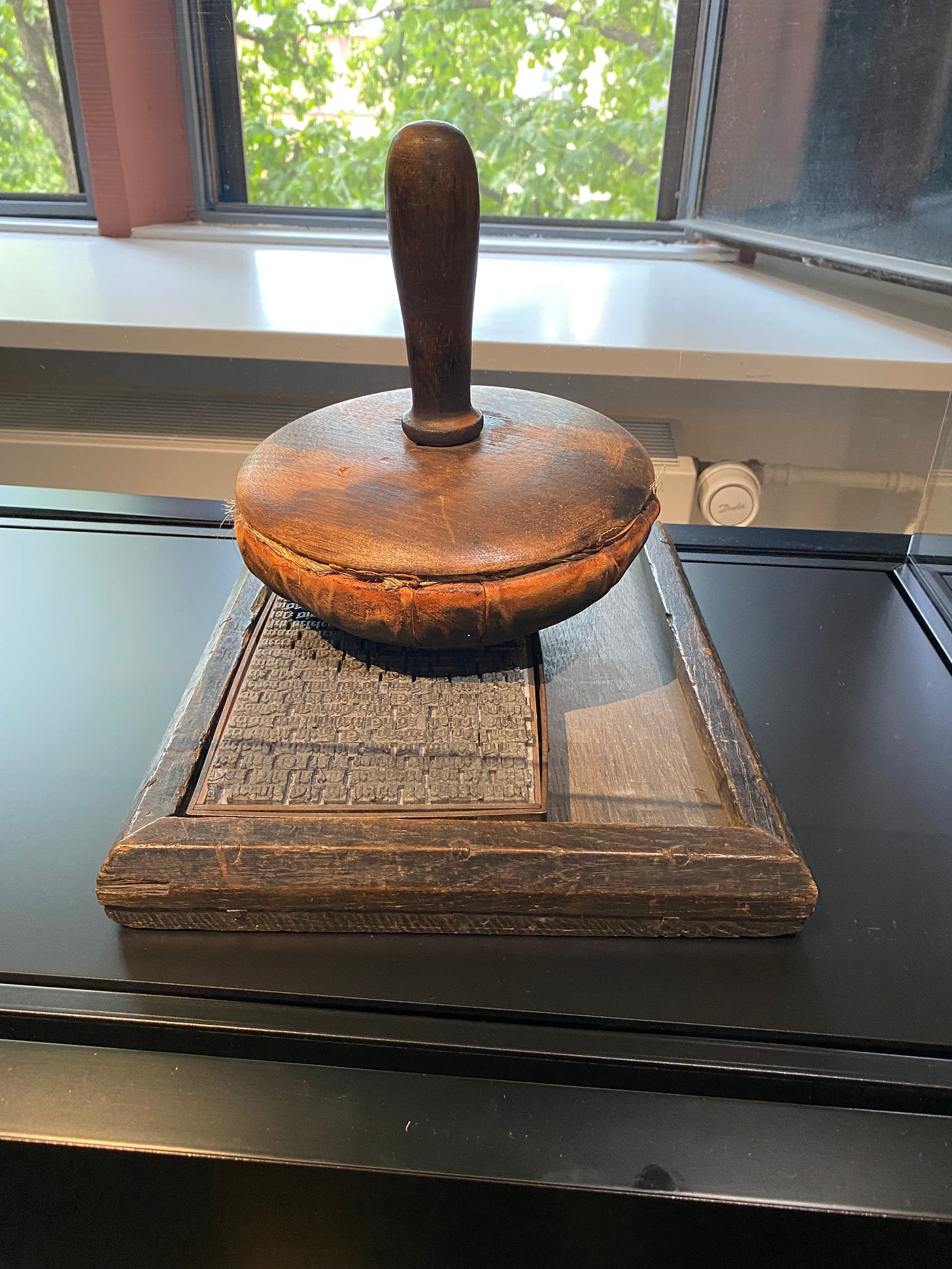
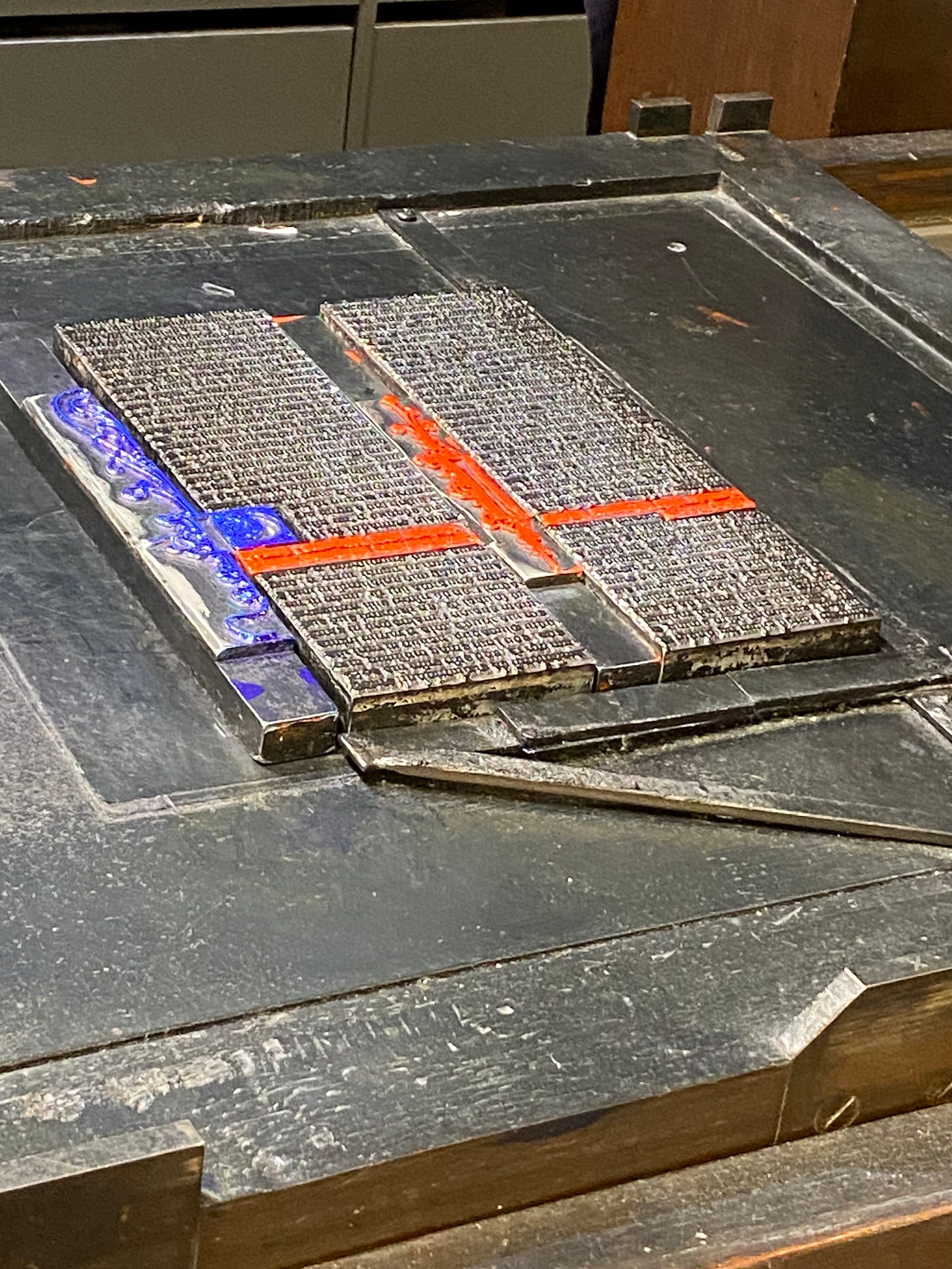
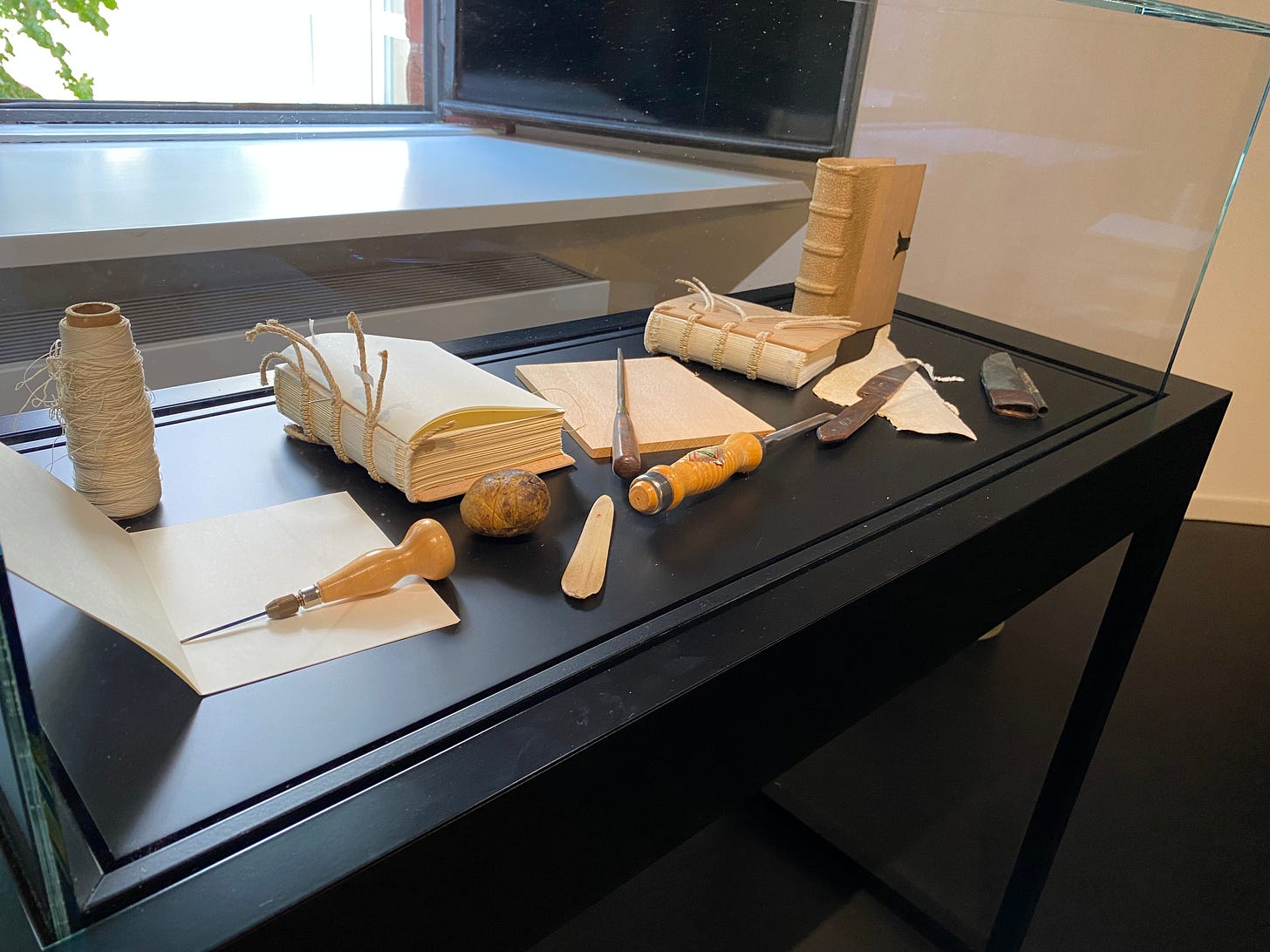
You learn a bit about Gutenberg (much is hazy) and about the commercial climate of the day. Printing was in the air, and a lot of people were hustling for ways to mechanize production. A realization struck me. Johann Gutenberg was a startup technology entrepreneur.
He was born about 1400 and spent his early years in and around Mainz. In 1434, he headed south to Strasbourg, and spent the next decade working on what court records describe as a “secret art”, an “aventur und kunst”, which translates roughly as “a risky enterprise involving manual skill”. Basically it was a startup “stealth mode”.
He returned to Mainz in 1448 and did what any good entrepreneur would do. Sought money. Over the next few years, he borrowed ~1,600 guilders (about $1 million today) from an investor named Fust and from 1452-1455 he printed about 180 of his eponymous Bibles. They weren’t the first creations printed on his press — those were likely calendars and grammar books. And they aren’t the first book-like objects ever created (previous bound texts were handwritten), but in the modern conception, the Gutenberg Bibles were the first book books.
Of course, since Gutenberg was a startup founder, he ran into money problems. He went to court against Fuchs, lost, was told to pay back what he owed, and had to relinquish his print shop and press to Fuchs. Fuchs then went into business with one of Gutenberg’s former employees and it seems Gutenberg never makes the big bucks. (It’s always the finance bros.)
The legal setback didn’t stop his career completely, though. He set up another shop in Mainz, and later in the nearby town of Eltville. In 1465 he was made a courtier by Archbishop Adolf II of Nassau (which gave him a kind of pension). He died in 1468, having sparked a revolution and gained immortality.
Finally, you come to the Bibles.
49 survive. Two are in the museum. Each is unique.
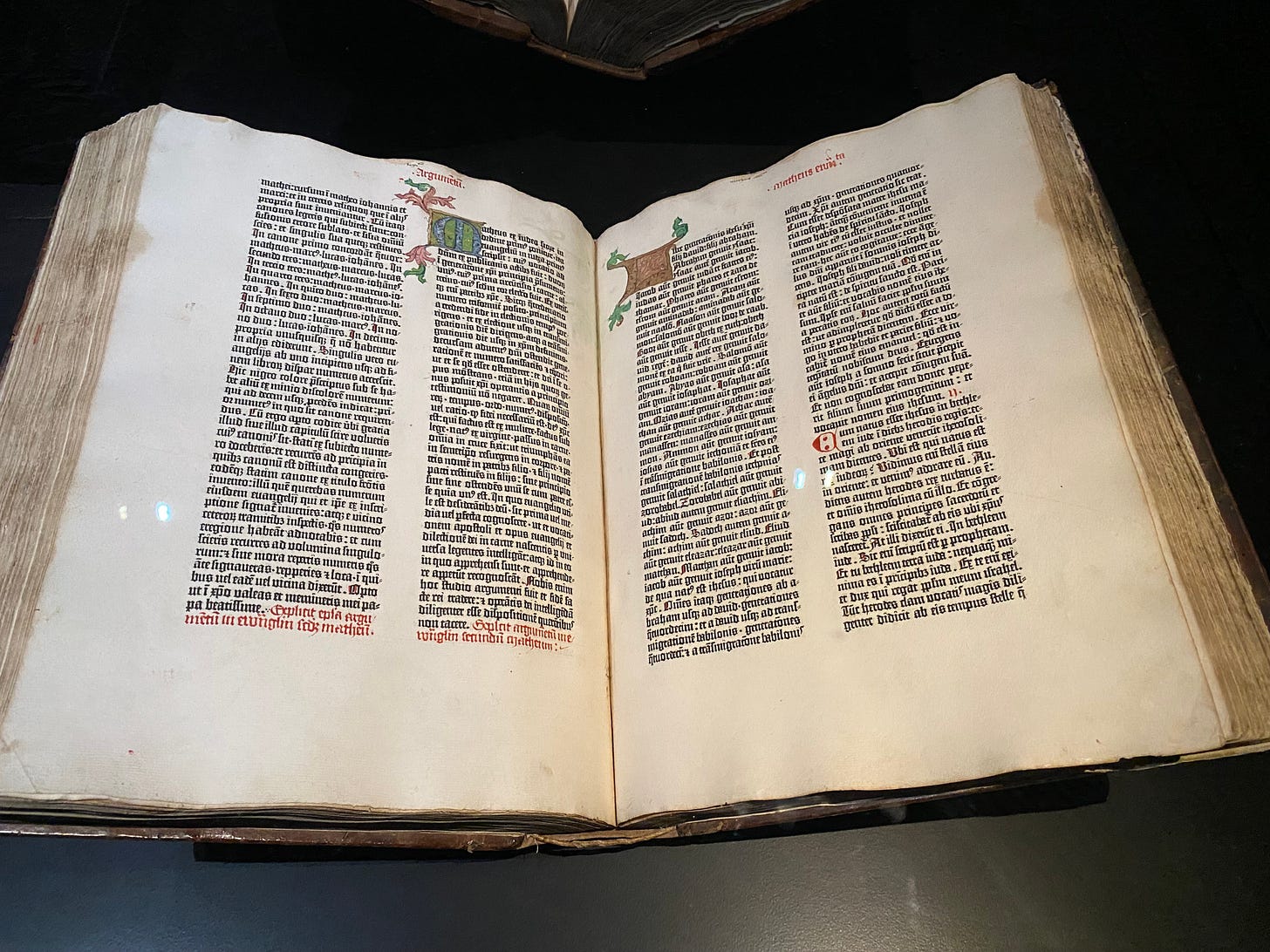
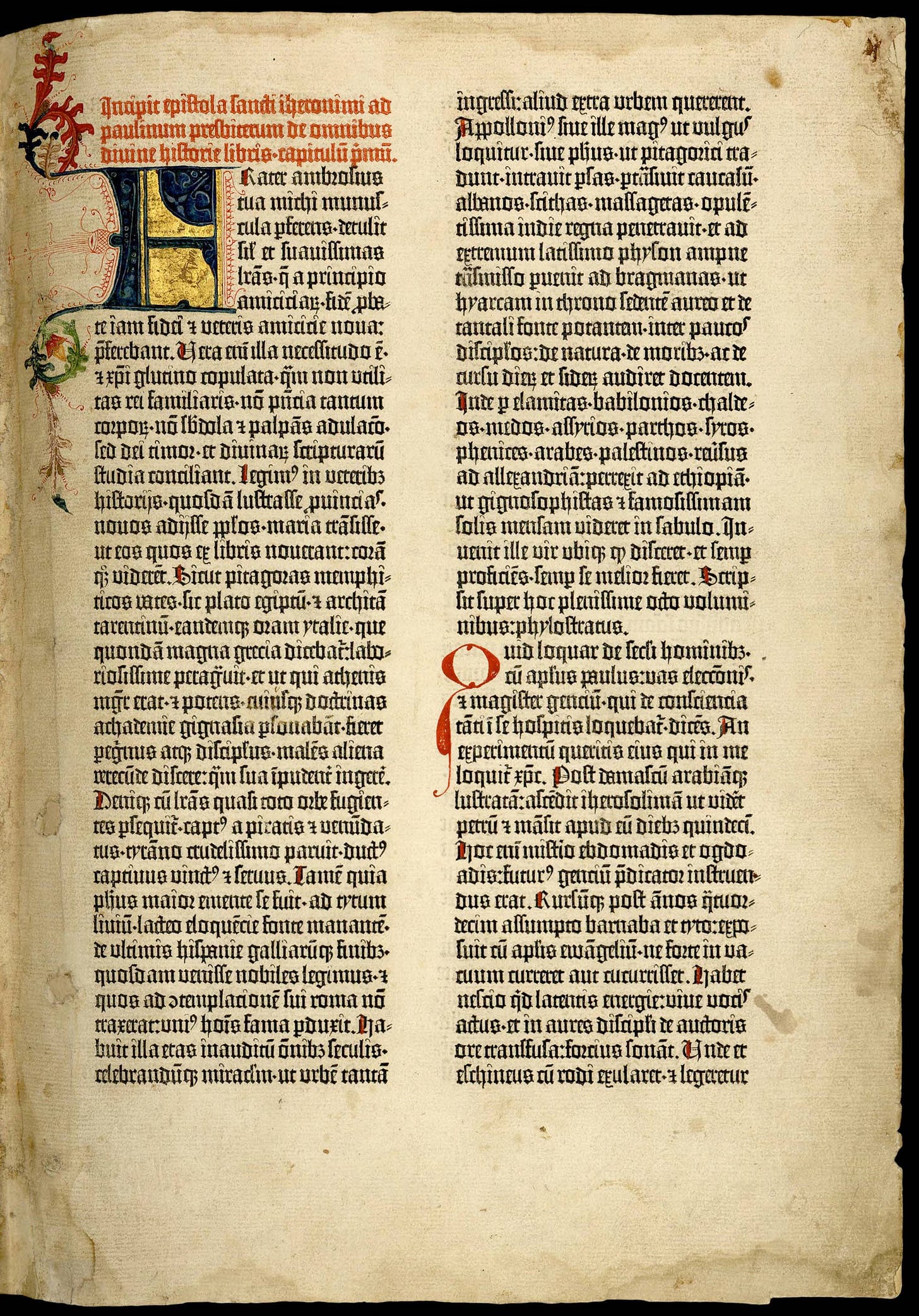
Gutenberg’s production method was to print the pages but leave space for the drop-caps. After printing, artists called “illuminators” would add the capital letters and custom-illustrate the Bibles according to the tastes of the buyer.
The result was a transcendent work of art.
Looking at the Bibles in their room at the museum, where I was alone for a few minutes, a thought occurred to me.
A book is like an open flower; we disperse the seeds.
Subscribe for free to receive new stories and posts. Happy reading!
PS. All the content I write is free, but if you want to support my work, consider buying one of the dozen titles I have on Amazon. Or, just toss me a one-dollar tip for the year. That’s it! One buck. Once a year. No AI. No auto-renew. No shenanigans. — Jeff.
Bible detail: From the digital collection of the Harry Ransom Center of the University of Texas at Austin, Public Domain. Other photos from the author.
Comments
Nothing yet. Say the first thing.
Sign in to join the conversation.