
Research methods that question the assumptions of power in the research process, in research relationships, and in ways of knowing. Approaches that challenge traditional Western methods that undermine lived experiences (Smith, 2013).
Over the past year, I have taken part in a two part project focusing exploring participatory research. The project focused on working closely with cultural organisations in Palestine (more on this here), disrupted of course by the war. The project is ongoing but as it is important to not only share findings but also key methodologies and tools which help to co-create and explore knowledge exchange and production, sharing some thoughts on participatory research.
Participatory research has become a buzz word of sorts in the academic world these days, but why? What’s so special about including lived experience and peoples’ voices into the research process? On one hand, it’s a way to include, but learning about the history, it goes much deeper that that and is even more critical.
Participatory research in short is researching ‘for’ and ‘with’ rather than about and in my case, focusing on the needs of who you are working with and how research can be used for social change. The history of research, especially with indigenous communities, was used as a tool to exploit, extract, manipulate and capitalise upon. While this historically took place amongst indigenous communities in a scientific context, it is relevant in all types of research. As historically, research in many countries was associated with colonisation and exploitation, researchers, particularly working in countries that are not their countries of origin, have an extra responsibility to dismantle some of these outdated systems through the work they are doing.
There are many types of participatory research but at its core, participatory research, ‘encompasses research designs, methods, and frameworks that use systematic inquiry in direct collaboration with those affected by an issue being studied for the purpose of action or change’ (Vaughn and Jacquez, 2020). Crucial to participatory research is the concept common in feminist research, situated knowledge. Situated knowledge, ‘refers to the idea that objective knowledge, including scientific knowledge, is influenced by the specific material, social, and cultural contexts in which it is produced, challenging the notion of universal and purely objective truths’ (Thompson, 2001). In short, people are experts in their own lives and research should be designed accordingly, valuing the lived experience of those you are working with.
As Edward Said stated, ‘Who decides?’
As an American woman working in a range of international contexts, most often in Global Majority countries, I often find myself working in communities that are not my own, with a desire to co-create change and work closely to form solutions led by those in those communities. Participatory research is a way to do this with integrity and in a way that honours the lived experience of those who should benefit from the research project or process.
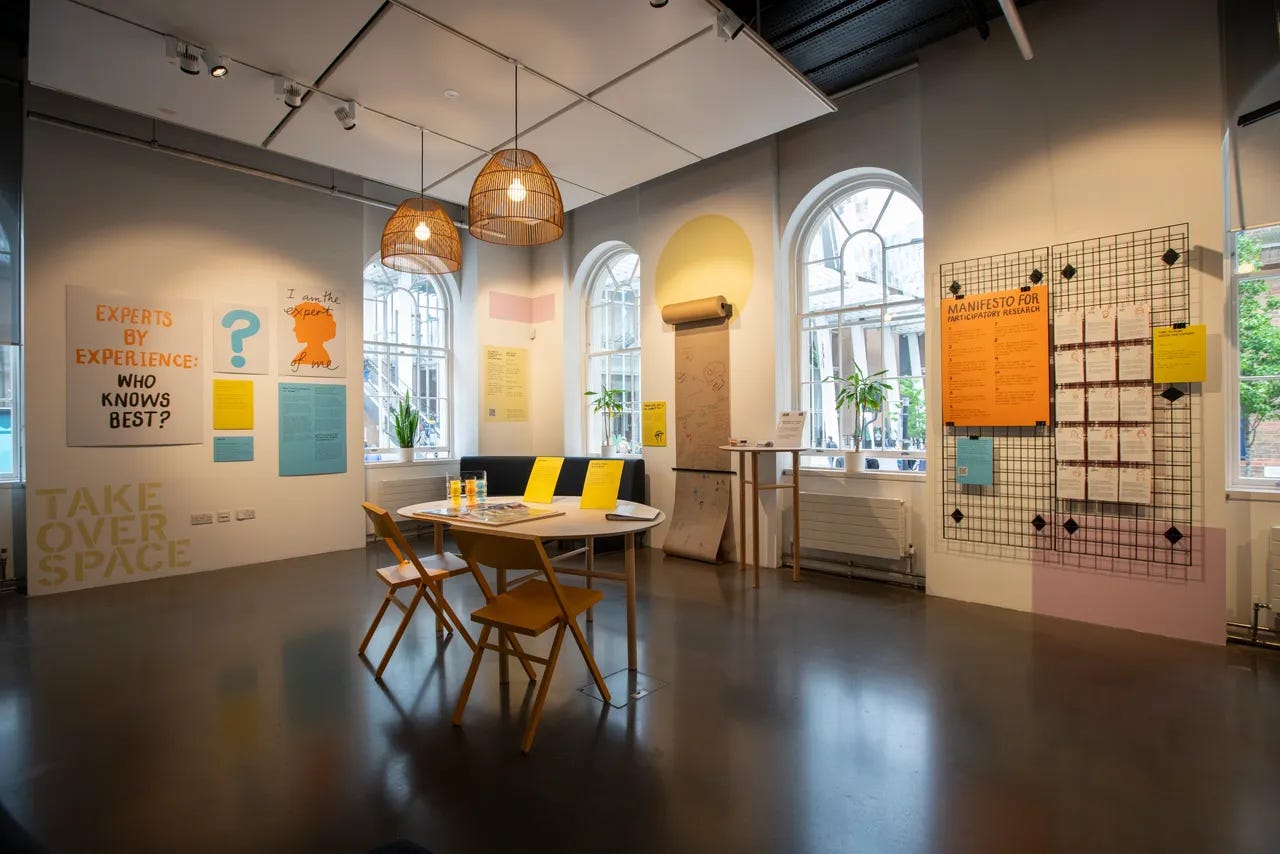
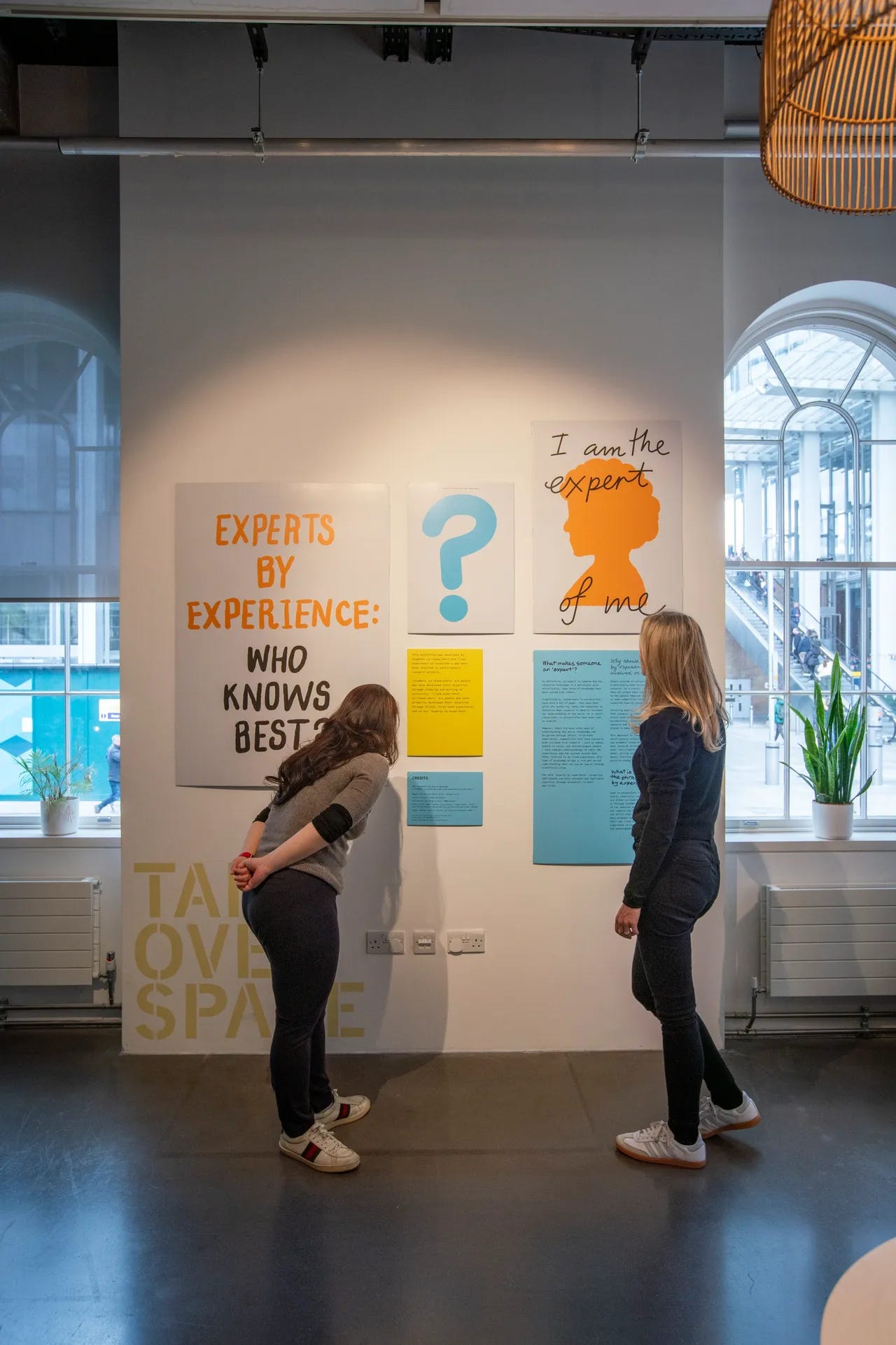
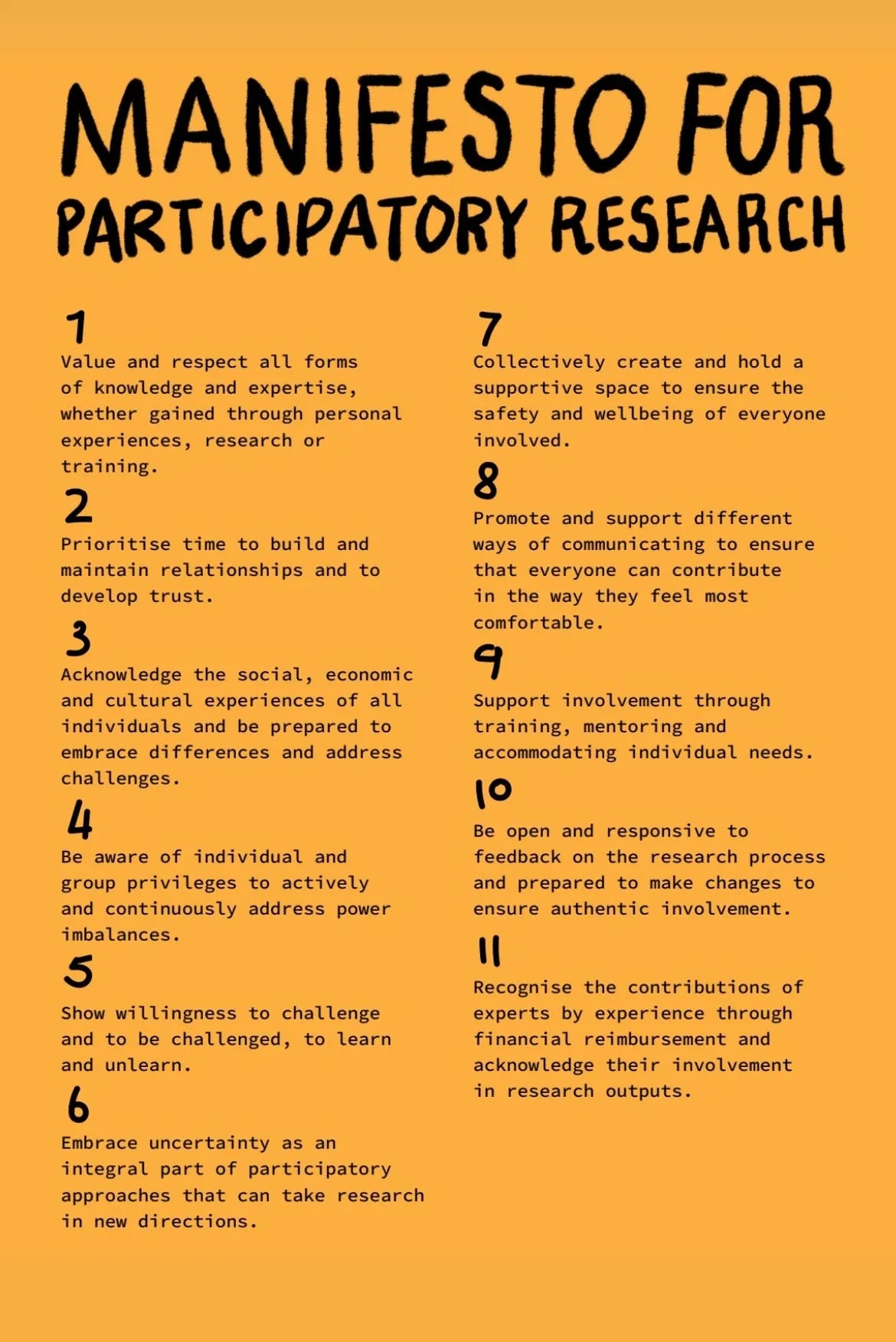
One important element of this co-creation of knowledge is also the sharing of methodologies and not just the knowledge itself but the knowledge underpinning the way that projects unfold. The Include Us In project in Palestine was selected as one of four other participatory research projects as part of King’s College London’s Participatory Research fund with an exhibition at the Science Gallery in April 2024. As part of that exhibition, eleven key principles of participatory research were co-created with researchers, forming a Manifesto for Participatory Research:
Value and respect all forms of knowledge and expertise whether gained through personal experiences, research or training.
Prioritise time to build and maintain relationships and to develop trust.
Acknowledge the social, economic and cultural experiences of all individuals and be prepared to embrace differences and address challenges.
Be aware of individual and group privileges to actively and continuously address power imbalances.
Show willingness to challenge and to be challenged, to learn and unlearn.
Embrace uncertainty as an integral part of participatory approaches that can take research in new directions.
Collectively create and hold a supportive space to ensure the safety and wellbeing of everyone involved.
Promote and support different ways of communicating that everyone can contribute in the way they feel most comfortable.
Support involvement through training, mentoring and accommodating individual needs.
Be open and responsive to feedback on the research process and prepared to make changes to ensure authentic involvement.
Recognise the contributions of experts by experience through financial reimbursement where possible and acknowledge their involvement in research outputs.
These principles are by no means exclusive nor does every project have to or have the ability to include all of these, but this is a good starting point for incorporating these methods more into any form of research.
This does not mean that Western researchers should not work in non-Western contexts (to put it simply), but it is important to not just try and implement tools from the West into these contexts nor take tools from Global Majority contexts but to co-create new tools, new ways of knowing and working together. I am seeing a shift happening in the academic world, still with a long way to go, but hopefully by sharing and speaking around these topics, it debunks and demystifies them, allowing more space for them to become common place. This will make research more impactful and provide more sustainability and ownership, changing the narrative in general about what research is, who its for and who benefits from it.
No posts
Comments
Nothing yet. Say the first thing.
Sign in to join the conversation.