
Games of Impact takes a look at the most important games in the industry’s history, with a max limit of 20 per year.
NOTE - This is a re-release of my Strachey’s List series, just renamed and reformatted. I’ve made small changes to reflect more accurate information.
Astro Race
September 1973 - Taito
Key People: N/A
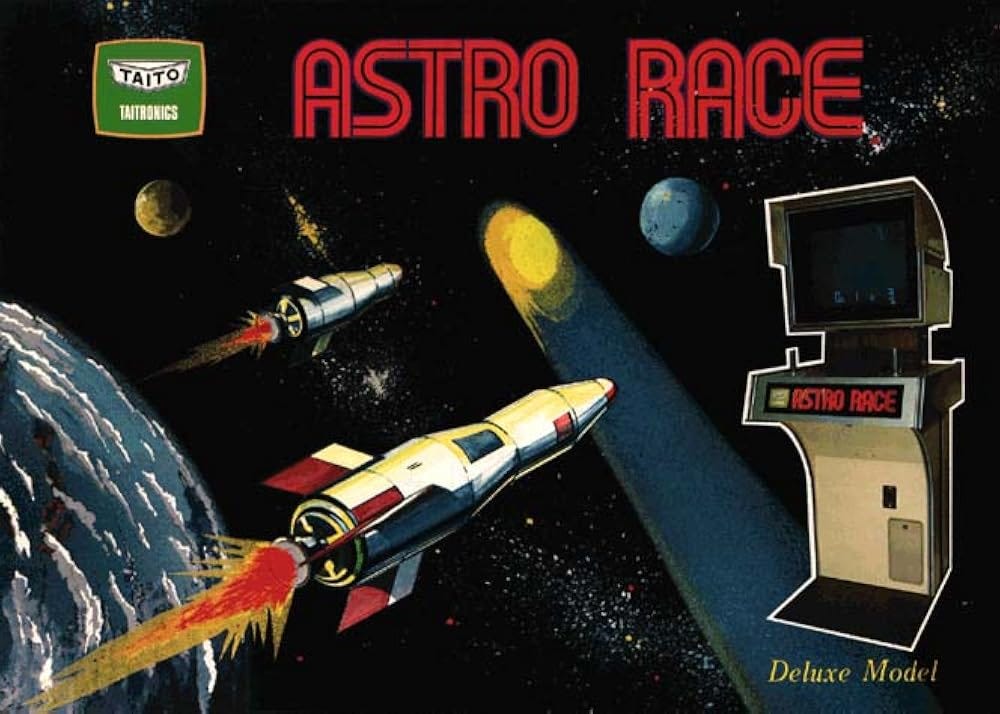
This is a Space Race copycat from Taito that perfectly shows the strategy competitors used on each other in this first commercial video game market decade. Companies would simply copy any game that was or could be a success. Taito’s Astro Race was just that and benefited by making more money than the original Space Race.
![Elepong [TAITO] - Arcade - (1973)](https://substackcdn.com/image/fetch/$s_!cE6r!,f_auto,q_auto:good,fl_progressive:steep/https%3A%2F%2Fsubstack-post-media.s3.amazonaws.com%2Fpublic%2Fimages%2F3ad4ab8f-991c-4fe8-85b3-d92d4fba9fff_640x480.jpeg "Elepong [TAITO] - Arcade - (1973)")
Elepong
July 1973 - Taito
Key People: Tomohiro Nishikado
Tomohiro Nishikado became one of gaming’s first iconic game developers in the 1970s. He would become Taito’s secret weapon at arcade success and setting Japan up to become one of the major players in video games. His first game was Elepong, quite frankly a Pong copycat. However, due to the company and careers it launched, I’m putting it on this list as it began a golden age for Taito and helped launch the Japanese gaming market.
Empire
1973
Key People: John Daleske
While Jim Storer’s Rocket was the first of the many iterations of what we now call Lunar Lander, the second iteration is where the game got a lot of its personality and popularity from. Moonlander changed the game to have actual visual graphics instead of text-based gameplay. The DEC commissioned game would go on to be re-released many times with the new name of Lunar Lander.
Gotcha
October 1973 - Atari
Key People: Allan Alcorn
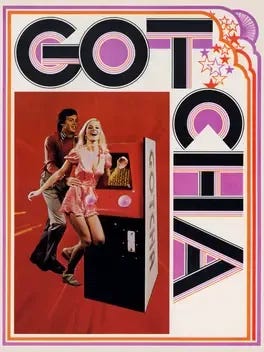
The first “controversial” video game, Gotcha was a game that saw players trying to catch each other in a maze. The game was simple enough but the marketing and the cabinet’s main control input raised some eyebrows as it seemed it was about catching women, specifically their breasts. Despite this and not the greatest reviews, it still made pretty good money for the arcade market and the maze like structure could be see as an inspiration for future games like Pac-Man.
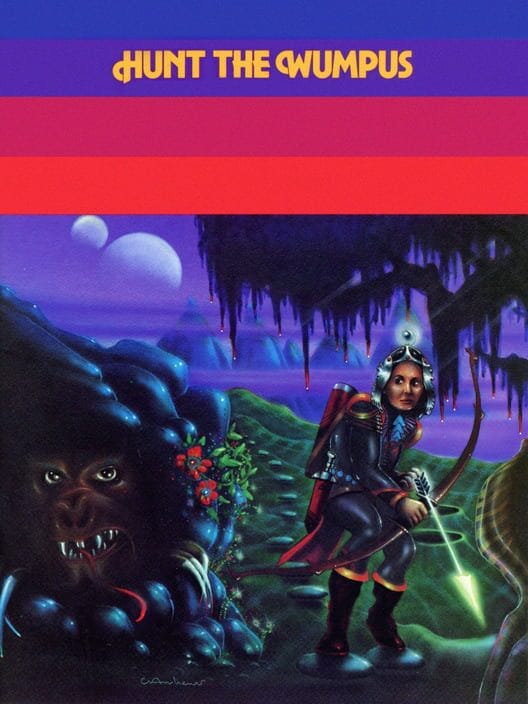
Hunt the Wumpus
1973 - People’s Computer Company
Key People: Gregory Yob
Inspired heavily by Mugwump, Hunt the Wumpus is considered by some to be the first survival horror game. It plays similar to Mugwump, but has players also avoid large bats and pitfalls as they explore caves to hunt for the Wumpus monster. Since its release, the Wumpus monster has shown up in multiple media and the game is seen as one of the more influential early games in the industry.
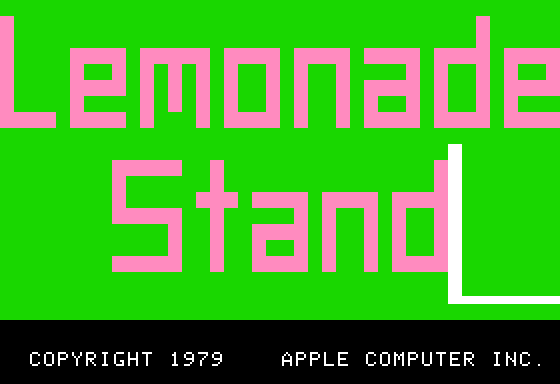
Lemonade Stand
1973 - Minnesota Educational Computing Consortium
Key People: Bob Jamison
A text-based business oriented game that is among the first of business simulations. The game takes into account things like weather and how that will affect your customer count. It’s actually gone on to be used in schools and like many pre-modern games, have a bunch of copycats.
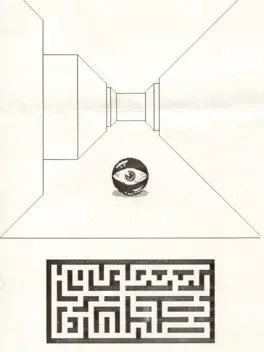
Maze War
1973 - NASA / MIT
Key People: Steve Colley, Greg Thompson, Howard Palmer
America’s top institutions began to have computer systems and many of their own employees used them to make games. Maze War is one such game, which became popular in places like the NASA study program and MIT. The game is considered by some to be the first first-person shooter. You would travel around a maze to find the other player to take out. Later on it could be played by on two connected computers, featured level editors, and avatars; many firsts for the industry.
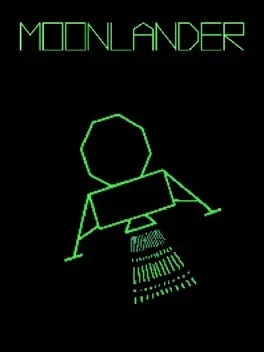
Moonlander (a.k.a - Lunar Lander)
1973 - Digital Equipment Corporation
Key People: Jack Burness
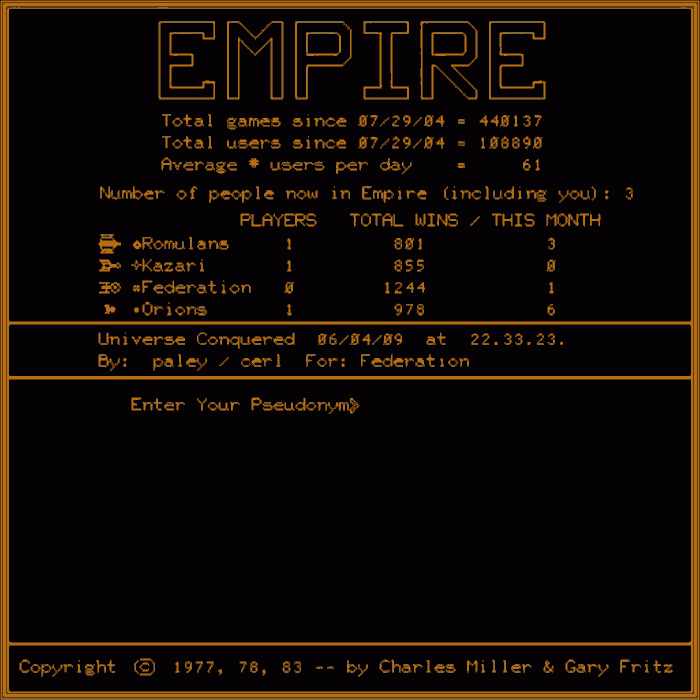
Conquer the galaxy with Empire. The first networked-multiplayer shooter, Empire has players fight it out in space by using keyboard demands. The game featured dogfights and protecting your planets. It was ahead of its time in many ways and was a preview of today’s large scale multiplayer titles. It was mainly played on PLATO Computer systems and went on to have several sequels, each building upon the features and concepts from the original.
Mugwump
April 1973 - People’s Computer Company
Key People: Bob Albrecht
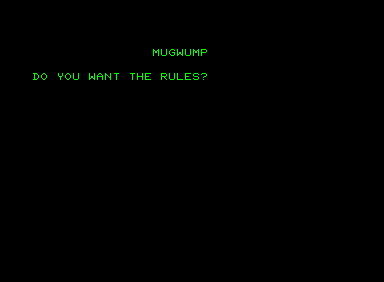
Mugwump had players search for the titular creatures by scanning a 10x10 grid and the game would tell the player how close they were. In some ways, it was a text-based hide and seek game. The game became popular across BASIC computer programmers. It also inspired many early developers and the next game on the list.
Pong-Tron
July 1973 - Sega
Key People: N/A
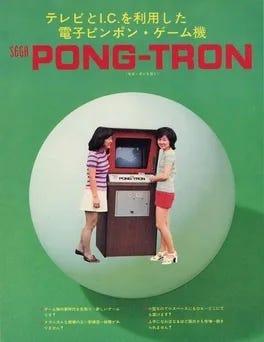
Another Pong copycat, but this time a different important Japanese company - Sega. Pong-Tron was another success that directly competed against Elepong and was the start of Sega’s arcade brilliance.
Space Race
July 1973 - Atari
Key People: Ted Dabney
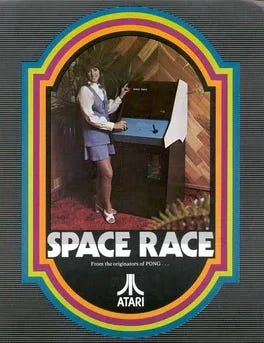
Space Race has players race, avoiding obstacles like asteroids, to get from the bottom of the screen to the top, a first in the industry. The game lost Atari money as it wasn’t nearly as successful as Pong and created contractual headaches since Midway argued they should’ve been able to publish and make money from it. Despite this, its a technical groundbreaking game at the time and once again inspired many copycats.
Soccer
November 1973 - Taito
Key People: Tomohiro Nishikado
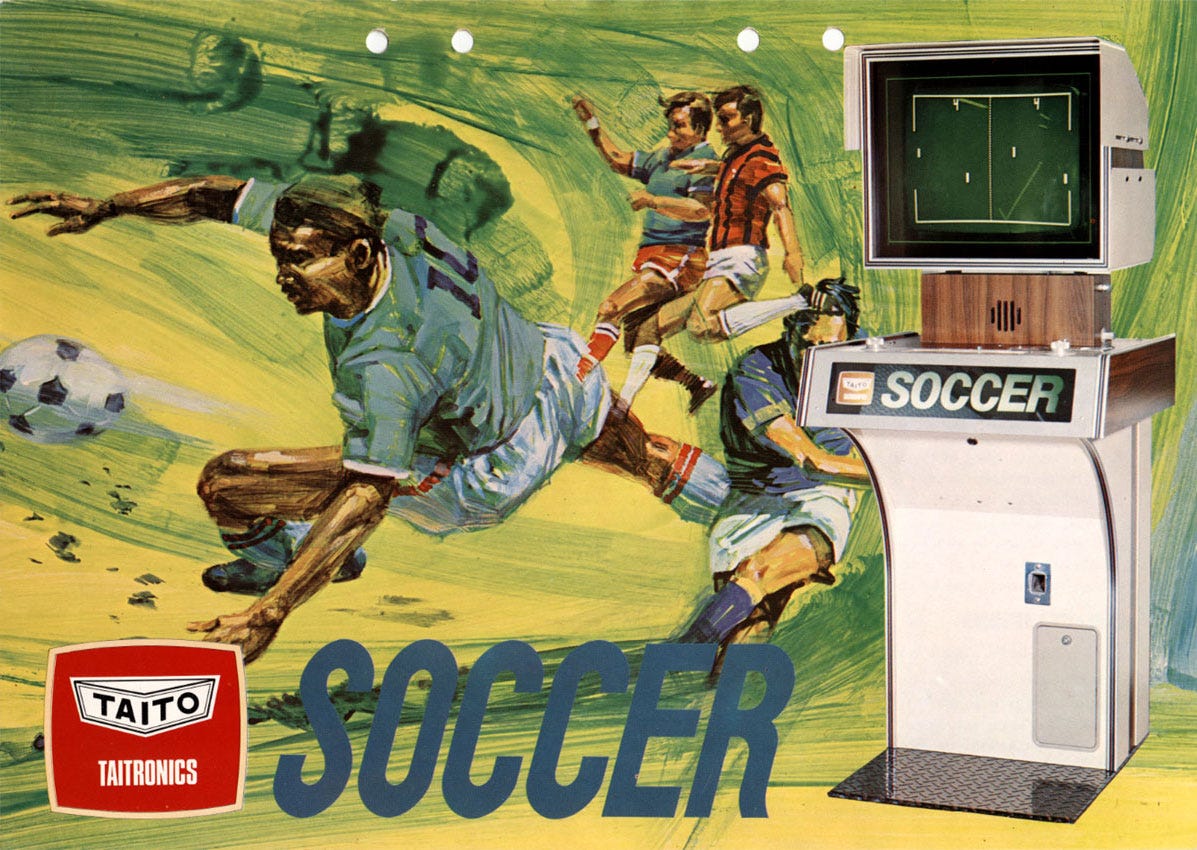
Sports video games where available plenty in 1973. Most of these were Pong copycats that were marketed under the premise of Tennis. You had some other sports, but it was Taito and Tomohiro Nishikado’s Soccer that really stood out. The game was similar to Pong, but actually added some spice and more challenge. This is in many ways the first true sports video game that gets it right and another notch in Nishikado’s legacy.
No posts
Comments
Nothing yet. Say the first thing.
Sign in to join the conversation.