
Listen, I can try to understand why you might not like historical fiction. Maybe it feels like school to you, maybe you’re so jaded or cynical that it’s hard for you to get into it, maybe you associate historical fiction with one particularly cringy or stereotypical bodice ripper you borrowed from your aunt when you were seventeen.
But— said lovingly— you’re so wrong! Sorry!
Personally, I am never happier, more mentally well, and more myself than when I am either:
a.) Sitting in my beach chair with an iced beverage, reading historical fiction. (June-September)
b.) Sitting under my favorite reading blanket with a warm beverage, reading historical fiction. (October-May)

I read to escape, to expand the limits of my mind, to make sense of the fact that we self govern on a piece of rock that is floating in the ether surrounded only by other floating rocks that are entirely unknown to us.
It’s harder, for me, to escape or expand when I’m reading about the same stuff I am inundated with day in and day out: stressful days for people with computer jobs, people navigating dating apps, the impending doom of the climate crisis, et al. All art is meaningful and all art has an audience— reading and being an active reader on Goodreads has taught me that in spades, there is a foot for every shoe— but my personal preference is to escape a little... further afield.
And what’s an easier or more clear cut escape than a different place and time? Not only do I instantly walk through a portal to a different world, I usually get some perspective there that makes stepping back into reality feel a little bit easier or expansive.
Today, I’m making my case for historical fiction as a deeply underrated genre. It is SO not all trope-y romance or unreadable epics of war, though sure, there are plenty of those if you seek them. But as an expert level historical fiction reader— I read 150 books a year, and at least half are set in another time— turned historical fiction writer, I took the time to pull together a list that I think could hook you no matter your genre preference.
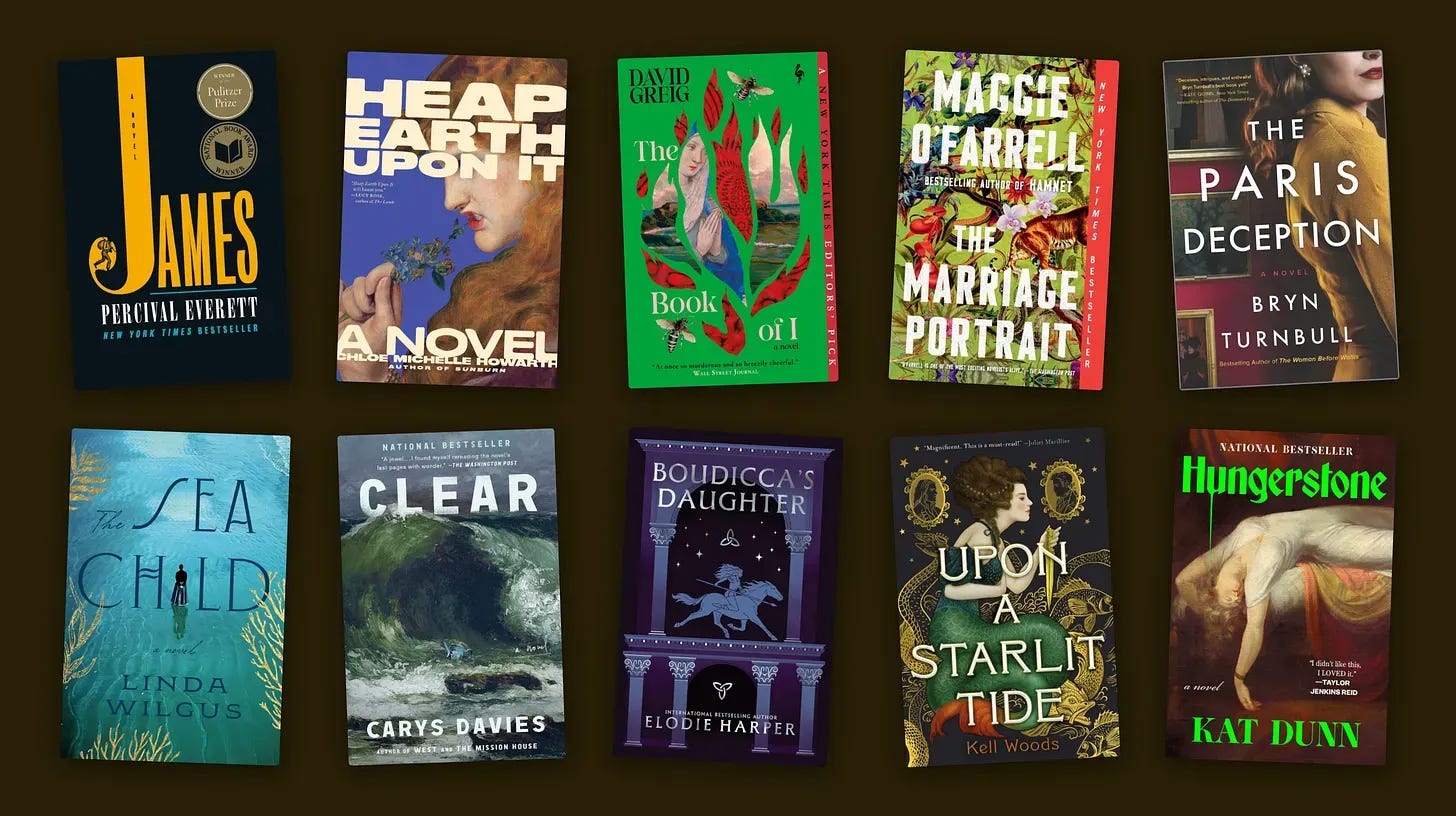
These are entry-level doors in for people who don’t self-identify as historical fiction readers. Give these a try, and tell me if it stokes your interest as much as I think it will.
I organized them by categories that I think make for smooth entry points, but many fall into multiple categories, so don’t be shy if the category label isn’t always your bag!
I shared this in my paid letters last week, but if you like these reading round-ups and my monthly book reviews, click here for 40% off for one year of First Rodeo (the biggest discount I’ve ever offered!) and get access to ALL of it, including 3+ years of my archive.
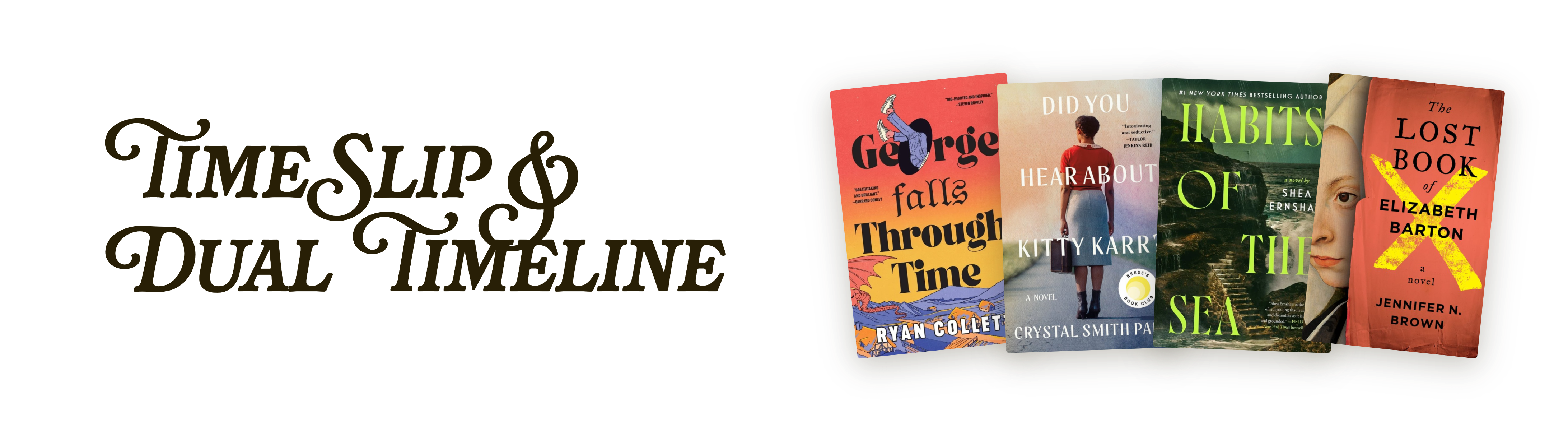
This is the gateway drug for historical fiction— you can keep one foot in present reality to tether yourself. If you’re like me, you’ll probably end up liking the plot set in the past a bit more than the present. Bonus, if you read thrillers, the dual-timeline mystery engine can feel like a familiar comfort.
George Falls Through Time by Ryan Collett // George, a mid-thirties Londoner with an expired relationship and a faded career, falls through time in Greenwich Park and lands exactly where he stood, 700 years earlier. A playful, surprisingly profound riff on the myth of St. George (dragon included) that pits modern sensibilities against medieval England.
This is by far the most “modern” of the books I’m recommending in this letter— I mean, I’m pretty sure the book mentions Grindr— and so if you think the genre is all bodice ripping in a peaty bog, this book will challenge that outdated assumption! As a bonus, I found it very funny. [Amazon | Bookshop]
Did You Hear About Kitty Karr? by Crystal Smith Paul // When Old Hollywood icon Kitty Karr dies and leaves her fortune to the Black St. John sisters, tabloid speculation explodes. The novel moves between Kitty’s rise through 1950s Hollywood and the present day, unspooling the secret of who Kitty really was and what passing cost her. [Amazon | Bookshop]
Habits of the Sea by Shea Ernshaw // After Clay Lockhart’s wife dies, a storm tears his farmhouse and the land beneath it off the Scottish coast and sets it adrift in the Atlantic. Ellie Mills finds the fabled floating island twice: once at twelve, and again in her thirties, when Clay hasn’t aged a day and she has to choose between the life she’s built and a love— and land!— that ignores the laws of time. [Amazon | Bookshop]
The Winter Sea by Susanna Kearsley // Novelist Carrie McClelland settles near the ruins of Slains Castle in Scotland to write about the 1708 Jacobite invasion, and finds the story pouring out of her in details she couldn’t possibly know, as if she’s remembering her ancestor’s life rather than inventing it. Two love stories, three hundred years apart, on the same windswept coast— this is objectively my favorite book, and I have a hard time with superlatives or declaring favorites. I almost dislike sharing it because it feels so intimate and tender to me that opening it up to feedback is almost blasphemous. [Amazon | Bookshop]
The Rose Garden by Susanna Kearsley // Grieving her sister, Eva Ward returns to the Cornish house of her childhood summers and (accidentally!) begins slipping between the present and the early 1700s, where the house belongs to smuggler Daniel Butler. The harder she falls for a man three centuries away, the harder the question gets of which time she actually belongs in. [Amazon | Bookshop]
The Phantom Tree by Nicola Cornick // Alison, a woman from Tudor England trapped in the present day, spots a familiar face in what’s labeled a portrait of Anne Boleyn and knows it’s actually Mary Seymour, her one link to the child she left behind in the past. The story alternates between Alison’s modern hunt for the truth and Mary’s voice from the 1500s.
I can’t say I often see time travel work this way in fiction, propelling a character into the future! Our minds tend to default to imagining us leaping backwards, I did enjoy the subversion. [Amazon | Bookshop]
The Mapmaker’s Daughter by Clare Marchant // In 1569, Frieda Ortelius flees persecution in Holland and her rare mapmaking talent catches the eye of Queen Elizabeth, who demands her help against the Spanish threat. In the present, Robyn discovers an unusual 16th-century map in her father’s map-making studio in Hay-on-Wye and pulls the thread connecting their two lives. [Amazon | Bookshop]
The Lost Book of Elizabeth Barton by Jennifer N. Brown // Historian Alison Sage unearths the long-lost book of prophecies of Elizabeth Barton, the 16th-century nun executed for predicting Henry VIII’s downfall. Her discovery lands her at an exclusive academic gathering where jealousy, greed, and murder take over, braided with Barton’s own voice from the 1520s.
This was a rare book where the mystery and thriller pace of the present-day was more captivating to me than the past, but I also loved how the present day cast of characters were historians and academics with a deadly (literally) competitive streak. The author has a very similar career and academic specialty to her main character, which makes me feel like the world of academia is far more cutthroat than we could have imagined… [Amazon | Bookshop]
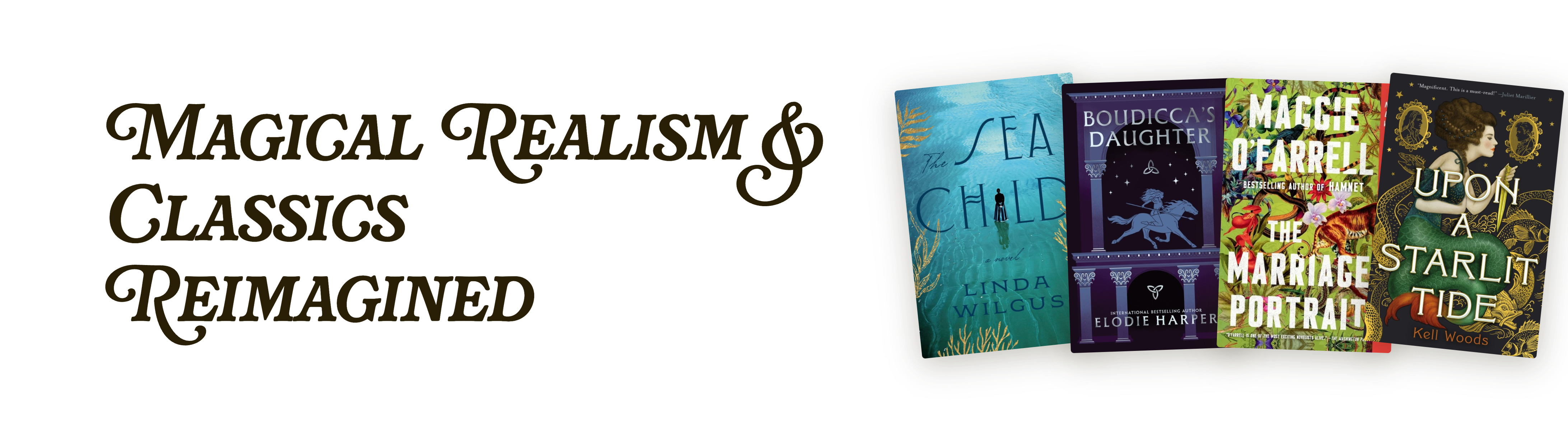
For readers who want a little wonder, or already know the story and want it turned inside out!
The Sea Child by Linda Wilgus // A band of smugglers lands on the Cornish coast, where young widow Isabel becomes entangled in their schemes— and with their charismatic captain. Historical adventure with a saltwater thread of the supernatural, as Isabel chases the truth of her strange kinship with the ocean. I found this to be so cozy and easy of a read, I felt deeply attached to Jack, the male lead. [Amazon | Bookshop]
Upon a Starlit Tide by Kell Woods // Saint-Malo, 1758: Lucinde, the youngest daughter of a wealthy shipowner, secretly learns to sail with an English smuggler, then pulls a drowning stranger from the sea and gets swept into a world of glittering balls and faerie magic. The Little Mermaid and Cinderella braided into one dark, seaborne historical fantasy. This book was a major inspiration to me in my own writing— if The Little Mermaid was your favorite princess, pick this one up. You kinda think you know where it’s going, but you don’t! [Amazon & Kindle Unlimited | Bookshop]
Lady Tremaine by Rachel Hochhauser // Cinderella retold from the stepmother’s side, where Lady Tremaine is not a villain but a twice-widowed single mother holding together two daughters, a prickly stepdaughter, and a crumbling manor. When the royal ball changes everything for the wrong daughter, she uncovers a rotten secret at the heart of the royal family. If you’re a mother, I think you’ll resonate with this re-telling. [Amazon & Kindle Unlimited | Bookshop]
Circe by Madeline Miller // Banished to a remote island for the crime of witchcraft, the nymph Circe (daughter of the sun god and merely footnote in other people's myths) spends centuries turning herself into the main character: taming her power, crossing paths with Odysseus, the Minotaur, and Medea, and eventually facing a choice between the gods she was born to and the mortals she's grown to love. This one is beloved by so many for a reason! [Amazon | Bookshop]
Boudicca’s Daughter by Elodie Harper // Roman historians never named Boudicca’s daughters, so Harper imagines the eldest, Solina: her Iceni upbringing, the brutality that sparked her mother’s famed uprising, and her long, complicated life in its aftermath, all the way to Rome. If you loved Circe, this might be your next book— Ancient Rome was BRUTAL. I still think about this one. [Amazon | Bookshop]
The Marriage Portrait by Maggie O’Farrell // Renaissance Ferrara: fifteen-year-old Lucrezia de’ Medici is married off to a duke and slowly becomes certain her husband intends to kill her. O’Farrell takes one line from history (Lucrezia died within a year of her wedding) and builds an entire story inside it, as masterfully as only Maggie O’Farrell can be. The end was incredible.
I listened to this as an audiobook, and while Maggie O’Farrell writes so beautifully on a line level that I know her stories are meant to be savored in physical form, I do admit that the audiobook was quite good and helpful to me— I struggle getting to the 20-30% mark in O’Farrell’s books, though once I get there I am able to rip to the finish. [Amazon | Bookshop]
The Last Grand Duchess by Bryn Turnbull // A tale of Imperial Russia’s collapse, as seen from inside the palace through the eyes of Olga Romanov, eldest daughter of the last Tsar Romanov. As war breaks out and revolution closes in, Olga trades court life for nursing wounded soldiers, falls in love with an officer beneath her station, and watches her family’s world end in slow motion, knowing (as the reader does) exactly where it’s headed.
Did you love Anastasia as a child? I did! If you ever had a perverse fascination with the Romanovs, I recommend this book. It is heartbreaking, since most of us know from page 1 where it’s going… but still beautiful and impactful and I learned a lot. I do recommend the audiobook version! If you finish the book and it leaves you curious or hungry for more, I recommend watching the episode of The Crown about the Romanovs and the British Monarchy’s role in their execution. (Ipatiev House, The Crown: Season 5, Episode 6.) [Amazon | Bookshop]
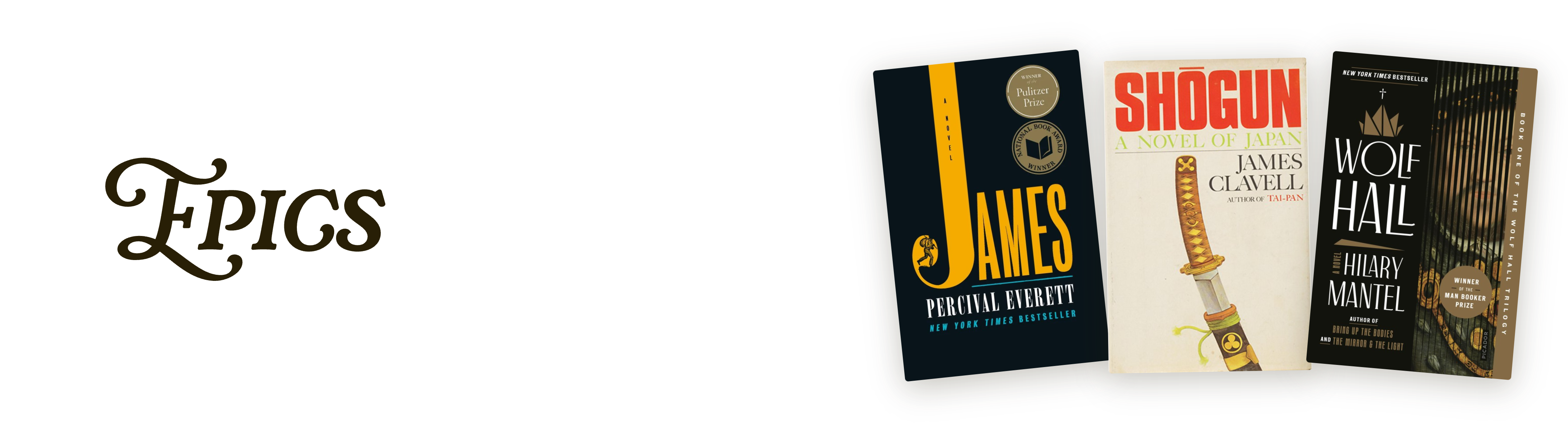
Total immersion, the books that swallow a chapter of your life and spit you out as a different version of yourself. In a word: impactful!
Shōgun by James Clavell // English pilot John Blackthorne shipwrecks in 1600 Japan and is pulled into the orbit of Lord Toranaga, a warlord maneuvering for supreme power. A thousand pages of politics, culture clash, and slow-burn transformation. My husband went from never reading— not even one book a year— to CRUSHING this book and the sequel after seeing a few episodes of the new show on Hulu. I have never seen a more sun and sea tattered copy of a book than his absolute brick of a copy of Shogun. [Amazon | Bookshop]
James by Percival Everett // The Adventures of Huckleberry Finn retold by Jim, who is not the man Huck thought he knew: literate, strategic, and code-switching to survive. Funny, furious, and I think likely one of the best books of our time. This is one book where I will make the case for the audiobook, which is so beautifully narrated! I firmly believe this should become required reading in schools. [Amazon | Bookshop]
Wolf Hall by Hilary Mantel // The rise of Thomas Cromwell, blacksmith’s son, from nothing to the right hand of Henry VIII, told in prose so close and present-tense that Tudor England feels like it’s happening to you.
This is the gold standard of the genre for a reason. Is it an easy read? NO! I read about 150 books a year and this one was a fucking challenge— it’s just so… meaty. But it’s so incredibly well done. Another great audiobook. I make this recommendation for the reader who is in pursuit of the best or most literary writing of our time, regardless of setting or time period— at the end of the day, the brilliance of this book is in its character study. [Amazon | Bookshop]
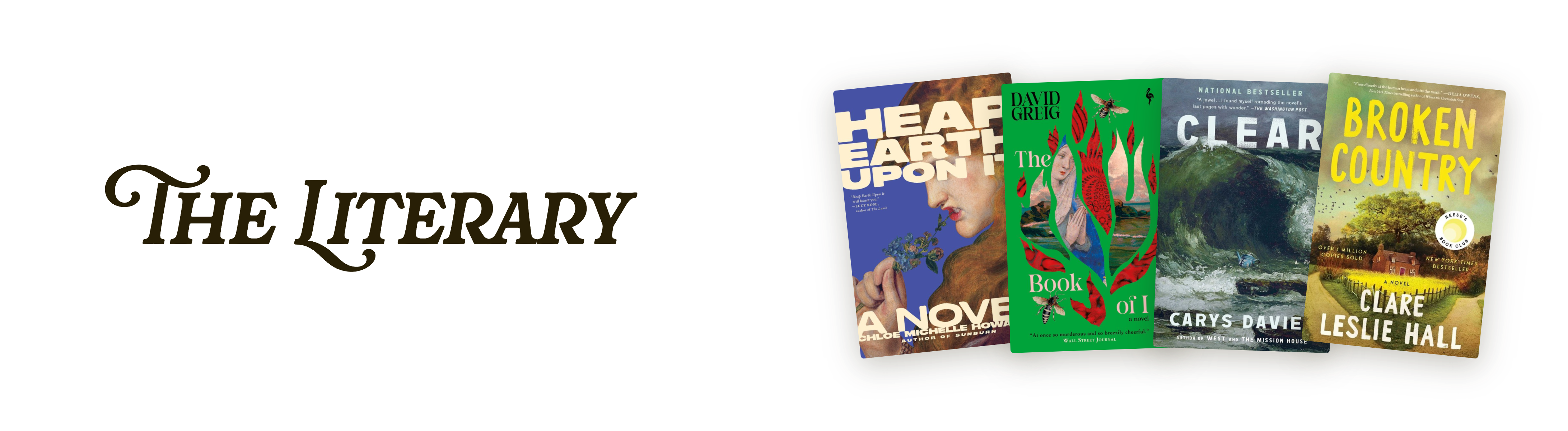
Prize-list prose that happens to be set in the past— for readers who ~don’t read genre.~
Heap Earth Upon It by Chloe Michelle Howarth // January 1965: the four O’Leary siblings arrive in a small Irish town desperate to seem ordinary, offering few and contradicting details about their past… A creeping, atmospheric story of sibling loyalty and sapphic obsession. This is recent enough that even the biggest historical fiction haters among us can stomach the time period and just appreciate the prose! [Amazon | Bookshop]
The Safekeep by Yael van der Wouden // The Netherlands, 1961: Isabel guards her late mother’s house and its every object with rigid devotion, until her brother’s girlfriend Eva moves in for the summer and things begin to go missing. What starts as domestic suspense becomes an obsessive love story and then something else entirely, tied to what the country would rather forget about the war... Incredibly beautiful and one of my best reads last year. [Amazon | Bookshop]
The Book of I by David Greig // 825 CE: after Viking raiders sack a monastery on a remote Scottish isle, three unlikely survivors are left behind, including a young monk and an aging Norseman. A short, strange, beautiful meditation on guilt, redemption, and what people choose to believe, written by a playwright with the pace and quickness to prove it! This is one of my favorite books of the year. Pick this up if you enjoyed Madeline Cash’s Lost Lambs. [Amazon | Bookshop]
Clear by Carys Davies // 1843, during the Scottish Clearances: a poor minister is sent to a remote island to evict its last inhabitant, so the greedy landlord can convert the island to farm sheep— only to find that the island’s sole dweller is a mysterious man whose language he doesn’t speak. What grows between them, word by word, is one of the most moving and beautiful things I’ve ever read. Incredibly, this novel is so short. Like The Book of I, it packs a tremendous amount into a small package. [Amazon | Bookshop]
Broken Country by Clare Leslie Hall // Dorset, 1968: Beth’s steady life with her farmer husband is upended when her first love returns to the village, and the novel braids their past, their present, and a mysterious murder trial together. [Amazon | Bookshop]
Hamnet by Maggie O’Farrell // The story of Shakespeare’s son, who died of plague at eleven, told mostly through his mother Agnes, a woman more at home with herbs and hawks than with the town that distrusts her. I shouldn’t have even mentioned Shakespeare, because he’s sort of the least interesting thing about this story. This is the sort of book that ends up feeling like an absolute purge of emotions, it’s a full body experience. [Amazon | Bookshop]
Rebecca by Daphne du Maurier // A shy young woman marries the wealthy widower Maxim de Winter and arrives at Manderley to find the house, the staff, and the marriage still ruled by his dead first wife. The 1938 classic that perfected the gothic slow reveal; if you’ve only seen adaptations, that was a MISTAKE! Nothing compares to the actual original book, it’s entirely singular. [Amazon | Bookshop]
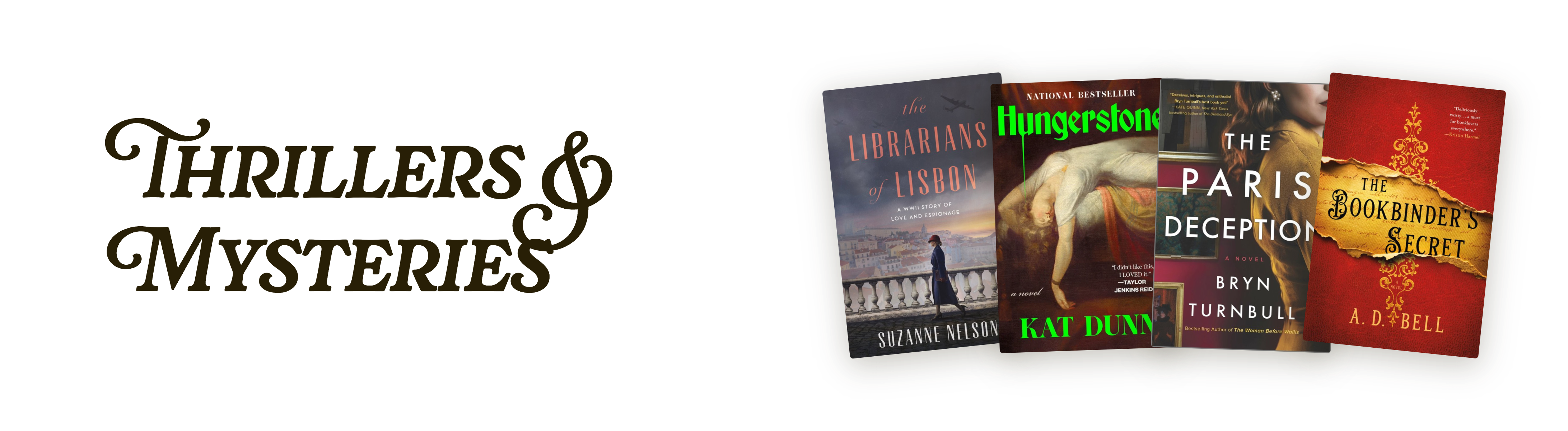
Same propulsion that you already like… but better costumes!
The Librarians of Lisbon by Suzanne Nelson // Lisbon, 1943: best friends Selene and Bea are librarians by day, undercover Allied agents by night, infiltrating the Axis spy network in a neutral city crawling with informants. I found this utterly charming and incredibly interesting— I learned a lot about WWII that I didn’t know. The title and cover do it a disservice making it look a little fluffier than it is, but I quite recommend it. [Amazon | Bookshop]
Hungerstone by Kat Dunn // Lenore, the dutiful wife of a Victorian steel magnate, hosts a mysterious carriage-crash survivor named Carmilla at their Peak District estate, and a hunger she’s suppressed her whole life starts waking up. A sapphic reworking of the vampire story that predates Dracula, the un-making of a prim, Victorian lady. [Amazon | Bookshop]
The Bookseller of Inverness by S.G. MacLean // Six years after Culloden, Iain MacGillivray has survived the battle and settled into quiet life as an Inverness bookseller, until a stranger is found dead in his shop with a coded list of Jacobite traitors nearby. Highland history with a proper murder mystery at its spine— this is dense, and more of an advanced read.
It really is one of my favorite books of all time, but you work for your reward at the end. (If Wolf Hall is a 10 on the “advanced reading” scale, this is a 7.) [Amazon | Bookshop]
The Paris Deception by Bryn Turnbull // In Occupied Paris, art restorer Sophie and her sister-in-law Fabienne risk everything forging “degenerate” artworks so the Nazis destroy fakes while the originals are smuggled to safety. I learned so much in this book and found it a great read— I like the audiobook versions of Bryn Turnbull’s books, this one was incredibly well-narrated. [Amazon | Bookshop]
The Bookbinder’s Secret by A.D. Bell // Oxford, 1901: Lily Delaney, an apprentice bookbinder in a man’s profession, is given a burned book and finds a fifty-year-old letter hidden beneath its binding, speaking of forbidden love, lost fortune, and murder. The hunt takes her through London’s eccentric booksellers and unscrupulous collectors— while it suffers from a bad cover, this is pretty much as classic a cozy mystery as they come! Lovers of mysteries and thrillers— and books, duh!— should give this one a try. [Amazon | Bookshop]

Okay, readers! What do we think? This was not all or even my favorite historical fiction reads— but just the ones I think are a good entry point or books that stand so firmly on their own legs that folks who read outside of the genre could still enjoy.
If you’re a fellow historical fiction lover, what would you recommend to the haters (or the people who just don’t know how good it is yet!) out there? I would be curious to see what obvious books I missed or overlooked… and maybe snag a few for my own TBR!
ICYMI: If you’ve been thinking about subscribing or upgrading— or really liked this letter!— click here for 40% off for one year (the biggest discount I’ve ever offered!) and get access to all my book reviews, reading round-ups, personal essays, and 3+ years of my archive.

Comments
Nothing yet. Say the first thing.
Sign in to join the conversation.