
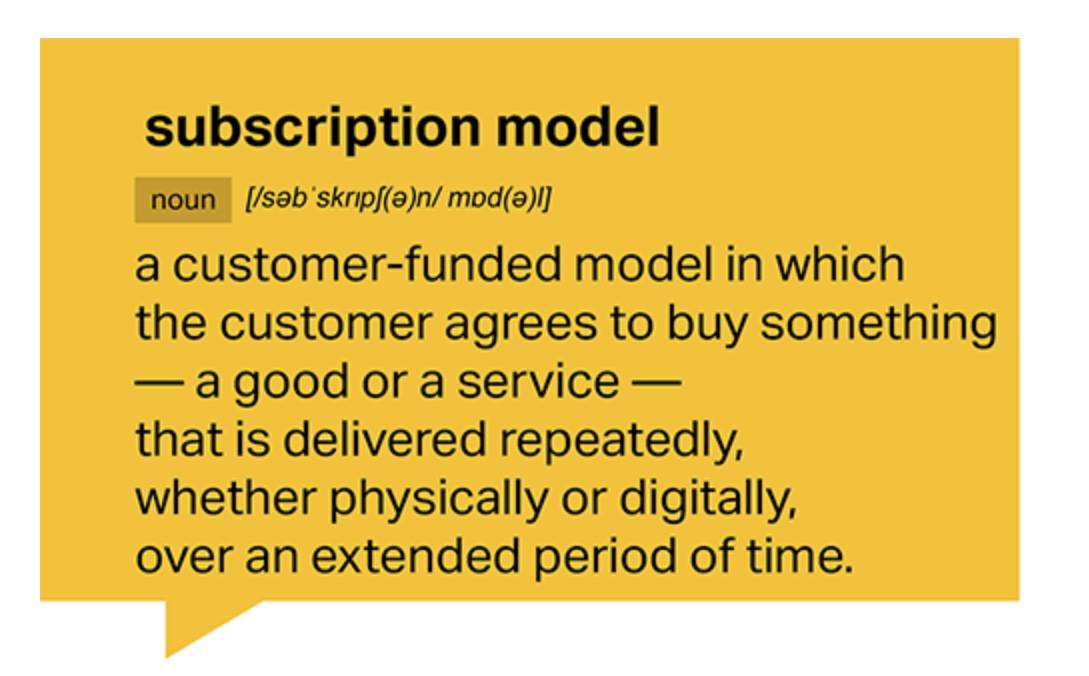
Subscriptions are ubiquitous because they offer companies in the market recurring revenue and “sticky” customer retention through automatic renewals. Business Insider reports that this model, which began with services like cable TV and internet providers, has expanded to nearly every product, from software like Adobe Creative Cloud to physical goods like printers and smart mattresses and even cars. Companies often use “dark patterns” and obscure terms to make cancellation difficult, further maximizing profits. Some have pointed to how the rise of subscriptions is leading to an “own nothing” economy, where consumers pay for access rather than true ownership. This means losing rights like reselling, lending, or passing down products. While some consumers are fighting back by embracing physical media and advocating for the “right to own,” the overall trend points towards companies maintaining control over products and their features through software dependencies, ultimately benefiting corporations at the expense of consumer liberty.
I recently attended a conference on micro-credentials. Some presenters were introducing ideas around subscriptions in higher education but only in very specific ways. The implications are very different from digital companies because higher education isn’t selling a tool; higher education offers credentials, experiences, and long‑term social mobility. Two ideas matter most: what could work, and what would break.
Where subscription models could work:
These are areas where a recurring‑access model aligns with how learning actually happens:
Lifelong learning access: Graduates pay a modest annual fee for continued access to updated courses, micro‑credentials, or alumni‑only learning libraries. This fits fields where knowledge expires quickly (AI, cybersecurity, biotech).
Modular, stackable programs: Instead of paying for a full degree upfront, learners subscribe to a sequence of short modules that eventually stack into a credential.
Professional upskilling bundles: Similar to Adobe Creative Cloud, a university could offer a subscription to a suite of career‑oriented micro‑courses, coaching, and certifications.
Curricular “maintenance plans” for employers: Companies subscribe to a university’s training pipeline, paying for continuous employee upskilling rather than one‑off courses.
These models work because the value is ongoing, not one‑and‑done.
Where subscription models break down:
These are structural barriers that make a Netflix‑style model in higher education unrealistic:
Accreditation and financial‑aid systems assume discrete courses and degrees, not continuous access. A subscription model disrupts credit hours, transcripts, and compliance.
Students expect ownership of a credential, not rented access. A degree is a durable asset with lifelong value.
Universities have high fixed costs (faculty, facilities, research infrastructure). Subscriptions tend to work when marginal costs are low, which is true for software but not for education.
Equity concerns: A subscription could become a regressive tax on learners who need more time or who pause their studies.
Cultural expectations: Higher education is still framed as a life milestone (to some like buying a house), not a service you rent.
Overall, a unique insight is that the most viable subscription model in higher education isn’t for degrees: it’s for post‑degree relevance. Universities increasingly compete not on what students learn at 20, but on who they become at 40, and beyond!
[Image from: Growth Institute]
#HigherEducation #research #organization #collaboration #engineering #PublicPolicy #university #design
Comments
Nothing yet. Say the first thing.
Sign in to join the conversation.